Ibanez RG vs JEM Quick Facts
- First JEM model: JEM777 (1987)
- First RG model: RG550 (1987)
- Main difference: The JEM is Steve Vai’s signature guitar, while the RG is the broader production model
- Shared design traits: 24 frets, fast necks, superstrat body shape, floating tremolo
- JEM-only identity: Monkey Grip, Lion’s Claw, and signature styling
The Ibanez JEM and RG are closely related guitars introduced in 1987. The JEM was created as Steve Vai’s signature model, while the RG was developed as a wider production platform based on many of the same performance ideas. Both guitars share a modern superstrat design, but the JEM keeps distinctive signature features such as the Monkey Grip and Lion’s Claw, while the RG presents a simpler and more widely available version of that concept.
Introduction
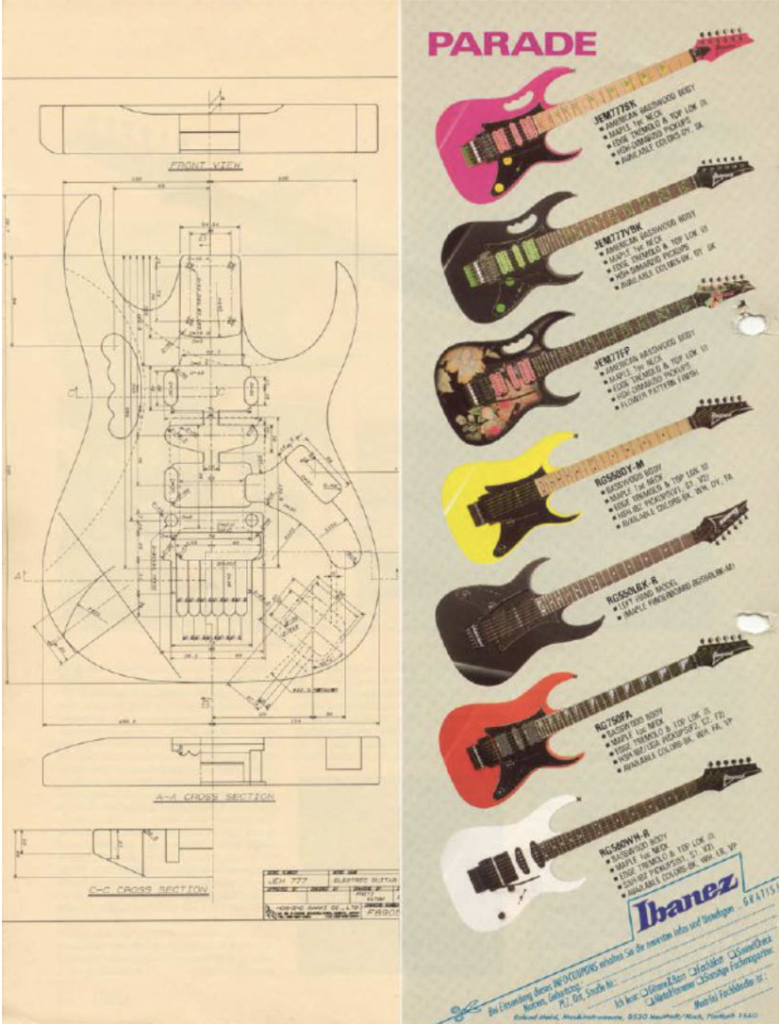
The Ibanez RG and Ibanez JEM are often discussed together because the two guitars are closely related in origin. Both appeared in 1987, both reflect Ibanez’s move toward high-performance superstrat designs, and both helped define the company’s modern identity.
Despite their similarities, the two guitars were created with different purposes in mind.
The JEM was developed as a signature instrument built around Steve Vai’s specific design ideas, while the RG became the broader production model that adapted many of those ideas for a wider range of players.
Understanding the relationship between the two helps explain why both guitars remain important in Ibanez history.
For a broader overview of the RG platform and its major model lines, see the Ibanez RG Series Guide.
The Origin of the JEM

The story begins with Steve Vai searching for a guitar that better matched his playing style.
In the mid-1980s, Vai felt limited by traditional designs such as the Stratocaster and Les Paul. Many guitars at the time had 21 or 22 frets, and even when higher frets existed they were often difficult to reach comfortably.
He wanted a guitar that solved several problems at once:
- 24 frets
- easier access to the highest frets
- a tremolo system with greater expressive range
- humbucker tones with the option of single-coil sounds
- a versatile switching system
Vai experimented with modifying guitars and reshaping bodies to achieve these ideas. When several companies approached him about endorsements, he sent them the specifications of what he wanted. Most companies responded with instruments that were only slightly modified versions of their existing models.
Ibanez took a different approach.
After receiving Vai’s notes and guitars for reference, the company worked with him to develop a new instrument from the ground up. That collaboration led to the creation of the Ibanez JEM, introduced in 1987.
Signature Design Features
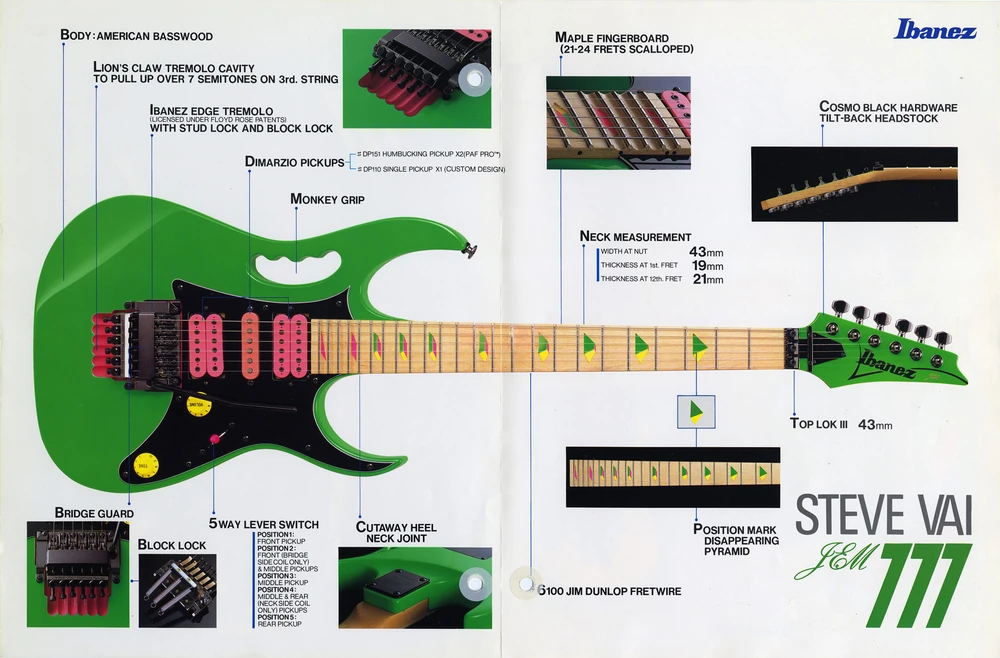
The JEM incorporated many features that reflected Vai’s playing style and visual identity.
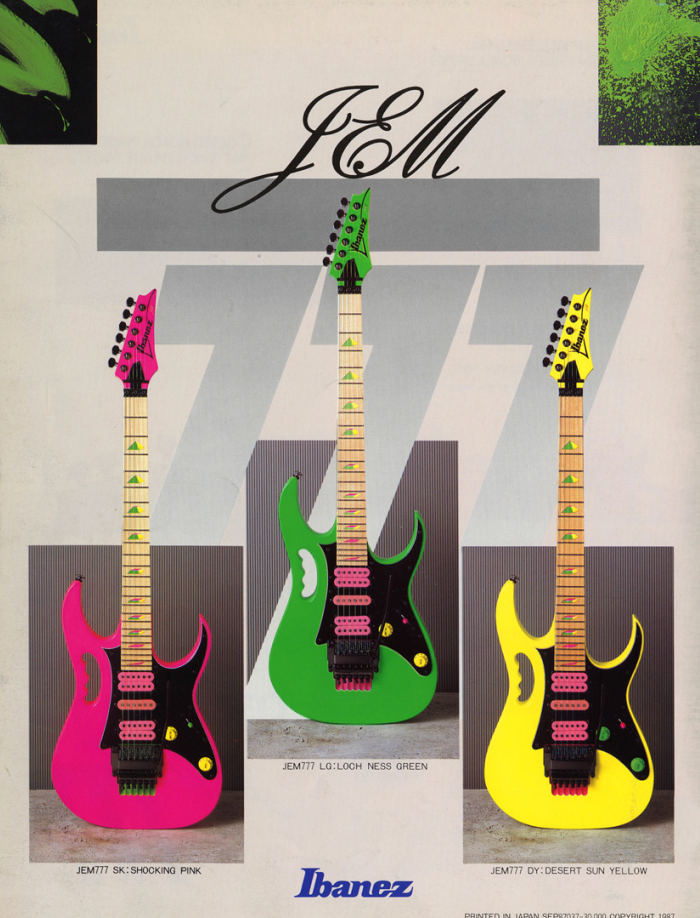
One of the most recognizable is the Monkey Grip, the handle-shaped cutout in the guitar’s body. The idea was to include at least one design element that would immediately distinguish the guitar and make it unmistakably associated with the instrument.
Another distinctive element is the Lion’s Claw, a set of routed scoops behind the tremolo bridge. These cavities allow the tremolo to move more freely upward, giving the player greater expressive control.
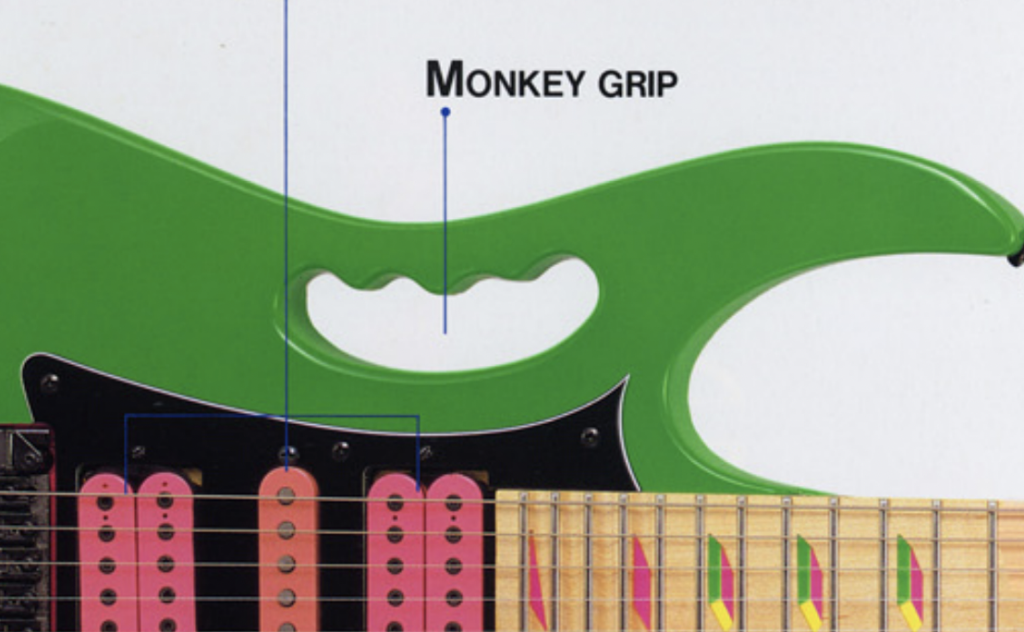
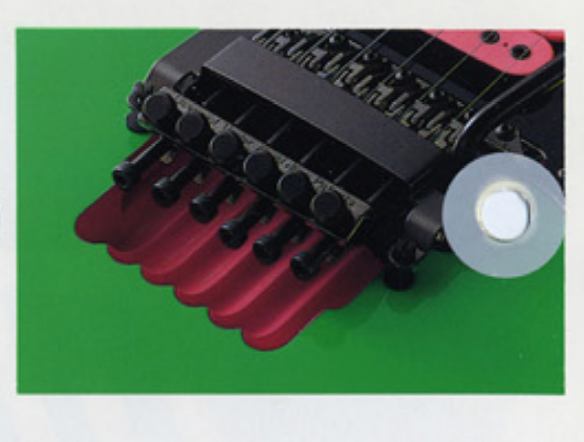
The JEM also featured:
- a 24-fret neck
- a floating tremolo bridge
- a versatile switching system capable of both humbucker and single-coil tones
- dramatic visual styling and bright finishes
Together, these features created a guitar that looked and played differently from many instruments of the time.
The Birth of the RG
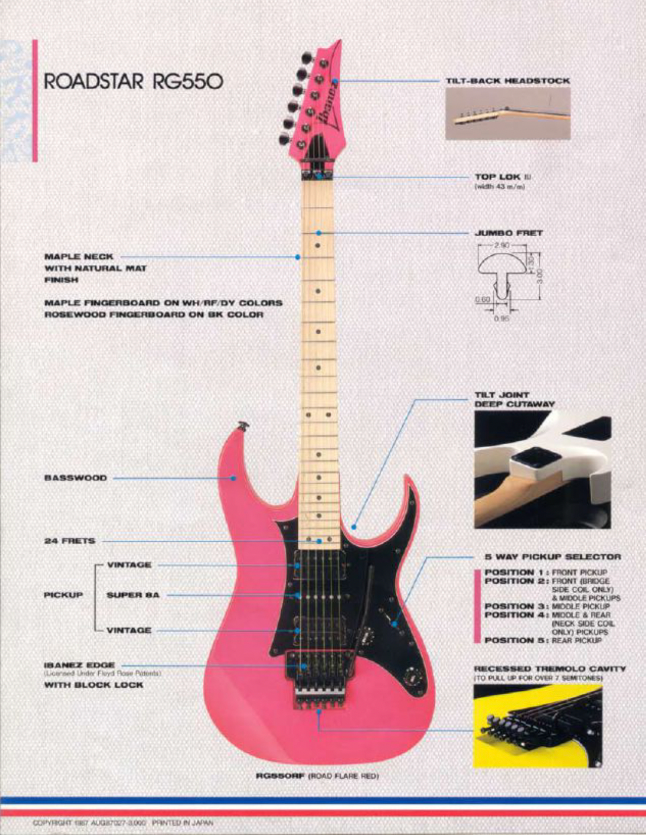
While the JEM was designed as a signature instrument, Ibanez quickly realized that its performance-focused design had broader potential.
At the same 1987 NAMM show where the JEM was introduced, Ibanez released another guitar based on many of the same design ideas: the RG550.
The RG550 kept much of the JEM’s performance-oriented foundation, including:
- a 24-fret neck
- a fast-playing profile
- a floating tremolo bridge
- a modern superstrat body design
However, it removed many of the more distinctive signature features. The RG did not include the Monkey Grip, the Lion’s Claw routing, or the highly personalized styling associated with the JEM.
Instead, it presented the same basic performance philosophy in a more traditional production guitar.
For a deeper look at how the RG evolved from the Roadster and Roadstar guitars of the late 1970s and 1980s, see the full Ibanez RG History guide.
Shared Design DNA
Because the RG evolved from the JEM concept, the two guitars share a strong design relationship.
Both instruments were created during a time when rock and metal players were demanding faster necks, greater technical flexibility, and improved tremolo systems. As a result, they share several core characteristics.
Common features include:
- 24-fret fingerboards
- fast neck profiles designed for technical playing
- superstrat-style bodies with aggressive cutaways
- floating tremolo systems
- pickup configurations capable of both humbucker power and single-coil clarity
These similarities explain why the two guitars often feel closely related despite their different visual identities.
What Makes the JEM Unique
Although the RG shares much of its performance DNA, the JEM remains a more personal instrument.
The JEM reflects Steve Vai’s specific vision of what a modern guitar should be. Its distinctive features, including the Monkey Grip and Lion’s Claw, give it a strong visual identity. Many models also feature elaborate finishes and inlays that reinforce its status as a signature instrument.
Because of this connection to Vai, the JEM is often seen as a guitar that represents a particular artistic approach rather than simply a general production model.
What Makes the RG Different
The RG took the same performance ideas and applied them in a broader context.
By removing the more theatrical elements of the JEM, Ibanez created a guitar that could serve as a versatile platform rather than a single signature model.
The RG maintained the essential performance characteristics that players appreciated:
- fast necks
- excellent upper-fret access
- powerful pickups
- reliable tremolo systems
At the same time, its simpler design made it easier to produce across a wider range of models and price levels.
This flexibility allowed the RG to grow into one of the most extensive guitar families in the Ibanez catalog.
Playability and Musical Styles
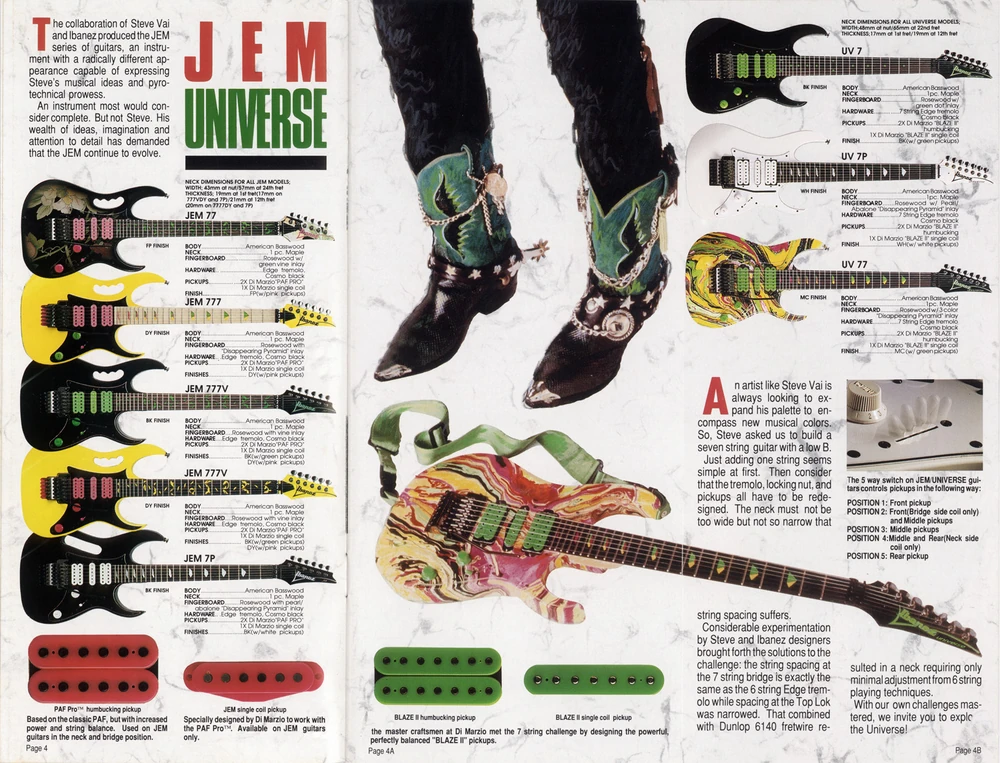
In terms of playability, the RG and JEM are often quite similar.
Both guitars were designed with technical playing in mind. Their fast neck profiles, extended fret range, and responsive tremolo systems made them particularly appealing to players in genres such as rock, metal, and progressive music.
The JEM tends to attract players who appreciate Steve Vai’s influence and the distinctive visual identity of the instrument.
The RG, on the other hand, has become a more universal platform used by a wide range of guitarists across many styles.
Why the RG Became So Widespread
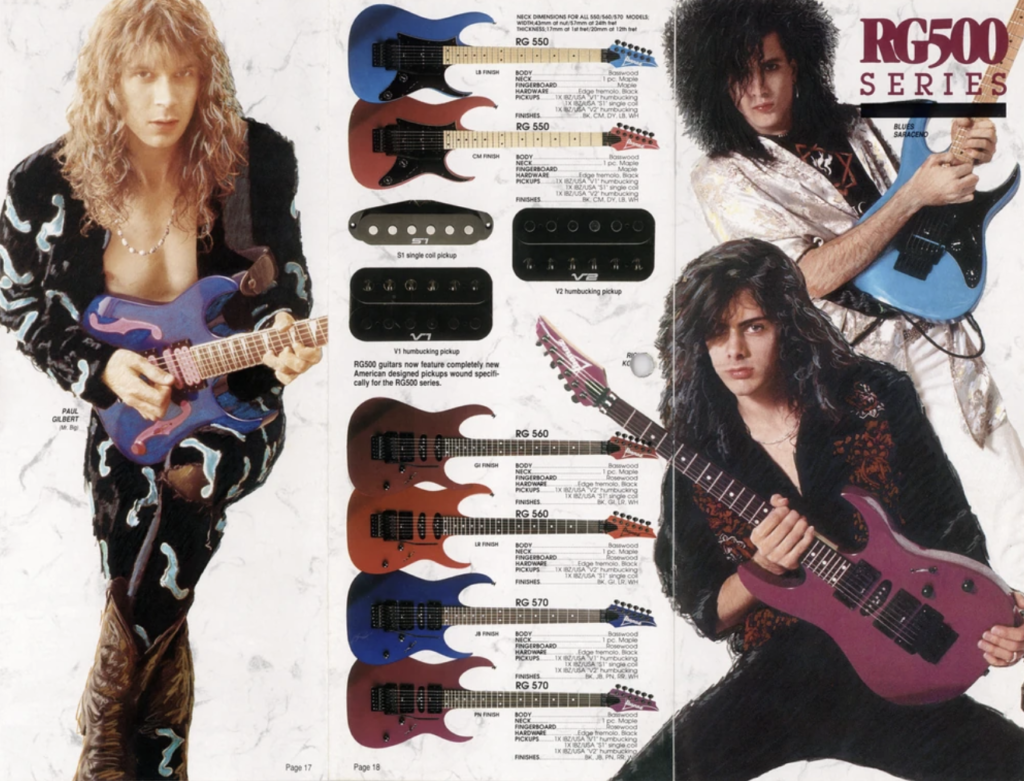
Although the JEM played a key role in Ibanez history, the RG eventually became the company’s most widely expanded guitar platform.
The reason is simple: the RG could evolve in many different directions without being tied to a single artist’s identity.
Over time, the RG series expanded into numerous variations and configurations, including different body styles, pickup layouts, and extended-range models. This adaptability allowed the RG to grow far beyond its original form.
The JEM, by contrast, remained closely tied to Steve Vai and continued as a more focused signature line.
Conclusion
The Ibanez JEM and RG share a common origin but represent two different ideas.
The JEM began as a highly personalized instrument built around Steve Vai’s vision of a modern performance guitar. Its distinctive features and visual identity reflect that creative collaboration.
The RG took many of those same ideas and transformed them into a versatile production platform. By simplifying the design and removing the most personalized elements, Ibanez created a guitar that could reach a much wider audience.
Today, both guitars remain central to the Ibanez legacy.
The JEM represents the original creative spark, while the RG represents the design’s broader evolution.
If you want to explore the RG platform in more detail, including major models, product tiers, and modern RG variants, see the complete Ibanez RG Series Guide.
FAQ
What is the main difference between the Ibanez RG and JEM?
The main difference is that the JEM was developed as Steve Vai’s signature guitar, while the RG was created as a broader production model based on many of the same performance ideas.
Did the Ibanez JEM come before the RG?
Yes. The JEM was introduced first in 1987 as Steve Vai’s signature model, and the RG550 followed in the same year as a more production-focused guitar derived from the JEM concept.
How is the RG related to Steve Vai’s JEM?
The RG550 adapted many of the JEM’s core performance features, including a 24-fret design, modern superstrat body shape, and floating tremolo approach, but removed signature features such as the Monkey Grip and Lion’s Claw.
What features are unique to the Ibanez JEM?
The JEM is best known for signature features such as the Monkey Grip handle, Lion’s Claw tremolo routing, and a more personalized visual identity tied to Steve Vai.
Do the RG and JEM play similarly?
Yes. Because the RG was developed from many of the JEM’s core design ideas, both guitars share fast necks, 24 frets, strong upper-fret access, and performance-oriented hardware.
Who should choose an Ibanez RG instead of a JEM?
Players who want the core playability of the JEM in a simpler and more widely available format may prefer the RG. The JEM is more closely tied to Steve Vai’s signature design, while the RG offers a broader range of models and price points.
More Ibanez guitar articles
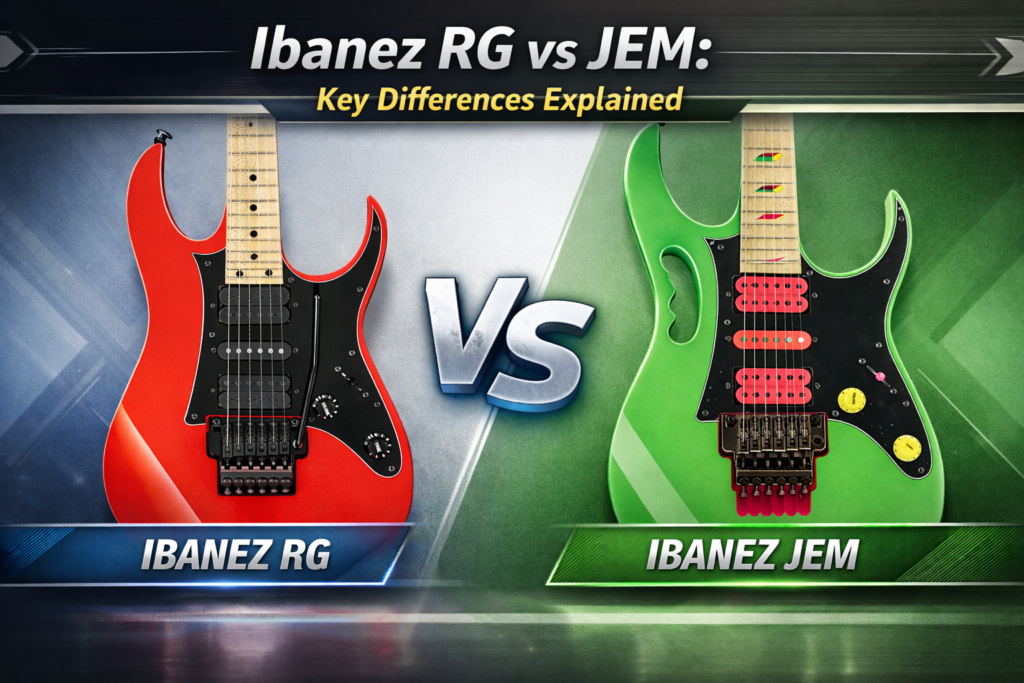
Ibanez RG vs JEM: Key Differences Explained

Ibanez RG Series Guide: Models, Lineup & Product Lines
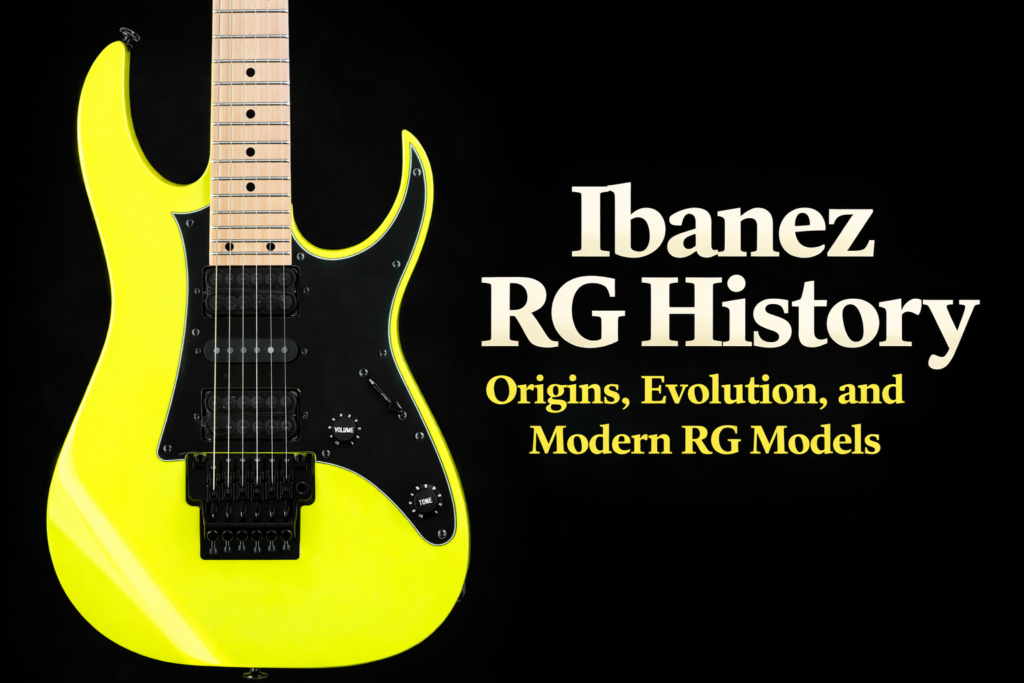
Ibanez RG History: Origins, Evolution, and Modern RG Models
Ibanez IC420MFM Announced
Ibanez EHB600 / EHB605 Announced
Ibanez Q54WQM-DEL & Q54WR-CNL – Figured Wood Q Series