Overview & Key Points
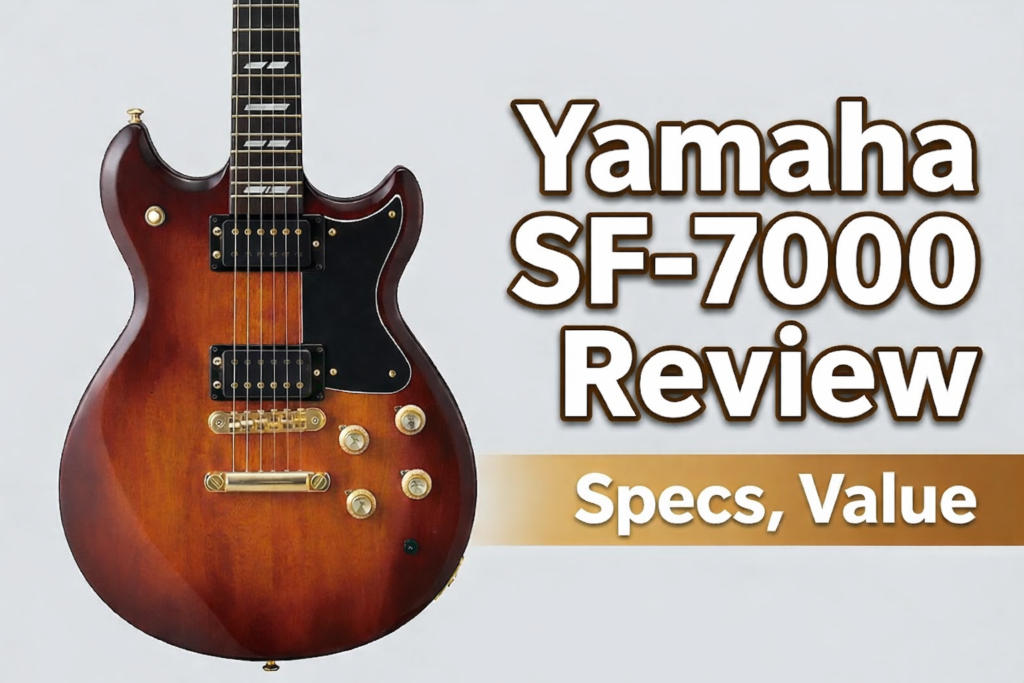
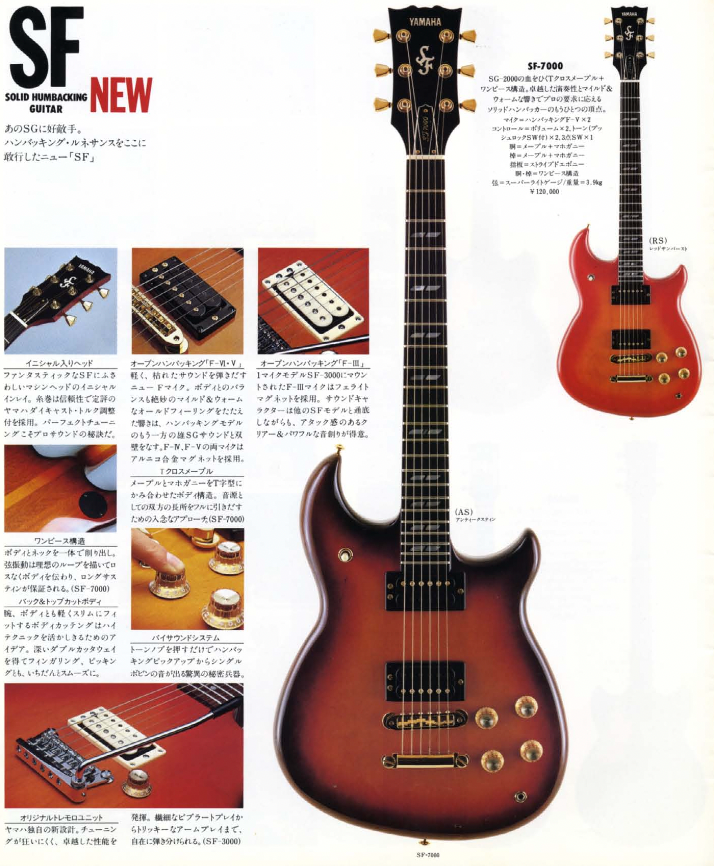
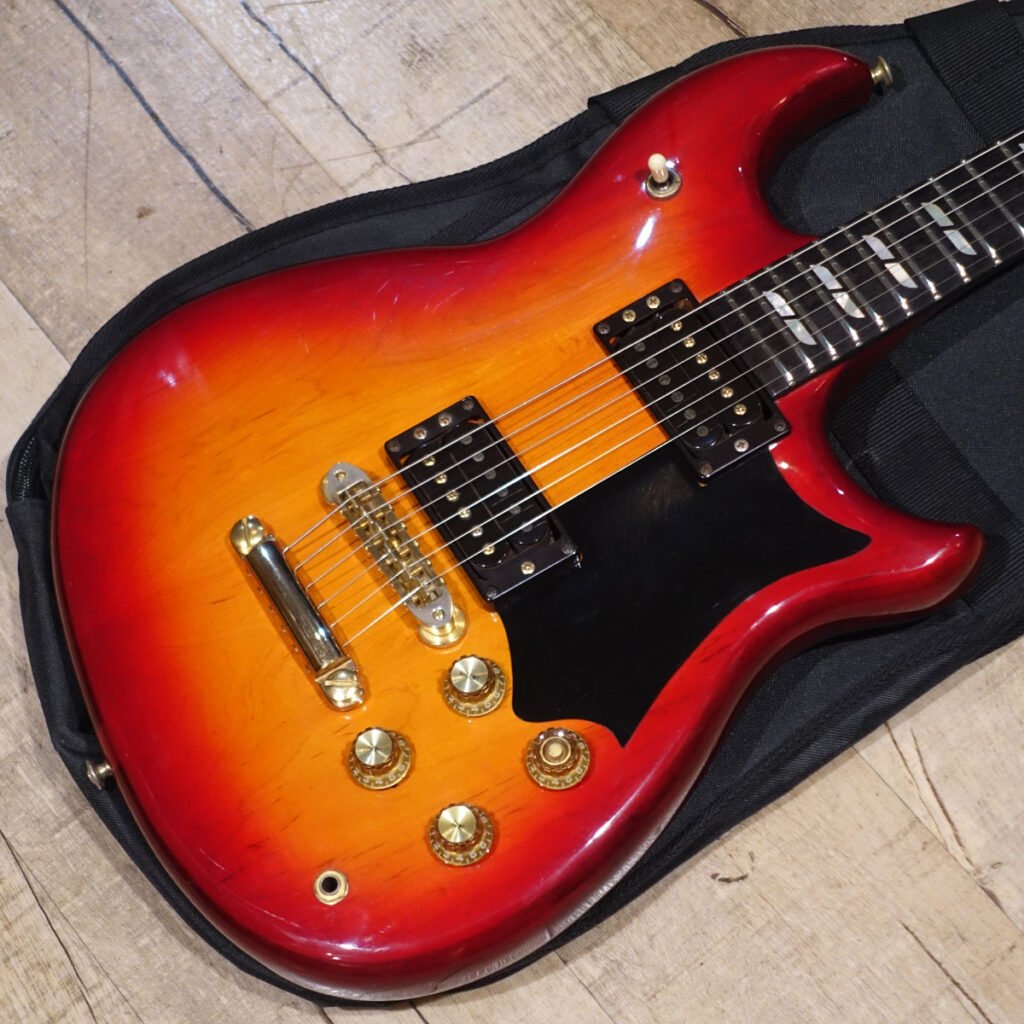
The Yamaha SF-7000 is a late 1970s to early 1980s Japanese solid-body guitar known for its 24-fret double-cut design, maple and mahogany construction, and articulate humbucker tone.
Often compared to the Yamaha SG, the SF-7000 offers a clearer and sharper tonal response while maintaining professional-grade build quality.
- Design: Double-cutaway body with 24 frets, offering extended upper-register access compared to traditional single-cut models.
- Construction & Electronics: Maple and mahogany cross-laminated build, striped ebony fingerboard, Yamaha FV humbuckers, and push-lock coil-split functionality.
- Tonal Character: Clearer and more articulate than the Yamaha SG, with a sharper attack and strong note definition suited to technical playing.
Video Overview of This Article
Production History and Position in the SF Series
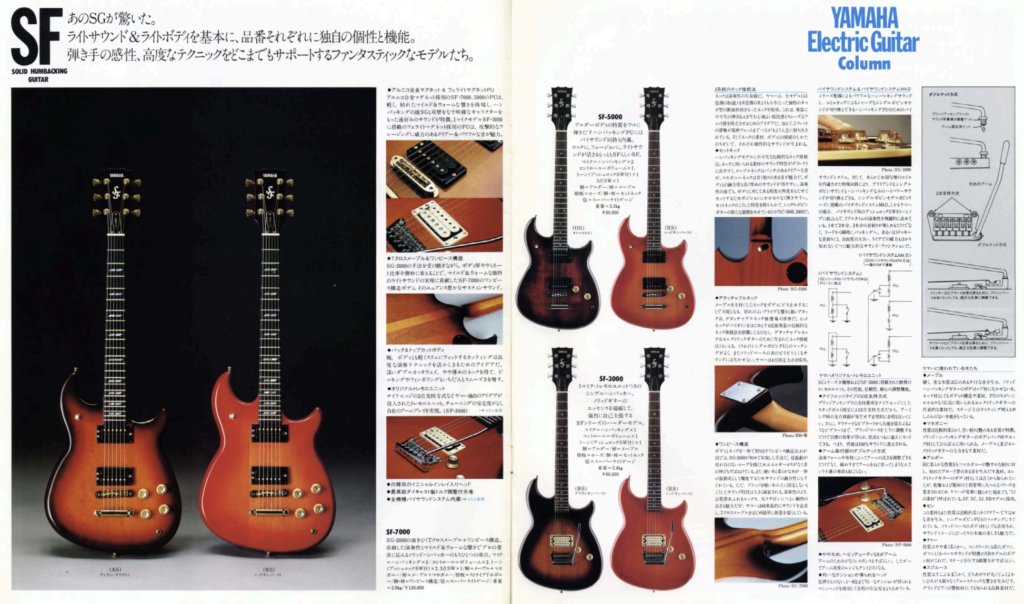
The Yamaha SF-7000 was produced in the late 1970s to early 1980s as part of Yamaha’s SF series. Positioned as a professional-grade model, it featured a double-cutaway body and 24 frets, distinguishing it from many traditional carved-top solid-body designs.
Construction and Specifications
The SF-7000 features:
- Maple and mahogany cross-laminated body and neck
- One-piece carved structure
- Striped ebony fingerboard
- 24 frets
- Approximate total weight of 3.9 kg
Compared to Yamaha SG models, which often exceed 4.5 kg, the SF-7000 is slightly lighter while still substantial in feel.
Pickups and Electronics
The guitar is equipped with Yamaha FV humbuckers and a traditional control layout:
- 2 Volume knobs
- 2 Tone knobs
- 3-position selector switch
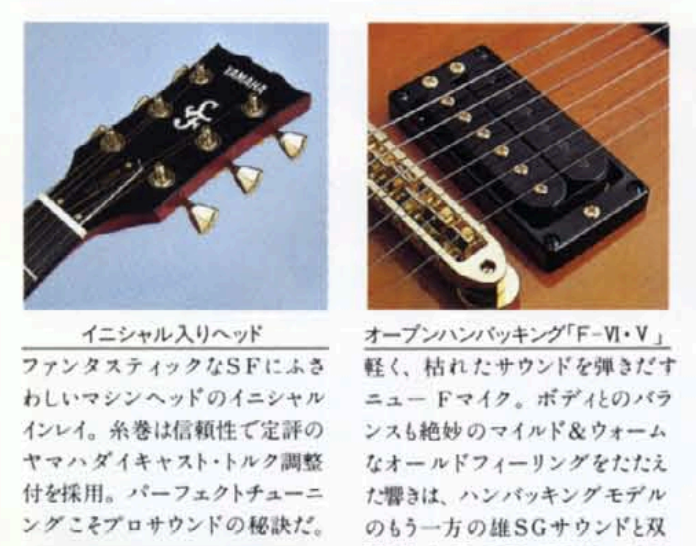
The headstock is marked with the “SF” logo inlay.
It is equipped with Yamaha’s original F-VI or F-V pickups, known for their mild, warm, and slightly dry tonal character.
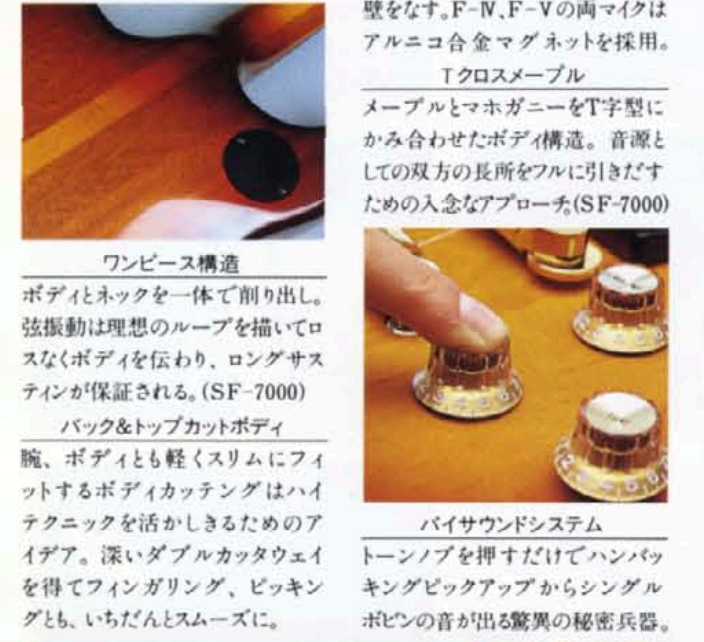
The flagship SF-7000 employs a neck-through construction and a T-shaped maple and mahogany body structure similar to that used in the SG2000. This design aims to fully utilize the tonal characteristics of both tonewoods.
A push-function tone control enables coil splitting, providing single-coil-style output. Yamaha referred to this feature in contemporary catalogs as the “Bi-Sound System.”
Yamaha SF-7000 vs Yamaha SG
While both models use maple and mahogany construction, their tonal identities differ.
The Yamaha SG is typically described as warm, thick, and powerful, delivering a classic fat humbucker sound.
The Yamaha SF-7000, by contrast, offers:
- Sharper attack
- Clearer midrange
- More defined high-end response
The 24-fret double-cut design also provides greater upper-fret access compared to most SG models.
| Feature | Yamaha SF-7000 | Yamaha SG |
|---|---|---|
| Production Era | Late 1970s–Early 1980s | 1970s–1980s |
| Body Style | Double cutaway | Double cutaway |
| Frets | 24 frets | Typically 22 frets |
| Construction | Maple + Mahogany cross-laminated | Maple + Mahogany |
| Weight | ~3.9 kg | Often 4.5 kg or more |
| Pickups | Yamaha FV humbuckers | Yamaha humbuckers |
| Coil Split | Yes (push-lock tone control) | Yes (on some models) |
| Tonal Character | Clear, articulate, sharper attack | Warm, thick, powerful |
Is the Yamaha SF-7000 Worth Buying?
For players seeking a versatile Japanese vintage guitar with 24 frets, coil-split functionality, and a clearer tonal profile than the Yamaha SG, the SF-7000 represents a distinct alternative within Yamaha’s late 1970s lineup.
Conclusion
The Yamaha SF-7000 stands apart within Yamaha’s late 1970s lineup. While often compared to the SG, its 24-fret double-cut design and clearer tonal profile give it a distinct identity.
For players and collectors interested in vintage Japanese guitars, the SF-7000 represents a well-built and technically oriented alternative from an important period in Yamaha’s solid-body history.
As interest in Japanese vintage guitars continues to grow, the SF-7000 remains a model worth closer consideration.
FAQ
What is the Yamaha SF-7000?
The Yamaha SF-7000 is a late 1970s to early 1980s solid-body electric guitar from the SF series. It features a double-cutaway design, 24 frets, and Yamaha FV humbuckers.
How is the SF-7000 different from the Yamaha SG?
While both use maple and mahogany construction, the SF-7000 offers a clearer, sharper tonal response and a 24-fret double-cut body. The SG typically delivers a thicker, warmer humbucker tone.
What are the key specifications?
Key specifications include a maple and mahogany cross-laminated body and neck, a striped ebony fingerboard, 24 frets, 2 volume and 2 tone controls, a push-lock coil-split function, and an approximate weight of 3.9 kg.
How much is a Yamaha SF-7000 worth today?
Originally priced around $1,000, well-preserved examples now commonly exceed $2,000 in the vintage market.
Is the Yamaha SF-7000 a good vintage buy?
For players seeking a versatile Japanese vintage guitar with 24 frets and coil-split capability, the SF-7000 represents a distinct alternative to the Yamaha SG.