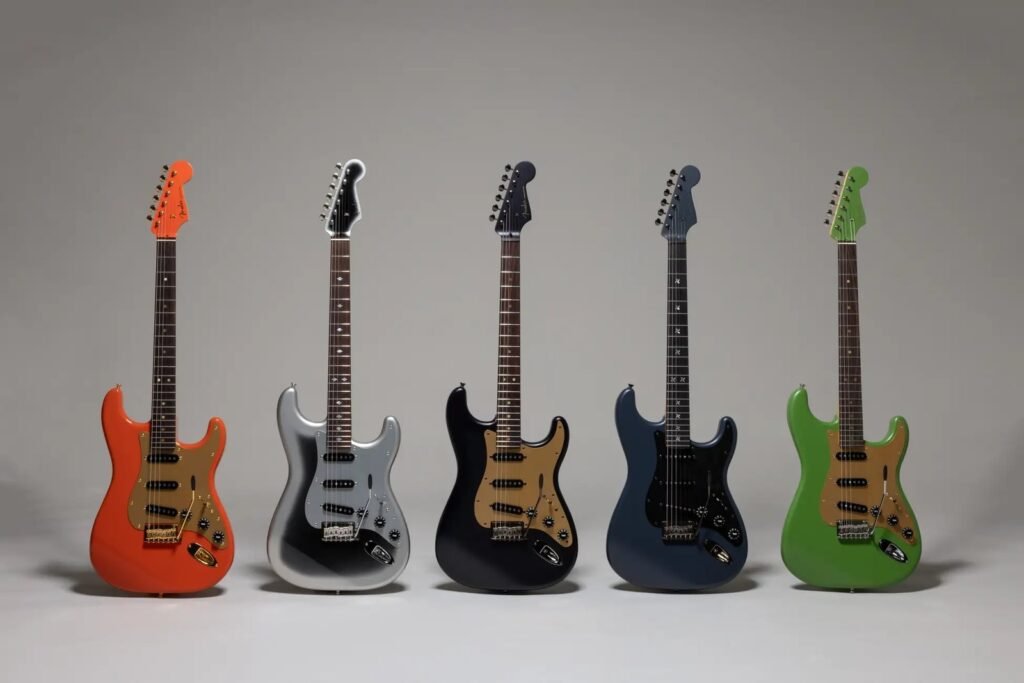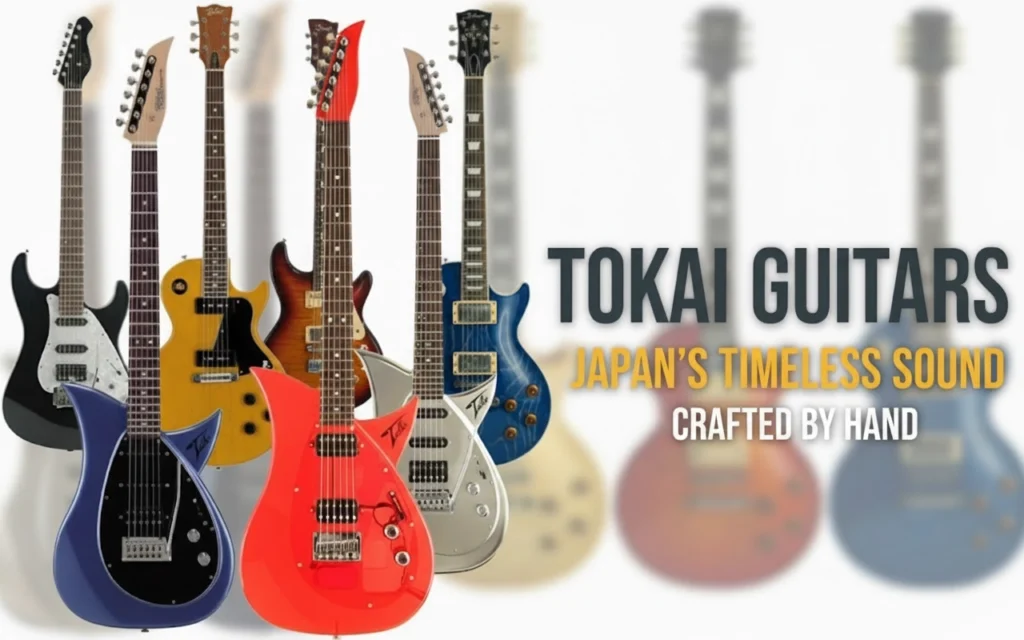
Tokai Gakki Manufacturing Co., Ltd. (東海楽器製造株式会社) is a Hamamatsu-based manufacturer in the truest sense: a company that owns its factory and builds in-house, rather than a trading company that puts its logo on someone else’s work. Founded in 1947 making harmonicas and pianos, it moved into guitars in the 1960s and established the Tokai brand in 1977. It is famous for two things that sound like opposites – replicas of American classics so accurate they became collectibles in their own right, and originals as strange as a guitar cast entirely from aluminum.
Tokai Quick Facts
- Founded: 1947, Hamamatsu, Japan – the heart of the country’s instrument industry
- Company type: Manufacturer (own factory, in-house production). Harmonicas and pianos first, guitars from the 1960s
- Brand established: 1977
- Claim to fame: Love Rock (Les Paul style) and Springy Sound (Stratocaster style), cornerstones of the Japan Vintage movement
- Signature original: Talbo (1983), a full cast-aluminum body
- Signature technology: SEB Structure (Sound Effect Body), patented
- Build hallmark: nikawa hide glue and what Tokai itself calls “non-efficient manufacturing”
- Main series: LS (Love Rock) / ST (Springy, Goldstar, Silverstar Sound) / Talbo
- Tokai in Brief: From Harmonicas to an Aluminum Guitar
- What Makes a Tokai a Tokai
- The Tokai Lineup
- Who Should Choose a Tokai
- Final Thoughts
- FAQ
- More Tokai guitar articles
Tokai in Brief: From Harmonicas to an Aluminum Guitar
Tokai spent its first two decades making harmonicas and pianos, instruments where tuning stability and consistent assembly are the whole job. Guitar production started in the 1960s, and the Tokai brand as we know it arrived in 1977.
What happened next is the part guitarists still argue about. Through the late 1970s and early 1980s, Tokai built recreations of American classics that were, by a lot of accounts, better finished than the originals being sold at the time. The Love Rock and the Springy Sound came out of that era and are now treated as Japan Vintage icons – the term collectors use for Japanese-made instruments from roughly 1975 to 1985, when domestic build quality outran the American factories they were imitating. (If terms like this are new to you, the Japanese guitar terms glossary covers them.) Then, in 1983, Tokai did something no copy house would do: it released the Talbo, a guitar with a body cast from aluminum.
| Year | Milestone |
|---|---|
| 1947 | Founded in Hamamatsu, making harmonicas and pianos |
| 1960s | Guitar production begins |
| 1977 | Tokai brand established; Springy Sound launched |
| Late 1970s | Les Paul Reborn, the first LS flagship |
| 1978-1985 | Silverstar Sound, the 1970s CBS-era Strat recreation |
| c. 1980 | Reborn Old, a short transitional series |
| Early 1980s | Love Rock name adopted after trademark conflicts |
| 1983 | Talbo launched; Goldstar Sound succeeds Springy Sound |
| Later | SEB Structure developed and patented |
What Makes a Tokai a Tokai
Built by Hand, Not by Speed: Tokai’s “Non-Efficient Manufacturing”
Tokai proudly calls its own process “non-efficient manufacturing.” That is not marketing self-deprecation, it is a description of how the factory actually runs. Instead of splitting production into isolated lines where a body moves past workers who each do one thing, a team completes one process together before the whole team moves to the next. Everyone on the floor stays on the same rhythm.
The most telling detail is the glue. Tokai still uses nikawa (traditional hide glue) on almost the entire range, not just the expensive models. Hide glue dries hard and crystalline rather than staying slightly rubbery like modern synthetics, so the joint transmits vibration instead of absorbing it, and the top and body behave as one piece of wood rather than two parts held together. It is also reversible with heat and moisture, which means a 40-year-old Tokai can have its neck reset properly instead of being destroyed in the attempt. Most factories abandoned hide glue decades ago because it sets fast and demands skill. Tokai kept it.
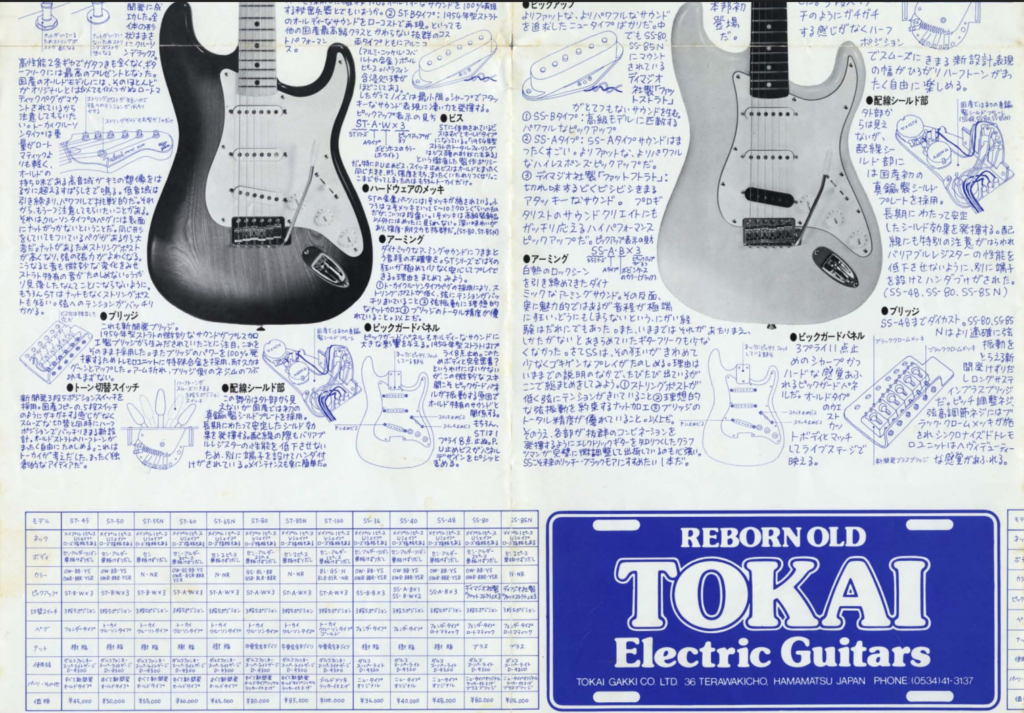
You can see the same personality in the paperwork. In the 1979 and 1980 catalogs I have collected, the pages are packed edge to edge with handwritten explanation: grain direction, glue choice, why a particular neck profile was cut the way it was. Most brands of that era printed a photo and a price. Tokai wanted to argue with you about wood.
SEB Structure: Re-Aiming the Wood Grain at the Bridge
Tokai’s one genuinely patented tonal idea is the SEB Structure (Sound Effect Body). A conventional guitar body is cut so the grain runs across it, which means string vibration has to travel partly against the grain to get anywhere. An SEB body is multi-layered, and its central section has the grain running vertically, straight from the neck joint to the bridge, along the exact path the vibration needs to take.
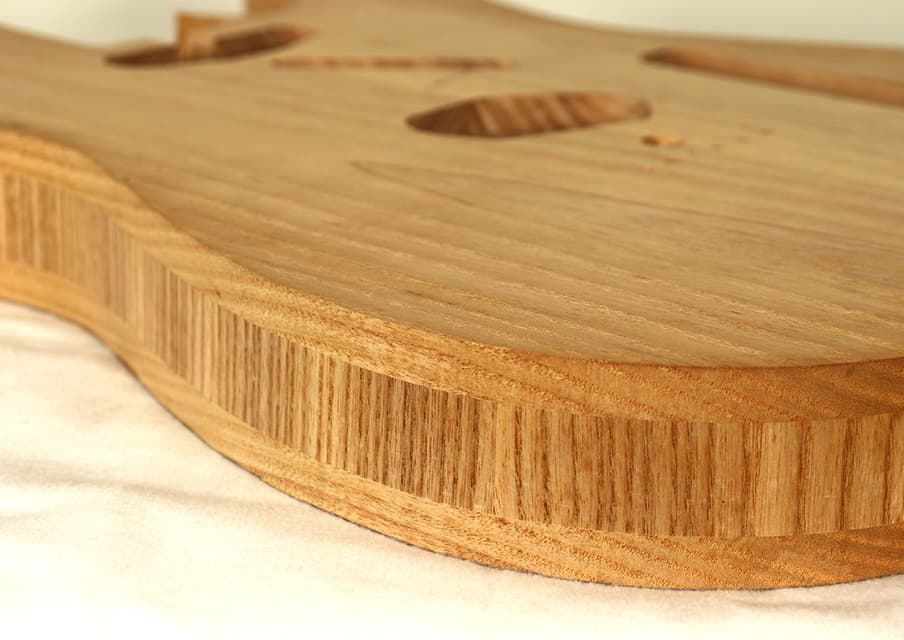
Wood conducts sound several times faster along the grain than across it, so aiming the grain at the bridge changes what you feel under your hands:
- Extended sustain that survives the volume knob. Notes keep blooming even rolled back to 4, which is useful for clean rhythm parts that still need to ring.
- Articulate note definition. Chords stay readable under gain instead of collapsing into one thick blur.
- Real acoustic resonance unplugged. You can hear whether the guitar is working before you plug anything in.
- Fast response to the pick. Small changes in attack come through, so dynamics become a playing tool rather than a pedal setting.
- Wide dynamic range. Warm when played softly, powerful when pushed. The guitar tracks how hard you are working.
A Tone That Sits Between Vintage and Modern
Across the range, Tokai chases one sound: open, dynamic, and balanced. Love Rock delivers thick vintage Les Paul warmth, Springy Sound captures classic single-coil sparkle, and the Talbo adds a metallic clarity no wooden guitar produces. Different tools, same target – vintage character refined by modern craftsmanship rather than replaced by it.
The Tokai Lineup
LS Series (Love Rock): Vintage Les Paul Warmth in Three Generations
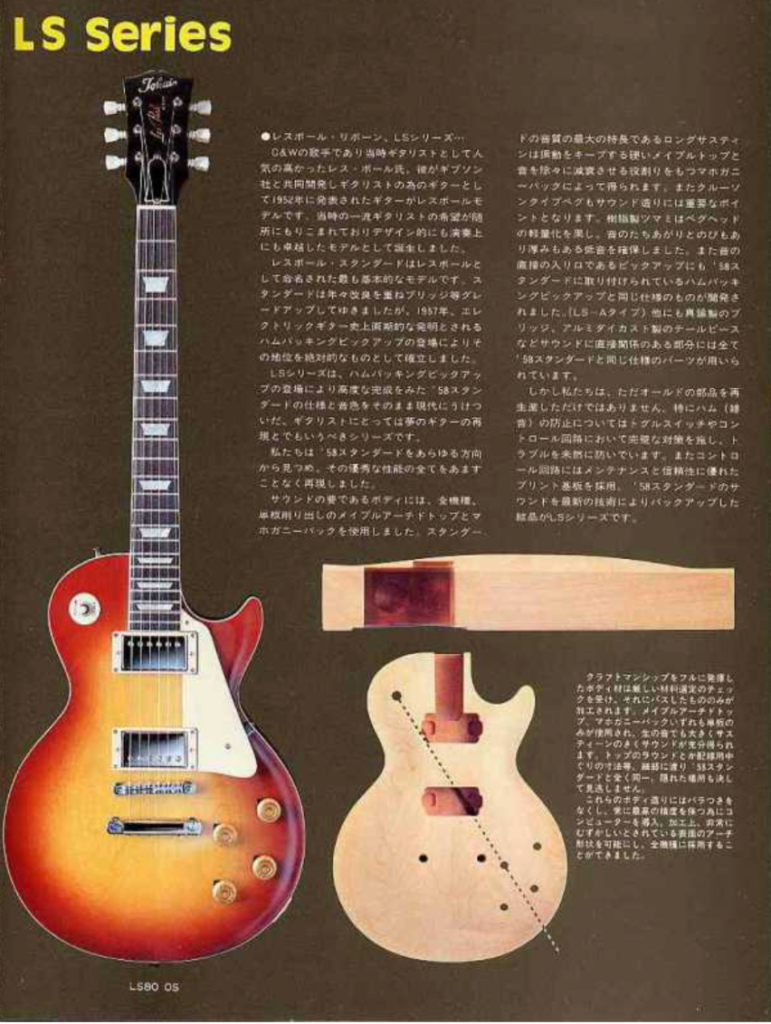
The LS line is where Tokai’s reputation was built, and it ran through three distinct name-eras that confuse first-time buyers constantly. They are worth separating.
Les Paul Reborn: the original target was a 1958
Tokai’s earliest flagship aimed directly at the tone and feel of a 1958 Gibson Les Paul, and got remarkably close through tonewood selection and hand-fit construction rather than clever electronics. The LS-80 is the model most people mean when they talk about a Reborn.
Reborn Old: the rare one in the middle
Built around 1980, this was a short transitional series bridging the Reborn and Love Rock eras. It is genuinely hard to find, which is exactly why collectors chase it.
Love Rock: the name that stuck
Introduced after the Reborn period to sidestep trademark conflicts, Love Rock models carried slightly revised designs with the build quality untouched. Three models cover the spread:
- LS-55 – the affordable one, and the one working players actually gig. Plain top, same bones.
- LS-100F – high-end, with a figured flame maple top. The F is the flame.
- LS-200F – higher grade again, built with more carefully selected materials and more advanced construction.
How to choose
Buying a guitar to play? Take the LS-55. The gap between it and the F models is mostly the top’s appearance and material grade, not the fundamental construction. Want the flame top, LS-100F is the sensible stopping point and LS-200F is the collector tier. Want the 1958-chasing era rather than the name, hunt for Reborn-period LS-80 examples.
ST Series: Three Different Stratocasters Hiding Under One Name
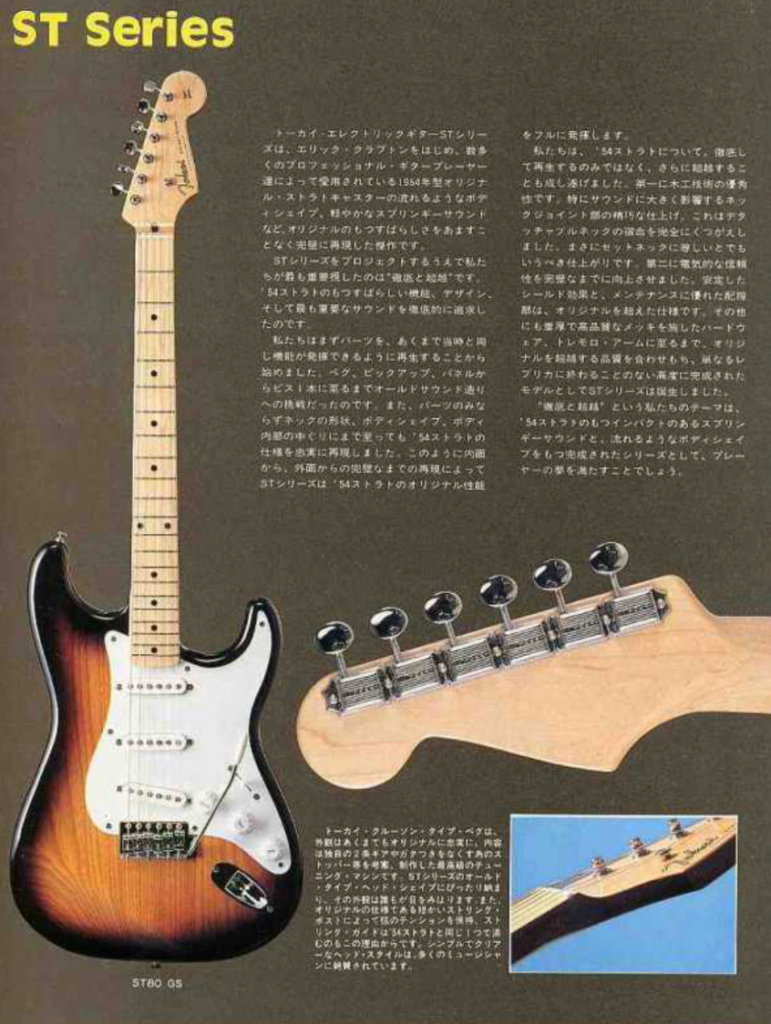
“ST Series” is not one guitar. It is three separate recreations of three different Stratocaster eras, and buying the wrong one is the most common Tokai mistake.
Springy Sound (1977-1983): the pre-CBS chase
Tokai’s recreation of the 1950s to early 1960s pre-CBS Strat, and the series that made the brand’s name abroad. Bodies came in sen ash or alder: sen ash gives the brighter, more open voice with scooped mids, alder the fuller midrange. Alnico pickups pull on the strings more gently than ceramic, so notes bloom and respond to touch instead of compressing. Add spaghetti-style headstock logos and slim neck profiles, and the whole guitar aims at that dry, open, early-era resonance.
The higher grades – ST-80, ST-100, ST-120 – added nitrocellulose finishes and even 1-piece bodies. Nitro is a thinner, harder film than poly, so it damps the top less and ages visibly, and a 1-piece body has no centre glue seam interrupting the grain. Those two details are why the top-grade Springys are the ones collectors fight over.
Goldstar Sound (1983-mid 1980s): the same idea, made dependable
Goldstar succeeded Springy in the early 1980s with the same pre-CBS philosophy but more consistent production and refined playability. The sound and feel stayed very close. What changed was the lineup’s centre of gravity, which shifted toward practical, gig-ready models while the ultra-premium grades became scarce. That makes Goldstars excellent player’s guitars: vintage tone, fewer nerves about taking it out of the house.
Silverstar Sound (1978-1985): the 1970s one
Silverstar goes somewhere else entirely. It recreates the 1970s CBS-era Strat, with a large headstock, 3-bolt neck joint, and micro-tilt adjustment. The extra headstock mass behind the nut firms up the low end and slows the attack slightly, and micro-tilt lets you set neck angle with a screwdriver instead of shimming the pocket. The tone runs fuller, brighter, and more modern than Springy or Goldstar. It sat in mid-range price tiers, without the 1-piece or nitro options of the top Springys, which is fair enough, because it was never trying to be that guitar.
How to choose
Want the vintage 1950s sparkle and do not mind paying for it? Springy Sound, ideally ST-80 and up. Want that same sound in something you will actually gig? Goldstar Sound. Love the big headstock, 3-bolt 1970s look and a bolder, brighter voice? Silverstar Sound, and it is usually the cheapest way into a good Tokai.
Talbo: The Cast-Aluminum Body That Rings Like a Piano
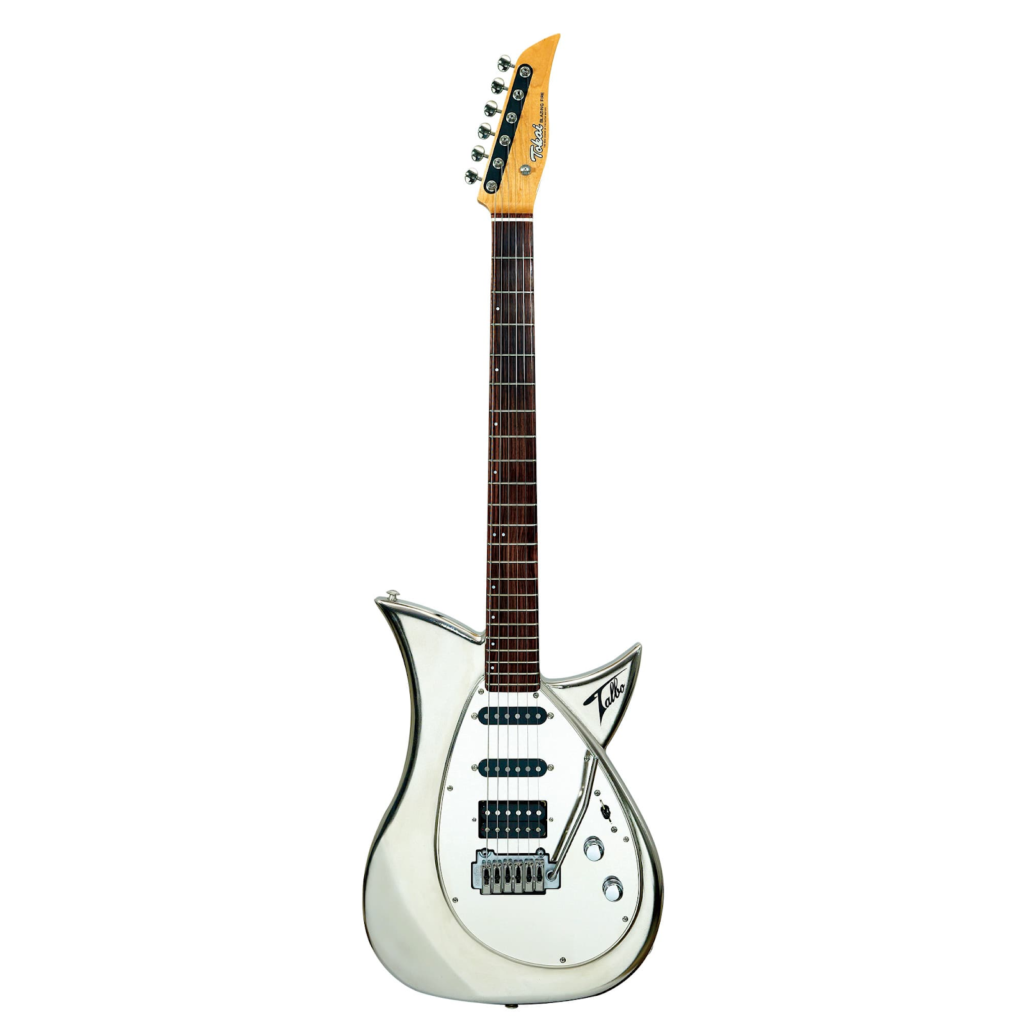
Introduced in 1983, the Talbo (Tokai Aluminum Body) is still one of the most distinctive guitars Japan has produced. The body is cast aluminum, not wood. Metal does not absorb string energy the way wood does, and it has no grain to favour one frequency over another. The result is a crisp, piano-like attack, exceptional sustain, and a wide, even frequency response with a metallic top end you cannot get out of a solid-body Strat or Les Paul. It also looks like nothing else on a stage, which was always half the point. The full Talbo story covers why it flopped on launch and came back decades later as the flagship, and the aluminum body was not a one-off experiment either – Tokai kept pushing into unusual materials with the MAT project.
Who Should Choose a Tokai
- Craftsmanship lovers: the hide glue, the hand-fit joints, the team-based build. You can feel where the hours went.
- Serious players and professionals: hand-fit neck joints and consistent resonance make these reliable live and in the studio, not just nice to look at.
- Experimenters: Talbo and the SEB models exist for players chasing materials and sounds nobody else is using.
- Collectors: late 1970s and early 1980s Japan Vintage Tokais keep climbing in value, with the top-grade Springys and Love Rocks leading the climb.
- Players on a budget: the Traditional Series delivers Tokai build quality at an accessible price, and used LS-55 or Silverstar examples are the easy way in.
Final Thoughts
Tokai grew from a small Hamamatsu workshop into a name recognised worldwide without ever changing its argument: a guitar is a single instrument, not an assembly of parts. Whether it is the warmth of a Love Rock, the crisp resonance of a Talbo, or the articulate response of an SEB model, each one connects sound, soul, and tradition in a way mass production cannot reproduce.
In an industry optimised for speed, Tokai still builds the slow way, the human way. Real tone comes from care, patience, and one stubborn pursuit: the art of timeless sound, crafted by hand.
FAQ
When was Tokai Gakki founded?
Tokai Gakki Manufacturing Co., Ltd. was founded in 1947 in Hamamatsu, Japan. The company began building guitars in the 1960s and officially established the Tokai brand in 1977.
What is the Tokai Love Rock?
The Love Rock is Tokai’s Les Paul-style series, introduced after the Les Paul Reborn era to avoid trademark conflicts. It kept the same craftsmanship and vintage-inspired specifications, with models ranging from the affordable LS-55 to the flame-topped LS-100F and LS-200F.
What is the difference between Springy Sound and Goldstar Sound?
Springy Sound (1977-1983) was Tokai’s early pre-CBS Strat-style series, with higher-end vintage details such as nitro finishes and 1-piece bodies on the ST-80 and above. Goldstar Sound followed in 1983 with very similar tone and feel, but more consistent, gig-oriented production and fewer ultra-premium grades.
What is the Tokai Talbo?
Introduced in 1983, the Talbo (Tokai Aluminum Body) has a full cast-aluminum body instead of wood. It delivers a bright, piano-like tone with strong sustain and a distinctive futuristic appearance.
What is Tokai’s SEB Structure?
The SEB (Sound Effect Body) Structure is Tokai’s patented multi-layer body design that re-orients the central wood grain to run vertically from neck to bridge, improving vibration transfer, sustain, and tonal clarity.
Are vintage Tokai guitars collectible?
Yes. Late 1970s and early 1980s Tokai models, especially Love Rock and Springy Sound guitars, are considered part of the Japan Vintage movement and are highly valued by collectors.
More Tokai guitar articles
Tokai Guitars History: From Harmonicas to the Copies That Beat the Originals
Tokai is the Japanese brand that made the phrase “better than the original” stick. It…
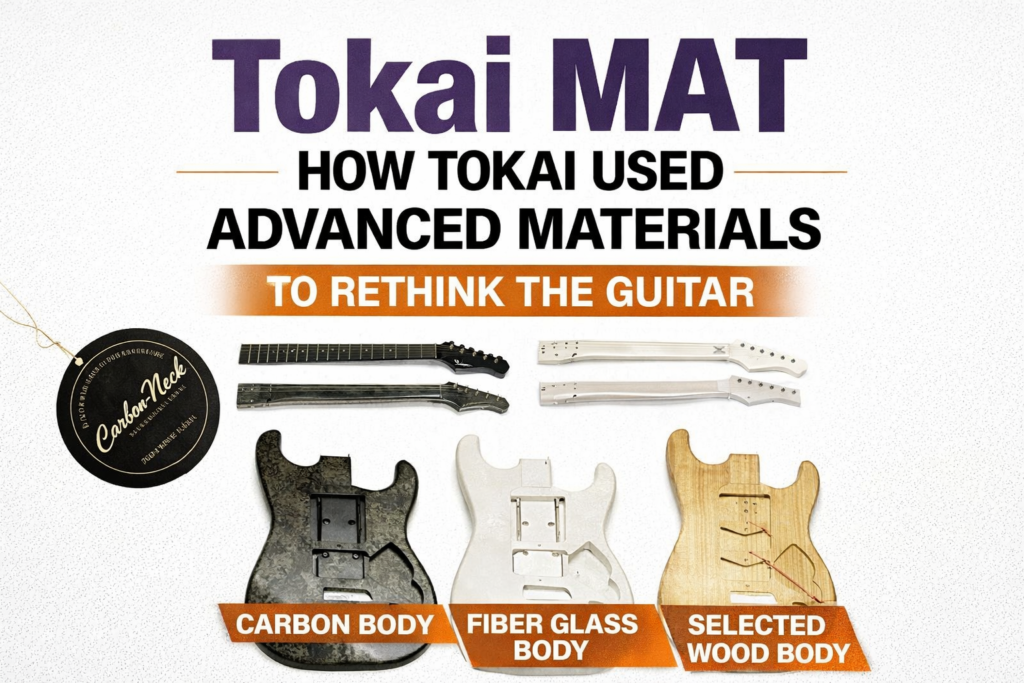
Tokai MAT: How Tokai Used Advanced Materials to Rethink the Guitar
The Tokai MAT is one of the most unusual guitar projects to come out of…
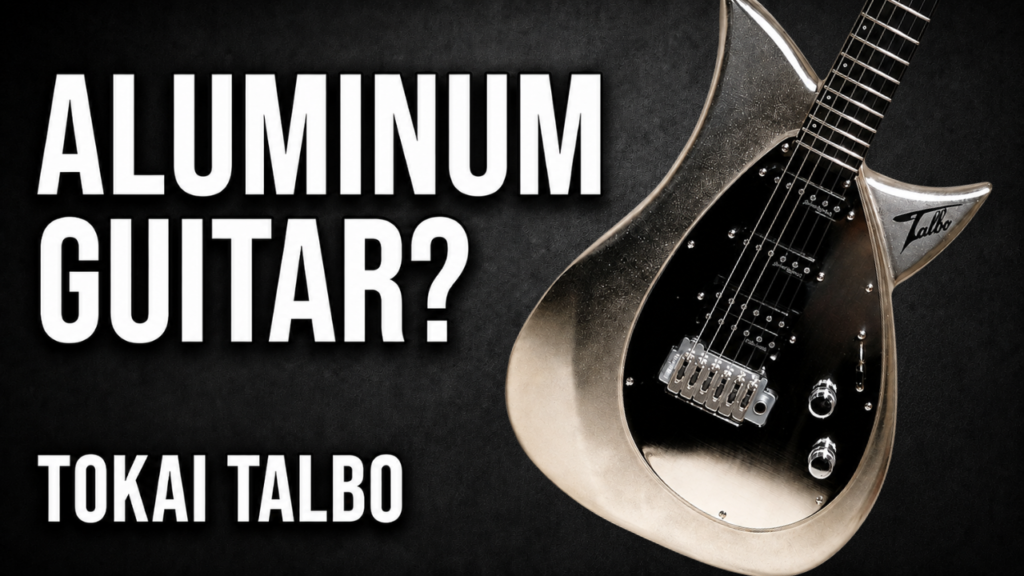
Tokai Talbo: The Aluminum Guitar That Failed, Came Back, and Became Tokai’s Flagship
In an era when every electric guitar was made of wood as a matter of…