Fernandes began in the 1970s as a maker of high-quality Fender and Gibson copies, but soon carved out its own identity with original designs and bold innovations. The brand is best remembered for the Sustainer system and the amp-equipped ZO-3 mini guitar, which together captured its blend of creativity and accessibility. After decades as one of Japan’s leading domestic brands, the company entered bankruptcy in the mid-2020s.
Fernandes Quick Facts
- Founded: 1969 in Ochanomizu, Tokyo, as Saito Gakki (renamed Fernandes in 1972)
- Where it started: High-quality copies — Fender-style under the Fernandes name, Gibson-style under Burny
- Signature innovation: The Sustainer, for near-infinite string sustain
- Best-known models: FR series, TEJ, RAVELLE, and the amp-equipped ZO-3
- End of the story: Suspended operations in 2024, bankruptcy finalized in 2025
Prefer to watch? This article is based on my own video below.
The History of Fernandes
The 1970s – Copy Roots in Ochanomizu
The Fernandes story begins in 1969, in Ochanomizu, Tokyo, where the company started life as Saito Gakki. At this stage it wasn’t an electric guitar maker at all — its first business was building classical guitars, rooted in craftsmanship and a love of the instrument.
In 1972, Saito Gakki changed its name to Fernandes and stepped into the electric guitar world in earnest. The timing was no accident: a rock boom was sweeping across Japan, and demand for electric guitars was climbing fast.
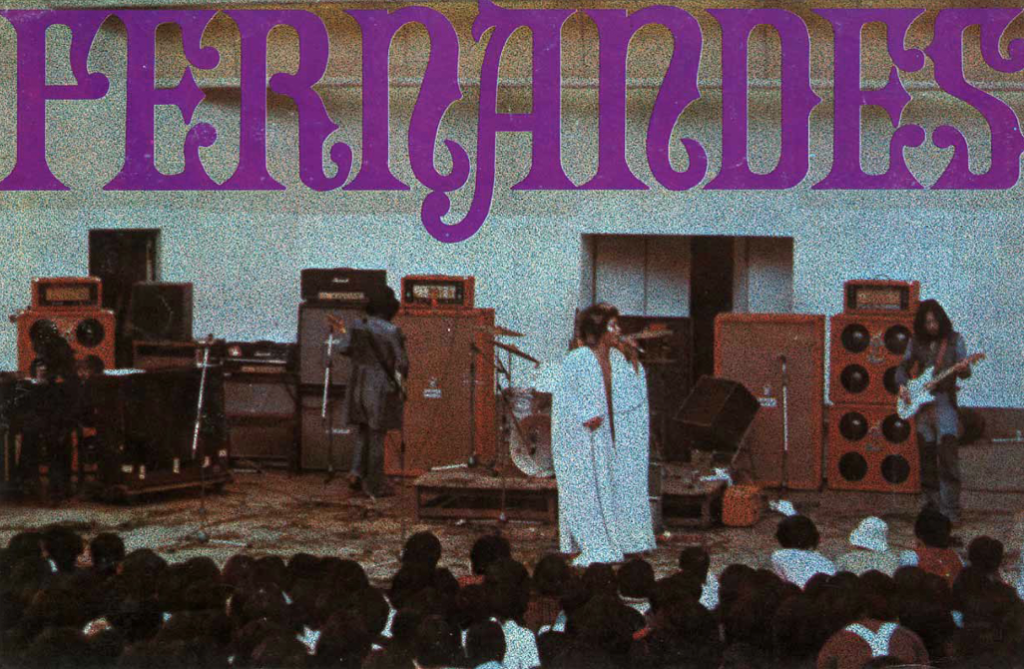
From the outset, the company worked differently from many of its rivals. Rather than run a large factory of its own, it focused on planning and design, outsourcing production to skilled Japanese manufacturers. It still kept in-house staff for product development and built musician samples and artist instruments internally, but this flexible approach let it experiment freely across many models.
The first guitars were copies of Fender and Gibson designs — and, interestingly, the company split them across two brands. Fender-style copies, led by the FST series, went out under the Fernandes name, while Gibson-style models were sold under the Burny label. Among the many Japanese copy builders of the era, the brand stood out for precision and consistent quality, winning over both professionals and amateurs.
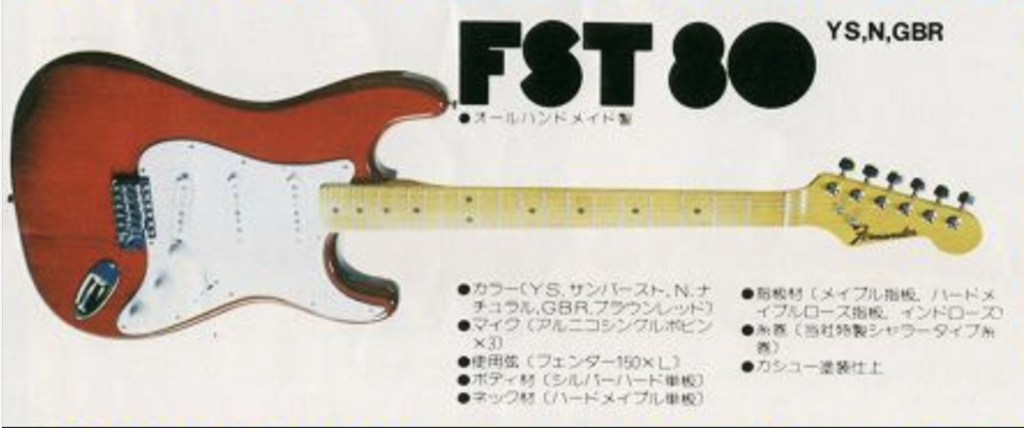
Being a copy maker had its pitfalls, though. Early guitars resembled Fender so closely — right down to the logo lettering — that Fender itself issued a complaint. That pushed the company to redesign its logo, and the new version featured a capital “F” that resembled the Japanese kanji for “stone” (ishi), earning it the nickname “the stone logo.” Guitars carrying this logo from around 1978 onward are now prized in the Japan Vintage market.
The 1980s – The Golden Age
The 1980s were the era when Fernandes — and Japanese domestic brands as a whole — shone brightest. At the time, real Gibsons were still out of reach for most Japanese players, Fender Japan had only just been founded in 1982, ESP was still a small Shibuya workshop, and Ibanez was focused mainly on overseas markets. For most Japanese buyers, the realistic choices were domestic names like Fernandes, Greco, Aria, Tokai, Yamaha, and Morris.
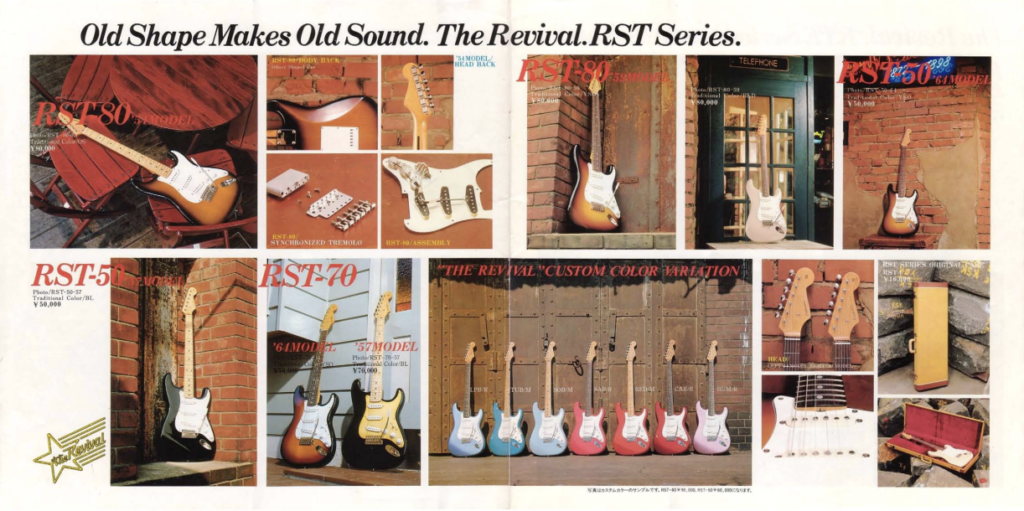
The symbol of the brand moving beyond copies was The Revival series, launched with the 1981 catalog. The company aimed for faithful reproductions of vintage Stratocasters, studied down to the smallest detail — even sourcing alder from Oregon and Washington to get as close to the originals as possible. The quality of these guitars helped drive the broader Japan Vintage boom.
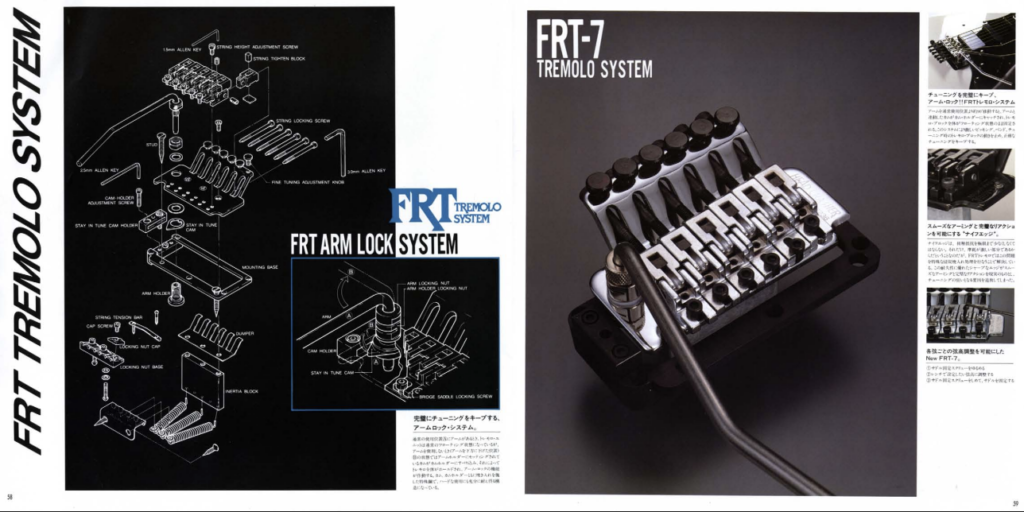
Around 1983, the company was even officially licensed to manufacture Floyd Rose units for the Japanese market, identifiable by their “Headcrusher” stamp.
But the brand didn’t stop at copies. Original models like the FR and TEJ series arrived one after another, timed perfectly with the rising heavy metal and hard rock movement. The FR series, released from around 1985, established the signature “Dinky” style: a slimmed-down Stratocaster shape with a bolt-on neck. By the late 1980s, this was no longer a Fender or Jackson copy — it was a fully original design. The company even developed its own active pickup, the FGI, jokingly nicknamed the “fake EMG” for how closely it resembled the real thing.
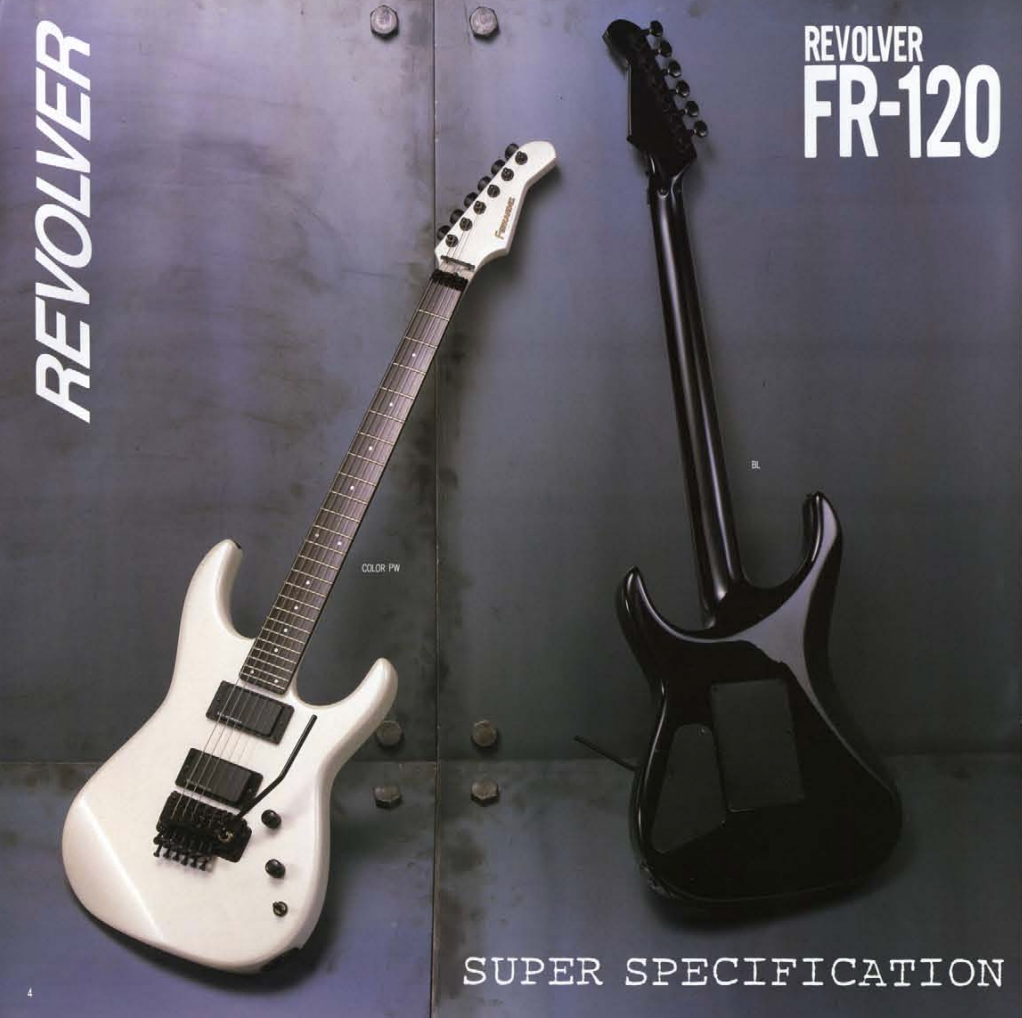
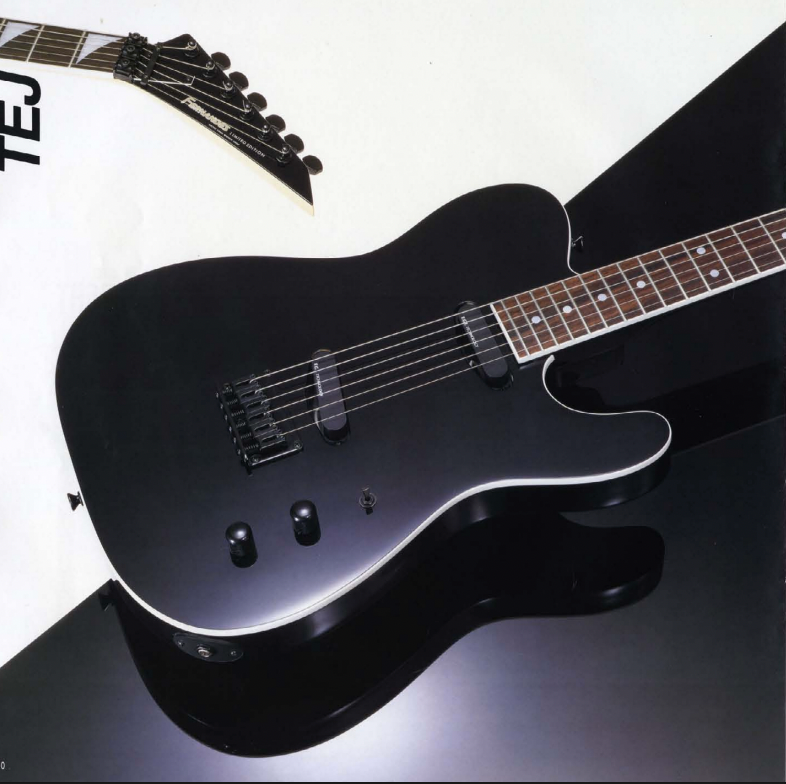
Artist endorsements were another 1980s strength. The company worked aggressively with musicians at home and abroad, including Brad Gillis and Adrian Vandenberg. At home, it released a defining signature model for Tomoyasu Hotei, guitarist of BOØWY, complete with a distinctive hand-painted “G pattern” that became an icon in its own right.
The 1990s – Big Hits and the Sustainer
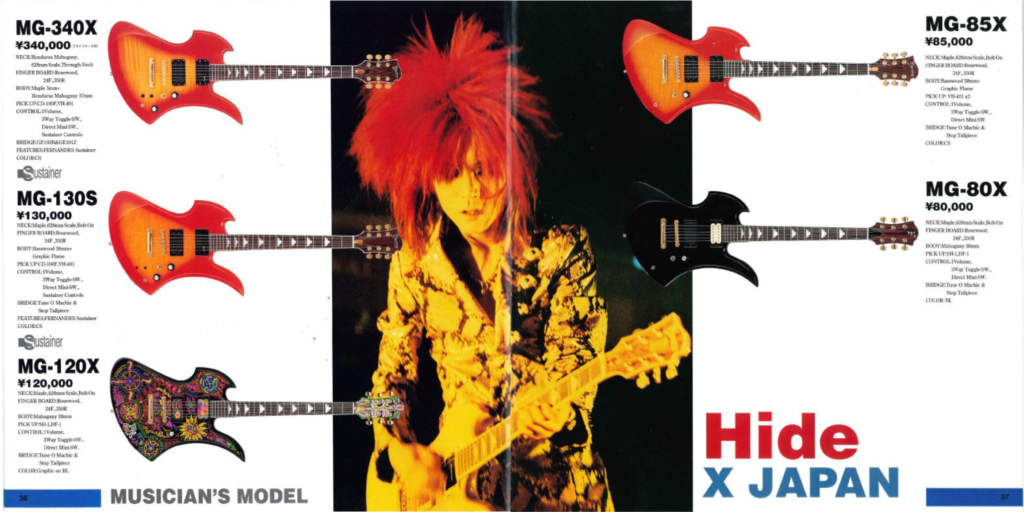
Momentum carried into the 1990s, boosted by its close ties to X (later X Japan), one of the biggest bands in the country. Guitarist Hide had been playing a Mockingbird-type guitar even before joining the band, and when his signature model appeared, it rose alongside X’s own popularity to become the company’s flagship artist model. Other members — bassist Taiji, guitarist Pata, and drummer Yoshiki — had ties to the brand as well, and the two built a genuinely deep partnership.
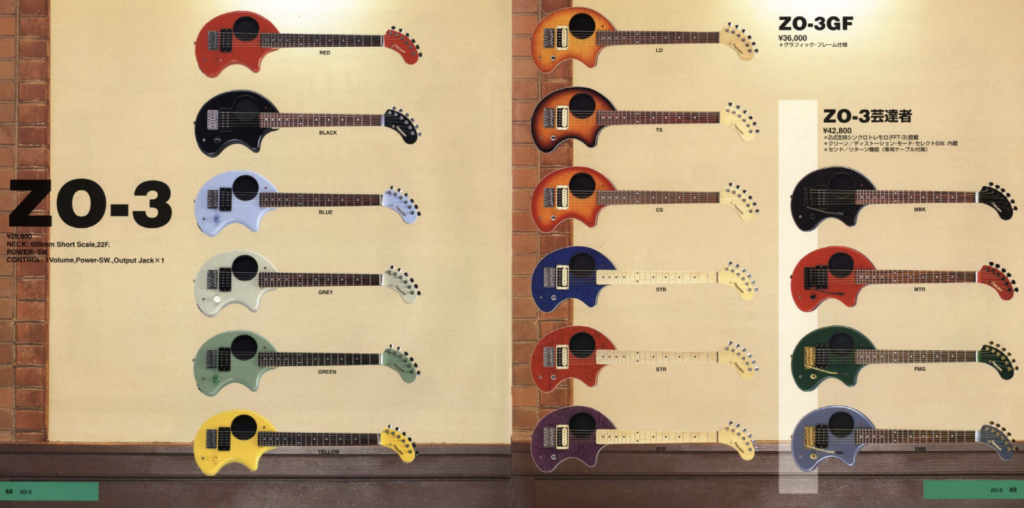
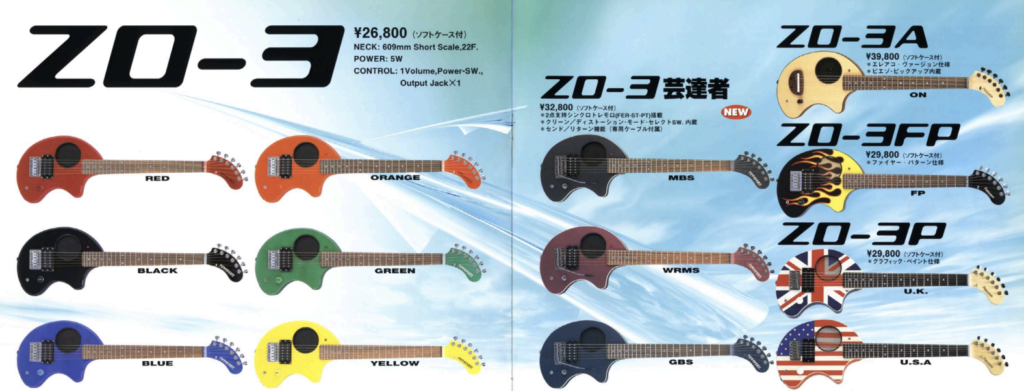
In 1990, the company released the ZO-3, a speaker-equipped mini guitar shaped like an elephant (zo-san in Japanese). Its cute design and built-in amp made it a runaway hit, selling more than 350,000 units and spawning collaborations with characters like Ultraman, Kamen Rider, and Hello Kitty.
The decade also brought the invention that made the Fernandes name known worldwide: the Sustainer. This in-house system keeps a string vibrating electromagnetically, producing near-infinite sustain. It grew out of a device called the Sustainiac, developed by American inventor Alan Hoover; the company acquired the patent, refined it in-house, and released it as the Fernandes Sustainer in the early 1990s.
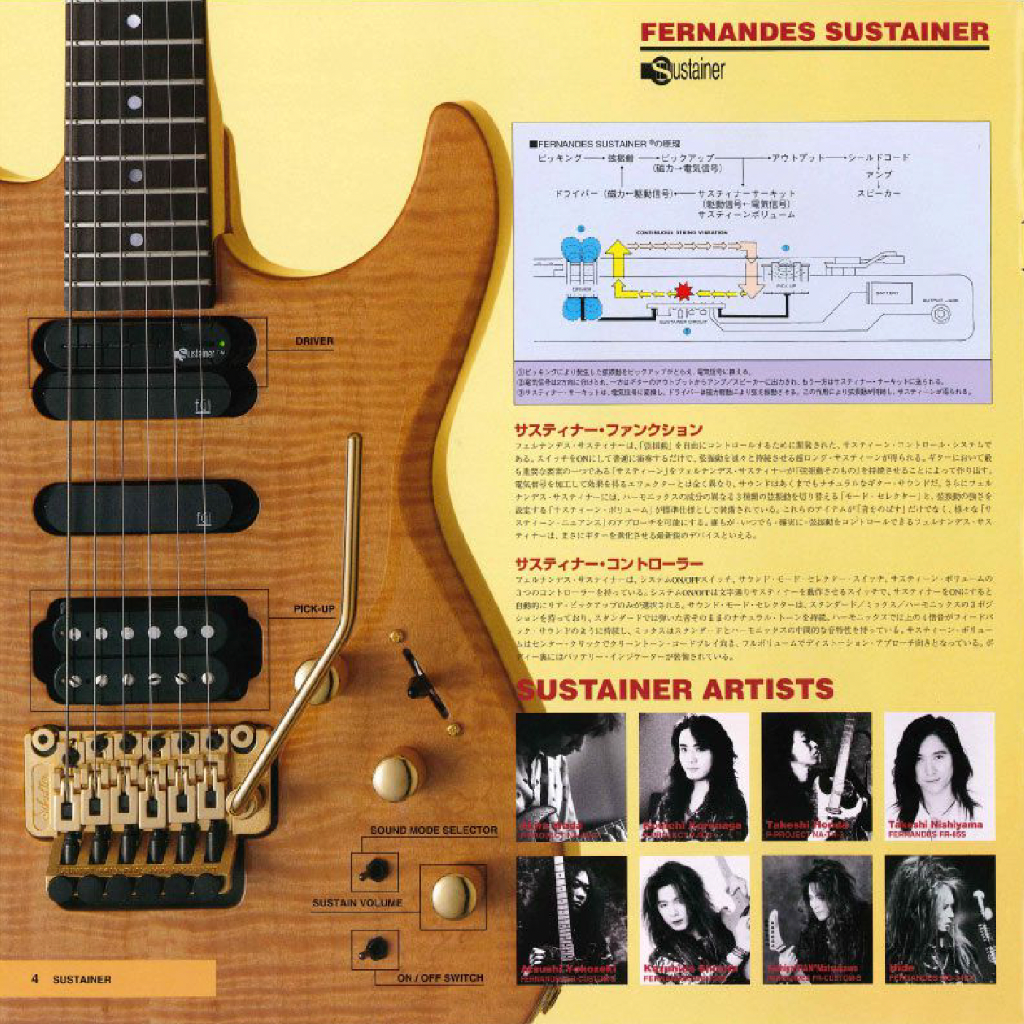
By the late 1990s and into the early 2000s, the company was at its commercial peak, with sales topping four billion yen (roughly USD $33 million at the time) and a growing overseas presence.
The 2000s and 2010s – Decline and Reissues
Even at its peak, cracks were forming. By the mid-1990s, overseas brands like Charvel and Jackson had ramped up domestic OEM production in Japan, intensifying competition. The company shifted focus toward entry-level models and overseas production, and by the 2000s it had fallen into the image of a budget brand — a reputation that proved hard to shake, even with X Japan’s backing and endorsements from Japan’s visual-kei scene.
The 2010s brought an attempt at a comeback. Like other Japanese brands, the company gradually brought manufacturing back home and reissued its glory-era 1980s models as high-end pieces. The ELT series, introduced from the mid-2010s, became the new flagship line, focused on details only achievable with Japanese craftsmanship. Around 2019, the Sustainer itself was updated with the Sustainer II, a thinner design mounted at the neck end that solved earlier limitations around pickup placement.
The 2020s – The Final Curtain
Despite these efforts, the 2020s brought the end. The pandemic hit hard: Osaka Fernandes, a closely tied business partner, went bankrupt in 2023 after demand collapsed under restrictions on live music, and the damage spread to the main company. Sales that had once topped four billion yen fell away sharply.
In July 2024, the company suspended operations and entered bankruptcy proceedings, receiving the formal decision to commence bankruptcy in 2025 — bringing the curtain down on more than fifty years of history. Rising material costs and the pandemic played a role, but every guitar maker faced those pressures; the brand, already struggling with a sales slump, simply couldn’t catch the wave of renewed guitar demand that saw brands like Fender post record sales in 2020.
Key Features of Fernandes Guitars
1. Innovation-Driven Design
Unlike many builders with in-house factories, the company focused on planning and design, outsourcing production to skilled Japanese manufacturers. This allowed it to experiment with numerous models, hardware variations, and artist specifications without being tied to a single facility.
2. The Famous “Sustainer” System
One of the brand’s signature innovations is the Sustainer — an active pickup system that drives the strings to vibrate indefinitely. It enables infinite sustain and harmonic feedback at controllable levels — a feature used by players like Steve Vai, Robert Fripp, and The Edge to create ethereal, violin-like tones. Later refined into the Sustainer II, it remains the technology most closely associated with the Fernandes name.
3. Unique Compact Models
The ZO-3 mini-guitar — featuring a short 609 mm scale and a built-in amplifier — is a prime example of the company’s playful engineering. It blurred the line between instrument and gadget, making it perfect for travel, backstage warm-ups, or bedroom jams.
Beyond that, the brand pushed boundaries with original shapes and artist-tailored designs, combining creativity with functionality. Together, these qualities made it a go-to name for guitarists seeking practical innovation infused with Japanese originality.
Who Should Choose a Fernandes Guitar
- Rock, hard rock, and metal players who prefer a compact body and 24-fret access for high-register playing. The FR Series exemplifies this with its “super-strat” layout and technical ergonomics.
- Sound designers and experimental players who want to expand their tonal palette through the Sustainer system and coil-tap options.
- Beginners or intermediate players who want a trustworthy Japanese brand offering strong cost-performance.
- Casual and travel players looking for compact models like the ZO-3, which combines portability with a built-in amp.
If you’re seeking luxury tonewoods or vintage prestige, this may not be your match — but if you want a creative, performance-oriented Japanese guitar, it’s a compelling choice.
Fernandes Lineup Overview
The Revival Series (RST / FST)
The model that first spread the brand’s name was the RST, part of The Revival series. The company studied vintage Fenders down to the smallest detail — the saddle material, the tuner construction, even the origin of the alder wood, which it sourced from Oregon and Washington — in a bid to get as close to the originals as possible. Santana reportedly bought five of these RSTs on a visit to Japan in 1982.
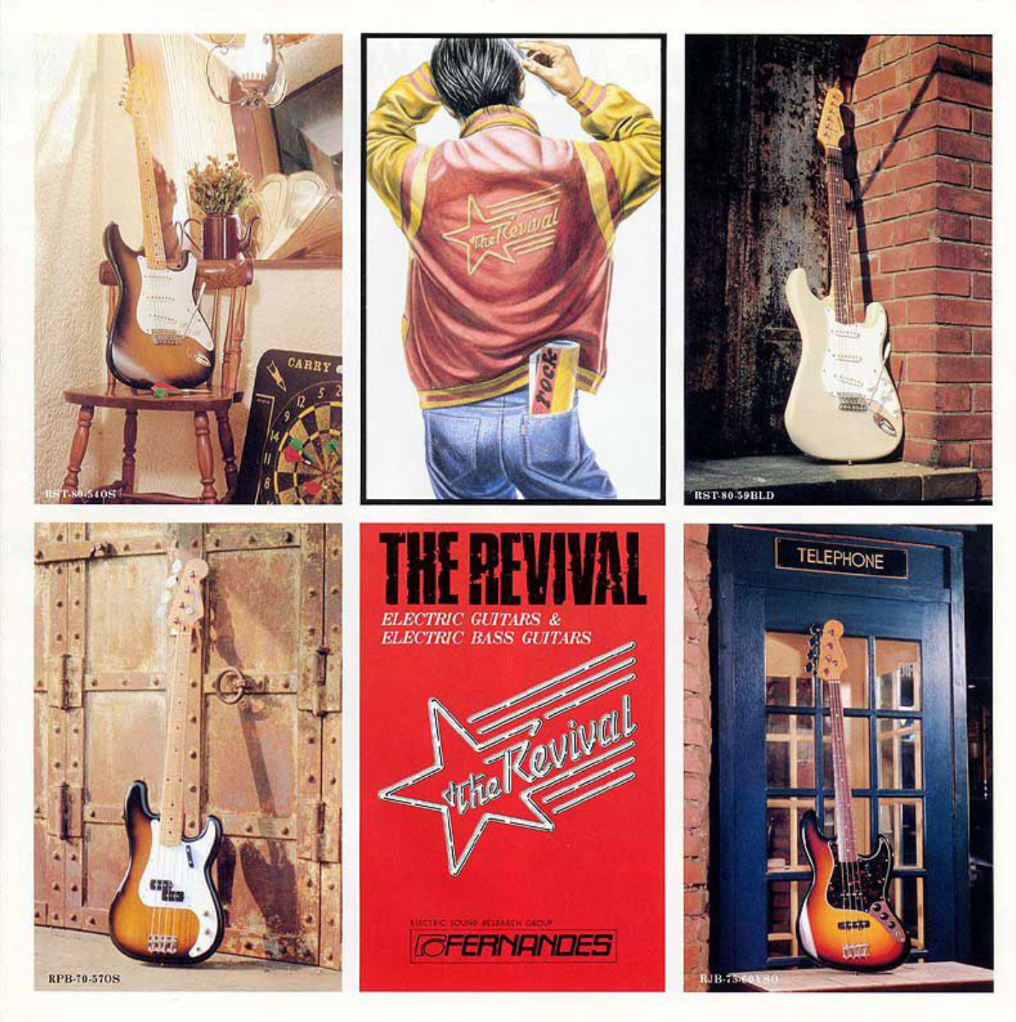
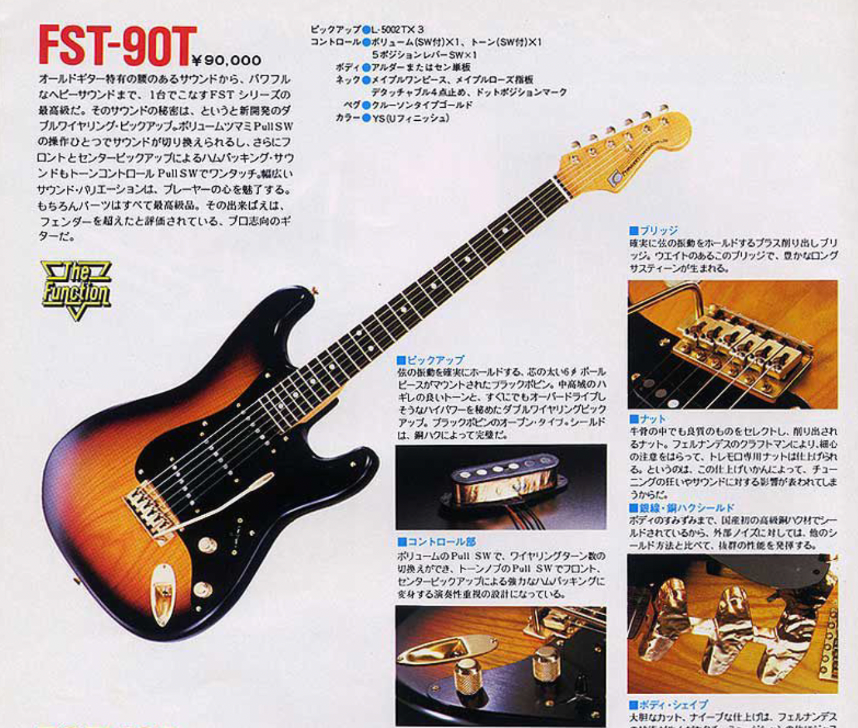
The RST grew out of the earlier FST series of the 1970s, which prioritized easy playability over strict vintage accuracy, later adding large-headstock and spaghetti-logo versions along with a 22-fret model.
FR Series
The guitar that carried the banner for decades, released from around 1985. The name stands for “Fernandes Revolver,” and the FR established the signature “Dinky” style: a slimmed-down Stratocaster shape with a bolt-on neck, 24-fret access, varied pickup layouts, and often a Floyd Rose. Many FR models came equipped with the Sustainer, making it arguably the guitar that best symbolizes the brand. While popular with metal and technical players, its balance of speed and comfort suits nearly any style. There’s even an FR EXL MBS with a stretched 666 mm scale for down-tuning, built with simple, stripped-back controls for heavy playing.
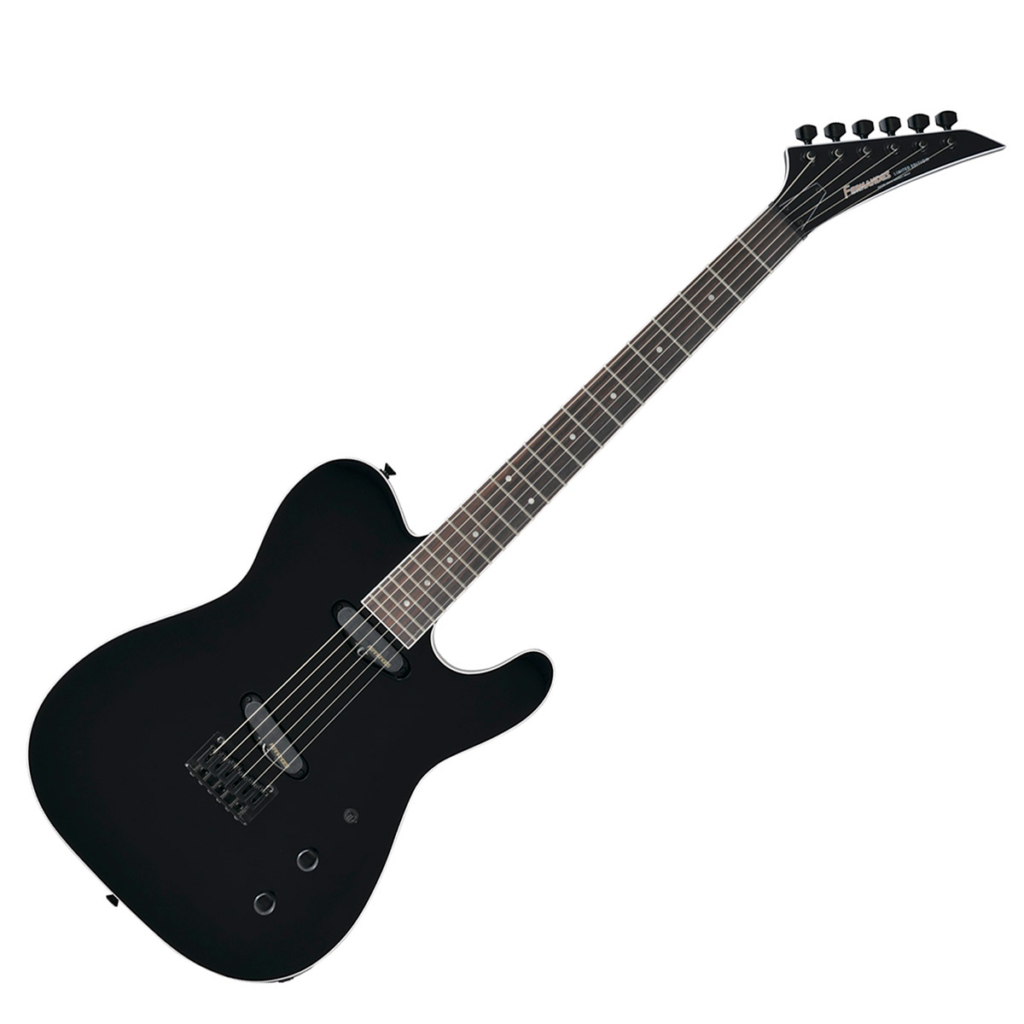
TEJ Series
A reimagined take on the Telecaster, designed for Japan’s 1980s rock and Visual Kei scenes. The TEJ features a Tele-style body paired with a pointed, Jackson-style headstock — a distinctive original. It became a major hit thanks to Tomoyasu Hotei’s use of it, which also led to his own signature model within the line. The upper-tier TEJ-DELUXE 2S carries EMG pickups, delivering a cutting rhythm tone all its own.
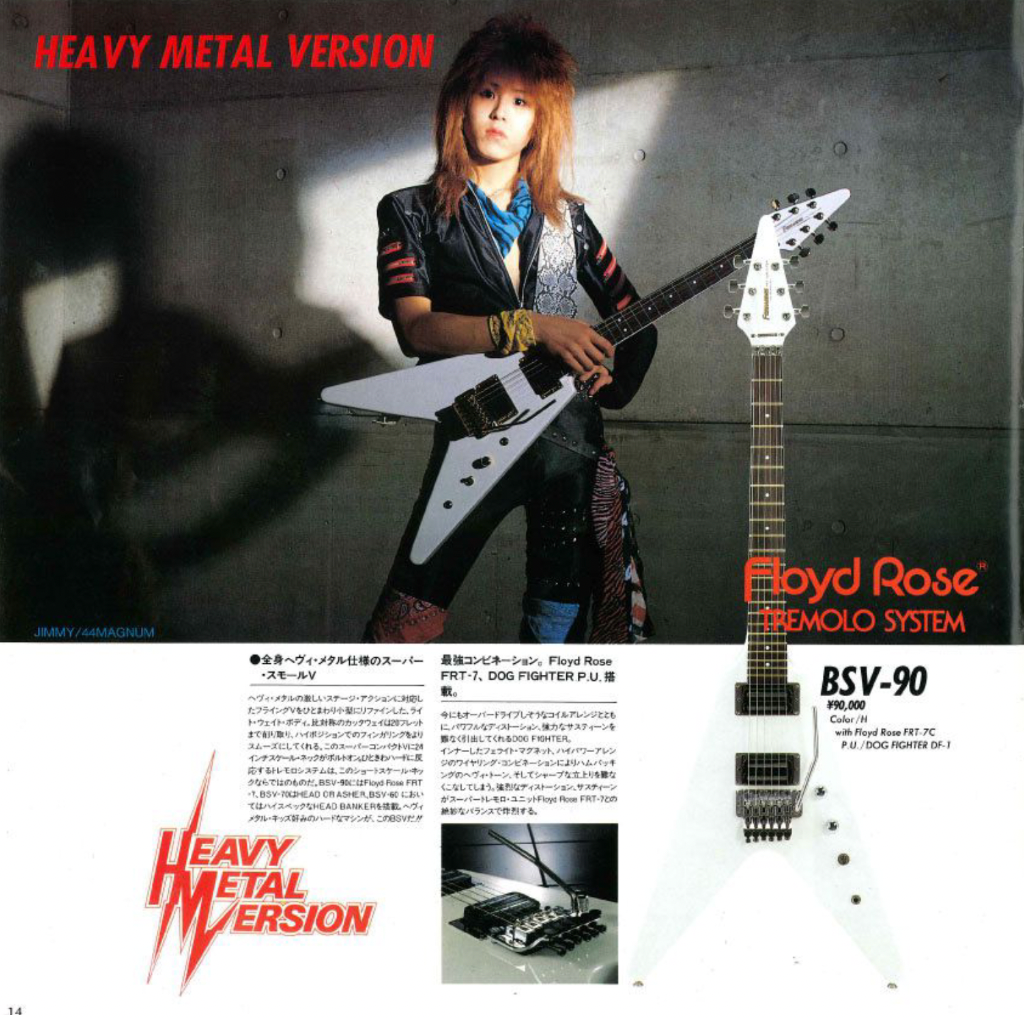
BSV Series
Under the same brand, there are Gibson-lineage models too. The BSV offers a short-scale take on the Flying V, sized down a notch to suit Japanese players, with a 609 mm scale — the same as the ZO-3. The shorter scale favors stretched-out fingering, and a deep rout behind the bridge allows for generous arm-up movement.
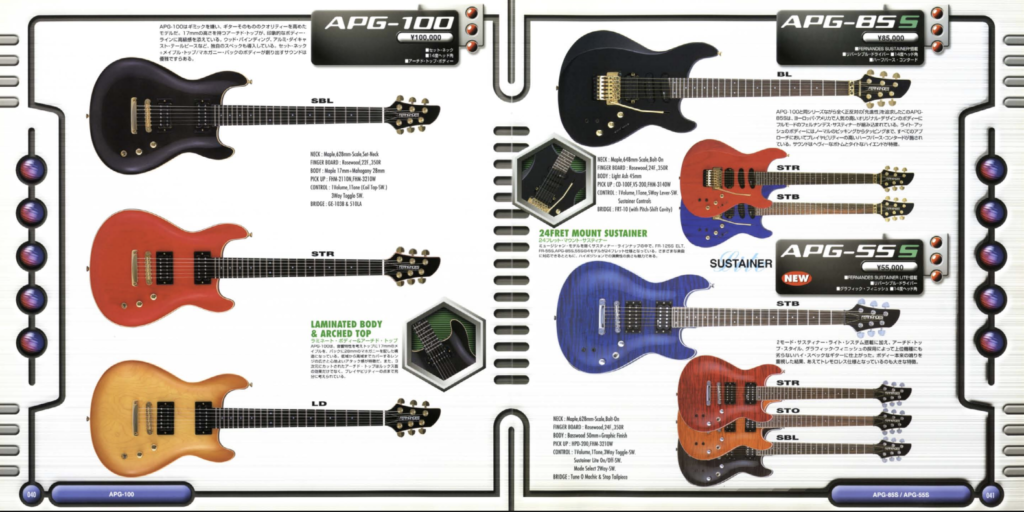
APG Series
Sold internationally as the “Dragonfly,” the APG is a PRS-style shape with a medium-scale neck, available in Tune-O-Matic and Floyd Rose versions. Earlier models used sen (a Japanese wood similar to ash), while later models moved to a maple top and mahogany back — a Les Paul–style construction that delivers that tone with far easier upper-fret access.
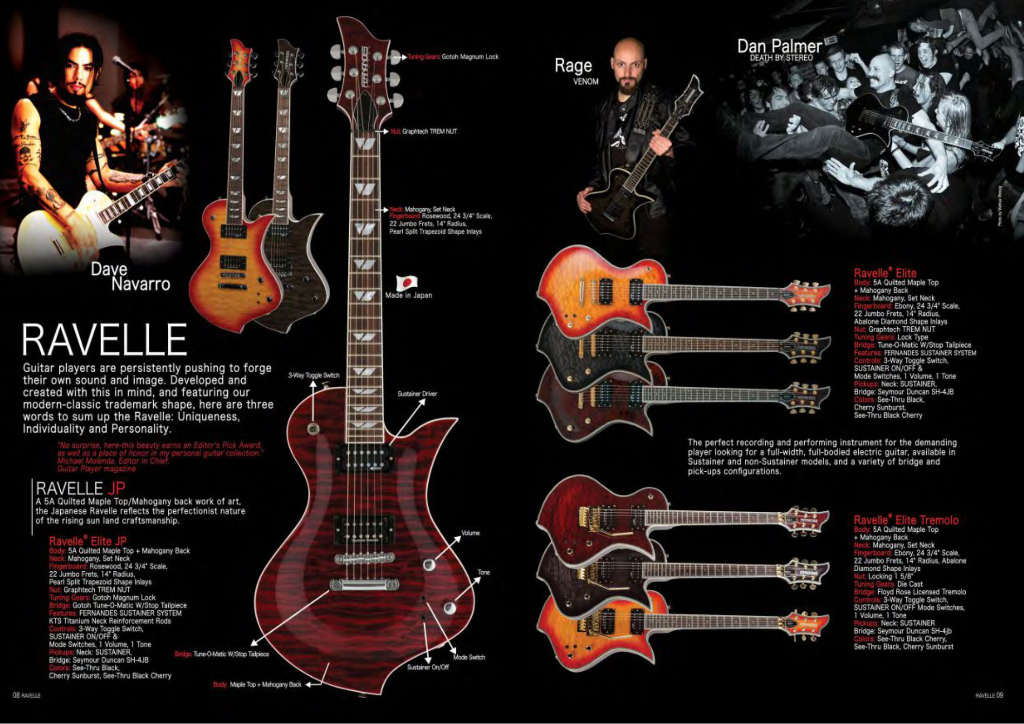
RAVELLE Series
The model that represents the brand from 2000 onward. First developed in the United States and later popularized in Japan, the RAVELLE takes the Les Paul formula and reworks it, combining warmth and depth with surprisingly easy upper-fret access. Its distinctive look and playability made it a favorite among rock and hard rock guitarists.
ZO-3 Series
The legendary mini guitar featuring a built-in amplifier and speaker. Upon release, it achieved massive success in Japan, becoming both a practical tool and a cultural phenomenon. To this day, the ZO-3 remains one of the most recognizable Japanese guitar silhouettes ever produced.
Artist Models and Other Brands
The company also produced numerous artist models and custom projects, including the MG Series — home to Hide’s signature guitars — and the professional-grade P-Project line. In addition, it developed the BURNY brand, a domestic line specializing in Gibson-style copy models such as Les Paul, SG, and archtop types.
Summary
Fernandes Guitars tells the story of a brand that evolved from copy-maker to creator. From its early copy models to cutting-edge designs like the ZO-3 and Sustainer-equipped FRs, it continually redefined what a Japanese guitar could be.
Today, it stands as a legacy of ingenuity and accessibility — a reminder that true innovation doesn’t come only from luxury, but also from curiosity.
Whether you’re a touring artist, a home player, or a collector of unique Japanese designs, this brand deserves a place in your MIJ lineup.
FAQ
When was Fernandes founded?
Fernandes traces back to 1969, when it started in Ochanomizu, Tokyo, as a company called Saito Gakki. It changed its name to Fernandes Co., Ltd. in 1972 and began producing electric guitars, basses, and accessories.
What is the Fernandes Sustainer?
The Sustainer is the brand’s signature innovation, an active pickup system that keeps the strings vibrating electromagnetically for near-infinite sustain. It grew out of a device called the Sustainiac, developed by American inventor Alan Hoover, which the company refined and released as the Fernandes Sustainer in the early 1990s.
What is the difference between the Fernandes and Burny brands?
In its copy era, the company split its models across two brands. Fender-style copies, such as the FST series, were sold under the Fernandes name, while Gibson-style copies were sold under the Burny label. Burny remains a well-known name for Japanese Gibson-style copies to this day.
What is the Fernandes ZO-3?
The ZO-3 is a compact mini guitar with a built-in amplifier and speaker, shaped like an elephant (zo-san in Japanese). Released in 1990, it sold over 350,000 units and became a pop-culture phenomenon, spawning collaborations with characters like Ultraman, Kamen Rider, and Hello Kitty.
Which artists have used the brand’s guitars?
The brand worked with many artists over the years. The Sustainer attracted players like Steve Vai, Robert Fripp, and The Edge, while in Japan it built a deep partnership with X Japan, including Hide’s signature MG models. Tomoyasu Hotei of BOØWY also had a defining signature model.
Did Fernandes go out of business?
Yes. After a long decline, the company suspended operations in July 2024 and entered bankruptcy proceedings, receiving the formal decision to commence bankruptcy in 2025. Its guitars remain admired by players and collectors worldwide.