
Tips
Learn how to buy Japanese guitars in Japan or from Japanese guitar stores.
Practical guidance on domestic marketplaces, condition terminology, shop chains, and what to check before you commit to a listing you can’t play first.
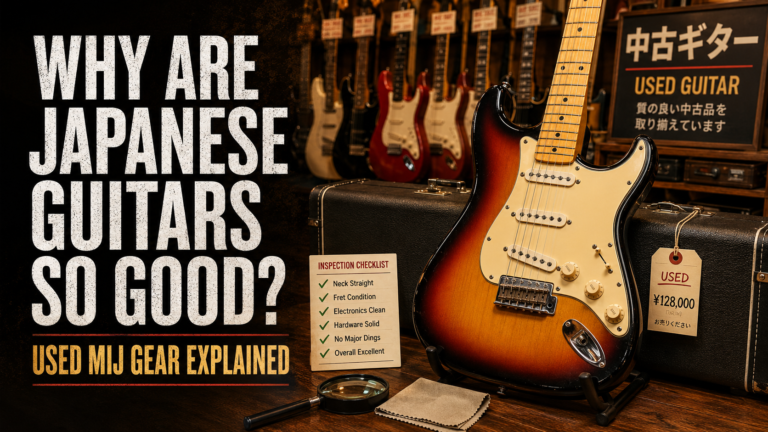
Why Are Japanese Guitars So Good? Used MIJ Gear Explained
Ask any collector why Japanese guitars are so good and you’ll usually get an answer…
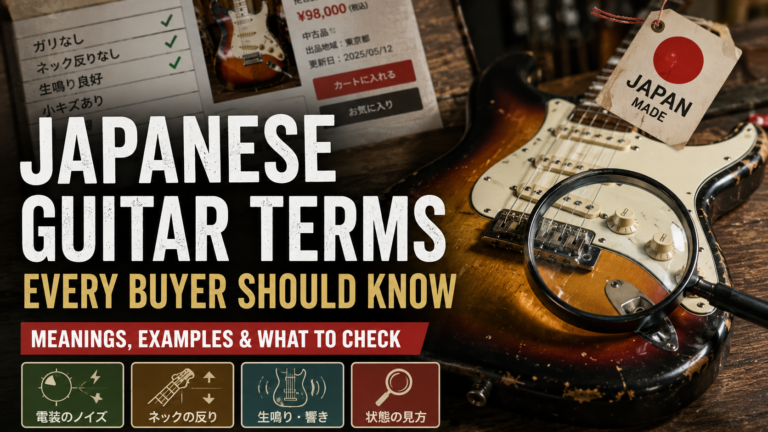
Japanese Guitar Terms Every Buyer Should Know: Gari, Sori, and Nari Explained
Browse enough Japanese guitar listings — on Digimart, Yahoo Auctions, Mercari, or a shop’s own…

Guitar Shops in Japan: A Buyer’s Guide to the Major Chains
If you’ve spent any time browsing Yahoo Auctions, Mercari, or Digimart for a Japanese-made guitar,…
Buying a Japanese guitar from outside Japan is not difficult, but almost nothing about the process is self-explanatory. The listings are in Japanese. Condition is described using a vocabulary that has no direct English equivalent. The major marketplaces don’t ship internationally, so most transactions run through a proxy service. Prices that look like bargains sometimes aren’t, once shipping, proxy fees, and import duties are counted.
None of this is a reason to avoid it. Japanese domestic pricing on used Japanese instruments is frequently well below what the same guitar costs abroad, and the domestic used market is unusually well-stocked and unusually honest about condition. It just requires knowing how the system works.
These guides cover that ground.
Before You Buy: The Short Version
If you read nothing else on this page, read this.
Learn the condition vocabulary first. Japanese listings describe condition with specific terms — フレット (fret wear), 打痕 (dings), 反り (neck relief), ネック起き — and machine translation handles them badly. A listing that translates as “there is some warping” can mean anything from a truss rod adjustment to a guitar that isn’t worth shipping. Knowing five or six of these terms prevents most bad purchases.
Identify the factory, not just the brand. Japanese brands changed manufacturers over time, sometimes mid-year. The same brand name across two different years can mean two different quality tiers. Serial numbers and hardware details usually settle it.
Calculate the true landed cost. Item price, domestic shipping within Japan, proxy service commission, international shipping, and your own country’s import duty and VAT. A guitar that looks 40% cheaper than the local market can end up roughly even once everything is counted — or still substantially cheaper, but you should know which before you bid.
Understand you can’t return it. Individual sellers on Japanese auction platforms typically sell as-is with no returns, and a proxy service won’t inspect the instrument for you beyond checking that the box arrived. Established shops are different and usually do offer a short inspection window — which is often worth the higher price.
Check the shipping method. Guitars require specific handling and not every proxy service packs instruments properly. Ask before you commit.
Frequently Asked Questions
Can I buy directly from Japanese shops if I live overseas? Some of the larger chains ship internationally and have English-language support; many domestic shops and nearly all individual sellers do not. Where direct purchase is possible, it’s almost always the better route — fewer intermediaries and some form of inspection.
Are Japanese guitars actually cheaper in Japan? Usually yes on the used market, sometimes substantially. New domestic-market models are a different calculation, since export pricing includes distribution margins that domestic pricing doesn’t. Whether the gap survives shipping and duty depends on your country.
Is a Japan-market guitar different from the export version? It can be. Pickups, hardware, finish options, and occasionally body woods differ between domestic and export versions of the same model number. It’s not automatically an upgrade — but it is frequently a difference worth knowing about.
What about import duties? Rates depend entirely on your country, and musical instruments are sometimes classified in ways that surprise buyers. Check your own customs schedule before committing. Nothing on this site is customs or tax advice.