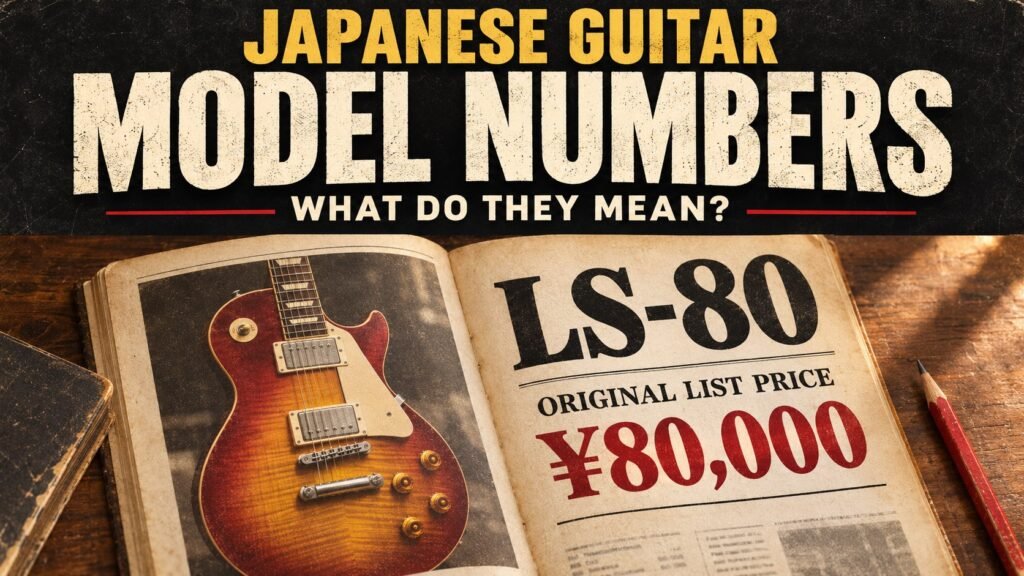
Many Japanese guitars from the 1970s and 1980s carry their original list price in the model number. A Greco EG-360 was ¥36,000 and a Fender Japan ST57-115 was ¥115,000. Once you can read it, a used listing tells you at a glance where a guitar sat in its maker’s lineup.
Japanese Model Numbers Quick Facts
- What the number means: The original list price in yen
- Common on: Japanese guitars of the 1970s and 1980s, such as Greco, Tokai, Burny and Fender Japan
- Two ways to read it: Thousands of yen (LS-80 = ¥80,000) or hundreds of yen (EG-360 = ¥36,000)
- Why it matters: Higher numbers usually mean better parts and finishes in the same line
- Watch out for: Brands and eras that don’t follow the rule, and very different prices back then
How the Model Number Shows the Price
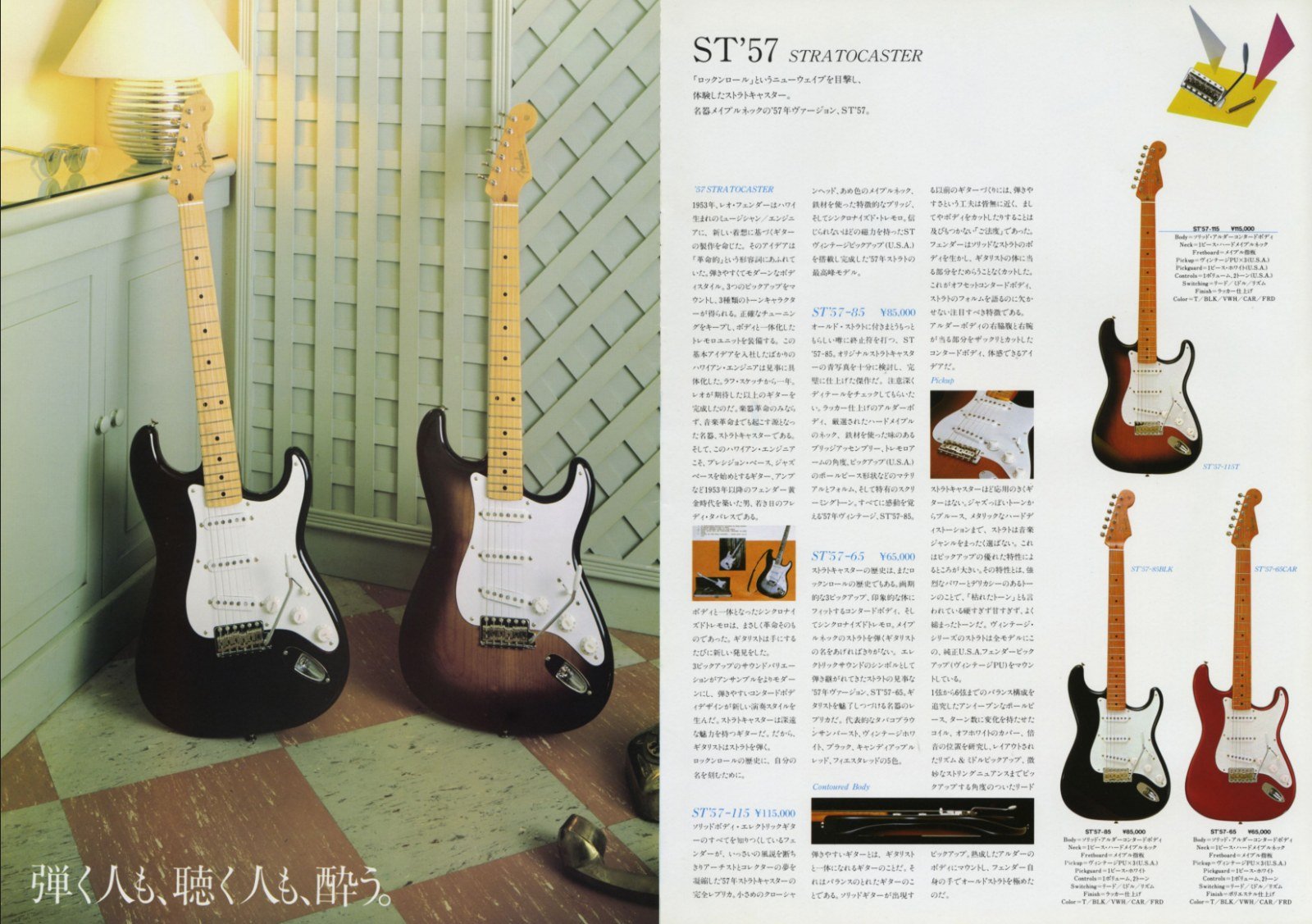
Putting the price in the model number was common on Japanese guitars of the time. Fender Japan’s JV-era catalogs show it clearly: the last number is the price in thousands of yen.
Reading a Japanese model number
Chart: MIJ Guitar Guide, based on the Fender Japan JV catalog.
Not every maker counted the same way. Some used thousands of yen, others hundreds. If one reading gives an impossible price for the era, try the other.
| Brand | Example | Read as | List price |
|---|---|---|---|
| Fender Japan | ST57-115 | Thousands | ¥115,000 |
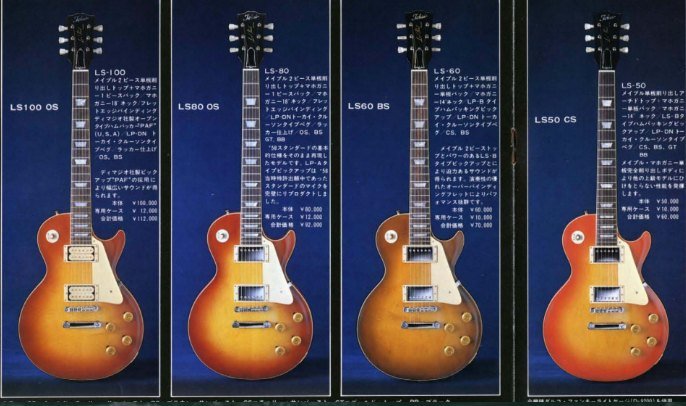
| Tokai | LS-80 | Thousands | ¥80,000 |
| Burny | RLG-150 | Thousands | ¥150,000 |
| Greco | EG-360 | Hundreds | ¥36,000 |
| Greco | EGF1800 | Hundreds | ¥180,000 |
Entry, Mid or High-End? Reading the Grade
For guitars of the late 1970s and early 1980s, the price ranges below are a useful rule of thumb for where a model sat.
Where common models sat (late 1970s to early 1980s)
Grade:EntryLower-midMidHigh-end
Chart: MIJ Guitar Guide, based on Greco, Tokai, Fender Japan and Burny catalog prices. Grades are the author’s rule of thumb. USD at about ¥230 to the dollar, roughly the rate of the period.
My Take
My rough guide: up to about ¥50,000 is entry level, around ¥70,000 to ¥100,000 is the middle, and ¥150,000 and up is high-end. So if your favorite guitar is a 600, like a Greco EG600PB, it sits at the lower end of the middle.
Same Line, Different Grades: What the Extra Money Bought
The number becomes really useful when you compare models in the same line. A higher grade usually meant better pickups, finish or wood.
| Line | Lower grade | Higher grade | What changed |
|---|---|---|---|
| Fender Japan JV Strat | ST57-65 (¥65,000) | ST57-115 (¥115,000) | Polyester to lacquer finish; U.S.-made pickups, pickguard and controls on the 115 |
| Tokai Les Paul Reborn | LS-50 / LS-60 | LS-80 and up | Steeper 18-degree headstock and a one-piece solid mahogany back |
| Greco EG (1980) | EG600PB / PR (¥60,000) | EGF1000 (¥100,000) and up | Super Power decal to Super Real; flame top and Greco’s DRY or DiMarzio pickups |
My Take
Check what else was in the same line. If a 600 was the top model, it was the best that line had to offer. But if there was also a 1000 or a 1500, the 600 may have cheaper pickups or a simpler finish. That said, a lower grade isn’t automatically worse to play. Tone and feel are personal, so it comes down to what you like.
Prices Then vs Now
A model number is the price at the time, not today’s money. Prices in Japan roughly tripled between 1971 and 2020, so an early-1970s number means much more than it looks.
Chart: MIJ Guitar Guide. Adjusted with Japan’s consumer price index (2020 = 100; 1971: 32.9, 1980: 73.2) from the Cabinet Office. Rough estimates.
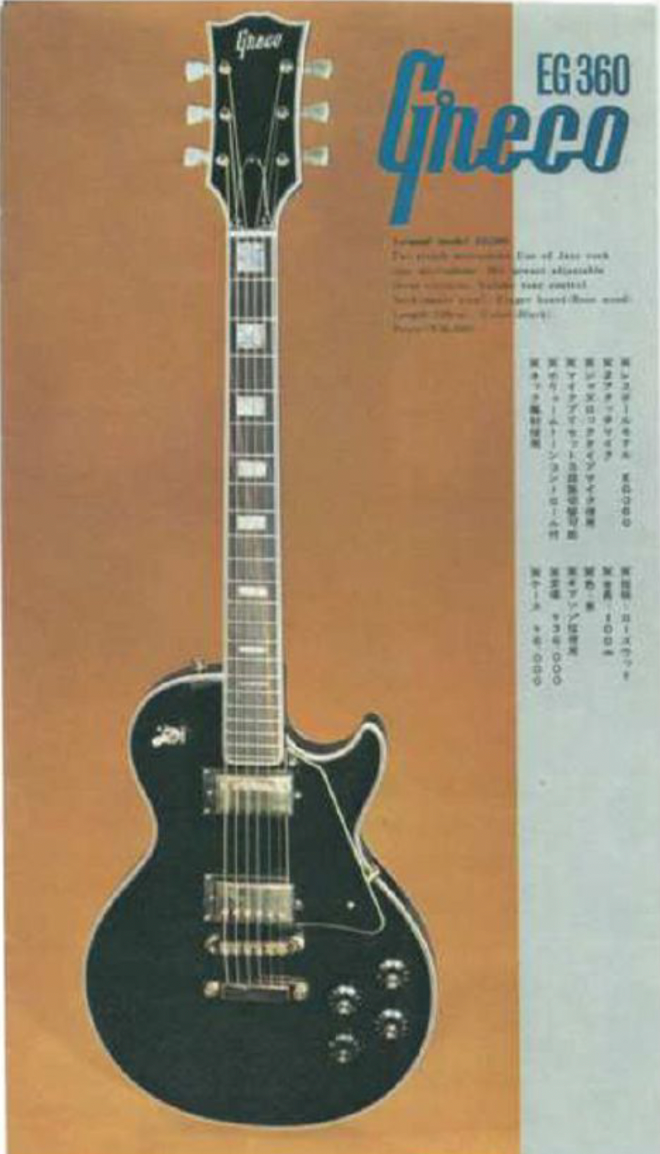
The EG-360 came out in 1971 as Japan’s first serious Les Paul copy. Its ¥36,000 price was about $100 at the ¥360-per-dollar rate of the time, and around ¥109,000 in 2020 terms. A “360” was not a cheap guitar in its day.
When the Rule Doesn’t Work
- Not every brand used it. Ibanez model numbers are series codes: a later DT400 reissue sold for ¥70,000.
- Suffix letters can add to the price. On Tokai Springy Sound models, an N after the number meant a natural finish priced ¥5,000 higher (Tokai Springy Sound).
- The number is the price in that catalog year. Later catalogs and reissues may use different numbers, so check the catalog for the year your guitar was made.
Final Thoughts
A model number is a quick way to see a Japanese guitar’s original grade, especially when you compare it with its siblings. Use it as a starting point, then check the specs and, above all, how the guitar plays. If you’re shopping from overseas, see How to Buy a Guitar from Japan.
Frequently Asked Questions
What does the number in a Japanese guitar model name mean?
On many Japanese guitars of the 1970s and 1980s, it is the original list price in yen. For example, a Tokai LS-80 was ¥80,000 and a Fender Japan ST57-115 was ¥115,000.
Is the number in thousands or hundreds of yen?
It depends on the brand. Tokai, Burny and Fender Japan used thousands (LS-80 = ¥80,000), while Greco used hundreds (EG-360 = ¥36,000).
Does a higher model number mean a better guitar?
Within the same line, a higher number usually meant better parts or finish, such as lacquer instead of polyester on Fender Japan JV Strats. Whether it plays or sounds better is personal.
Do all Japanese brands put the price in the model number?
No. Ibanez, for example, uses series codes. Check the brand’s catalog for the year your guitar was made.
How much was ¥36,000 in 1971 in today’s money?
Using Japan’s consumer price index, about ¥109,000 in 2020 prices. It was a serious guitar at the time.