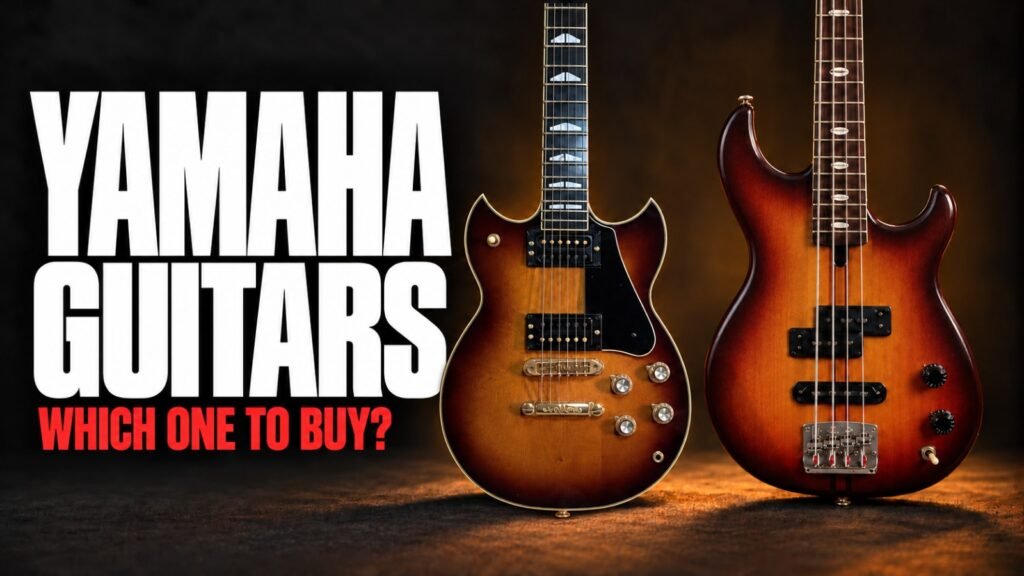
Yamaha is the Hamamatsu instrument maker that launched its folk guitars, electric guitars and basses together in 1966. It is best known for the FG180, the SG-2000, the BB bass and the Pacifica.
This guide explains what makes Yamaha different, its main series, and which Yamaha guitar to buy.
Yamaha Quick Facts
- Founded: 1887 (first organ) / Nippon Gakki founded 1897, Hamamatsu
- Guitars: Full guitar lineup from 1966
- Claim to fame: FG180, which Yamaha calls Japan's first domestically made folk guitar
- Breakthrough artists: Carlos Santana, Billy Sheehan, Nathan East, Mike Stern
- Signature models: FG, L Series, SG, BB, Pacifica, Revstar
- Brand family: Yamaha Guitar Development (LA); Yamaha Guitar Group (Line 6, Ampeg, Córdoba, Guild)
Start here
- Yamaha Pacifica Guide: the all-rounder, from first electric to made in Japan
- Yamaha SG History: every SG from 1966 to the SG1820
- What Is a Folk Guitar?: the FG and what the term means in Japan
- Yamaha Guitars History: the full story, from 1887 to today
- Yamaha History in Brief
- What Makes Yamaha Guitars Different
- Which Yamaha Should You Buy?
- The Yamaha Guitar Lineup
- FG Series: The Folk Guitar That Started Japan's Acoustic Boom
- L Series: Luxury Acoustics That Open Up Like Fine Wine
- SG-2000: The Santana-Tuned Double-Cut Built for Sustain
- BB Series: The 1977 Bass Design That Still Holds Up
- Pacifica: The LA Studio Guitar That Became Everyone's First Electric
- Revstar: A Cafe Racer You Can Plug In
- The Yamaha Brand Family
- Notable Yamaha Players
- Buying a Yamaha Guitar
- Final Thoughts
- FAQ
- All Yamaha Articles
Yamaha History in Brief
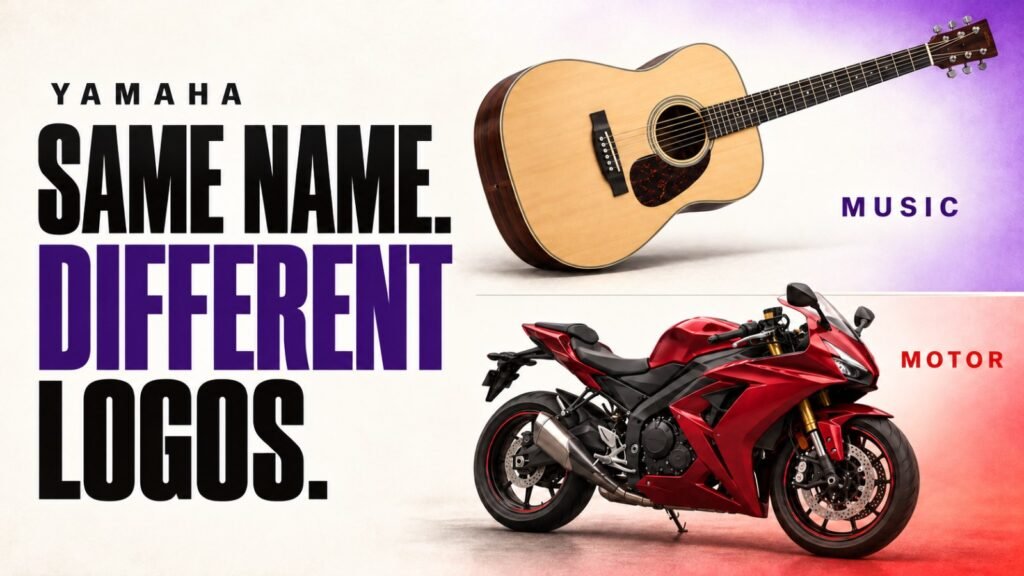
It all started in 1887, when Torakusu Yamaha repaired a broken organ at an elementary school in Hamamatsu and then built one of his own. He founded Nippon Gakki in 1897, and piano production followed in 1900. Along the way Yamaha also built aircraft propellers, which took the same precision as piano work, and after the war it moved into motorcycles with the YA-1 of 1955. That is why Yamaha Motor, a separate company today, still shares the tuning-fork logo.
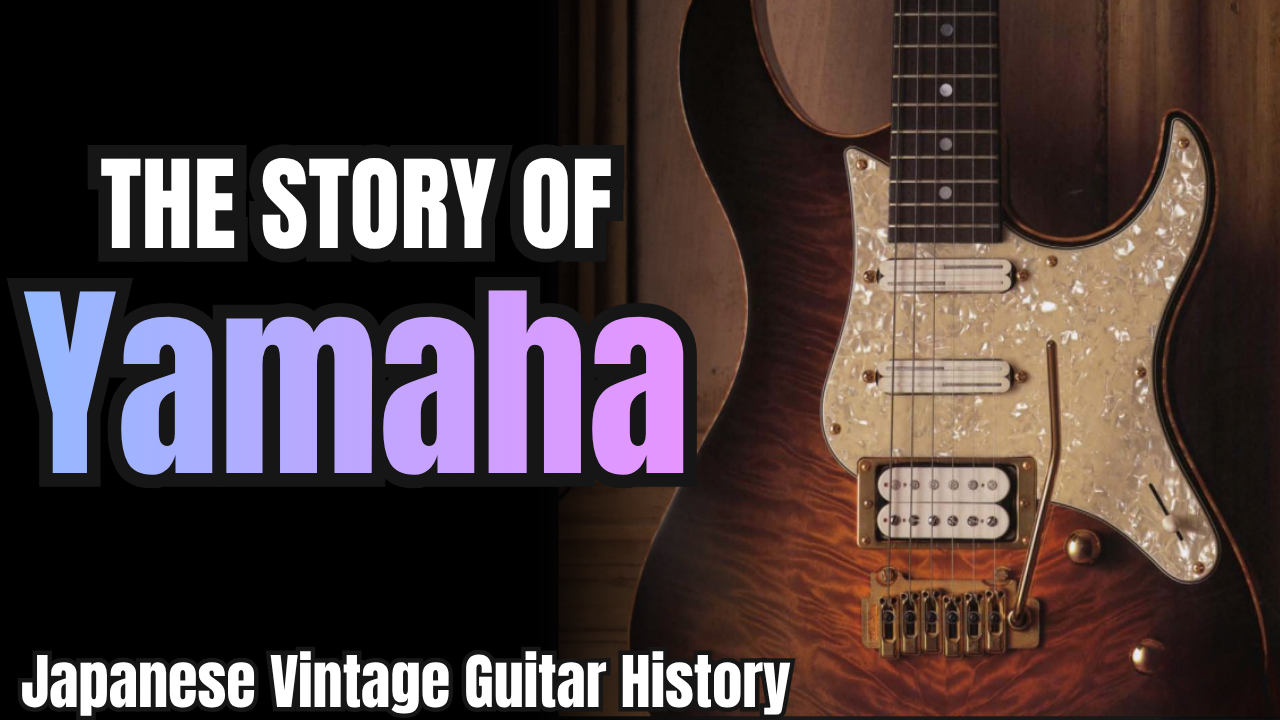
Prefer the full story?
Yamaha Guitars History: From an Organ Repair to 60 Years of Icons
From an organ repair in 1887 to Yamaha’s guitars today.
What Makes Yamaha Guitars Different
A Broken-In Guitar on Day One: A.R.E. and I.R.A.
Two Yamaha processes aim to give a brand-new guitar the sound and feel of one that has already been played in.
| A.R.E. | I.R.A. | |
|---|---|---|
| Treats | Raw wood, before the guitar is built | The finished instrument |
| How | Controlled heat, humidity and pressure (no chemicals) | Specific vibrations applied to the guitar |
| Goal | New wood that sounds like long-played wood | A guitar that feels “played in” from day one |
| Since | 2008 on guitars (research began in the late 1990s) | In use by 2009 |
| Found on | Acoustics such as the L Series and FG/FS Red Label | BB Pro basses, Revstar Professional, SG1820 and more |
Designing Resonance with Data: Acoustic Design
Yamaha analyzes great-sounding guitars, recreates their vibration in 3D models, runs simulations, then refines prototype after prototype with artist feedback. Instead of chasing tone by feel alone, it designs the resonance first. You can hear the result in the second-generation Revstar’s chambered bodies.
Which Yamaha Should You Buy?
| You play… | BeginnerEntry models | IntermediateMid range | AdvancedTop of the line |
|---|---|---|---|
| All-round electricPacifica | PAC112 | Pacifica Standard Plus | Pacifica Professional |
| Modern rockRevstar | Revstar Element | Revstar Standard | Revstar Professional |
| Vintage double-cutSG | – | SG-1000 (used) | SG-2000 (used) / SG1820 |
| AcousticFG / FS | FG800 / FS800 | FG / FS Red Label | L Series |
| BassBB | BB234 | BB434 / BB734A | BB Pro (BBP34) |
My pick
The Pacifica
If you are buying a Yamaha, start with the Pacifica. It is the all-rounder of the lineup, and there are so many variations that it fits everyone from a first-time player to a working pro.
The Yamaha Guitar Lineup
FG Series: The Folk Guitar That Started Japan’s Acoustic Boom
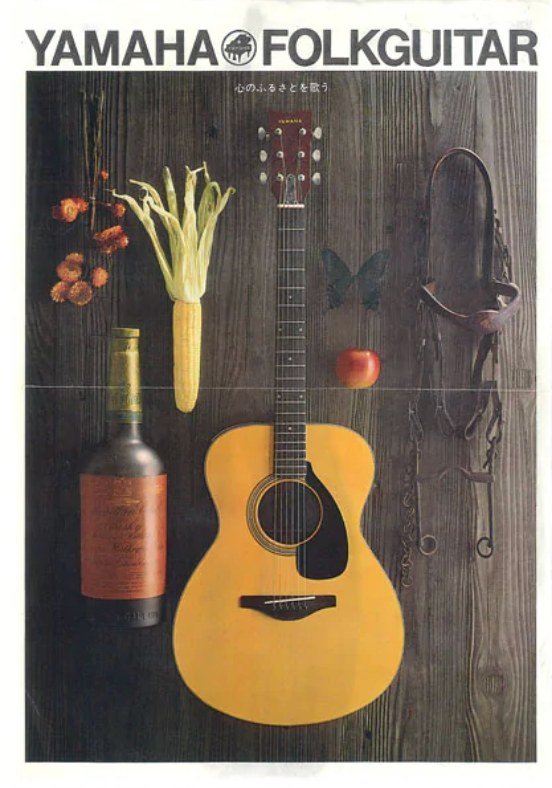
The FG180 and FG150 of October 1966 are what Yamaha calls Japan’s first domestically made folk guitars. They arrived at the height of Japan’s folk music boom, and a whole generation learned on an FG. In Japan, a “folk guitar” simply means a steel-string acoustic smaller than a dreadnought with a deep waist, roughly Martin 00 to 000 size.
| Feature | What it means for you |
|---|---|
| Laminated body, lacquer finish | stable and tough, yet carefully built and good-sounding |
| Label color (Light Green Label, then Red Label) | the quickest way to date an early FG |
| FG1500 / FG2000 (1971) | Yamaha’s best materials and handwork of the day for a more refined voice; the FG2500 is the 12-string |
| FG350E (1972) | a built-in pickup, so you can plug straight into a PA |
How to choose: Want vintage Japanese character for little money? Get a Red Label FG180. Want the top-grade build of the era? Hunt for an FG1500 or FG2000.
Deep dive
What Is a Folk Guitar? Why Japan Uses the Term, and the Yamaha FG That Started It
What “folk guitar” means in Japan, and the FG line from 1966 to today.
Fun detail: the model number was the price. The FG180 sold for ¥18,000.
L Series: Luxury Acoustics That Open Up Like Fine Wine
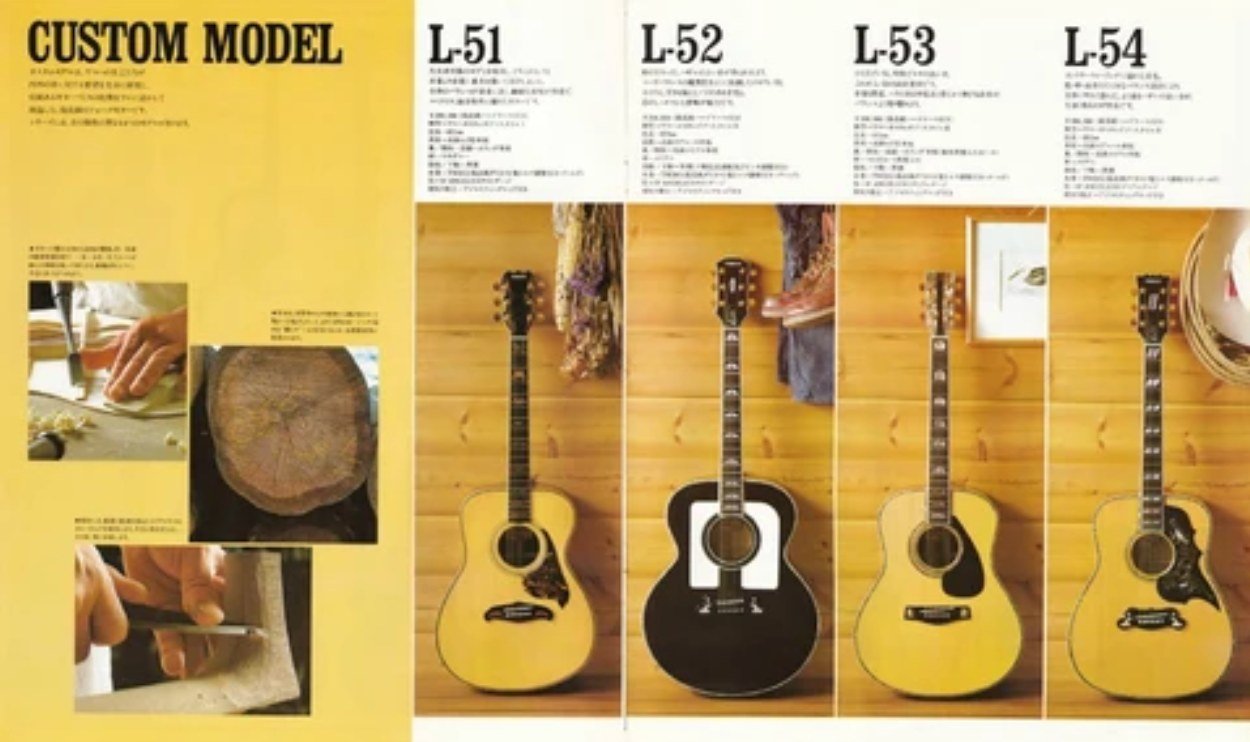
The “L” stands for Luxury. Launched in 1974, the series sat above the FG line. In 1975 came four models fans now call the Big Four, very expensive for the time and reportedly built with little concern for profit.
| Model | Character |
|---|---|
| L-51, asymmetrical body | designed sound-first for a balanced, delicate voice |
| L-52, jumbo body with white double pickguards | clear, crisp chords |
| L-53, abalone headstock inlay and herringbone-style binding | a luxurious look with a focused tone that cuts through |
| L-54, detailed inlay and original pickguard | bright, clear and powerful |
How to choose: Fingerstyle players should look at the L-51; strummers and singer-songwriters will love the L-52. For an L without vintage prices, go for the current series, redesigned in 1985 and again in 2004.
The developer behind the 2004 redesign compared the L sound to wine: modest at first, but the more you play it, the richer the low end becomes.
SG-2000: The Santana-Tuned Double-Cut Built for Sustain
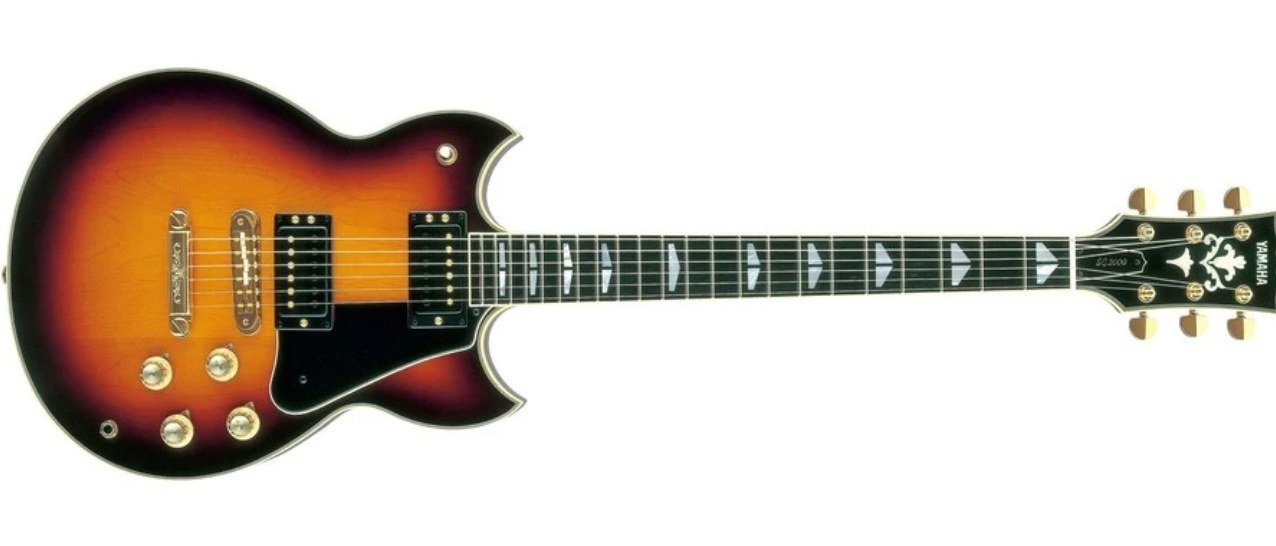
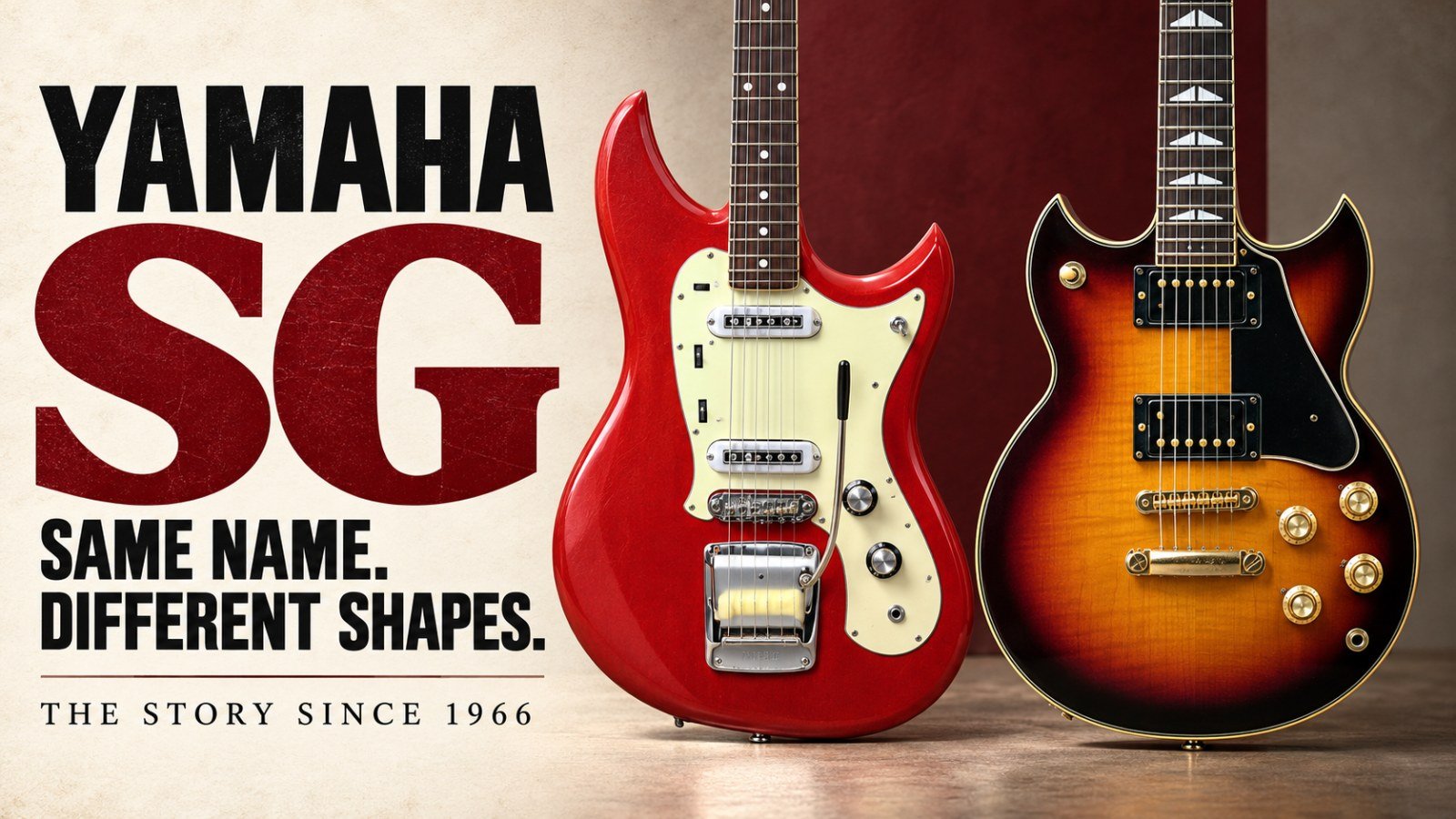
The 1966 SG-2 looked more like a Jazzmaster than today’s SG. The shape kept evolving until the SG-175 of November 1974, with Honduras mahogany, an ebony fingerboard and a floating pickguard, combining Gibson and Fender ideas with Yamaha parts. Carlos Santana played one on his 1974 Japan tour, and his feedback shaped the SG-2000 and the set-neck SG-1000 of July 1976. I cover that story in detail in Yamaha SG2000: The Guitar Shaped by Santana’s Ideas.
| Feature | What it does for you |
|---|---|
| T-cross construction (neck and body center as one piece) | long, even sustain |
| Metal sustain plate under the bridge | even more sustain and a firm attack |
| SG1820 (2010): set neck, rosewood board, deeper carve, no back contour | a punchier rock voice, with humbuckers (SG1820), P-90s (SG1802) or EMGs (SG1820A) |
How to choose: For the classic Santana and Takanaka sound, find a vintage SG-2000; the SG-1000 is the budget route to the same look. For a modern rock workhorse, the SG1820 fits, though it divides purists.
Deep dive
Yamaha SG History: From the 1966 SG-2 to the SG-2000 and Today’s SG1820
Every Yamaha SG from the offset SG-2 of 1966 to the SG1820.
BB Series: The 1977 Bass Design That Still Holds Up
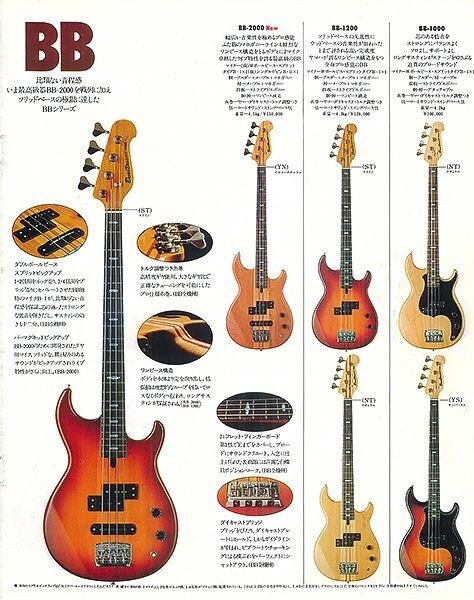
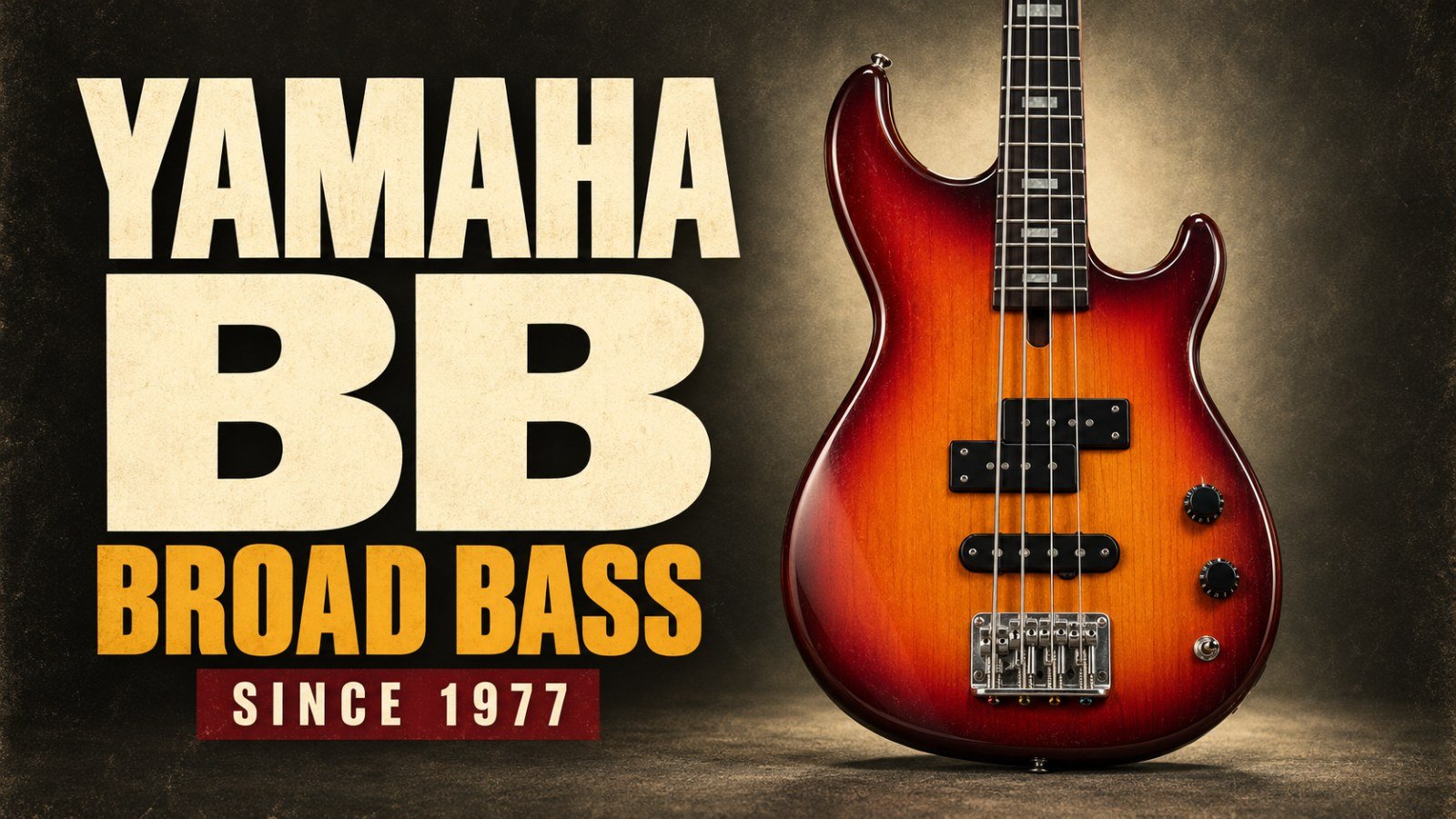
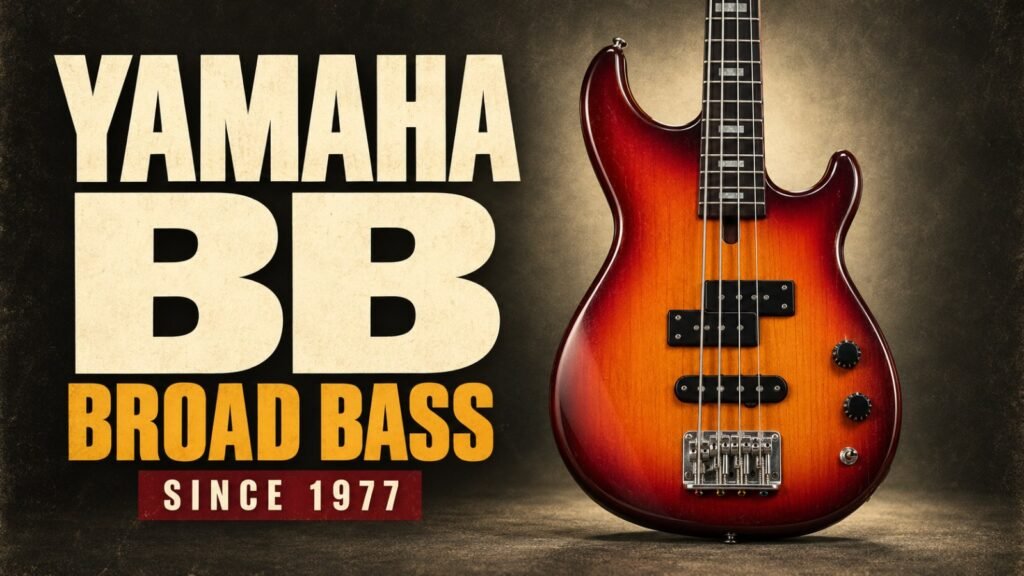
The BB launched in 1977 with the neck-through BB1200, and its basic design has barely changed since. It has served jazz, fusion, rock and pop players alike.
| Feature | What it does for you |
|---|---|
| Neck-through (BB1200 / BB2000) | sustain and even response up the neck |
| BB2000 (1978), extra rear pickup with bar magnets | a much wider tonal range than the one-pickup BB1200 |
| 2017 redesign, bolt-on neck on every model and I.R.A. treatment on the made-in-Japan BB Pro | bolt-on chosen because it sits best in a band mix |
How to choose: Vintage fans should look for a BB2000. Working bassists should start with the current bolt-on BB. Five-string players can trace the line back to the BB5000 of 1984.
Deep dive
Yamaha BB Bass: The Broad Bass Story From the 1977 BB1200 to Today
The BB from the 1977 BB1200 to the BB Pro, with a buying table.
Pacifica: The LA Studio Guitar That Became Everyone’s First Electric
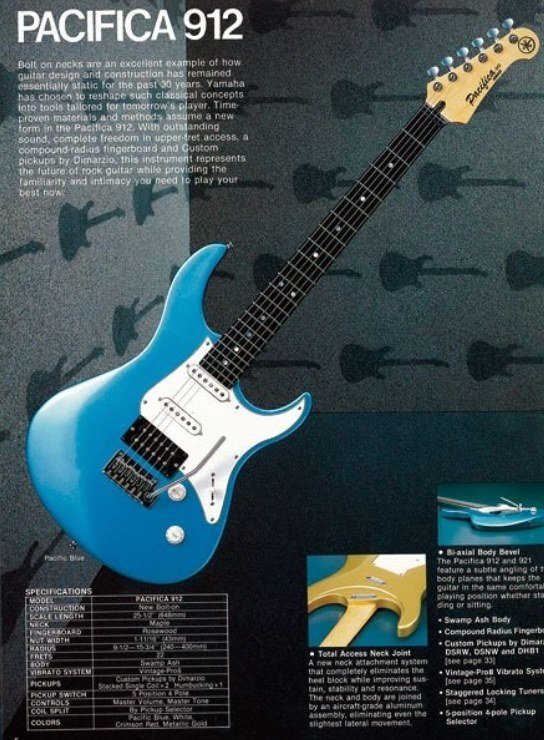
The Pacifica was the first Yamaha guitar planned and developed in the US, at YGD in North Hollywood, where session players wanted one dependable guitar for any genre. It began as an experiment until headquarters put the PACIFICA912 into production in 1990.
| Feature | What it does for you |
|---|---|
| Bolt-on neck | snappy attack and easy servicing |
| Single-single-humbucker pickups | single-coil sparkle and humbucker gain in one guitar |
| Pacifica Professional (made in Japan) and Standard Plus (2024) | modern pro-spec builds |
How to choose: Beginners: the PAC112, an affordable first electric. Serious players: the Standard Plus, or the Professional if you want a Japanese build. Fusion fans: Mike Stern’s PAC1511MS (1997), now the PAC1611MS.
Revstar: A Cafe Racer You Can Plug In
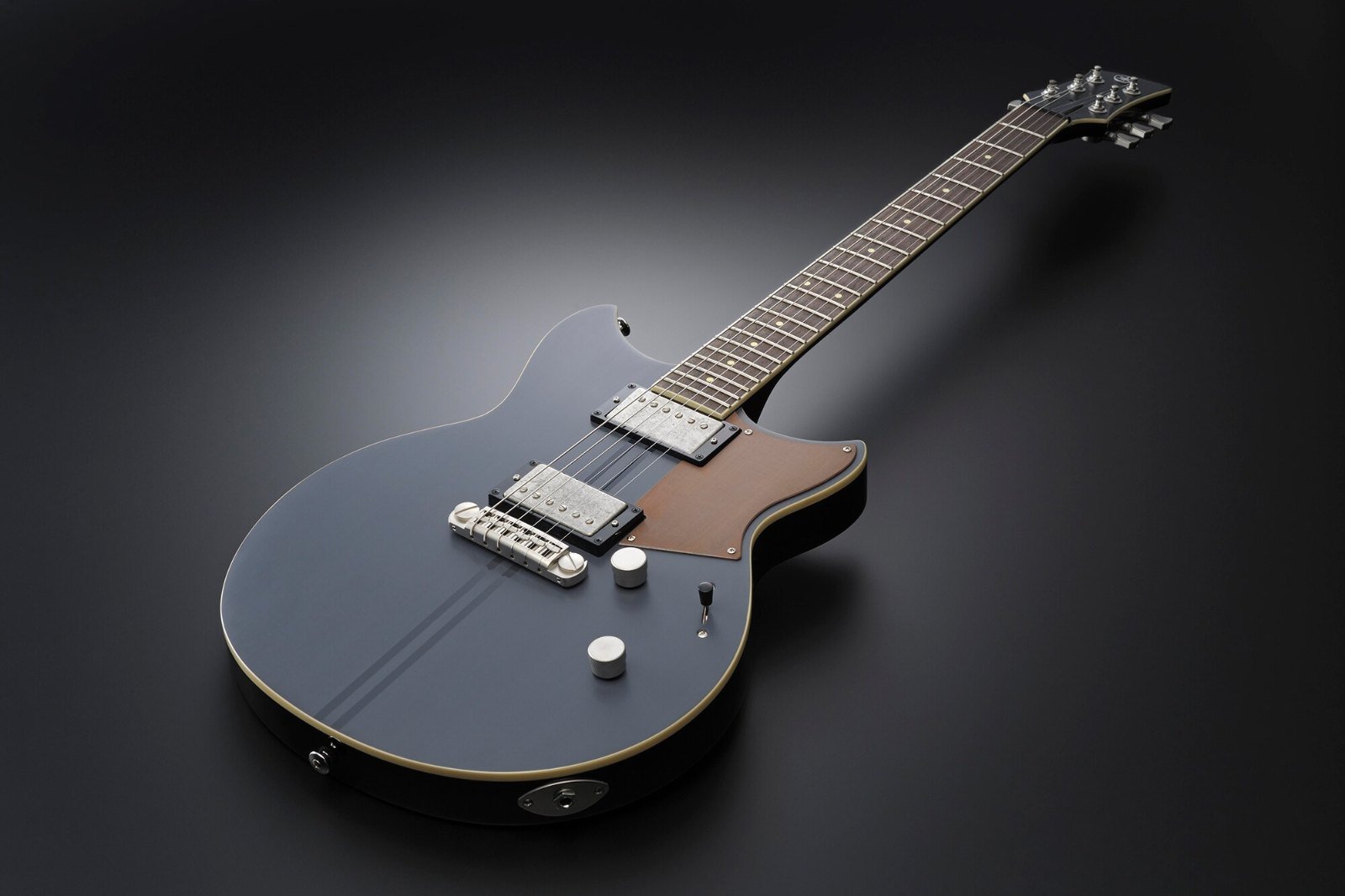
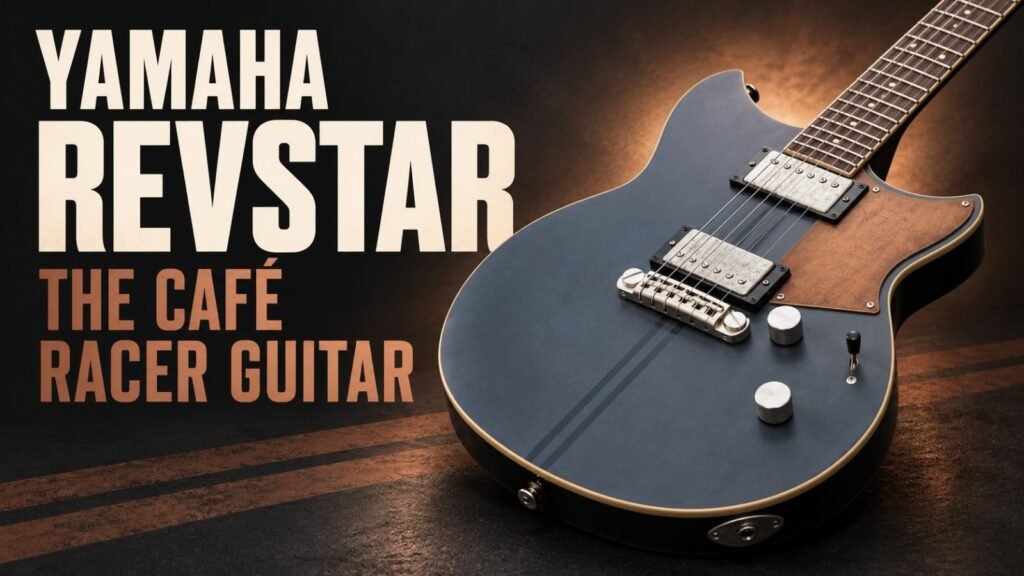
Launched in 2015, the Revstar was inspired by 1960s London cafe racers, motorcycles stripped of anything that did not make them faster. The goal was a simple, beautiful guitar with nothing extra, and it has won awards including the Red Dot and iF Design Awards.
| Feature | What it does for you |
|---|---|
| 2022 second generation, chambered bodies designed with Acoustic Design | lighter weight and more resonance |
| New switching circuits | more usable tones from each pickup set |
| Left-handed models | lefties finally covered |
How to choose: For the top build, get the Revstar Professional (RSP20), made in Japan. Collectors should look at the 2026 RSP20B 60TH, released alongside the FG9 60TH acoustic to mark 60 years of Yamaha guitars.
The Yamaha Brand Family
| Brand | Positioning |
|---|---|
| Yamaha | Acoustics, electrics, basses, THR amps and the Silent Guitar |
| Yamaha Guitar Development (YGD) | LA workshop for artist builds and prototypes; no public orders |
| Line 6 | Digital modeling; part of Yamaha since 2014 |
| Ampeg | Bass amps; acquired in 2018 |
| Córdoba / Guild | Nylon-string and American acoustic brands within Yamaha Guitar Group |
Notable Yamaha Players
| Player | Yamaha connection |
|---|---|
| Carlos Santana | SG-175 on his 1974 Japan tour; his “Buddha SG” led to the SG-2000 |
| Masayoshi Takanaka | Japanese fusion guitar icon and former Sadistic Mika Band member, famous for the instrumental “Blue Lagoon”; a longtime SG player |
| Kyoji Yamamoto | Guitarist of BOW WOW, one of Japan's pioneering hard rock bands; had his own Yamaha signature model in the 1980s |
| Billy Sheehan | Attitude Limited bass (1990); still plays an evolved version |
| Nathan East | BBNE (1995), a 5-string signature model, now the BBNE2 |
| Bob Marley / Paul McCartney | Bob Marley is said to have used an SG-1000, and Paul McCartney a left-handed BB1200 |
Buying a Yamaha Guitar
Vintage Yamaha prices swing a lot between Japan and overseas, and the high-end models mostly stay in Japan. Here is the picture from recent listings (USD at roughly ¥150 = $1):
| Model | Typical used price |
|---|---|
| FG180 Red Label | ¥30,000-100,000 in Japan (about $200-670); around $550-600 on Reverb |
| L Series “Big Four” (L-52 Custom etc.) | ¥1,000,000-1,650,000 at Japanese vintage dealers (about $6,700-11,000) |
| SG-2000 (1970s-80s) | Around $2,200 mid-market on Reverb (about ¥330,000) |
| BB2000 | ¥120,000-230,000 in Japan (about $800-1,540); around $1,000 on Reverb |
| Pacifica Professional (new) | $2,199.99 at major US retailers |
- New: Sweetwater for current US-market models
- Vintage and used: Reverb and eBay
- Japan-market and vintage stock: Ishibashi Music, which ships internationally
Dating tips: on early FGs, start with the label color (Light Green Label first, then Red Label). On electrics and basses, check the serial number against period catalog specs.
Final Thoughts
Reading through Yamaha’s own Japanese-language histories, I kept noticing the same pattern: its big guitar decisions come out of testing and data rather than tradition. More than 130 years of Yamaha history started with one organ repair. Skills honed on pianos, propellers and motorcycles gave us the FG180, the L Series, the SG, the BB, the Pacifica and the Revstar. In every era, Yamaha has been at the heart of Japanese guitar culture. The next time you pick one up, it might look a little different to you.
FAQ
Are Yamaha guitars made in Japan?
Some are. The Revstar Professional and Pacifica Professional are made in Japan, and so were classics like the early FGs, the L Series and the SG-2000. Other lines, such as the Pacifica Standard Plus (Indonesia), are made elsewhere.
Is a Yamaha FG180 Red Label worth buying?
Yes, if you want vintage Japanese character on a budget. Most sell for well under $1,000, and they are known for sounding great despite the laminated body.
What is the difference between the Yamaha SG and the Gibson SG?
They are different designs. The Yamaha SG-2000 uses a carved top, T-cross neck-through construction and a metal sustain plate for long sustain.
Is the Yamaha Pacifica good for beginners?
Yes. The PAC112 was designed as an affordable first electric, and its single-single-humbucker layout covers almost any genre.
Does Yamaha have a custom shop?
Yes. Yamaha Guitar Development (YGD) in Los Angeles works much like one, but it mainly builds for artists and does not take public orders.
What are the Yamaha L Series Big Four?
The L-51, L-52, L-53 and L-54 of 1975: handmade flagship acoustics that are now highly sought after in Japan.
All Yamaha Articles
Yamaha BB Bass: The Broad Bass Story From the 1977 BB1200 to Today
The Yamaha BB bass has been one of the most trusted working basses since 1977….

Yamaha Pacifica: The Session Guitar That Became Everyone’s First Electric (1990-Today)
The Yamaha Pacifica is the guitar many players own as their first electric, but it…
Yamaha Revstar: The Cafe Racer Guitar Explained, From 2015 to the Second Generation
The Yamaha Revstar is Yamaha’s modern electric guitar, designed around the look of 1960s London…
Yamaha Logo: Why the Guitar and Motorcycle Logos Are Surprisingly Different
Look closely at the Yamaha logo on a guitar and on a motorcycle, and you…
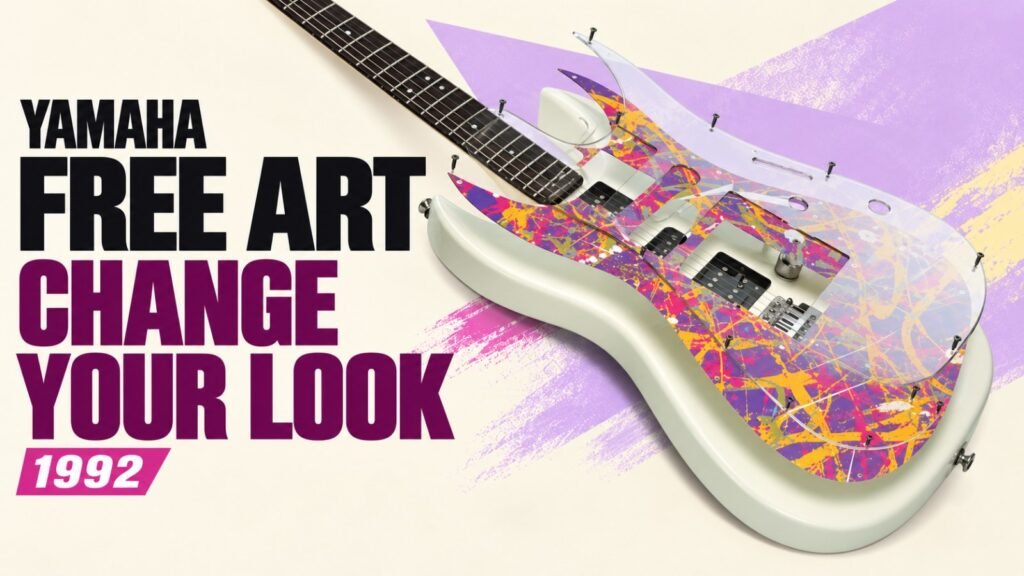
Yamaha Free Art Model: The 1992 Guitar With a Pickguard You Could Redesign
In Yamaha’s 1992 catalog there was a guitar that looked like just another graphic superstrat….
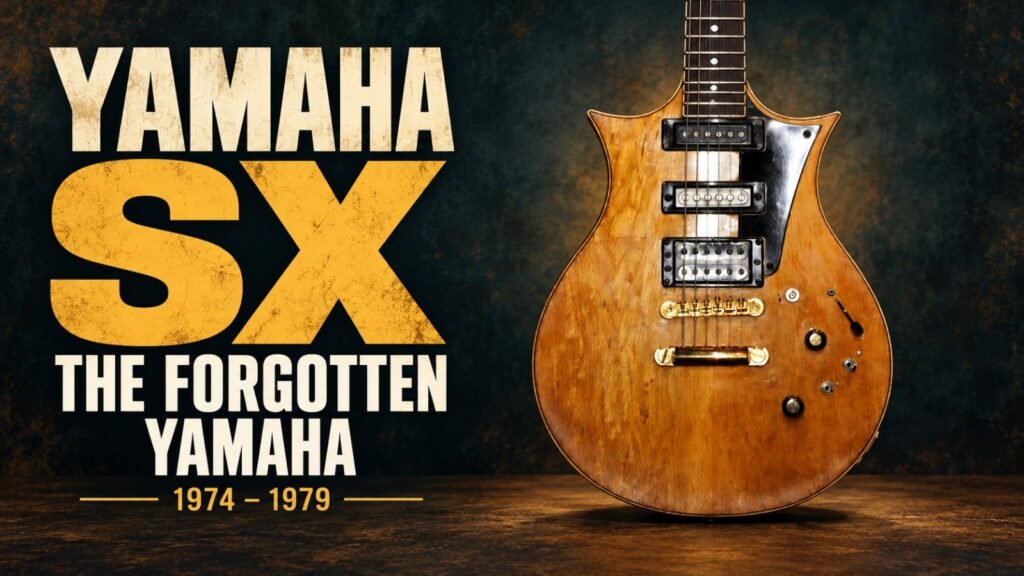
Yamaha SX Series: The Forgotten 1970s Yamaha Played by Tommy Bolin (1974-1979)
The Yamaha SX is one of the forgotten Yamaha electrics of the 1970s. Built for…
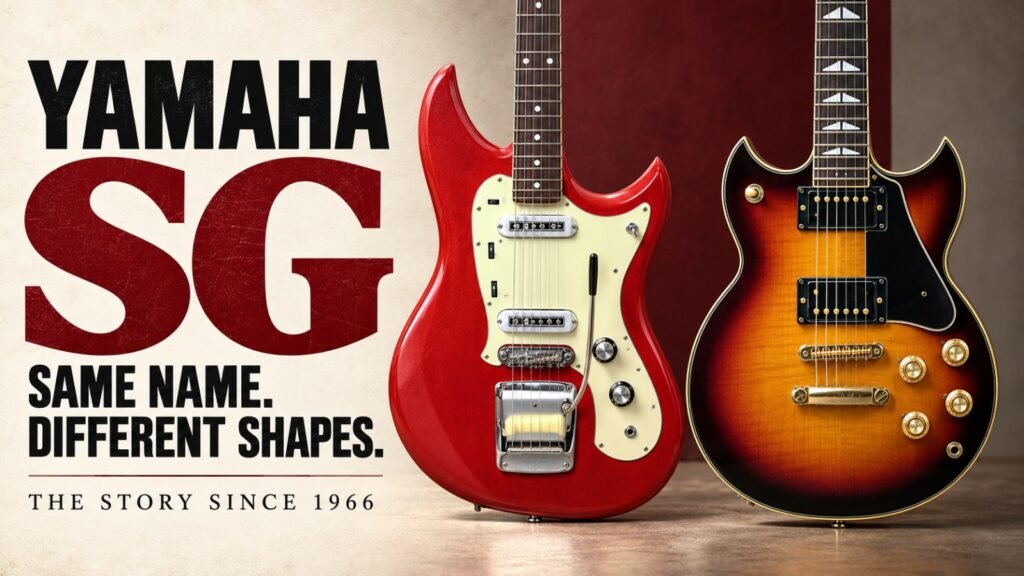
Yamaha SG History: From the 1966 SG-2 to the SG-2000 and Today’s SG1820
When people talk about Yamaha’s legendary guitars, the Yamaha SG usually comes up first, thanks…
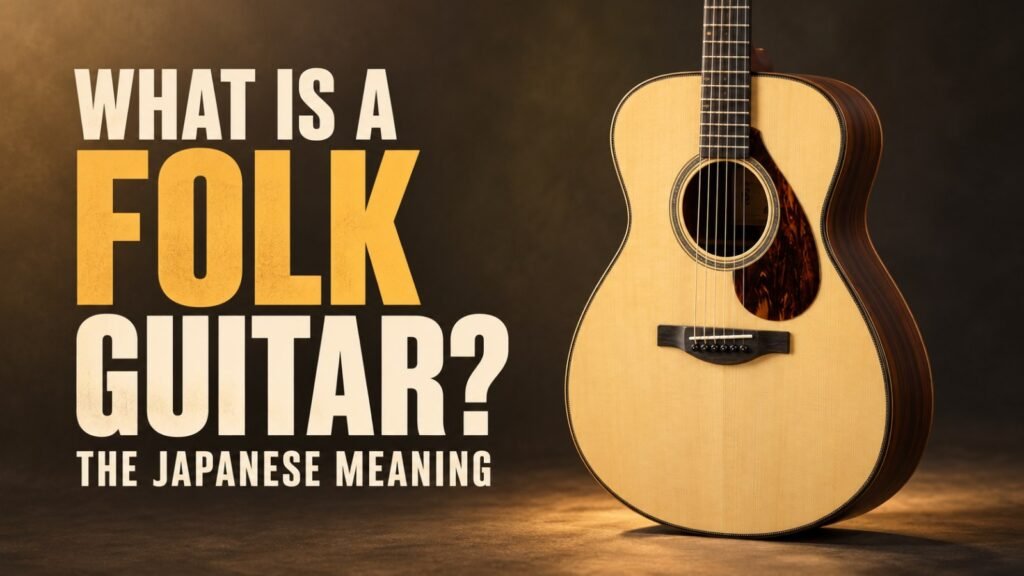
What Is a Folk Guitar? Why Japan Uses the Term, and the Yamaha FG That Started It
Browse Japanese acoustic guitars and you will see the term folk guitar everywhere. It sounds…
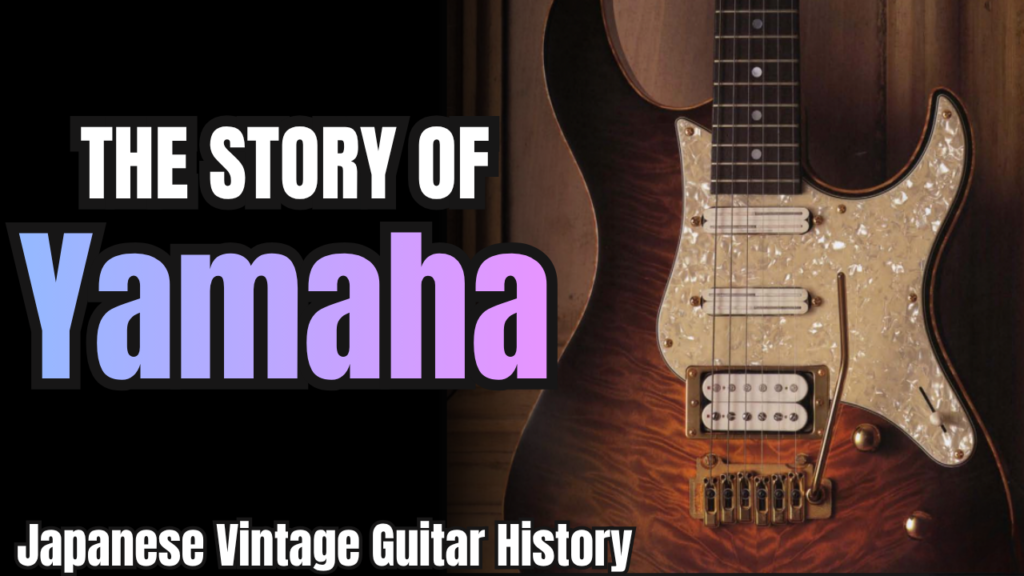
Yamaha Guitars History: From an Organ Repair to 60 Years of Icons
Yamaha is a name almost everyone knows, even people who have never touched a guitar….
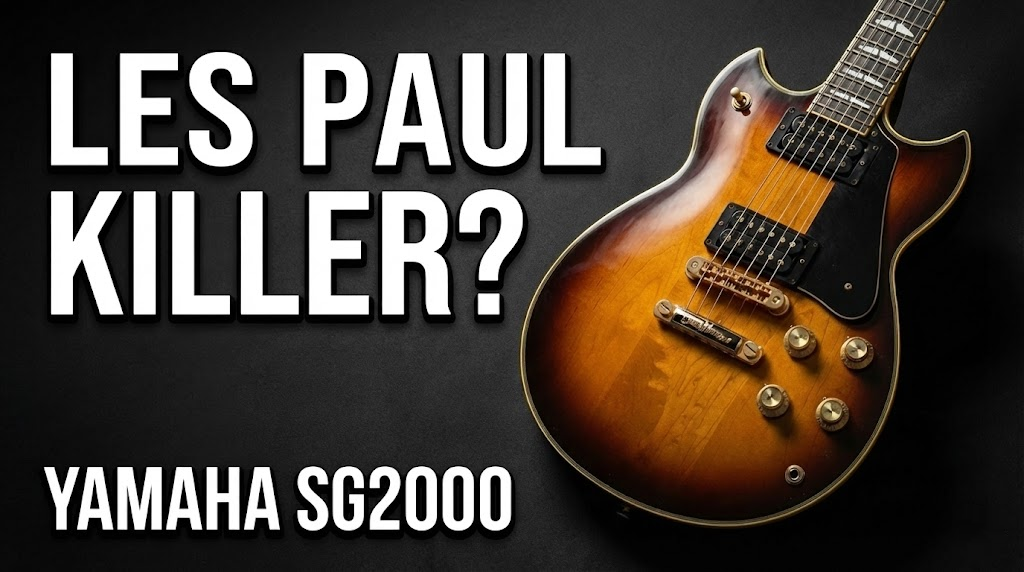
Yamaha SG2000: The Guitar Shaped by Santana’s Ideas
The Yamaha SG2000 is often seen as one of the most iconic electric guitars to…
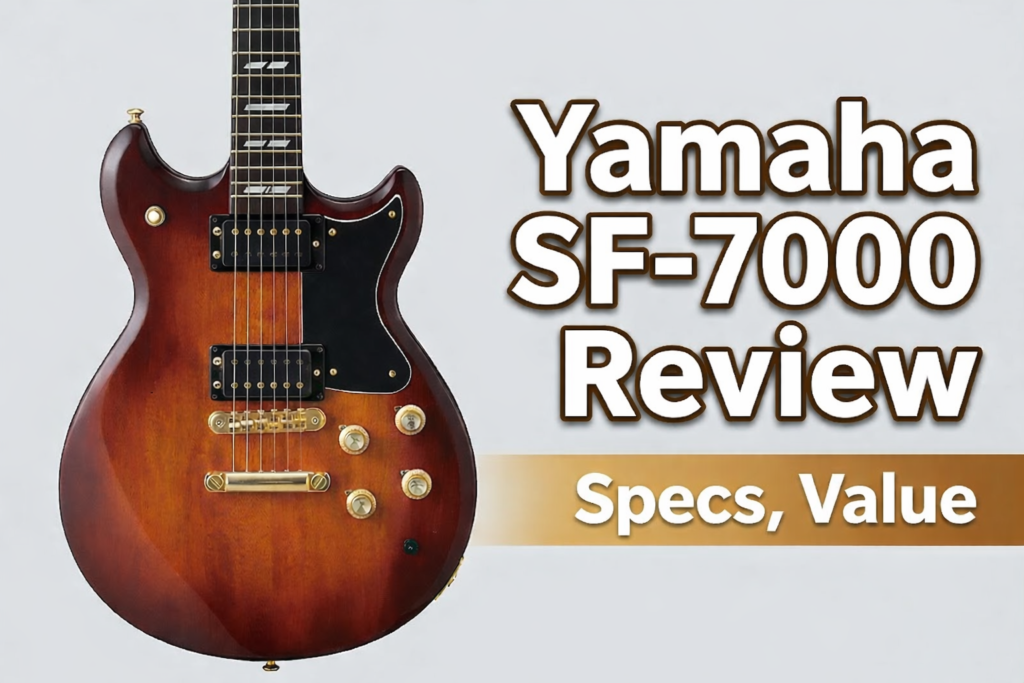
Yamaha SF-7000 Review: Specs, Value & SG Comparison
Overview & Key Points The Yamaha SF-7000 is a late 1970s to early 1980s Japanese…