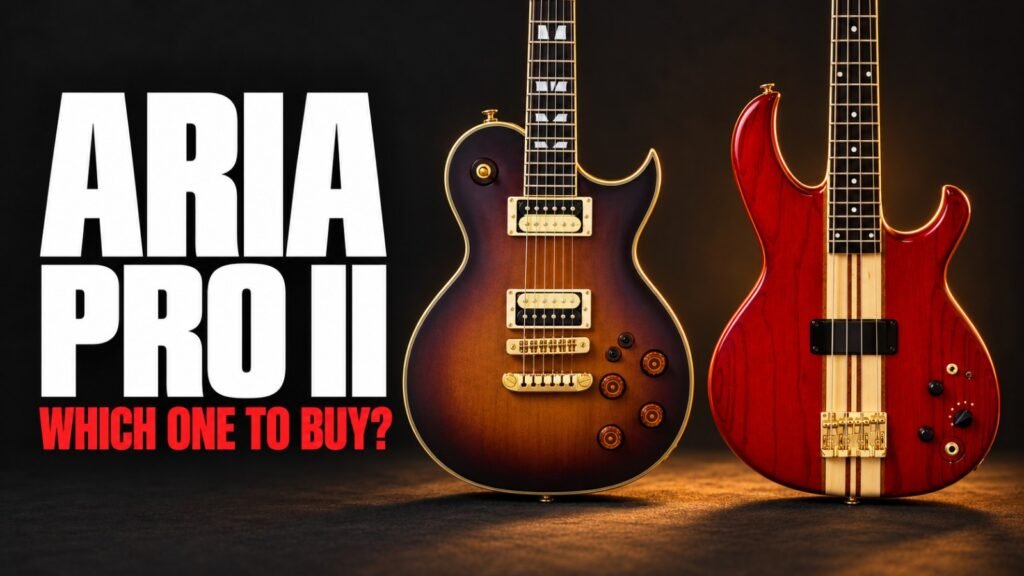
Aria Pro II is the Nagoya brand that turned Japan’s copy-guitar boom into original designs, built by the Matsumoku factory and played by Neal Schon, Yngwie Malmsteen and Cliff Burton.
This guide explains what makes Aria Pro II different, the models worth knowing, and which one to buy.
Aria Pro II Quick Facts
- Company: Arai & Co., Nagoya; Aria Pro II name since 1975
- Famous for: the PE series and the SB-1000 bass
- Vintage factory: Matsumoku, Nagano (until 1987)
- Model numbers: often the catalog price, e.g. RS-850 = ¥85,000
- Made today: PE reissues in Japan, plus more affordable models
Start here
- Aria Pro II History: from a classical guitar importer to a Japanese legend
- Aria Pro II PE Series: the PE-1500 and PE-R80 in the period catalogs
- Yngwie Malmsteen Aria Pro II: the Flying V he played in Alcatrazz
- Matsumoku: the factory behind the vintage guitars
- Aria Pro II History in Brief
- What Makes Aria Pro II Different
- How to Read Aria Pro II Model Numbers
- Which Aria Pro II Should You Buy?
- The Aria Pro II Lineup
- Notable Aria Pro II Players
- Aria Pro II Today: The Current Lineup
- Buying a Used Aria Pro II
- Related Brands and Factories
- Final Thoughts
- FAQ
- All Aria Pro II Articles
Aria Pro II History in Brief
Founder Shiro Arai was a classical guitarist who started importing guitars and sheet music in the 1950s. His company partnered with Matsumoku in the 1960s, decided in the 1970s to move beyond copies, and launched the Aria Pro II name in 1975 for its pro-oriented electrics.
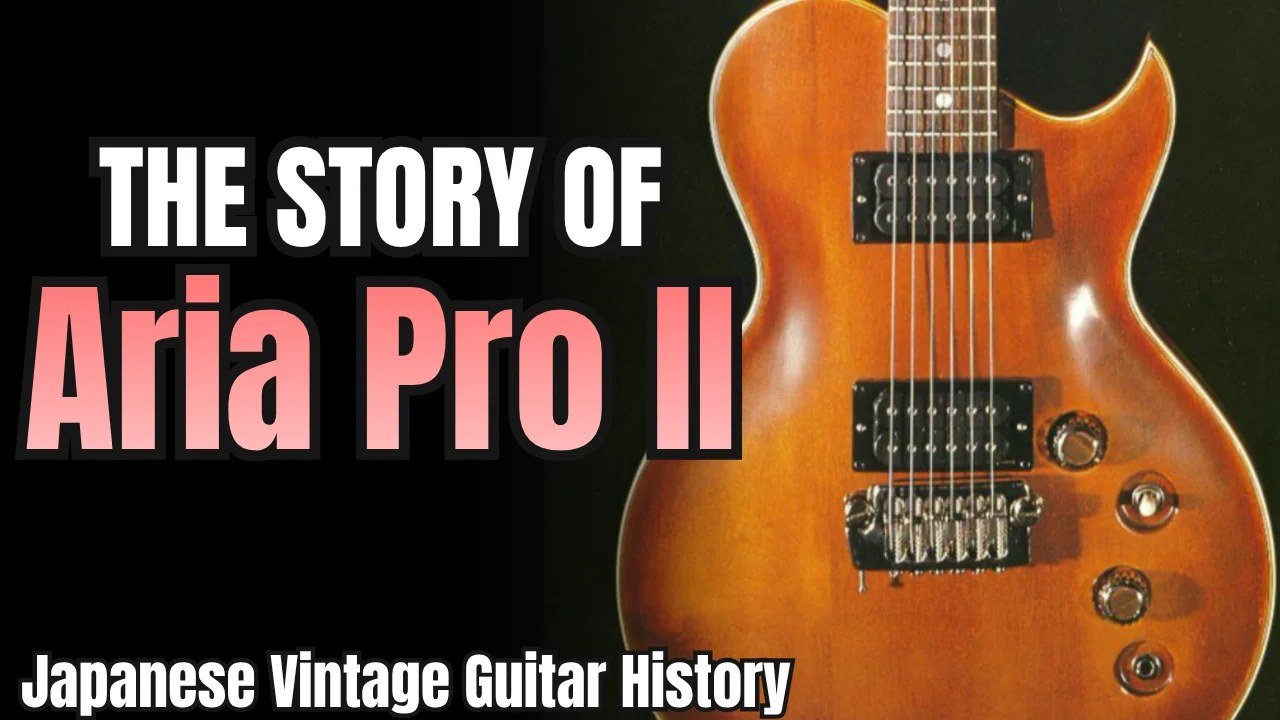
Prefer the full story?
Aria Pro II History: The Remarkable Story of a Nagoya Classical Guitar Importer (1954-Today)
The full story, from cracked export guitars to the AP2 rumor.
What Makes Aria Pro II Different
Originals Over Copies
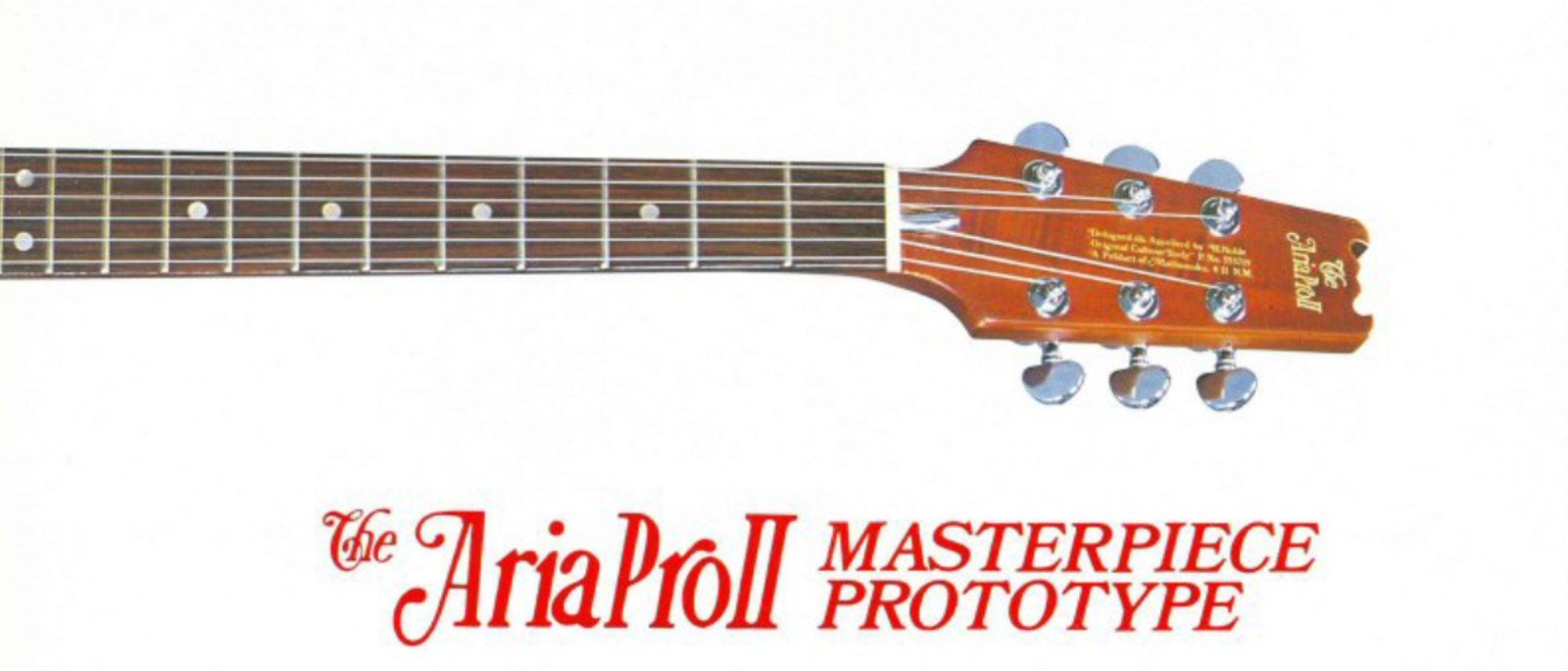
In an age dominated by copies, Aria moved early into original designs. The PE-1500 even carried its designer’s credit on the headstock, “Designed and Approved by H. Noble,” almost unheard of on a Japanese guitar. And when Aria Pro II did build copies, they aimed for the real thing rather than just the look.
Built by Matsumoku: Furniture-Grade Woodworking
Matsumoku started out making furniture and sewing machine cabinets, where a lid has to close cleanly and a surface can’t be off by a millimeter. That woodworking discipline, and serious wood-drying facilities, carried straight into its guitars. To me, Japanese sen ash under a thick clear coat is the Matsumoku look; my father’s SG-shaped Aria Pro was exactly like that.
Neck-Through and Active Circuits
Alongside the PE, models like the RS and TS took inspiration from the boutique builders of the day, such as Alembic and B.C. Rich: neck-through construction for sustain and upper-fret access, plus active circuits that shaped the tone almost like an effect.
How to Read Aria Pro II Model Numbers
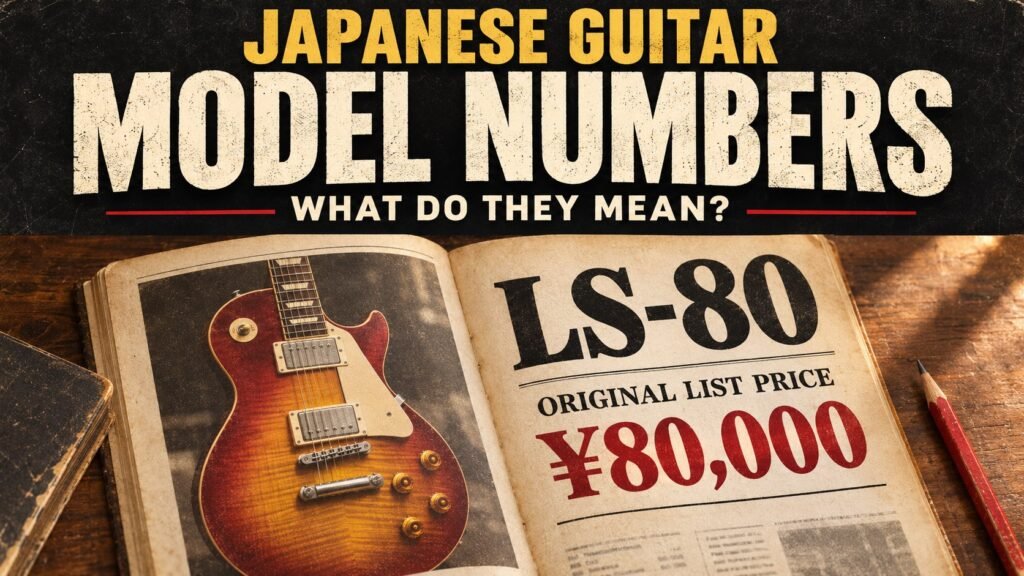
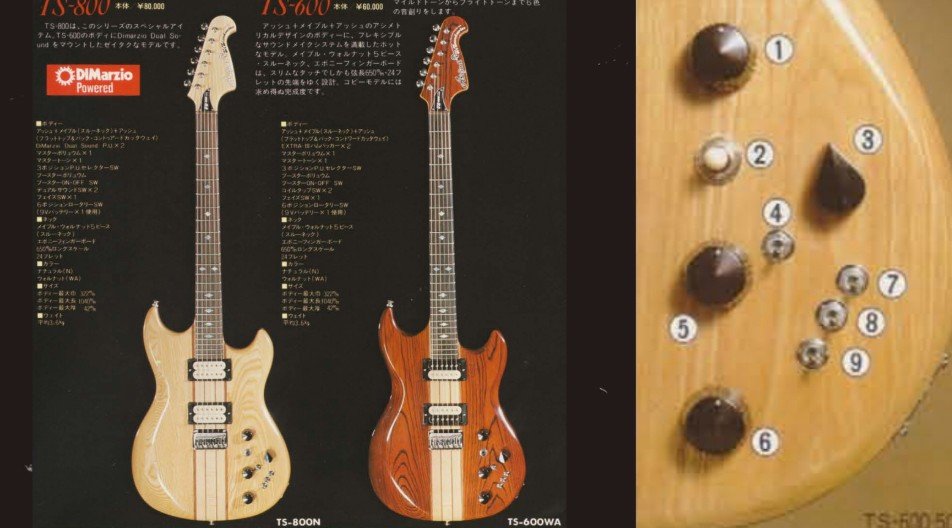
On many vintage Aria Pro II models, the number is simply the catalog price in thousands of yen, a common habit of Japanese makers at the time. It’s a quick way to see where a model sat in the range.
| Model | Catalog price | Number = price? |
|---|---|---|
| LS-450 | ¥45,000 | Yes |
| TS-600 / TS-800 | ¥60,000 / ¥80,000 | Yes |
| RS-850 | ¥85,000 | Yes |
| SB-1000 | ¥100,000 | Yes |
| PE-1500 (1979 catalog) | ¥135,000 | No: the PE-1500 is the exception |
Which Aria Pro II Should You Buy?
| You want… | Look for |
|---|---|
| The model that defines the brand | PE-1500 or PE-R80 (Matsumoku era) |
| A PE without vintage worries | Japan-made PE (PE-1500RI, PE-R80, PE-R100) |
| A neck-through with tone-shaping electronics | RS or TS (late 1970s–1980s) |
| A classic neck-through bass | SB-1000 |
| A serious vintage Les Paul copy | LS series |
| Something new and affordable | Current entry models such as the AE series |
My pick
A PE or PE-R
If it were me, I’d go for an Aria PE or a PE-R. These are the models that define Aria and Matsumoku, and I think they’re worth owning at least once. It would be interesting to compare one with the current Japan-built PE.
The Aria Pro II Lineup
PE Series: The Original Les Paul-Style Icon
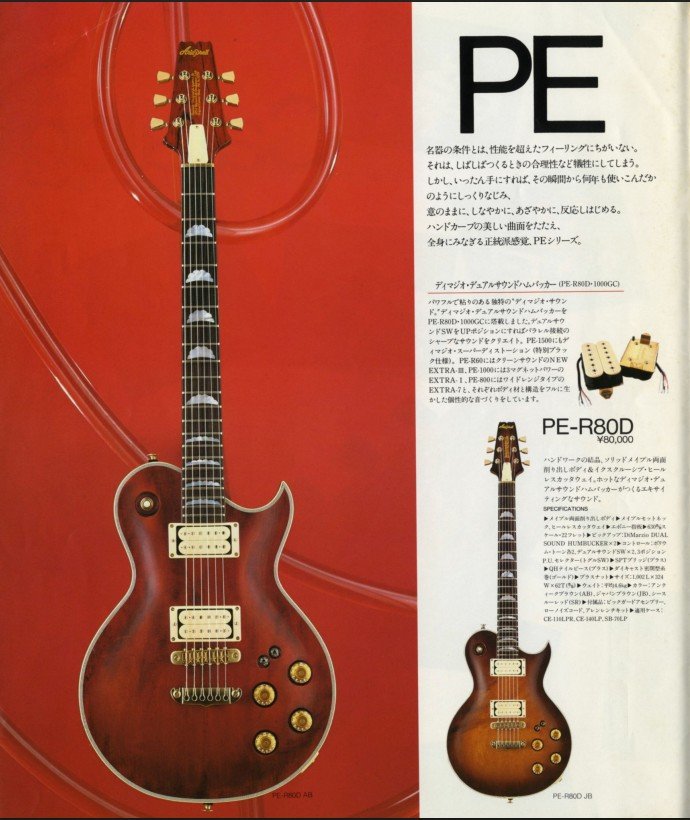
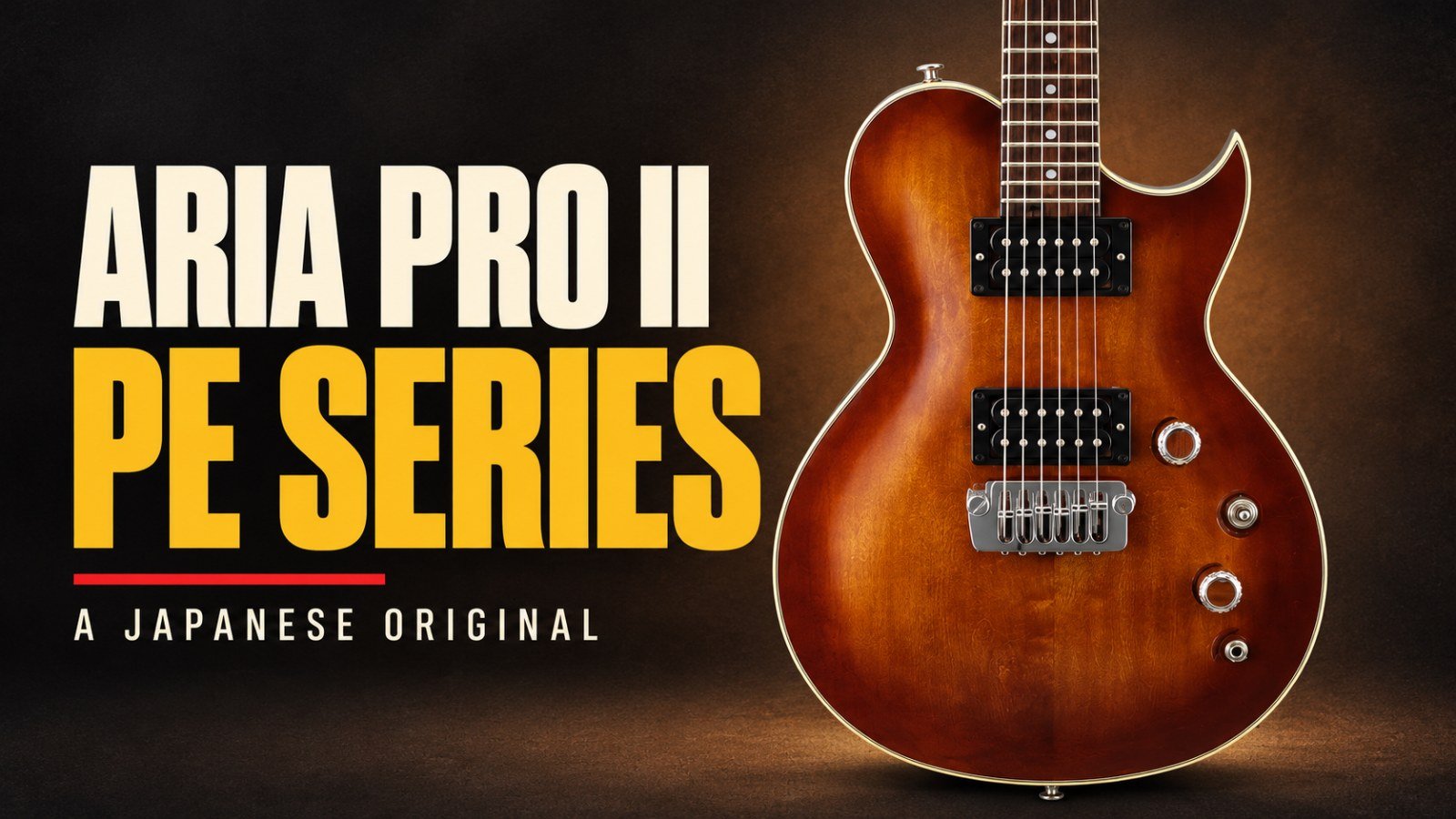
The PE started with the PE-1500: carved top and back, a heel-less cutaway and a 25.5-inch scale. The PE-R series of the early 1980s moved closer to a Les Paul, with a 24.75-inch scale and two volumes, two tones.
Decision line: the PE-1500 for the original Fender-scale feel, the PE-R80 for the most Les Paul-like PE.
Deep dive
Aria Pro II PE Series: History and Models of Japan’s Original Les Paul-Style Design
PE-1500 vs PE-R80 in the period catalogs, plus Neal Schon’s PE.
RS and TS: Neck-Through Guitars With Active Tone
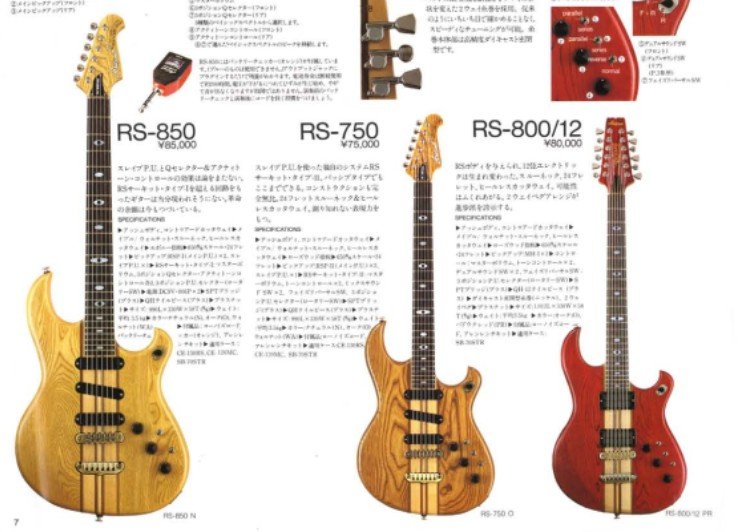
The RS-850 placed a dedicated slave pickup between two single coils to cancel noise, with a built-in booster for a wide range of tones. The TS-800 (shown above) used DiMarzio humbuckers and an active circuit said to offer, in theory, 144 different sounds.
Decision line: pick these if you like switches and tone-shaping. Check that the active electronics work, since they are the usual failure point on 40-year-old guitars. Both are out of production and collector favorites, so prices can be steep.
SB Series: The Neck-Through Bass That Went Global
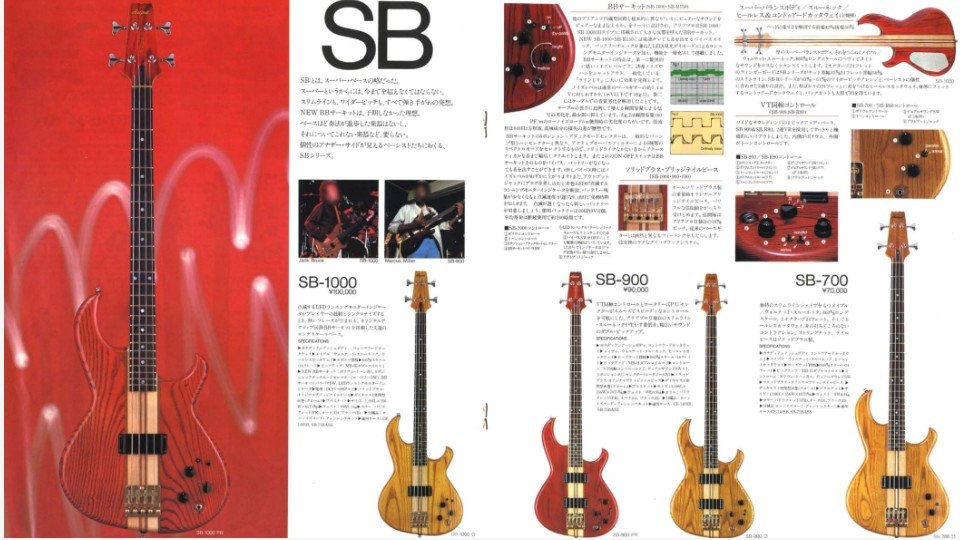
Following the PE-1500 came the neck-through SB-1000, praised first by overseas players and a huge hit. Cliff Burton of Metallica is its most iconic user, and Aria has recently released the SB-CLB, a model inspired by him.
Decision line: the SB-1000 is the one to find; the SB-900 and SB-700 sit below it in the same family.
LS Series and Strat Copies: Copies That Aimed for the Real Thing
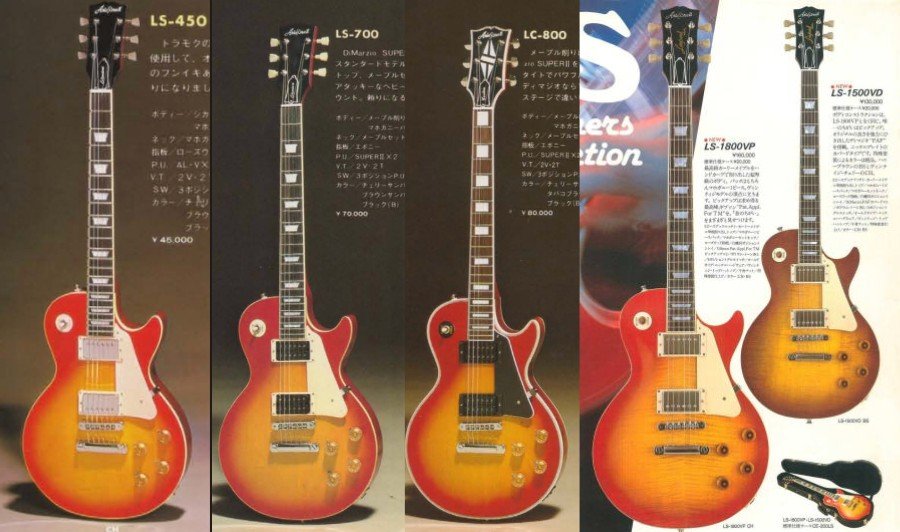
During the late-1970s Lawsuit Era, the LS-400 offered a set neck and solid body for ¥40,000, when many cheap copies only looked the part. The range ran up to the LS-1800VP, and the Strat copies such as the Stagecaster used sen or alder.
Decision line: often overshadowed by Greco and Tokai, these are a sleeper pick thanks to Matsumoku build quality. Compare them in Japanese Les Paul Copies.
Notable Aria Pro II Players
| Player | Model |
|---|---|
| Neal Schon (Journey) | PE, including a custom PE with a built-in guitar synthesizer |
| Yngwie Malmsteen | XX series, and the RS in promotional material |
| Michael Schenker | Custom XX in black and white |
| John Petrucci (Dream Theater) | CS custom with a Kahler, in his pre-Dream Theater Majesty days |
| Cliff Burton (Metallica) | SB-1000 |
| John Taylor (Duran Duran) | SB-1000 |
| Paul Jackson, Marcus Miller, Rudy Sarzo, Sami Yaffa | Aria Pro II basses |
Aria Pro II Today: The Current Lineup
The brand is alive and has tidied up its structure: copies of famous overseas models moved to separate names, Legend and Blitz, leaving only originals under Aria Pro II.
| Series | What it is today | Made in |
|---|---|---|
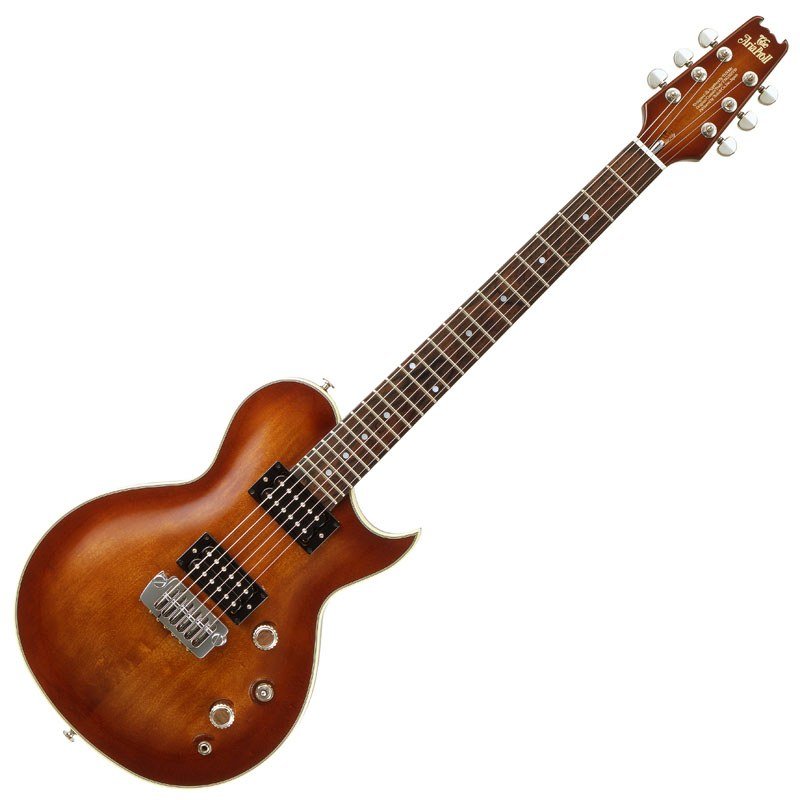
| PE | The flagship, built around the PE-R80 spec with a medium scale | Japan (PE-1500RI, PE-R80, PE-R100); more affordable models such as the PE-700 and PE-600MH |
| RS | Neck-through soloist guitar with a Floyd Rose-type tremolo and Seymour Duncan pickups | — |
| MA | Light dinky-type Strat with 24 frets and a bolt-on neck | — |
| AE (714 / 615) | Entry Strat and Tele types from 2020: Wilkinson bridge, heel-less joint, coil tap, around ¥50,000 | — |
| FA / TA | Full-acoustic and semi-acoustic models | Japan |
| SWB | Slim upright bass | — |
Buying a Used Aria Pro II
- Check the era: Matsumoku-built guitars date from before 1987; the serial and catalog features help place it.
- Don’t buy the factory name alone: Matsumoku built up to 30,000 guitars a year, so “made by Matsumoku” doesn’t automatically mean exceptional.
- Condition is everything: check the neck, the frets and especially the electronics on 40-to-50-year-old guitars.
- Mind the parts: original designs often use proprietary bridges. When one saddle cracked on my father’s guitar, we couldn’t find a replacement, the whole bridge had to go, and in the end we let the guitar go.
Related Brands and Factories
Final Thoughts
Aria Pro II was born from copies and went on to create originals the world recognized. If you spot that carved top in the corner of a guitar shop, do yourself a favor and pick it up.
FAQ
Is Aria Pro II still in business?
Yes. The Aria Pro II brand is still active and its original models remain in production. What ended in 2025 was the AP2 series, a high-end custom line, which caused some confusion.
Who made Aria Pro II guitars?
The brand belongs to Arai & Co. of Nagoya, Japan. Its classic guitars from the late 1970s and 1980s were built at the Matsumoku factory in Matsumoto, Nagano, until Matsumoku closed in 1987.
What is the best Aria Pro II guitar?
The PE series is the model most associated with the brand, especially the original PE-1500 and the PE-R80. For bass, the SB-1000 is the classic.
Are Aria Pro II guitars good?
The Matsumoku-era guitars are well regarded as Japan vintage, and the Japan-made reissues of the PE are serious instruments. As with any vintage guitar, condition matters more than the name.
What do Aria Pro II model numbers mean?
On many vintage models, the number reflects the catalog price in thousands of yen. For example, the RS-850 listed at 85,000 yen and the TS-800 at 80,000 yen.
Where are Aria Pro II guitars made today?
The high-end PE models, the PE-1500RI, PE-R80 and PE-R100, are made in Japan. More affordable models such as the PE-700 and PE-600MH are also available.
All Aria Pro II Articles
Aria Pro II History: The Remarkable Story of a Nagoya Classical Guitar Importer (1954-Today)
Aria Pro II history begins not with a guitar maker but with one young man…
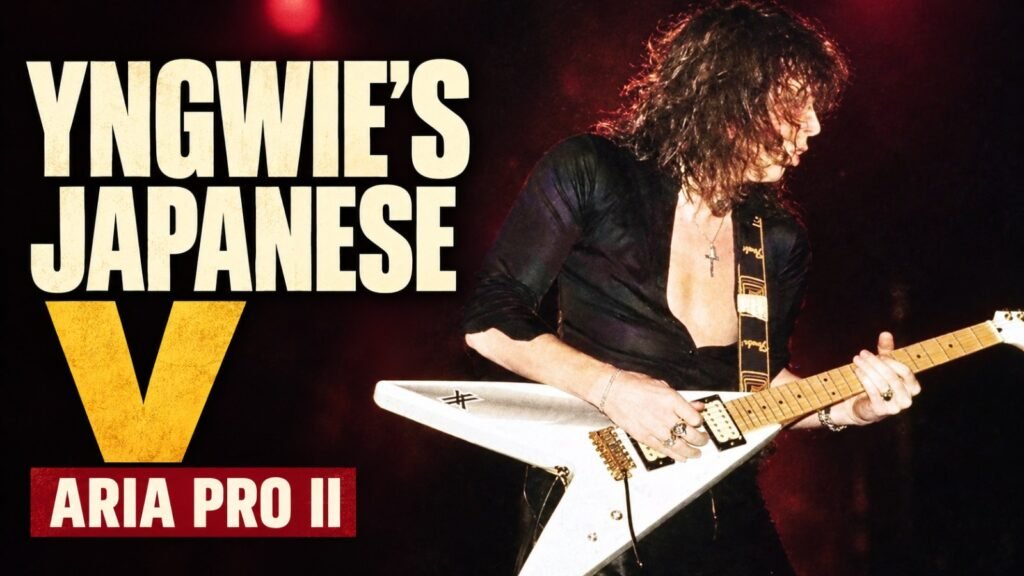
Yngwie Malmsteen Aria Pro II: The Surprising Japanese Flying V of the Alcatrazz Era (1983-1984)
The Yngwie Malmsteen Aria story surprises many fans: he is the last guitarist most people…
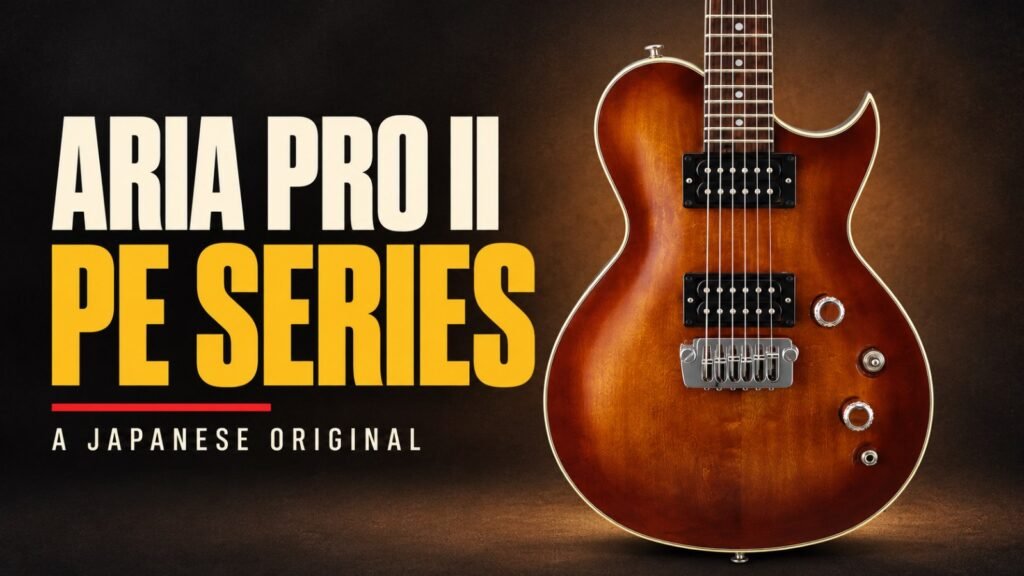
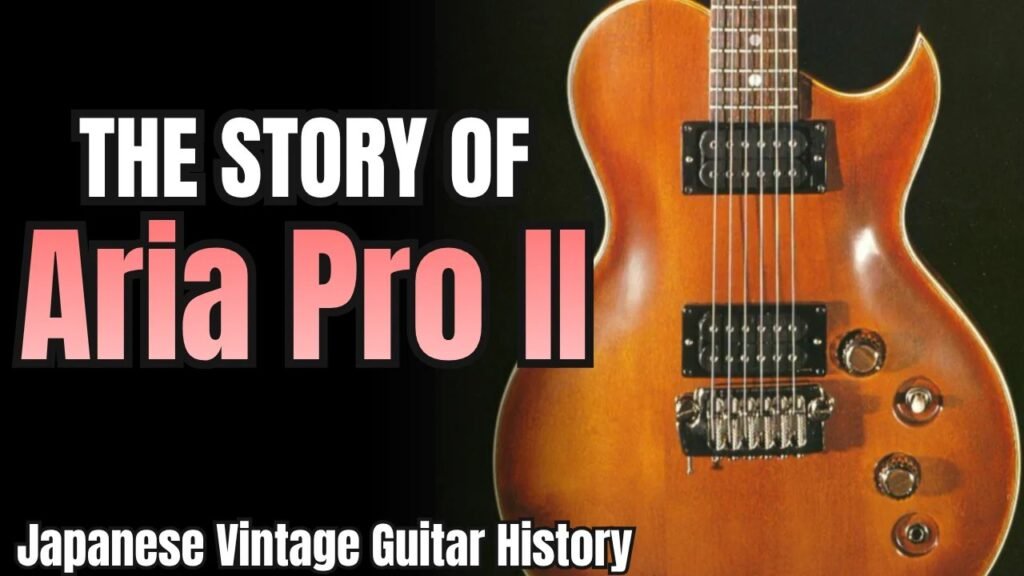
Aria Pro II PE Series: History and Models of Japan’s Original Les Paul-Style Design
The Aria Pro II PE is Japan’s own take on the Les Paul-style guitar: developed…