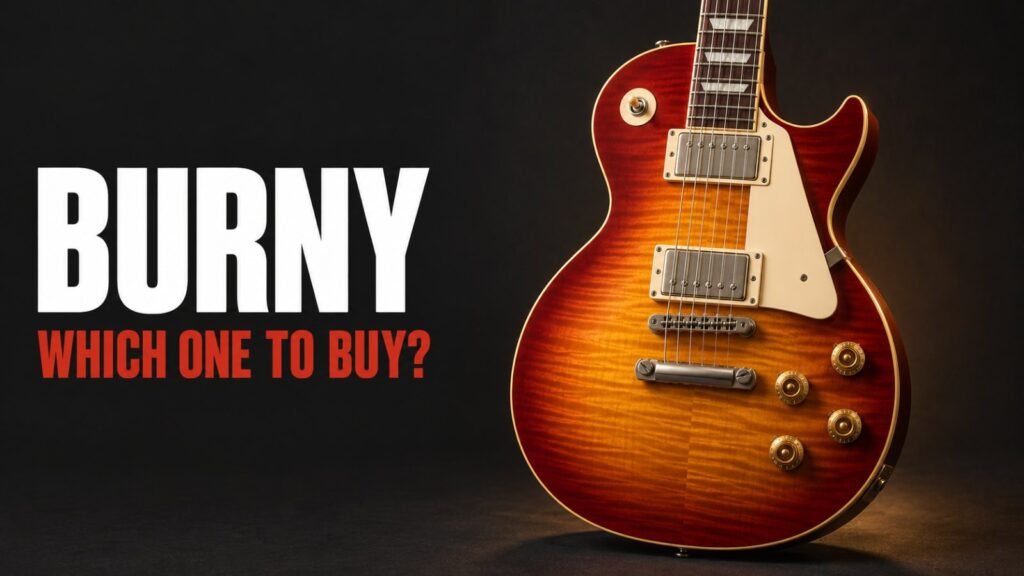
Burny was the Gibson-copy brand of Fernandes, best known for Les Paul copies so faithful that Gibson took Fernandes to court over the shape and lost. Its 1979–1980 FLG models are now prized as Japan Vintage guitars.
This guide explains Burny’s eras and model numbers, which Burny to buy, and what to check on a used one.
Burny Quick Facts
- Maker: Fernandes, Tokyo (Burny from c. 1975)
- Famous for: faithful Les Paul copies, plus SGs and archtops
- Golden era: FLG-240 / FLG-150, no-decal era (1979–1980)
- Model prefixes: FLG until 1981, RLG from 1982
- Status: ended with the Fernandes bankruptcy in 2025
Start here
- Burny History (1975-2025): every era, from the first FLG to the final bow
- Tokai vs Greco vs Burny: how the golden-era FLG compares
- Burny Les Paul: Early 80s RLG Series: the Revival-era models up close
- Fernandes vs Burny: why one company ran two brands
Burny History in Brief
The first Burny Les Paul, the FLG, appeared around 1975; by 1979–1980 the line had become one of the most accurate Les Paul copies ever built in Japan. Production later moved overseas, a few Japanese-made models returned in the 2000s, and the brand ended with Fernandes in 2025.
| Era | Prefix | Headstock clue | What to know |
|---|---|---|---|
| 1975–1978 | FLG | “Les Paul Model” logo; some 1978 guitars carry the Fernandes stone logo | Early build quality; collectible mainly for history |
| 1979–1980 | FLG | No “Les Paul” logo (no-decal) | The golden era: FLG-240 and FLG-150 are the grails |
| 1981 | FLG | “Super Grade” | Revival series begins |
| 1982–mid-1980s | RLG | Revival era | Pickups change to the Japanese L8001 |
| 1985 onward | RLG | — | VH-1 pickup on high-end models |
| Mid-1990s onward | Various | — | Much production moved outside Japan |
| 2002–2010s | RLG / RLC | — | Japanese-made RLG-90, RLC-100, RLG-85, RLC-85 |

Prefer the full story?
Burny History: From FLG Les Paul Copies to the Final Bow (1975-2025)
Every era in detail, with my video.
What Makes Burny Different
Built for One Job: Gibson-Style Copies
Burny existed for one purpose: Gibson-style guitars. Fender-style copies went out under the Fernandes name instead, as Fernandes vs Burny explains.
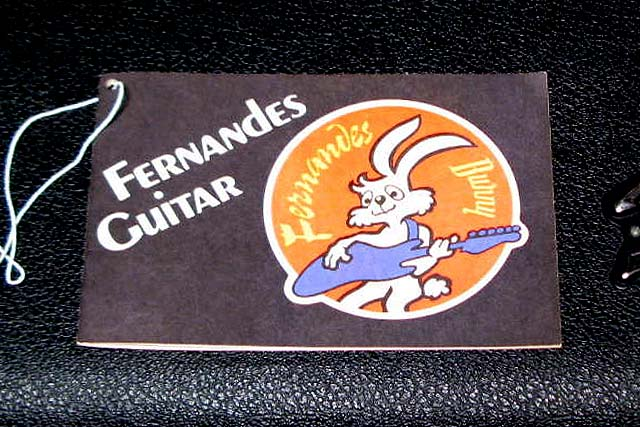
Even the name was an accident. It was meant to be “Bunny,” after a rabbit mascot, but came out misspelled as “Burny.” The company kept it because it suggested “burn.”
The VH-1 Pickup
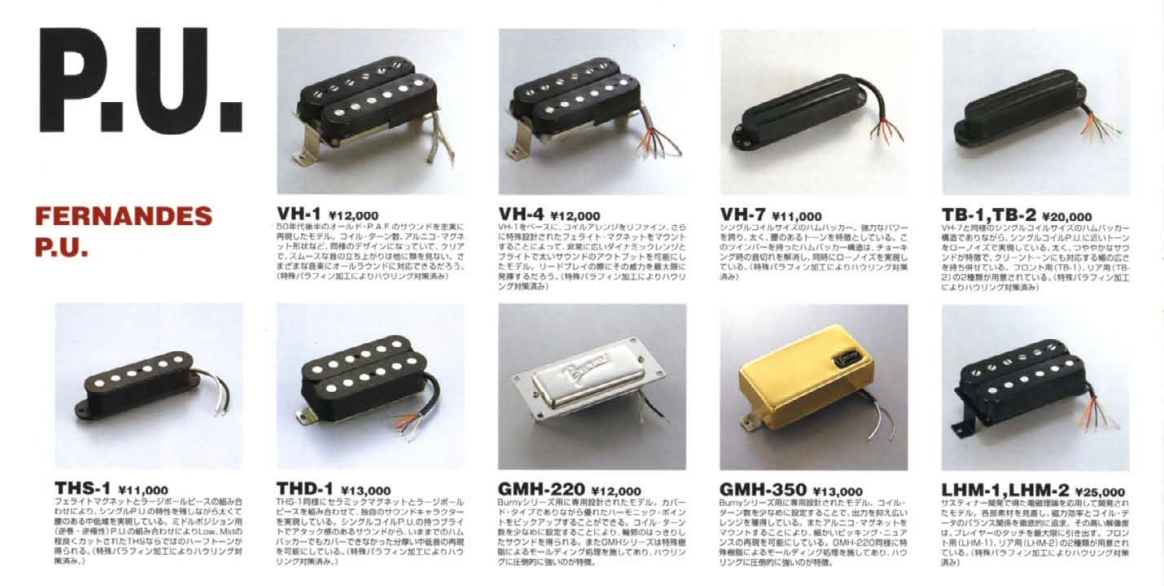
From 1985, Burny’s high-end models carried the VH-1, a PAF-style humbucker best understood as an upgraded take on the Gibson original. Magnets, wire and potting change from one generation to the next, so if you are chasing a specific tone, check which VH-1 a guitar has.
The Shape Gibson Couldn’t Own
In 1993 Gibson sued Fernandes in Tokyo, claiming the Les Paul shape identified Gibson. The courts found that two decades of openly sold copies had erased that link, and Gibson lost in 1998 and again on appeal in 2000. The Burny history covers the ruling.
Burny FLG Grades: What the 1980 Catalog Shows
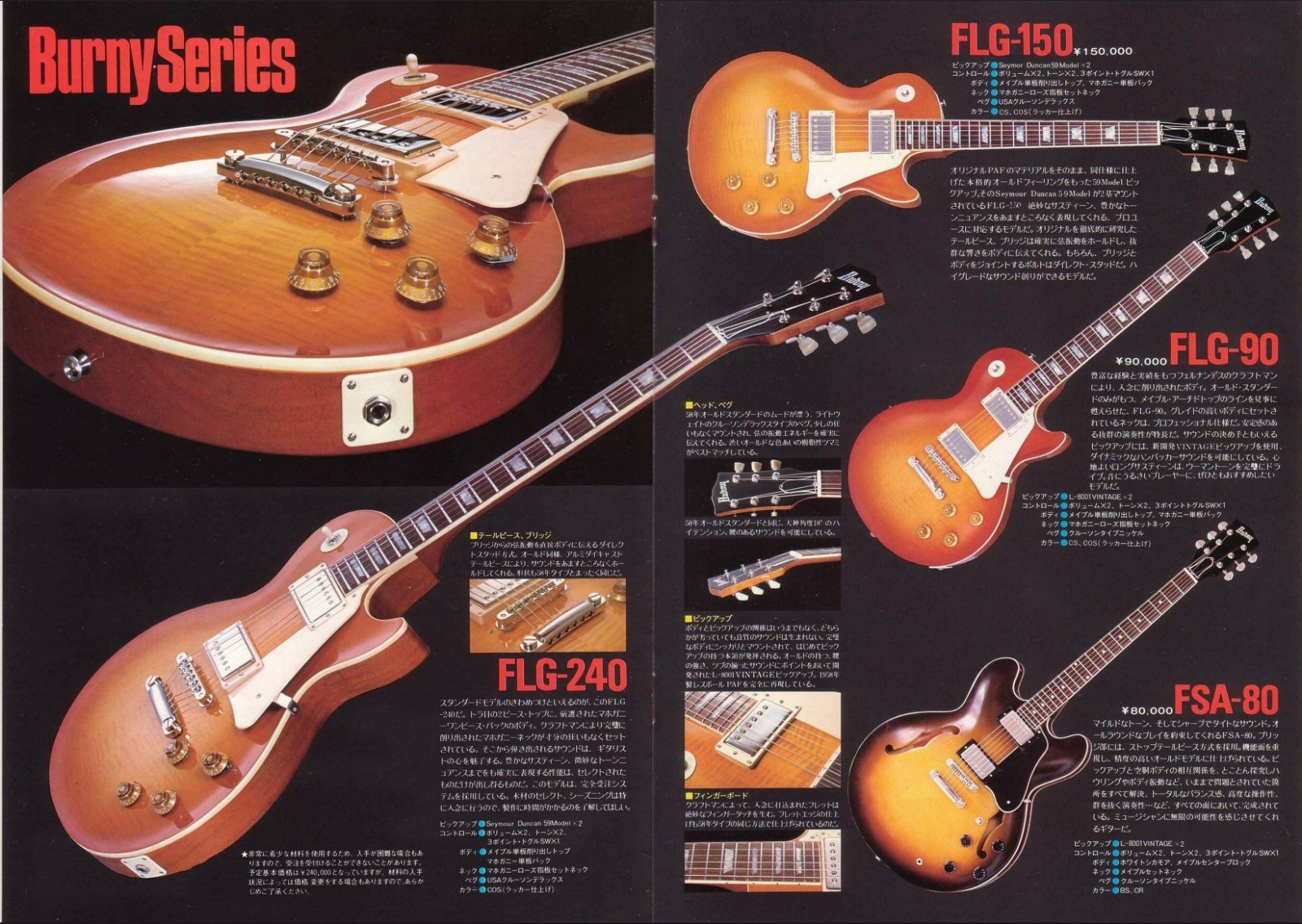
Like Tokai and Greco, Burny put the list price in the model number: an FLG-150 cost ¥150,000. Here is the golden-era ladder from the 1980 catalog, with what each step actually added:
What the 1980 catalog tells you
- The headstock angle: an 18° pitch, “the same as a ’58 Old Standard.” Burny was copying a 1958, not just “a Les Paul.”
- The cheaper pickups weren’t an afterthought: the FLG-90’s L-8001 Vintage is billed as a full recreation of a 1958 PAF.
- The FLG-240 was a rarity by design: made to order only, and the catalog warns that orders may be refused, or the price changed, because its rare materials are hard to obtain.
Decision line: the FLG-150 is the realistic target. It has the same Seymour Duncan ’59s and Kluson Deluxe tuners as the FLG-240, and from what I have seen, far more of them are out there.
Which Burny Should You Buy?
| You want… | Look for |
|---|---|
| A Japan Vintage grail | FLG-240 or FLG-150 (1979–1980) |
| A vintage-correct Les Paul for less | Super Grade FLG or early RLG-150 / RLG-120 |
| A goldtop with P-90s | RLG-60 (1956-style) |
| A recent, Japanese-made Les Paul in good shape | RLG-90, RLC-100, RLG-85 or RLC-85 |
| Something that isn’t a copy | E series or LS series (from c. 1992) |
| A hide Mockingbird | Burny MG models such as the MG-145S |
My pick
A golden-era FLG Les Paul (1979–1981)
If I were choosing, I’d hunt for a Les Paul from the FLG years. Burny made SGs and semi-hollows too, but its Les Paul is one of the high points of the lawsuit era, and that’s the guitar I’d want you to experience. The RLGs that followed are good guitars, but none of the later Burny Les Pauls reached this level of quality again.
The Burny Lineup
FLG (1975–1981): The Original Burny Les Paul
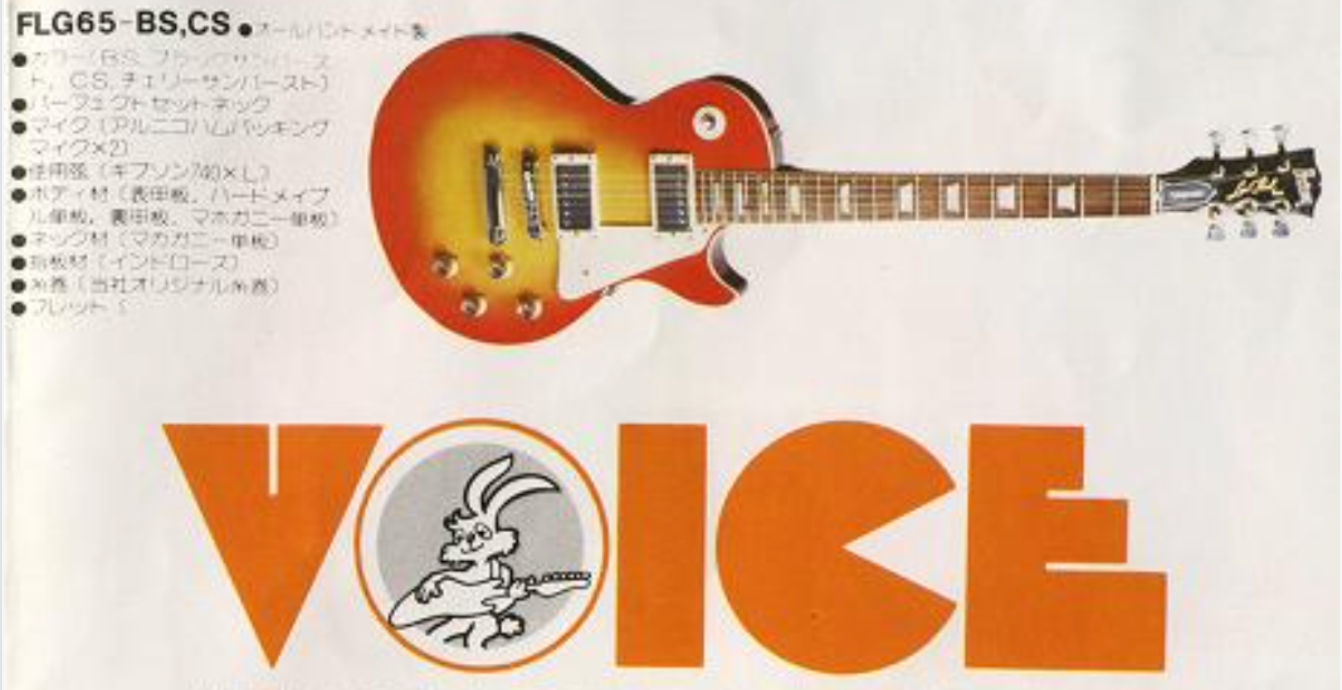
The FLG is where Burny began. Early 1975–1978 guitars had weaker hardware, pickups and finish work, like most brands of the time. The 1979–1981 FLGs are a different story, as the grades section above shows. Some sources say they were built by Tokai Gakki, but that has never been officially confirmed.
Decision line: aim for 1979–1981. Buy an earlier FLG only if the history matters to you.
Deep dive
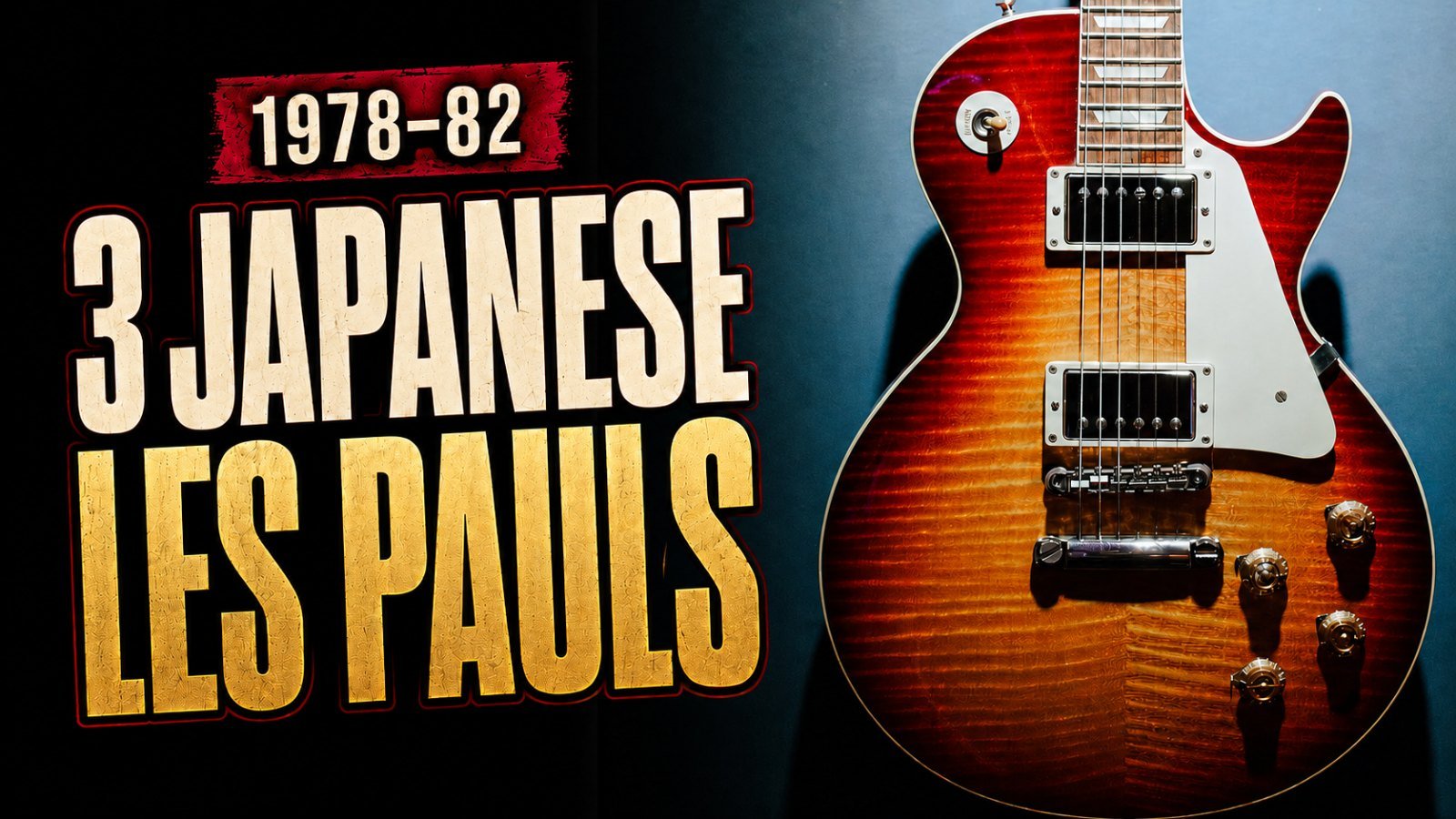
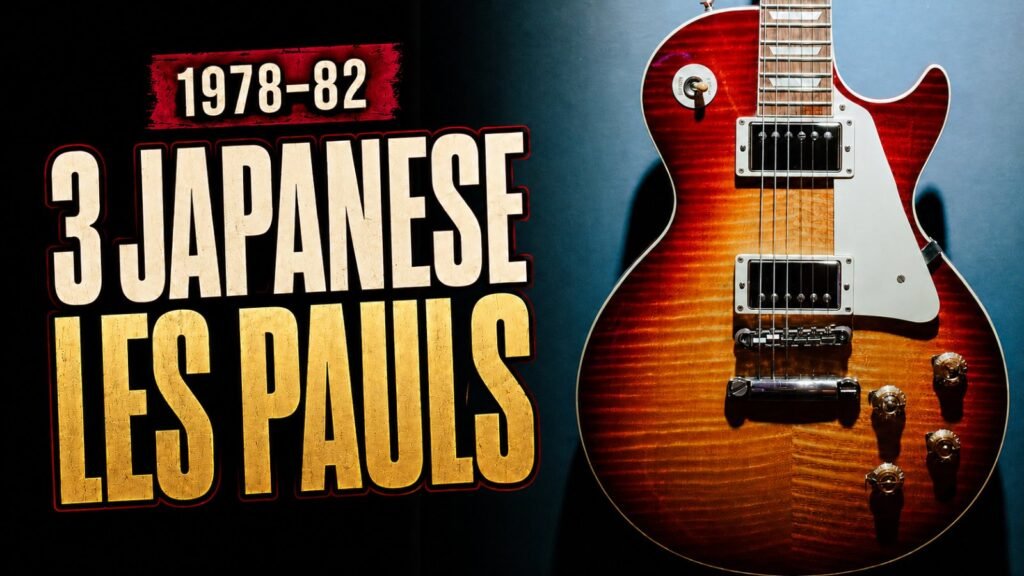
Japanese Les Paul Copies: Tokai vs Greco vs Burny (1978-1982)
How the golden-era FLG stacks up against Tokai and Greco.
Super Grade and RLG (1981–1980s): Revival-Era Les Pauls
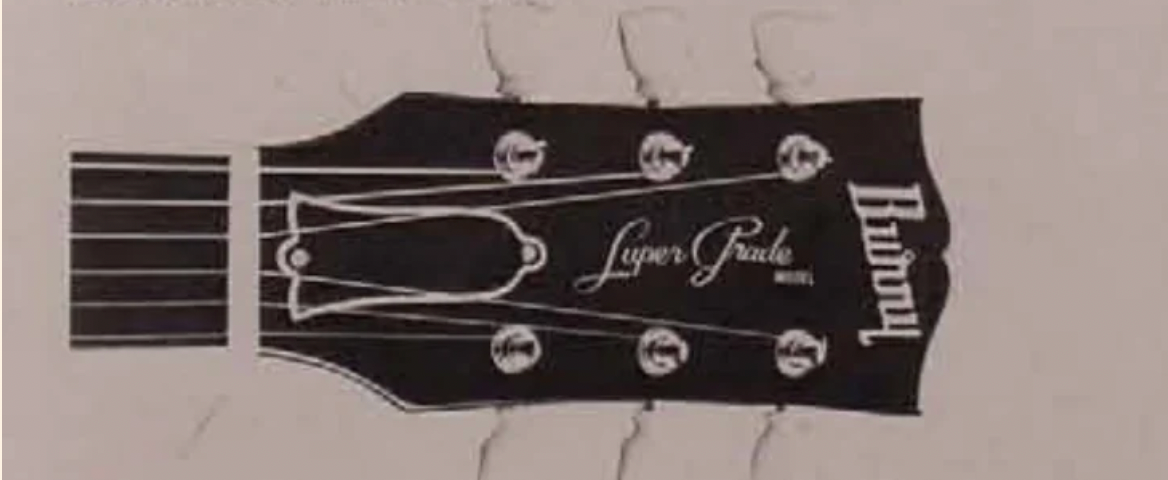
In 1981 the Revival series brought “Super Grade” to the headstock, and in 1982 every Les Paul FLG became an RLG. The RLG-150 and RLG-120 carried on as faithful copies with Japanese L8001 pickups, joined by the budget RLG-50 and the P-90-loaded RLG-60 goldtop.
Decision line: an RLG-150 or RLG-120 is the value route to a vintage-spec Burny.
Deep dive
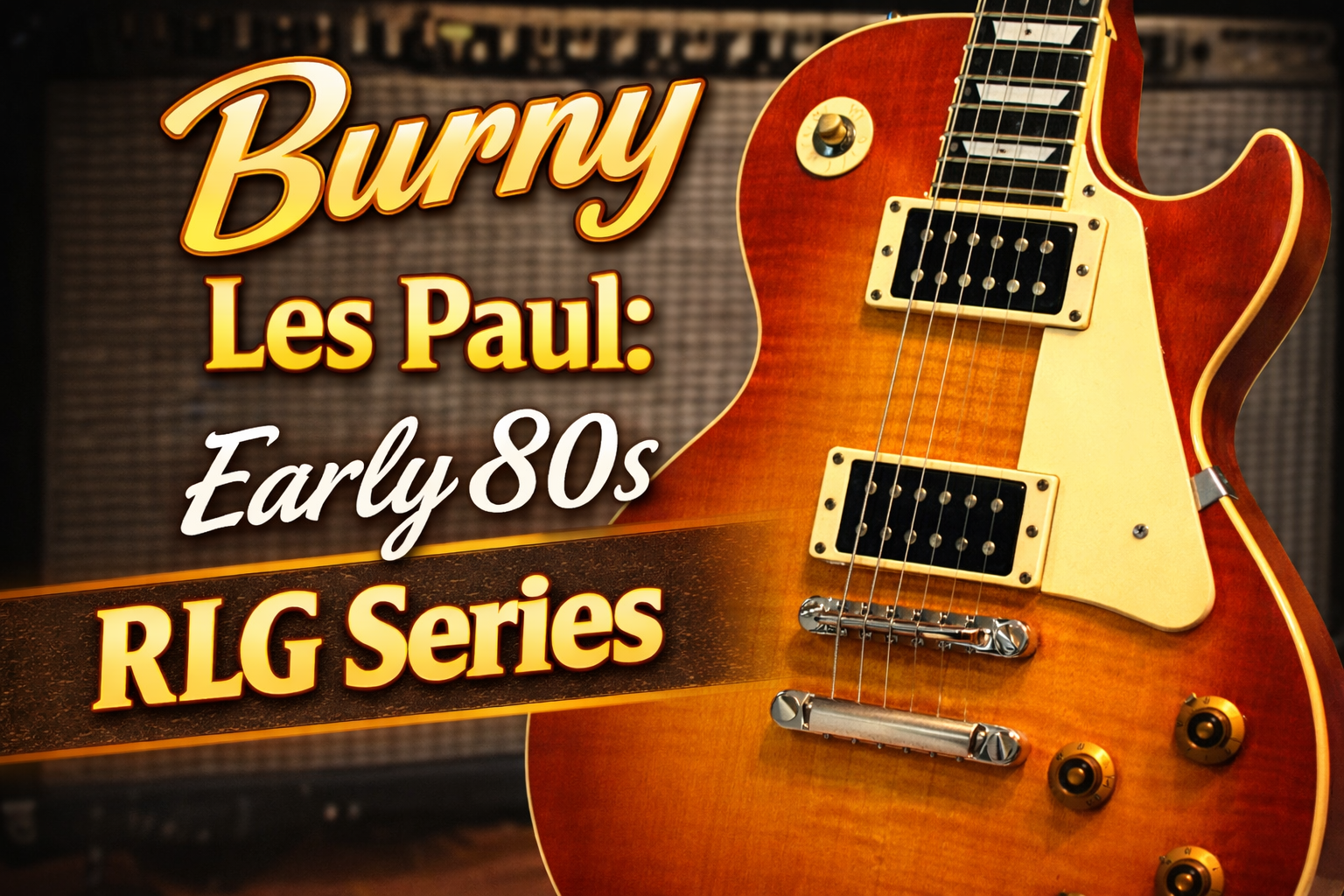
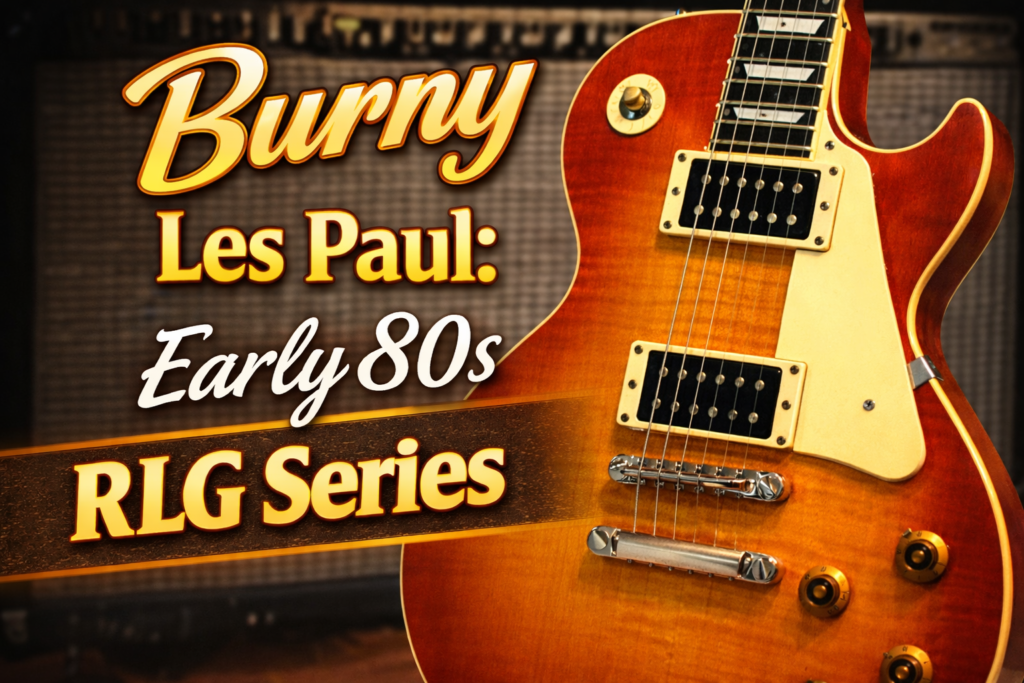
Burny Les Paul: Early 80s RLG Series
The RLG models and their specs.
Late Japanese Models: RLG-90, RLC-100, RLG-85, RLC-85
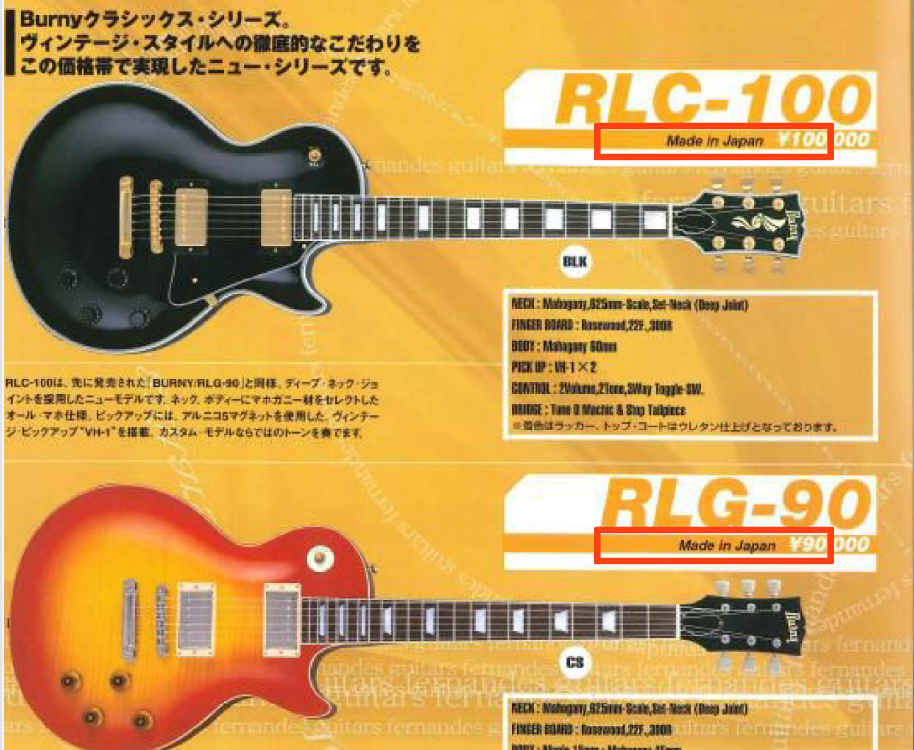
After production moved overseas in the mid-1990s, Burny still made a few Les Pauls in Japan: the RLG-90 and RLC-100 from 2003, and the RLG-85 and RLC-85 into the 2010s.
They don’t reach the golden-era FLG’s level, but they are recent, often near-mint and affordable. Choose one if condition and price matter more to you than collector value.
E Series and LS Series: Burny’s Own Designs
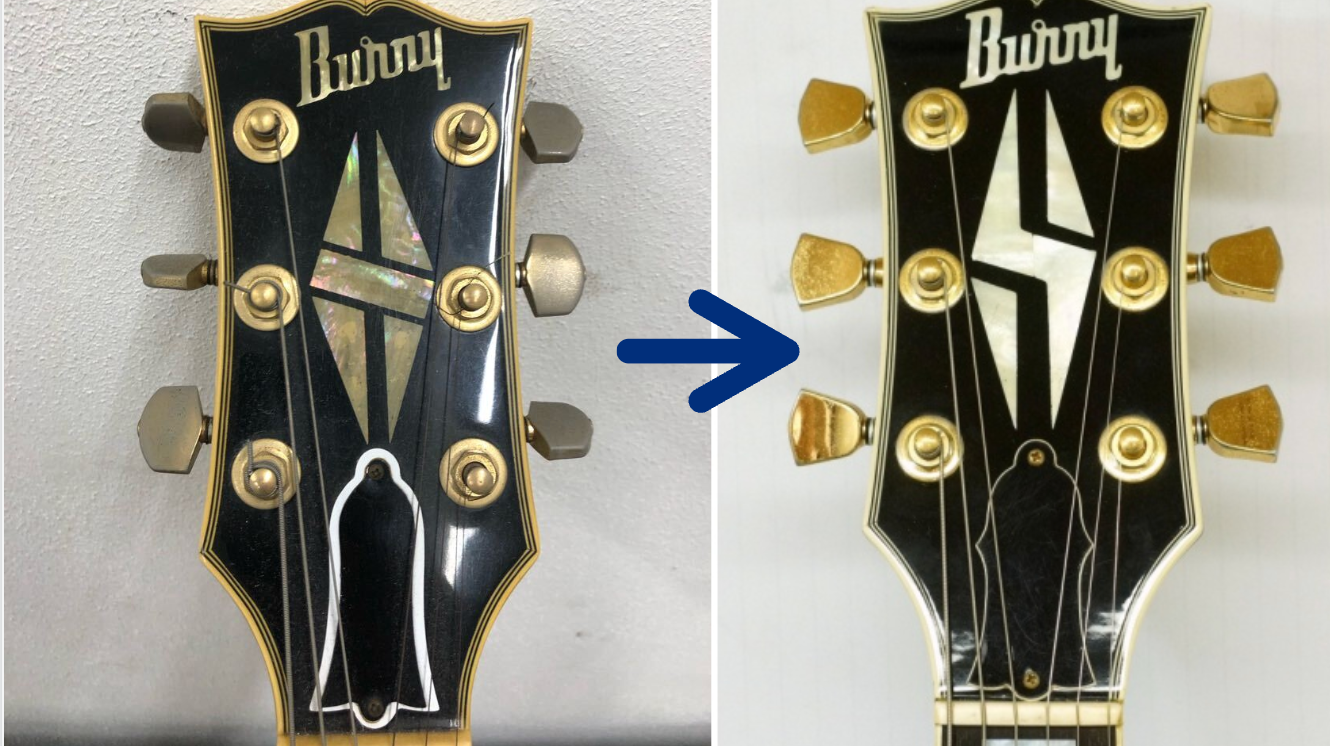
From around 1992, Burny added original designs: the double-cutaway E series and the LS series, with a body that looks like a pressed-flat Les Paul. Around the same time, Burny changed its truss rod cover shape and swapped the Les Paul Custom’s diamond inlay for a lightning bolt.
MG Series: hide’s Mockingbird
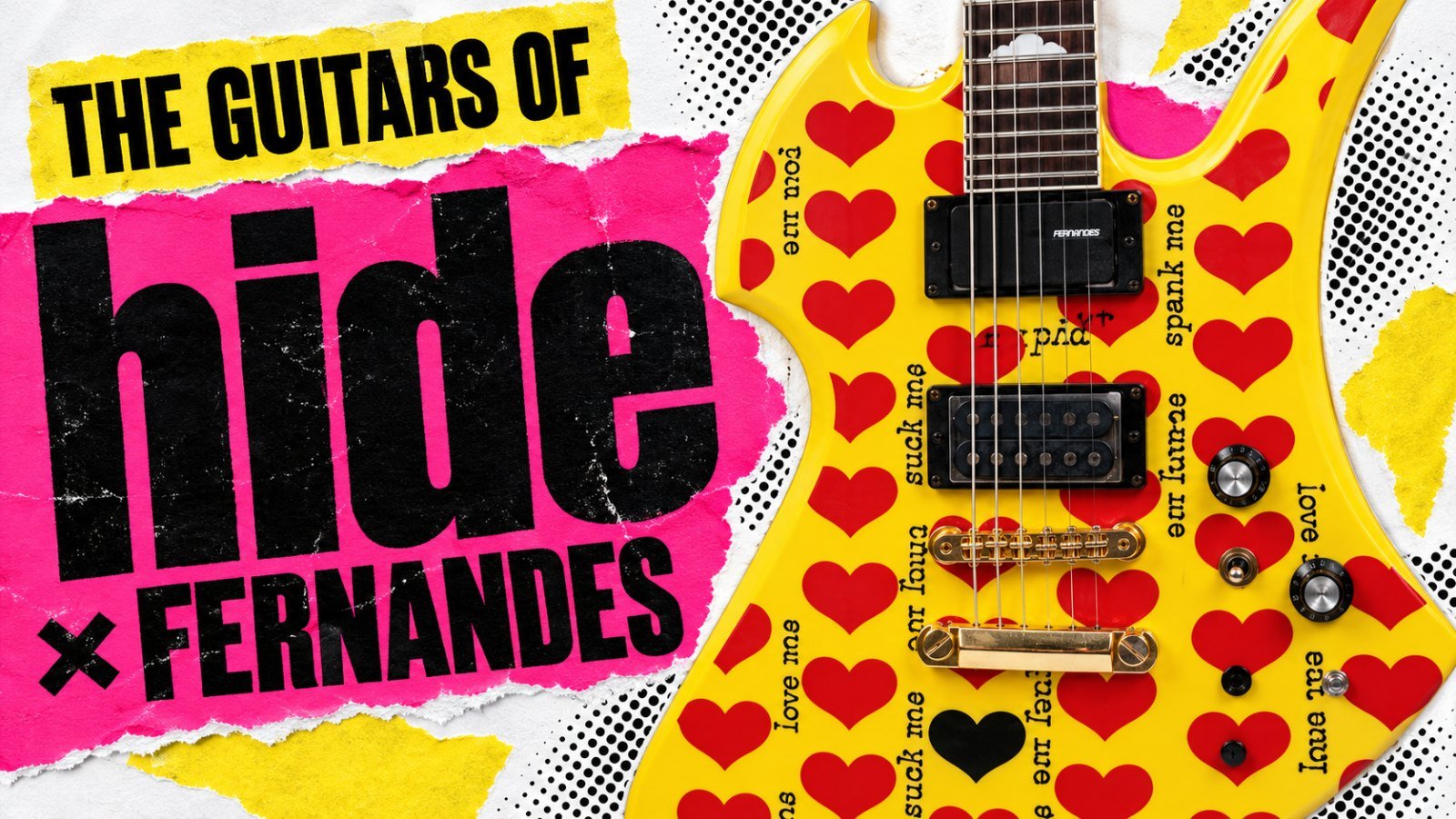
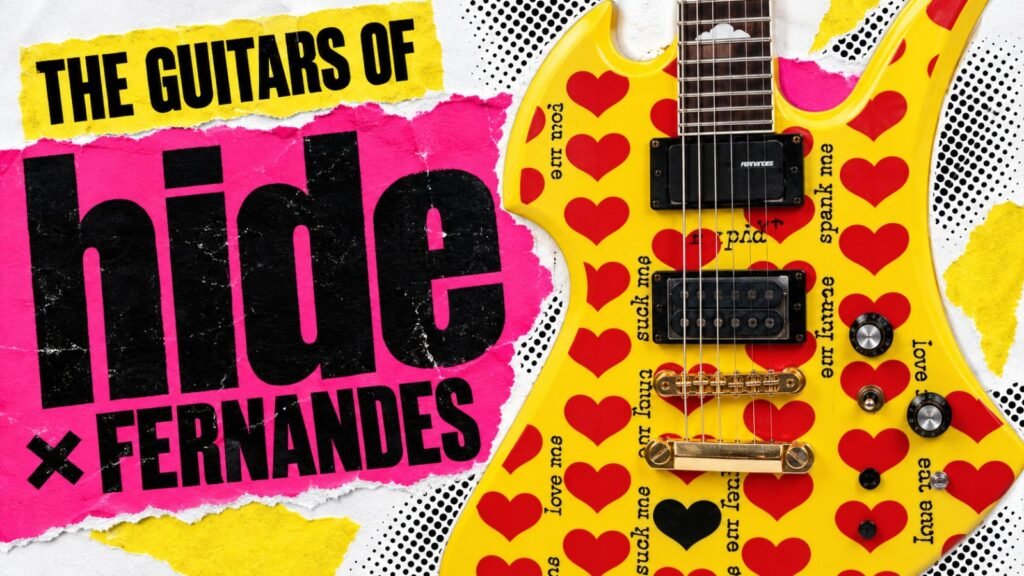
Burny also carried hide’s signature Mockingbirds, including the Yellow Heart MG-145S and MG-165S with the Fernandes Sustainer.
Deep dive
hide Fernandes Guitars: Army Panther, Ameba and Yellow Heart Explained
Every famous hide guitar and the models you can buy.
Buying a Used Burny
- Date it: the model prefix and headstock logo, matched against the eras table above, tell you roughly when it was made.
- Check the pickups are original: the right pickups for the era add value, so compare them with the grade and era.
- Confirm where it was made: much of the line moved overseas from the mid-1990s. Don’t rely on the “three-screw truss rod cover means not Japanese” rule: the Japanese-made RLG-90 and RLC-100 have three screws.
Related Brands and Factories
Final Thoughts
Burny began as an affordable sub-brand and ended up building some of the most faithful Les Pauls ever made in Japan. The golden-era FLGs are the collector’s prize, but the late Japanese-made RLGs are still one of the easiest ways to get a well-made MIJ Les Paul today.
FAQ
Who made Burny guitars?
Burny was a brand of Fernandes, the Tokyo guitar company. Fernandes sold Gibson-style guitars as Burny and Fender-style guitars as Fernandes.
Are Burny Les Pauls good guitars?
The best ones are excellent. The 1979 to 1980 FLG-240 and FLG-150 rank among the best guitars ever built in Japan, and later Japanese-made RLGs are well built and affordable.
What is the difference between Burny FLG and RLG?
FLG was the Les Paul prefix until 1981. In 1982 every Les Paul FLG was renumbered as an RLG.
What is a Burny VH-1 pickup?
A PAF-style humbucker used on Burny and high-end Fernandes models from 1985. Its magnets, wire and potting vary by generation.
Did Gibson sue Burny, and who won?
Gibson sued Fernandes in 1993 over the Les Paul shape and lost, in 1998 and again on appeal in 2000.
Are Burny guitars still made?
No. The brand ended when Fernandes went bankrupt in 2025.
All Burny Articles
Burny History: From FLG Les Paul Copies to the Final Bow (1975-2025)
Burny history is the story of the Gibson-copy brand of Fernandes, running from the first…
hide Fernandes Guitars: Army Panther, Ameba and Yellow Heart Explained
The hide Fernandes guitars are some of the most recognizable Japanese guitars ever made. In…

Fernandes vs Burny: 1 Company, 2 Brands Explained
Fernandes vs Burny is a comparison people often get wrong: they were not two companies….
Japanese Les Paul Copies: Tokai vs Greco vs Burny (1978-1982)
Japanese Les Paul copies from the late 1970s are some of the most faithful Les…
Burny Les Paul: Early 80s RLG Series
Overview & Key Points Burny Les Paul models from the early 1980s RLG series represent…