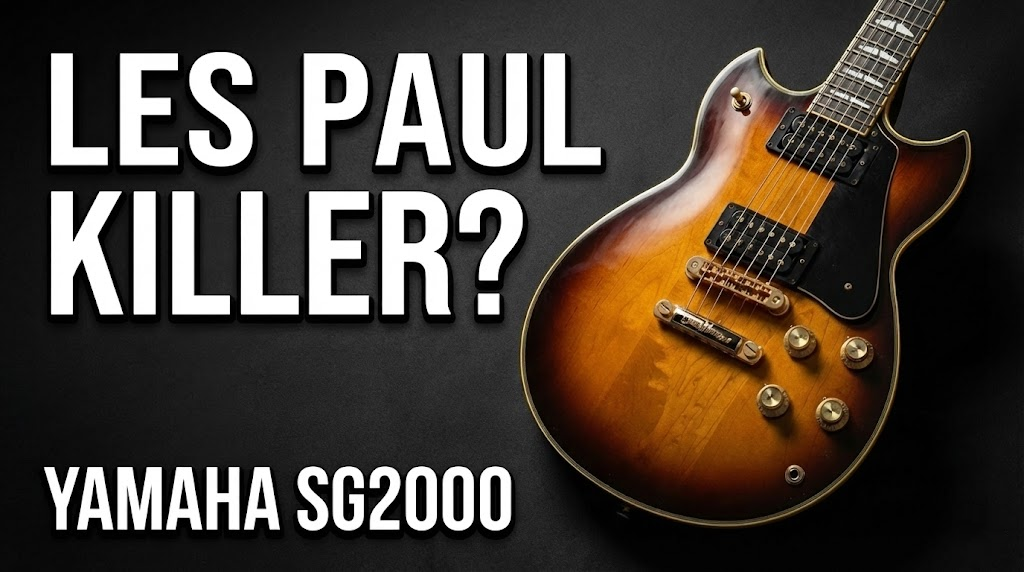
The Yamaha SG2000 is often seen as one of the most iconic electric guitars to come out of Japan.
But what makes it truly special is not just its build quality or design. It is the story behind it.
This is not simply “Santana’s guitar.”
It is a guitar shaped by his ideas.
In the mid-1970s, Yamaha didn’t just build a new model. They listened, adapted, and redesigned an instrument based on what a world-class player actually needed. That process led to the SG2000, a guitar built around sustain, power, and balance.
In this article, we’ll look at where the SG2000 came from, how it was developed, and why it still stands as one of the most respected Japanese guitars ever made.
Yamaha SG2000 Quick Facts
- Release year: 1976
- Development origin: Built based on Carlos Santana’s feedback after testing the SG175
- Key concept: Maximum sustain, strong low-mid punch, and professional-grade build
- Signature features: Neck-through construction, brass sustain plate, T-cross body structure
- Related models: SG175 (1974), SG1000 (1976), SG1820 (modern flagship)
The Origin: Santana and the SG175
A Meeting in 1974
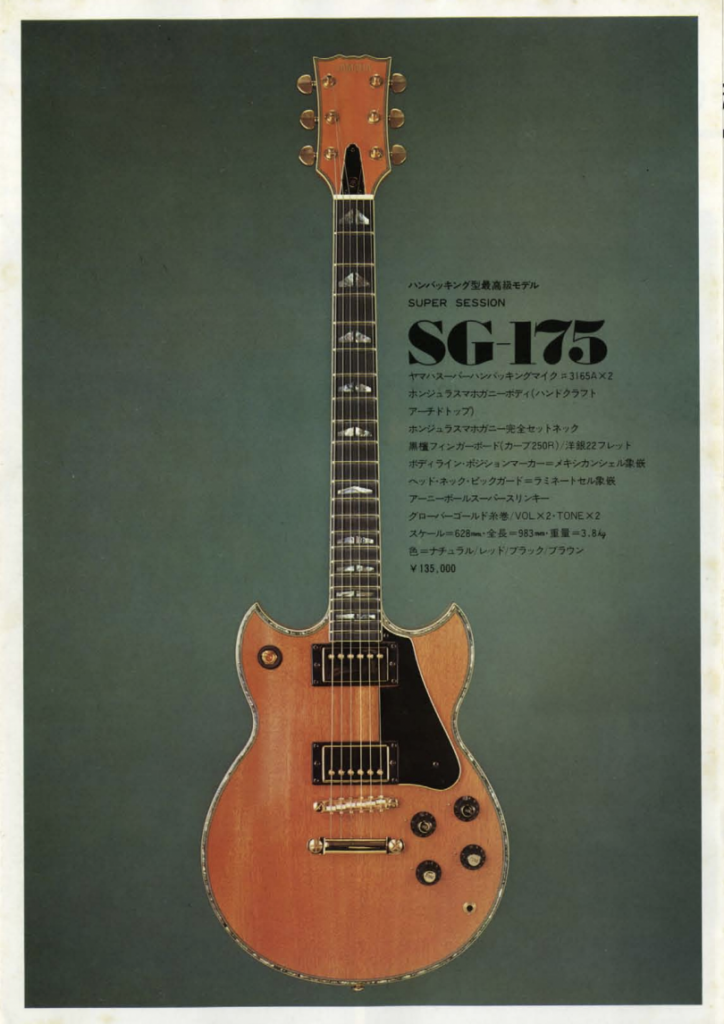
The story begins in 1974, when Carlos Santana visited Japan.
During that visit, Yamaha’s guitar designers brought him their SG175, a professional model they believed would match his style. It was designed with sustain in mind and had a tonal character that suited expressive playing, especially for songs like Europa.
From Yamaha’s perspective, it was a strong instrument.
But Santana saw it differently.
Santana’s Feedback Changed Everything
Santana didn’t reject the guitar outright.
Instead, he pointed out exactly what was missing.
He felt the guitar was too light, which limited its sustain.
He wanted more weight, more low-mid punch, and a stronger overall presence.
He also asked for 24 frets, extending the playable range.
These weren’t small tweaks.
They challenged the core design of the SG.
And that is what made them important.
The Turning Point: SG175 Buddha
From Feedback to Redesign
Yamaha didn’t ignore those comments.
They took them seriously.
Over the next year, the team went back to the drawing board and reworked the guitar from the ground up. The goal was simple: build something that could meet Santana’s exact expectations.
That process led to a completely different instrument.
The SG175 Buddha
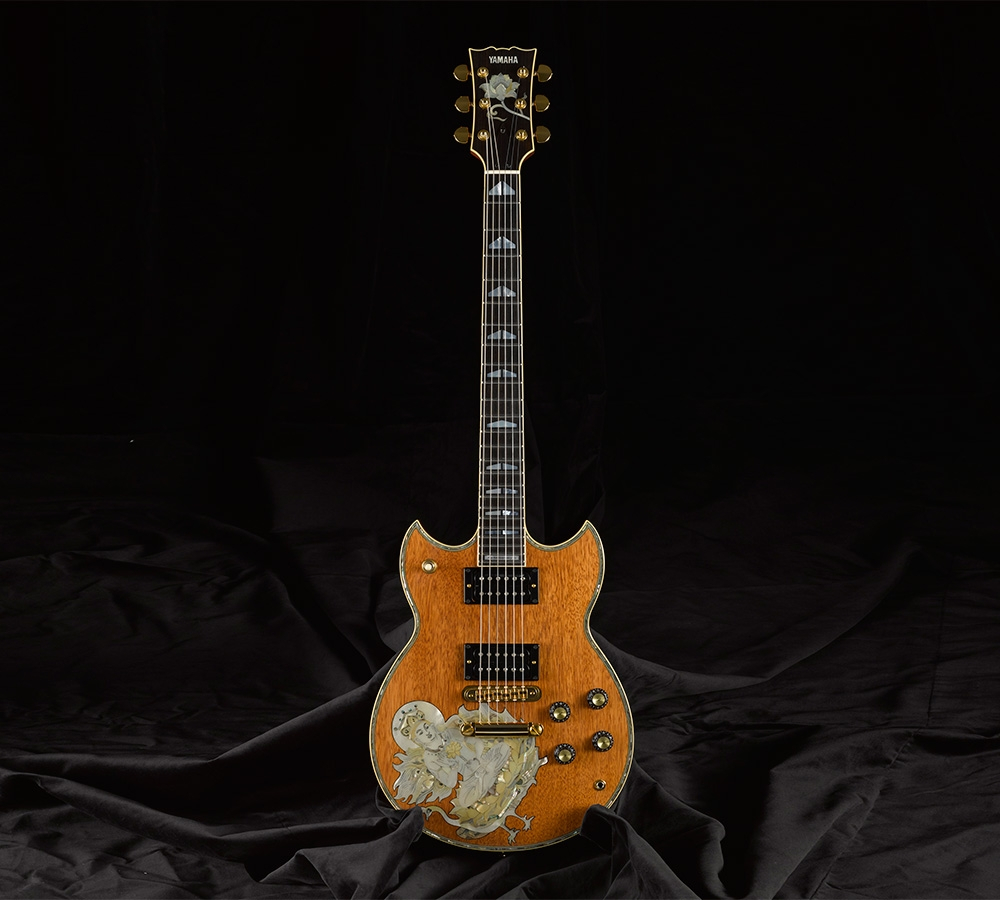
The result was the SG175 Buddha, a custom-built model created specifically for Santana.
It featured a neck-through construction, which improved both sustain and stability.
The overall build was heavier, directly addressing Santana’s concerns about mass and tone.
Visually, it was also unique, featuring a carved Buddha design on the body.
This wasn’t just a technical prototype. It was a statement piece.
Santana used this guitar both live and in the studio, making it a key step in the evolution of the SG series.
A Rare Piece of Yamaha History
Years later, in 1996, Yamaha brought this model back in a very limited form.
Only 50 units were produced, exclusively for the Japanese market.
Today, it is considered one of the rarest Yamaha guitars ever made.
The Birth of the Yamaha SG2000
From Custom to Production Model
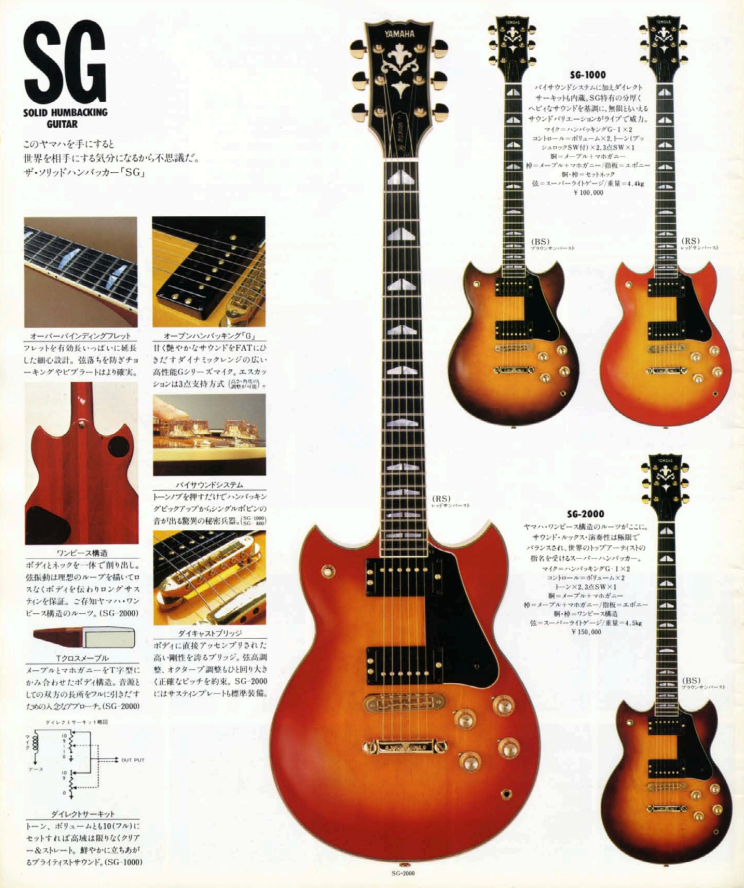
By 1976, Yamaha had taken everything they learned from this collaboration and turned it into a production model.
That model was the Yamaha SG2000.
This was not just an update.
It was the direct result of Santana’s input, translated into a guitar that other players could experience.
Built Around Clear Ideas
The SG2000 was designed with a clear focus.
- Strong sustain
- Powerful low-mid response
- Balanced overall tone
To achieve this, Yamaha incorporated several key features, including a neck-through structure, a brass sustain plate under the bridge, and high-output pickups designed for clarity and punch.
These were not random upgrades.
They were answers to specific problems.
And that is what gave the SG2000 its identity.
Design and Engineering Features
A Guitar Built as a System
The Yamaha SG2000 wasn’t defined by just one feature.
It was designed as a complete system, where each part contributed to the overall sound and feel.
That is why its tone, sustain, and playability feel so cohesive.
Over-Binding Frets
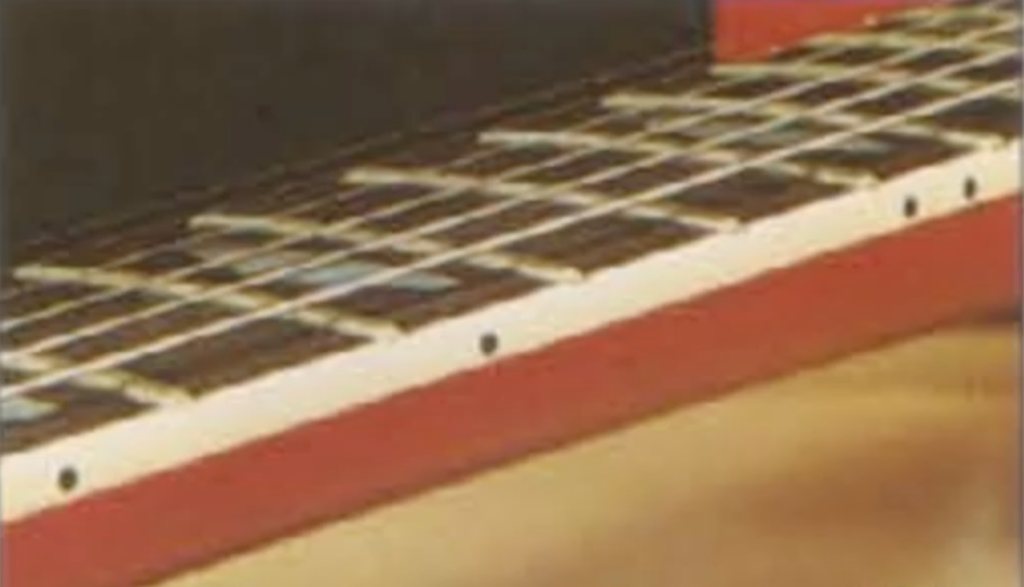
One of the most practical innovations was the use of over-binding frets.
These frets extend all the way to the edge of the fingerboard, increasing the usable playing surface.
As a result, strings are less likely to slip off the edge, especially on the first and sixth strings.
For players, this means bends and vibrato feel more stable and controlled.
T-Cross Body Construction
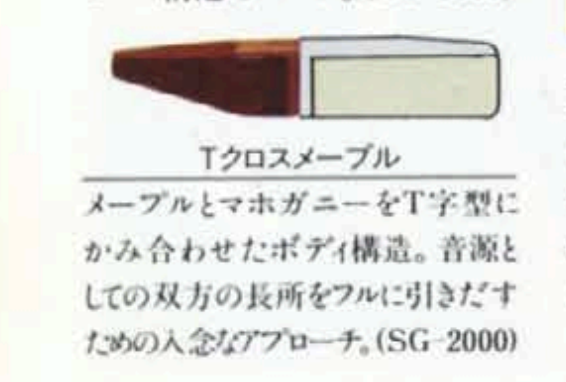
In the body construction, Yamaha used its unique T-cross design.
This structure locks maple and mahogany together, combining the brightness of maple with the warmth of mahogany.
The result is a tone that feels both clear and full, without leaning too far in either direction.
Bridge and Sustain Plate

The bridge system was also carefully designed.
A die-cast bridge is mounted directly to the body, improving stability and energy transfer.
On the SG2000, this bridge sits on a brass sustain plate.
This combination is a big part of what gives the SG2000 its long, piano-like sustain.
Electronics and System Features
Yamaha also explored new ideas in electronics.
On models like the SG-700 and SG-1000, they introduced the Bi-Sound System, essentially a coil-split by today’s standards.
This allowed players to switch to a brighter, more single-coil-like tone when needed.
The SG1000 also featured a Direct Circuit.
When the volume and tone controls are fully open, part of the circuit is bypassed, resulting in a cleaner and more direct signal.
Craftsmanship and Aesthetic Appeal

Built to Compete at the Highest Level
The SG2000 was not only about sound.
It was also built to look and feel like a top-tier instrument.
Gold hardware, multi-ply binding, and carefully finished inlays gave it a refined, professional appearance.
Made in Japan Quality
Each SG2000 was produced in Japan with a high level of precision and consistency.
At a time when build quality varied widely across brands, Yamaha delivered instruments that could stand shoulder to shoulder with major American manufacturers.
Because of this, the SG2000 earned a reputation strong enough to be called a “Les Paul killer” in some circles.
Artists and Influence
Beyond Santana
While Santana played a key role in shaping the SG2000, the guitar quickly found its way into the hands of other players.
Al Di Meola used it for its precision and clarity.
Andy Taylor brought it into the world of 1980s pop-rock, showing its versatility across genres.
A Strong Presence in Japan
In Japan, Masayoshi Takanaka became closely associated with the SG2000.
His use of visually striking models, including the well-known “Takanaka Blue,” helped define the guitar’s image within the Japanese music scene.
Still Relevant Today
Even today, SG-style guitars continue to appear in modern music.
Players like John Frusciante have brought that sound back into the spotlight, showing that the core character of the SG design still resonates with new generations.
The Legacy: From SG2000 to SG1820
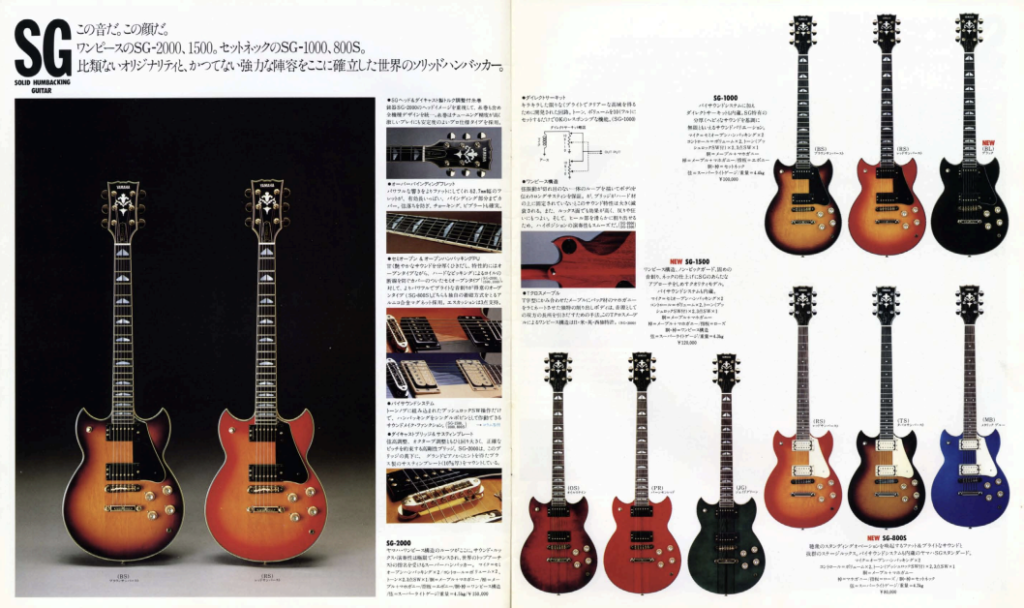
Expanding the SG Line
Shortly after the SG2000, Yamaha introduced the SG1000.
While it shared many design ideas, it used a set-neck construction, giving it a slightly brighter and more direct tone that appealed to rock players.
A Design That Continues
Over time, the SG series evolved, but the core ideas remained the same.
Focus on sustain.
Balance in tone.
Strong, reliable construction.
These principles carried forward into later models.
The SG1820 Today
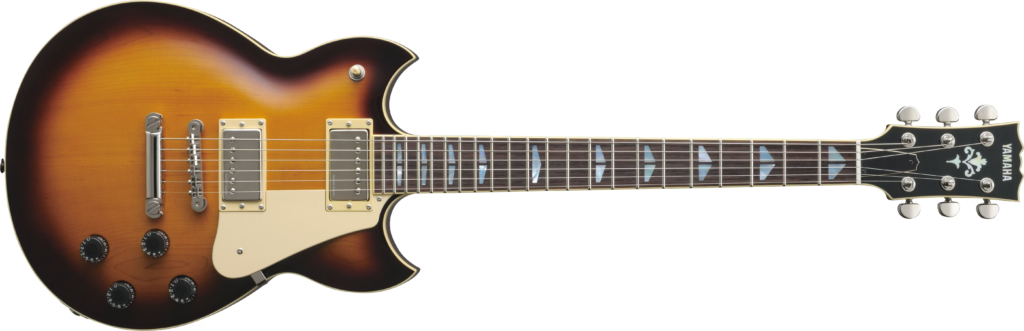
Today, that legacy continues in the SG1820, Yamaha’s current flagship.
While updated for modern players, it still reflects the same design philosophy that began with the SG2000.
Nearly fifty years later, the influence of that original model is still clearly visible.
Conclusion: A Guitar Defined by Ideas
The Yamaha SG2000 is more than just a vintage guitar.
It represents a moment when a company listened carefully to an artist and built something entirely new in response.
Instead of copying existing designs, Yamaha focused on solving real musical problems.
That approach led to a guitar with a clear identity.
And that is why, even today, the SG2000 remains one of the most respected guitars to come out of Japan.
FAQ
When was the Yamaha SG2000 released?
The Yamaha SG2000 was released in 1976 as the flagship model of the SG series, following the development work influenced by Carlos Santana’s feedback.
Was the Yamaha SG2000 a signature model for Santana?
No, the SG2000 was not officially a signature model. However, it was heavily shaped by Santana’s input, making it one of the rare production guitars built directly from an artist’s design ideas.
What makes the Yamaha SG2000 unique?
The SG2000 combines several key features, including neck-through construction, a brass sustain plate under the bridge, and Yamaha’s T-cross body structure, all designed to maximize sustain and tonal balance.
What is the T-cross construction in the SG2000?
The T-cross construction is Yamaha’s unique body design that locks maple and mahogany together, blending brightness and warmth to create a balanced tonal character.
What is the Bi-Sound System on SG models?
The Bi-Sound System, found on models like the SG-700 and SG-1000, is what we would now call a coil-split, allowing players to switch to a brighter, single-coil-style tone.
Is the Yamaha SG2000 still available today?
The original SG2000 is no longer in production, but its design continues in modern models like the SG1820, which carries forward its core design philosophy.