Burny is a Japanese guitar brand made by Fernandes, known for building some of the most faithful Gibson Les Paul copies ever produced. Active from the mid-1970s until Fernandes’ bankruptcy in 2025, Burny’s golden-era models are now prized as Japan Vintage.
Burny Quick Facts
- Maker: Fernandes (founded 1969 as Saito Gakki; renamed Fernandes in 1972)
- First Burny Les Paul: FLG series (c. 1975)
- Burny naming: A misspelling of “Bunny,” later kept for its link to “burn”
- Golden-era models: FLG-240 / FLG-150 (no-decal era, 1979–1980) — Japan Vintage grails
- Model prefixes: FLG (from 1975) → RLG (from 1982, Revival era)
- Signature pickup: VH-1, a PAF-style humbucker (from 1985)
- Landmark lawsuit: Gibson v. Fernandes — filed 1993; Gibson lost (Tokyo District Court 1998, Tokyo High Court 2000)
- End of the brand: Fernandes bankruptcy, 2025
Related: Fernandes · Gibson Les Paul · Greco · Tokai · Matsumoku · Japan Vintage · VH-1 pickup
Prefer to watch? This article is based on my own video below.
- The Origins of Burny and Fernandes
- The First Burny Les Pauls (1975–1978)
- The Golden Era: Japan Vintage FLG Models
- The Revival Era: Super Grade, RLG, and the VH-1 Pickup
- Original Designs and the Late Copies
- Gibson vs. Fernandes: The Lawsuit That Decided the Les Paul Shape
- The Decline and Final Bow
- Key Features of Fernandes and Burny Guitars
- Who Should Choose a Fernandes or Burny Guitar?
- Conclusion
- FAQ
The Origins of Burny and Fernandes
From Saito Gakki to Fernandes
Burny came from an instrument maker called Fernandes. The company started life in 1969 as Saito Gakki, selling mostly classical guitars. In 1972 it took the name it is known by today, Fernandes, and around the same time it moved seriously into building and selling electric guitars.
There was a clear reason for that move. In the Japanese guitar market of the early 1970s, Gibsons and Fenders were expensive, and hardly any were imported. For a young player, the real thing was out of reach. So Japanese makers rushed in, building precise copies and selling them cheaply. Kanda Shokai had Greco. Tokai Gakki had Tokai. Fernandes rode the same wave, aiming to produce copies good enough to stand next to the originals.
Two Brands: Fernandes and Burny
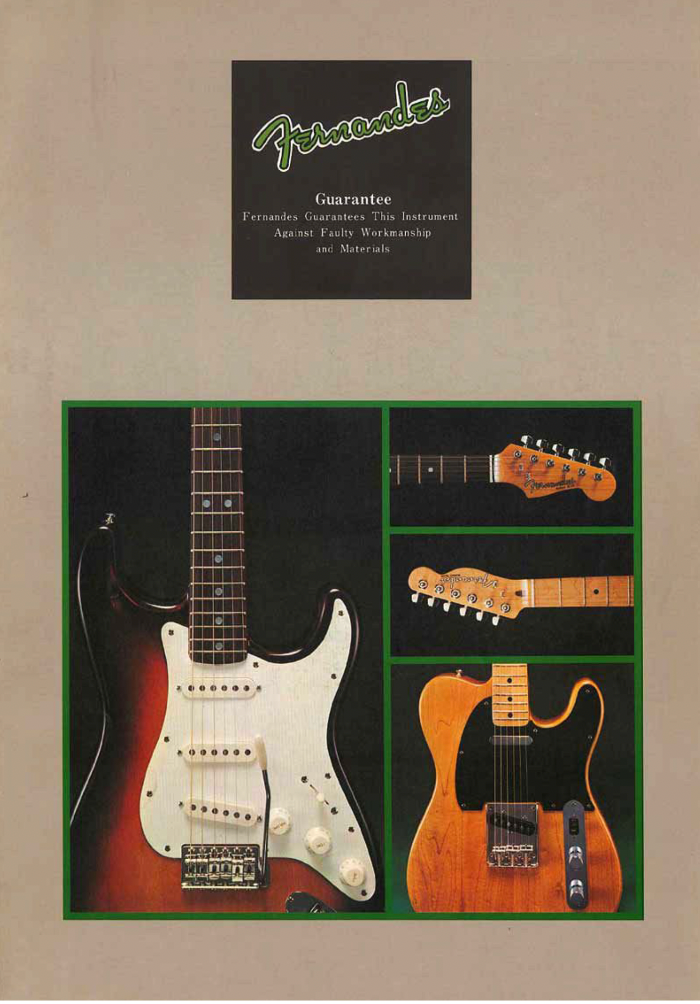
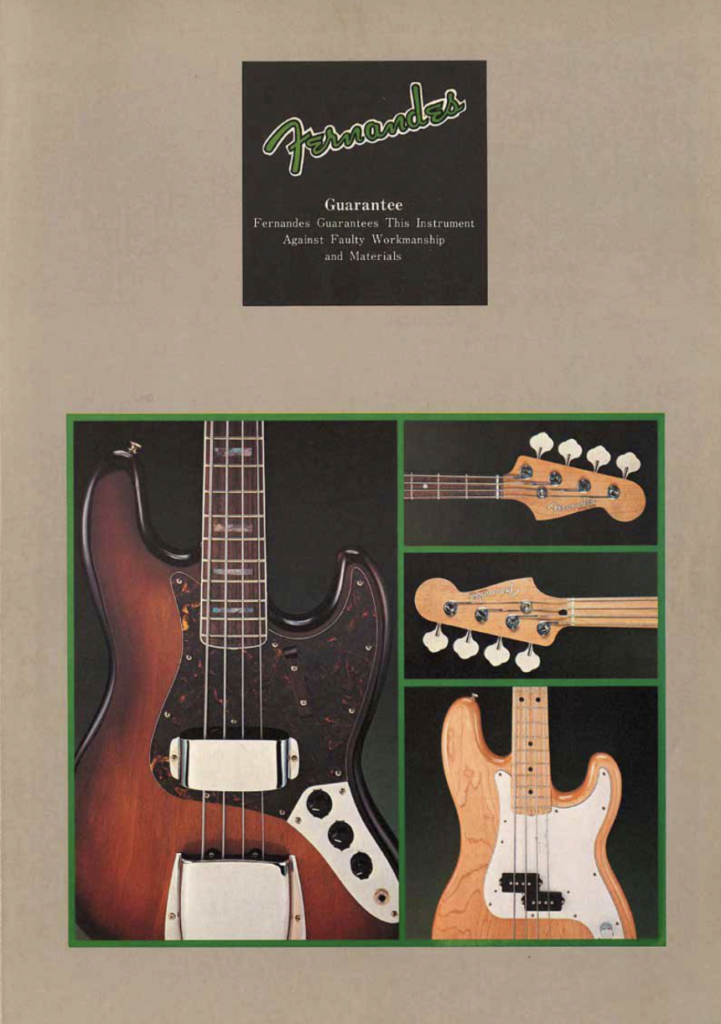
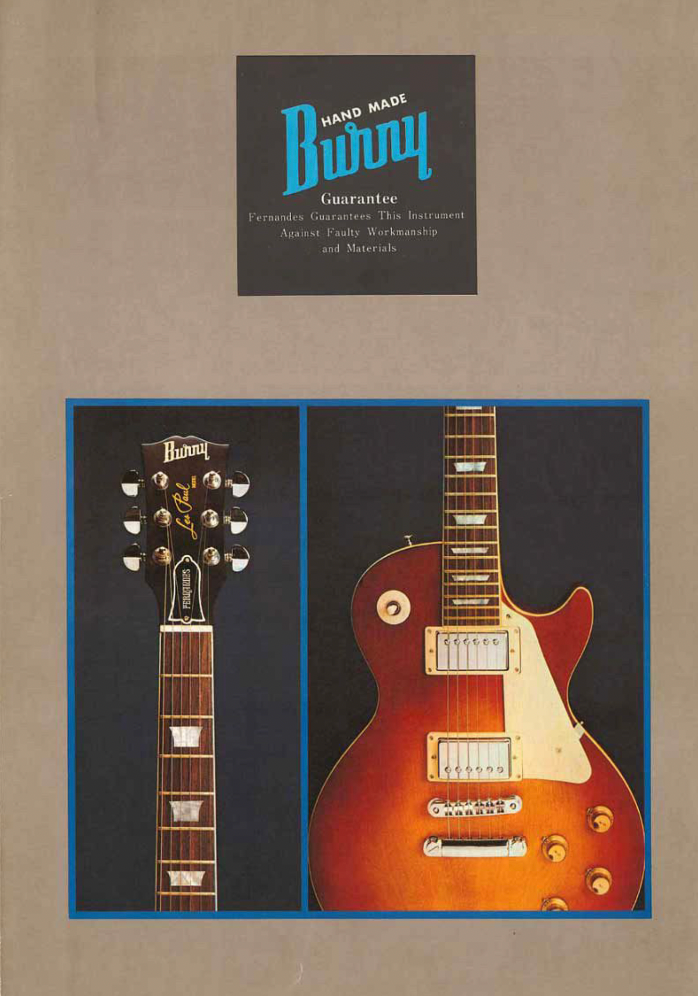
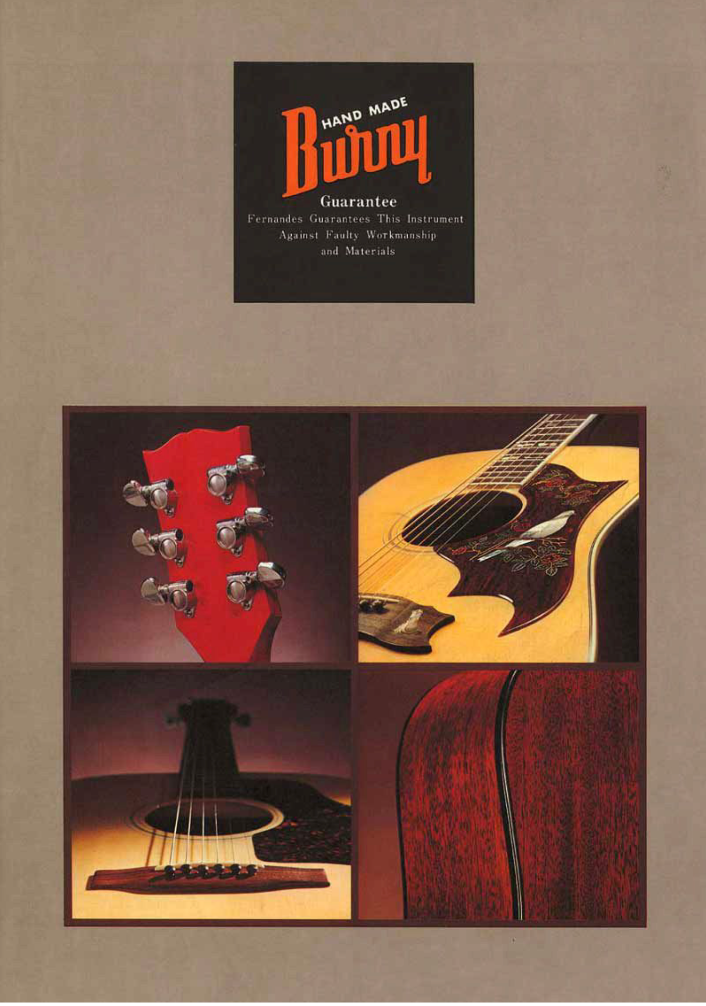
This is where the two-brand structure comes from. Fender-style copies — the Stratocaster and the Telecaster — went out under the Fernandes name. Gibson-style copies — the Les Paul and the SG — went out under the name Burny. In other words, Burny was built for a single purpose: Gibson copies.
The two brands were meant to be separate from the start, though you will still find early Fernandes Stratocasters carrying a Burny logo. Because the Fernandes brand also covered amps and PA gear, people simply saw it more often, so a “Burny Custom” logo was printed on the headstock of some Fernandes Strats to give the newer name more exposure.
How Burny Got Its Name
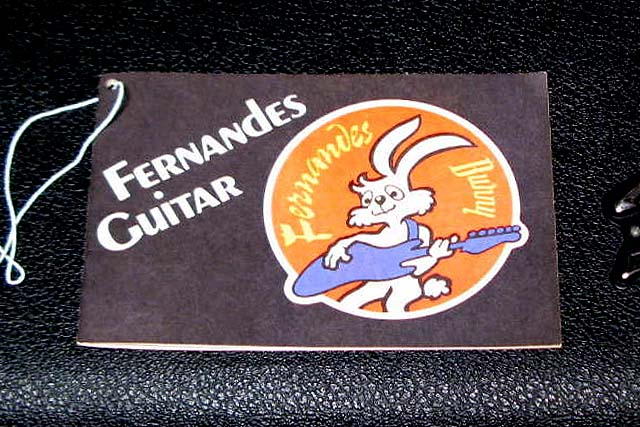
There is a famous story behind the name. It was supposed to be “Bunny,” after a rabbit character, but someone misspelled it and it came out as “Burny.” The company later noticed the spelling suggested the English word “burn,” liked it, and kept it. For a rock guitar brand, the accident landed perfectly.
The First Burny Les Pauls (1975–1978)
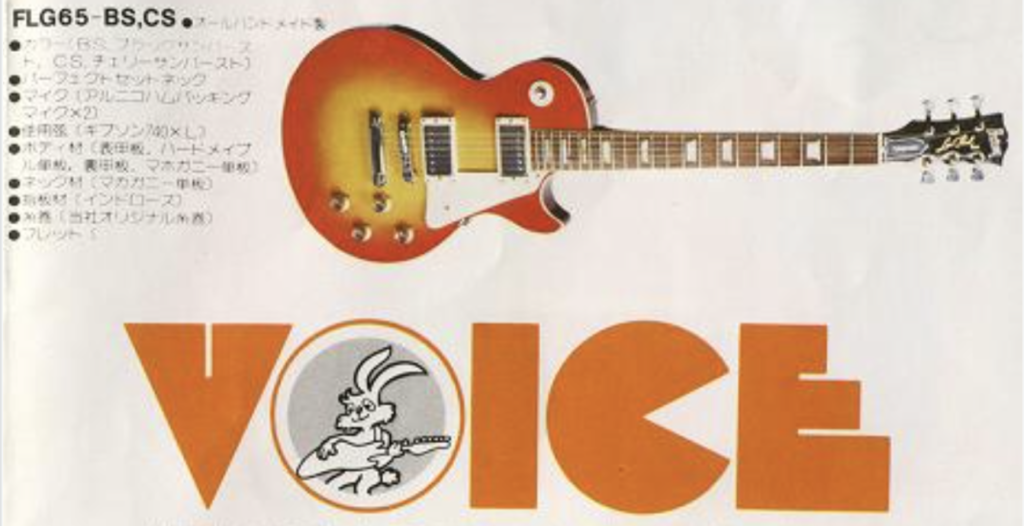
The FLG, Burny’s first Les Paul copy, appeared around 1975. Guitars from 1975 to 1978 mark the starting point of Burny’s quality, and it shows: the build was still developing, and reviews of the era often mention the same few weak spots — the chrome hardware, the pickups, and the finish work.
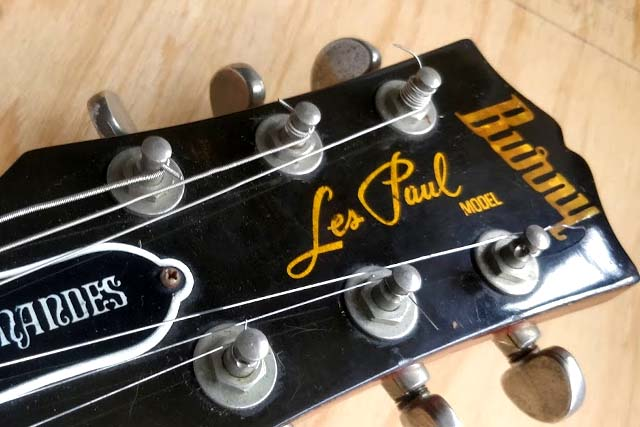
That said, most other brands of the period behaved the same way. They prioritized the look and a low price over the fine details of a vintage instrument, so Burny was not uniquely rough for its time. The headstocks from this era even read “Les Paul Model” outright — Burny was far from the only brand doing this, but it shows how bold Japanese makers were willing to be.
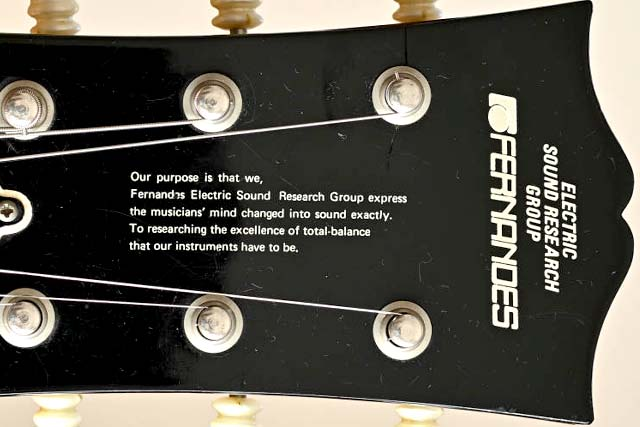
For a brief window in 1978, some FLGs carry a Fernandes “stone logo” instead of a Burny logo. On those, the headstock skips “Les Paul Model” entirely in favor of dense lines of English text — a detail you will not find anywhere else.
The Golden Era: Japan Vintage FLG Models
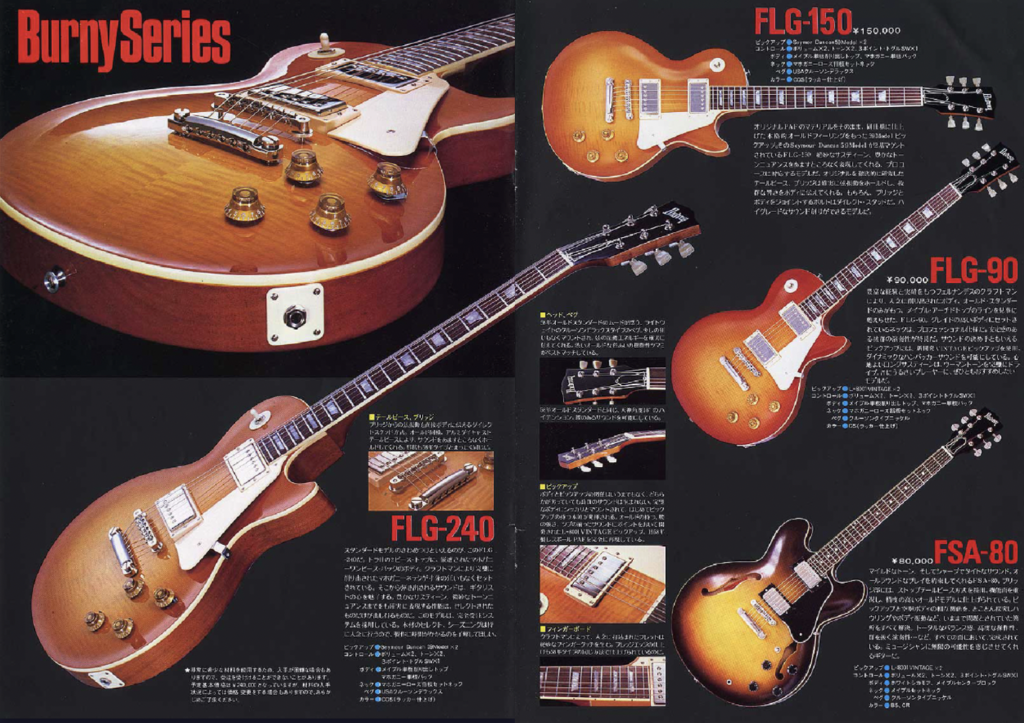
Around 1979 and 1980, Burny redesigned the Les Paul line and introduced the FLG-240, FLG-150, and FLG-90. These were faithful copies of Gibson’s 1959 Les Paul, considered down to the woods, the tuners, the frets, the headstock angle, and even the angle of the arched top. Because the “Les Paul” logo no longer appeared on the headstock, collectors call this the no-script period, or no-decal era.
The FLG-240 and FLG-150
These guitars rank among the best ever built in Japan. The FLG-240 was made strictly to order, with wood selected and seasoned by hand. It featured a one-piece body, a one-piece neck, and a solid flame top, finished in nitrocellulose, with Seymour Duncan ’59 pickups and high-quality nickel hardware. The FLG-150 was the production version — the same quality and features, built in larger numbers.
The Tokai Connection
There is also a claim that production moved to Tokai Gakki around this time. It is hard to dismiss: Tokai’s own Reborn Old, built in the same years, is strikingly similar, right down to how the serial number is stamped.
The Revival Era: Super Grade, RLG, and the VH-1 Pickup
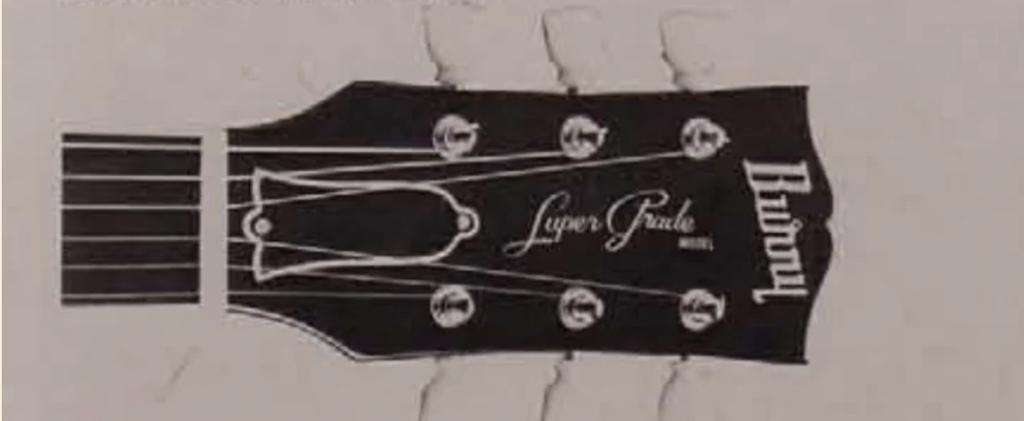
In 1981, the Revival series launched, and “Super Grade” appeared on the headstock. The model numbers still began with FLG and the grades stayed the same, though some sources say the factory shifted again here, from Tokai Gakki to Matsumoku.
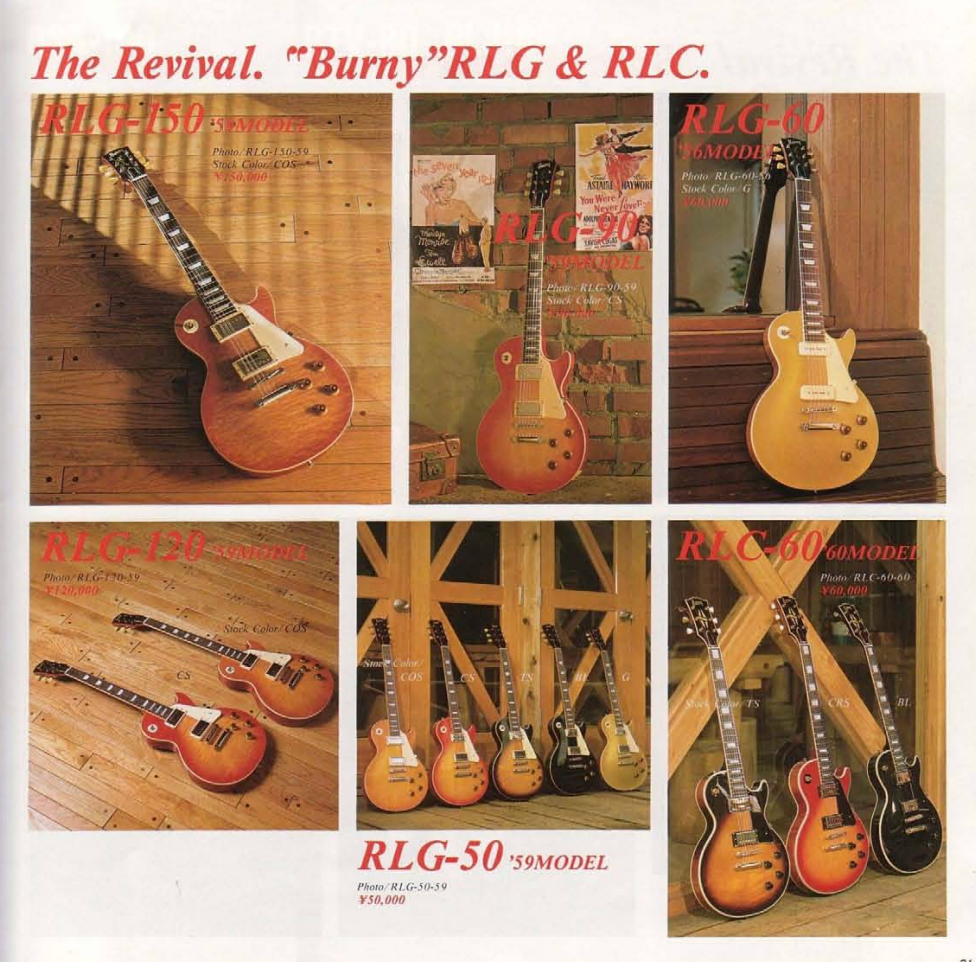
In 1982, the Revival series continued but the numbering changed. Every Les Paul model that had been an FLG became an RLG. The RLG-150 and RLG-120 carried on as faithful copies, with the pickups changing from Seymour Duncan to a Japanese unit called the L8001 — the same pickup used in the 1980–81 FLG-90. A budget RLG-50 joined the line, along with a P-90-loaded, 1956-style RLG-60 in goldtop only. Every other copy in the catalog was renumbered to start with R as well.
From 1985, the now well-regarded VH-1 pickup went into Burny and every high-end model across the Fernandes line. Tastes vary, but it is best understood as an upgraded take on the Gibson PAF. For collectors, the VH-1 rewards study: the magnets, the wire, and whether or not it was potted all change from one generation to the next.
Original Designs and the Late Copies
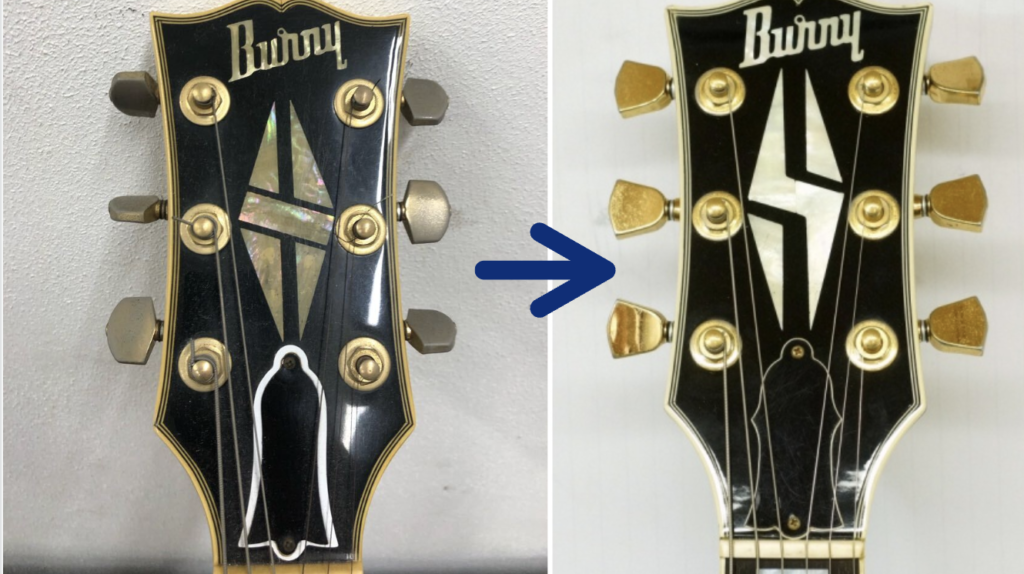
From the mid-1980s, the wider Lawsuit Era caught up with everyone. Japanese makers pulled back from faithful copies and changed their specs. Burny altered the shape of its truss rod cover, and on the Les Paul Custom, the diamond inlay was replaced with a lightning-bolt-shaped inlay.
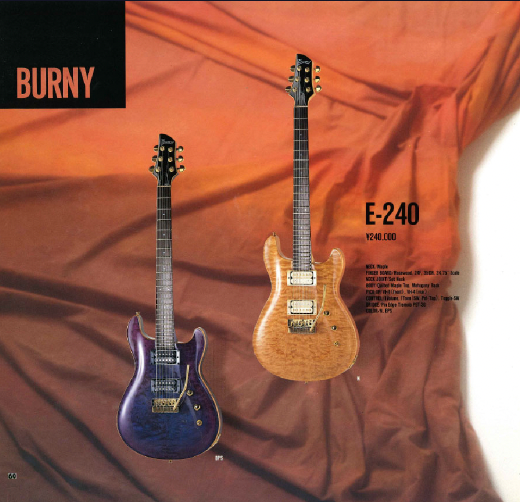
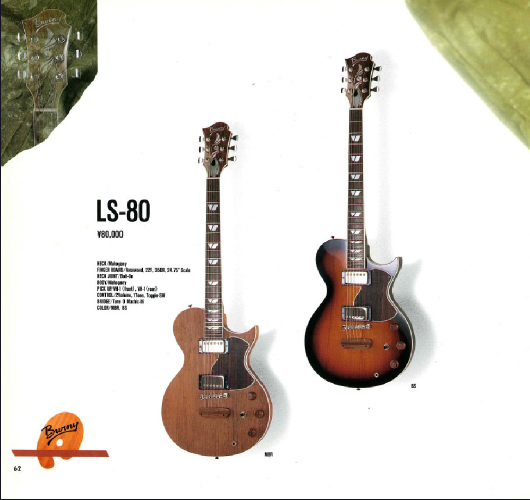
Burny was not only making copies, either. From around 1992 it introduced original designs, including the double-cutaway E series and the LS series, whose body looks like a Les Paul pressed flat. Even so, the faithful Les Paul Standard copy, with “Super Grade” on the headstock, stayed in the line into the early nineties.
Gibson vs. Fernandes: The Lawsuit That Decided the Les Paul Shape
In 1993, Gibson filed suit against Fernandes at the Tokyo District Court, seeking to halt production and sale of the copies and claiming damages. Its main claim was brought under Japan’s Unfair Competition Prevention Act — specifically the provision on well-known product indications — with a fallback claim in general tort. The core question was whether the Les Paul’s shape still functioned as a “well-known indication” of Gibson as the source. The court’s reasoning moved through four stages. (The full appeal judgment is published by the Japanese courts at https://www.courts.go.jp/assets/hanrei/hanrei-pdf-13312.pdf.)
1. The Shape Once Identified Gibson
The court accepted Gibson’s starting point — up to a point. It found that by around 1973, the Les Paul’s shape had become well known among Japanese rock fans as an indication that the guitar was a Gibson product — carried into Japan largely by famous players and the music media rather than by ordinary advertising.
2. But That Recognition Had Since Vanished
The decisive finding was that this source-identifying power had already been lost — at the latest, before Gibson sued in 1993. From around 1970, when the first copies appeared, more than twenty years of lookalikes had flooded the market: at times over a dozen Japanese makers selling under more than thirty brands. After all that, buyers could no longer tell a guitar’s source from its shape alone.
3. Sold Openly as Copies
That flood was possible because the copies were sold openly as “replicas,” their close resemblance used as the very selling point. Catalog copy pitched Fernandes as the affordable alternative to out-of-reach Gibsons and Fenders. Because buyers knew these were imitations, the shape could no longer point them back to a single maker.
4. Gibson’s Own Inaction
Crucially, the court noted — and Gibson conceded — that from the first copies around 1970 until 1993, Gibson took no action in Japan against the copyists. Two decades of tolerated imitation was itself what dissolved the shape’s legal protection.
The Verdict
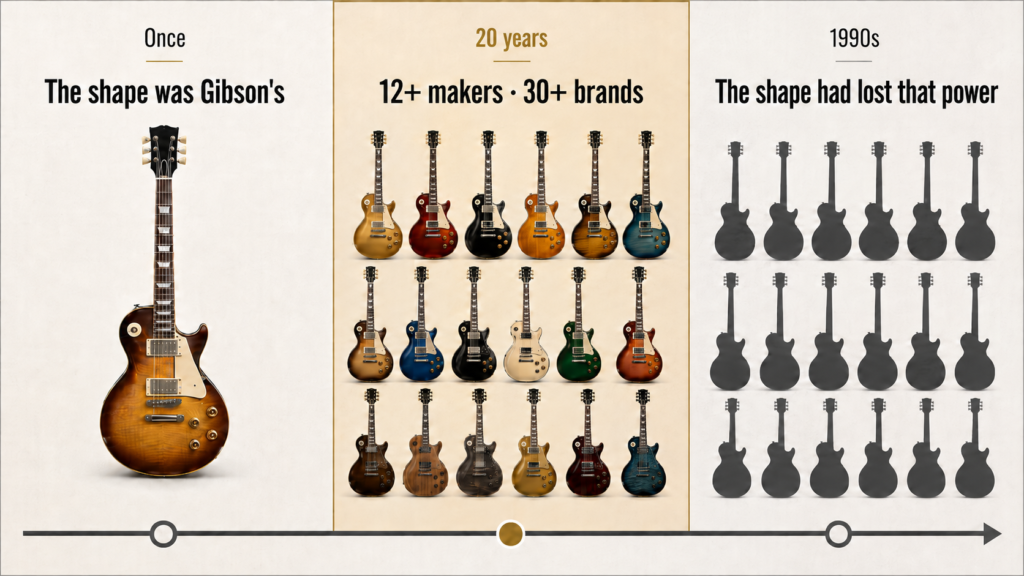
Because the Les Paul shape no longer worked as a source indicator, Gibson’s unfair-competition claim failed. The Tokyo District Court dismissed the case on February 27, 1998; Gibson appealed, and the Tokyo High Court dismissed the appeal on February 24, 2000. The fallback tort claim failed as well — while selling precise imitations that traded on Gibson’s fame might have been unlawful when it began, the years of unchecked circulation had, by then, standardized the shape across the industry. (An earlier Gibson–Elger dispute had helped kick off the wider “Lawsuit Era,” but that was a matter for the American market.) Had Gibson acted sooner, the outcome might have been different.
The Decline and Final Bow
By the mid-1990s, Fernandes had already turned toward cost-cutting, moving production to Taiwan, Korea, and China and focusing on entry-level guitars. Burny went with it — built outside Japan, in the low and mid price ranges, and reduced to a few pages at the back of the catalog apart from the hide signature models.
There were later Japanese-made highlights. In 2002, models based on the Les Paul Standard and Custom returned, and in 2003 the higher-end, Japanese-made RLG-90 and RLC-100 arrived. (Note: the common “three-screw truss rod cover means non-Japanese” rule fails here — both of these have three screws.)
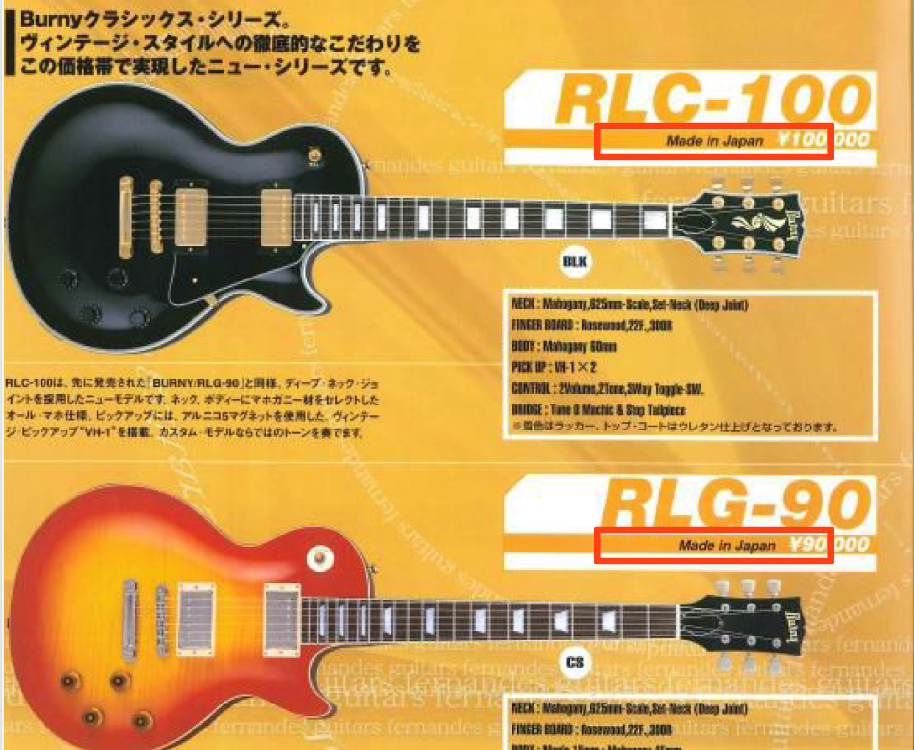
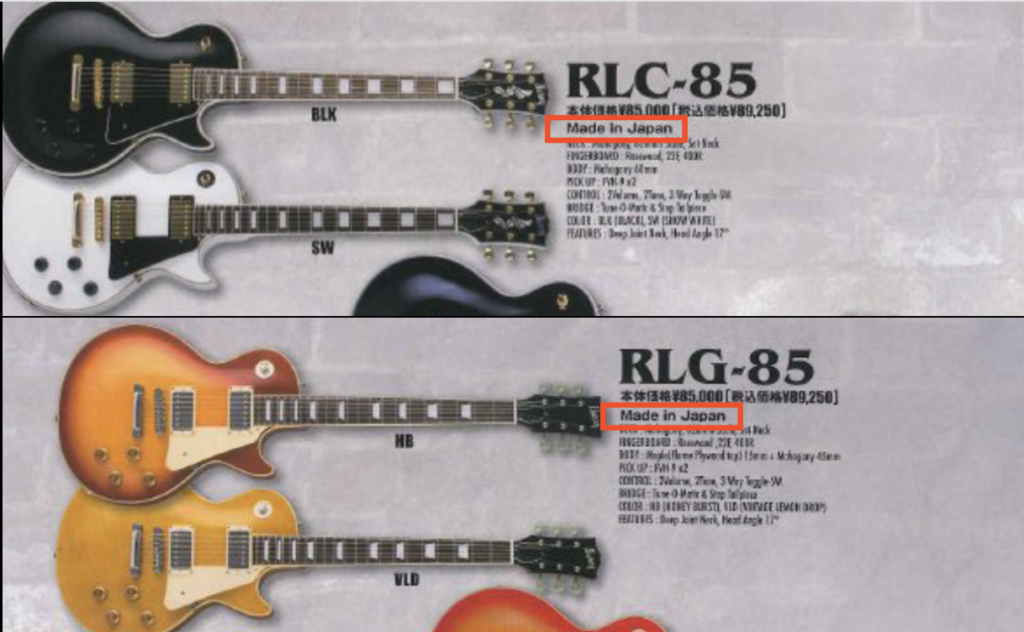
Even into the 2010s, Fernandes still built the RLC-85 and RLG-85 in Japan. For anyone who simply wants a Japanese-made Les Paul without paying for history, these late models are an easy recommendation: recent, often near-mint, and affordable.
Then came the 2020s. The pandemic hit, and Fernandes’ business declined. In July 2024 the company stopped trading and headed for bankruptcy; in 2025 the proceedings formally began. Fernandes was gone — and with it, Burny.
Key Features of Fernandes and Burny Guitars
Faithful, Vintage-Correct Construction
At their best, Burny Les Pauls were obsessive copies of Gibson’s 1959 original — right down to one-piece bodies and necks, correct headstock and top-carve angles, nitrocellulose finishes, and hand-selected, seasoned woods on the top-tier FLG and Super Grade models.
The VH-1 Pickup
From 1985, Burny’s high-end models carried the VH-1, a PAF-style humbucker that earned a lasting reputation. Its construction — magnet type, wiring, and potting — varies by generation, making it a favorite subject for collectors chasing a specific tone.
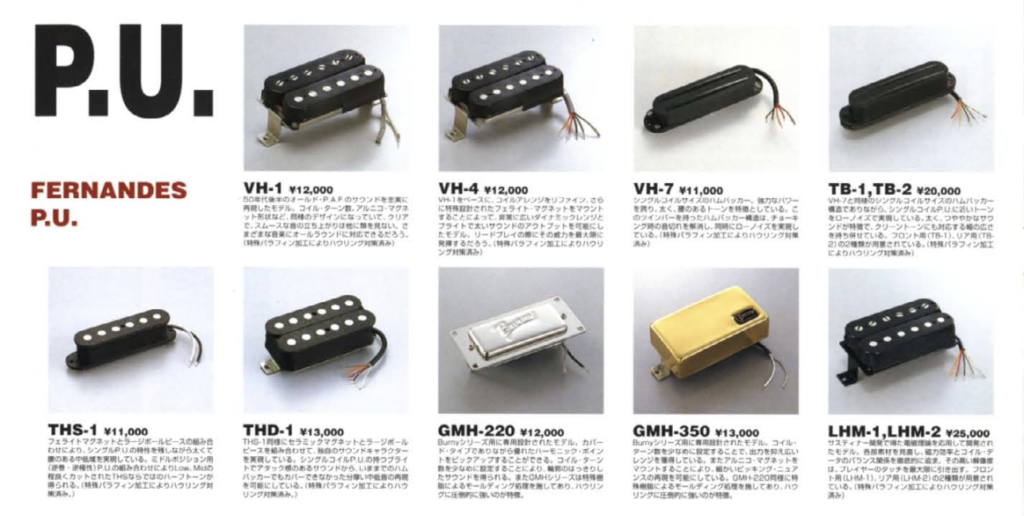
Made-in-Japan Quality and Value
Whether an early FLG, a golden-era Super Grade, or a 2000s RLG-90, the MIJ Burny built its name on delivering vintage-correct looks and feel at a fraction of a real Gibson’s price — the core reason the guitars are collected today.
Who Should Choose a Fernandes or Burny Guitar?
- Players who want a Gibson feel for less — a faithful Les Paul experience without the Gibson price tag.
- Japan Vintage collectors — golden-era FLG-240, FLG-150, and Super Grade models are among the most sought-after MIJ Les Pauls.
- Tone chasers — anyone specifically after the VH-1 pickup and its generational variations.
- Buyers who just want a recent, Japanese-made Les Paul — the 2000s–2010s RLG-90, RLC-100, RLG-85, and RLC-85 offer near-mint condition at reasonable prices.
In short: if you value vintage-correct Japanese craftsmanship and want a Les Paul that punches above its price, a Burny is well worth hunting down.
Conclusion
Burny’s story is one of the most remarkable in Japanese guitar history. What began as a sub-brand for affordable Gibson copies grew into a maker of golden-era Les Pauls good enough to sit beside the originals — and faithful enough that Gibson went to court over the shape, only to lose. That verdict, which held that the Les Paul silhouette no longer belonged to Gibson alone, is now as much a part of the Burny legacy as the guitars themselves.
When Fernandes closed its doors in 2025, more than fifty years of history came to an end. But the instruments remain: the obsessive golden-era FLGs, the Super Grade Standards, the VH-1-loaded high-enders, and the affordable late-era Japanese models still turning up near-mint today. For anyone drawn to Made-in-Japan craftsmanship, a Burny is a piece of that history you can still play — and one well worth seeking out.
FAQ
Who made Burny guitars?
Burny was a brand of the Japanese instrument maker Fernandes, founded in 1969 as Saito Gakki. The Fernandes name was used for Fender-style copies, while Burny was reserved for Gibson-style copies such as the Les Paul and SG.
What does the name “Burny” mean?
The name was originally meant to be “Bunny,” after a rabbit character, but a misspelling produced “Burny.” The company kept it after noticing the spelling suggested the English word “burn,” which suited a rock guitar brand.
Are Burny Les Pauls good guitars?
The golden-era models are highly regarded. The no-decal FLG-240 and FLG-150 of 1979–1980 are considered among the finest Made-in-Japan Les Paul copies ever built, with vintage-correct woods, angles, and finishes. Early 1970s models were rougher, and later budget models were built outside Japan.
What is the difference between Burny FLG and RLG models?
FLG was the original model prefix used from around 1975. In 1982, during the Revival era, the Les Paul models were renumbered from FLG to RLG. Broadly, FLG denotes the earlier guitars and RLG the later ones, though quality varies by specific model and year.
What is a Burny VH-1 pickup?
The VH-1 is a PAF-style humbucker fitted to Burny and high-end Fernandes models from 1985. It earned a strong reputation and is best understood as an upgraded take on the Gibson PAF. Its magnets, wiring, and potting vary between generations.
Did Gibson sue Burny, and who won?
Gibson sued Fernandes in 1993 over the Les Paul shape under Japan’s Unfair Competition Prevention Act. Gibson lost: the Tokyo District Court dismissed the case in 1998, and the Tokyo High Court dismissed the appeal in 2000. The court found the shape no longer identified Gibson as the source, partly because Gibson had tolerated copies for over twenty years.
Are Burny guitars still made?
No. Fernandes stopped trading in July 2024 and entered bankruptcy proceedings in 2025, ending both the Fernandes and Burny brands. Used Burny guitars, including recent Japanese-made models, remain widely available on the second-hand market.