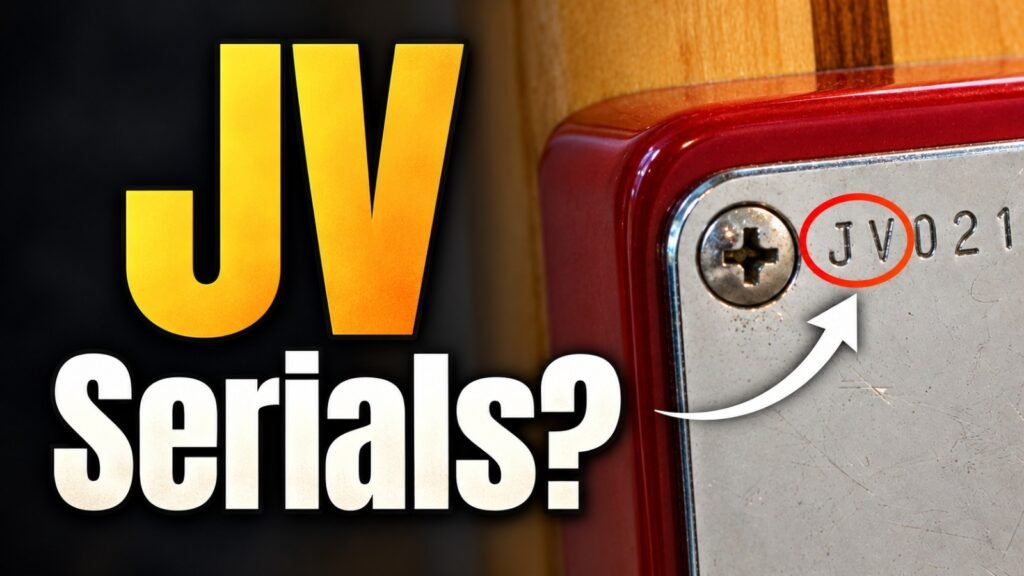
Fender Japan JV serial guitars are the first Fender-licensed instruments built in Japan, made mainly from 1982 to 1984 at FujiGen. This guide starts with what the original catalog says about the ST57 and ST62, then explains the model numbers, the three grades, how to check yours, and why JV guitars matter.
Fender Japan JV Quick Facts
- JV means: Japanese Vintage, on both Fender and Squier serials
- Years: mainly 1982–1984, built by FujiGen
- Core models: ST57, ST62 (Strat) and TL52, TL72 (Tele)
- Grades: 115, 85 and 65, which were also the prices in thousands of yen
- Grade check: a red A, B or C stamp in the neck pocket
Prefer to watch? This article is based on my own video below.
- Why 1957 and 1962?
- ST57: The 1957 Maple-Neck Strat, According to the Catalog
- ST62: The 1962 Rosewood Strat, According to the Catalog
- JV Model Numbers and Grades: 115, 85 and 65
- How to Tell Your JV Grade
- The Story Behind JV Serial Guitars
- Fender JV vs Squier JV
- Should You Buy a JV Serial Fender?
- FAQ
- More Fender Japan Articles
Why 1957 and 1962?
Fender Japan built its JV Stratocasters to 1957 and 1962 specs, and period catalog material explains why. American players were surveyed on the best Stratocaster year of the 1950s and of the 1960s, and the overwhelming answers were 1957 and 1962.
The catalog ties those years to bigger moments too: 1957 to the rise of rockabilly, and 1962 to the year the Beatles debuted. That is how the early Fender Japan lineup took shape.
ST57: The 1957 Maple-Neck Strat, According to the Catalog
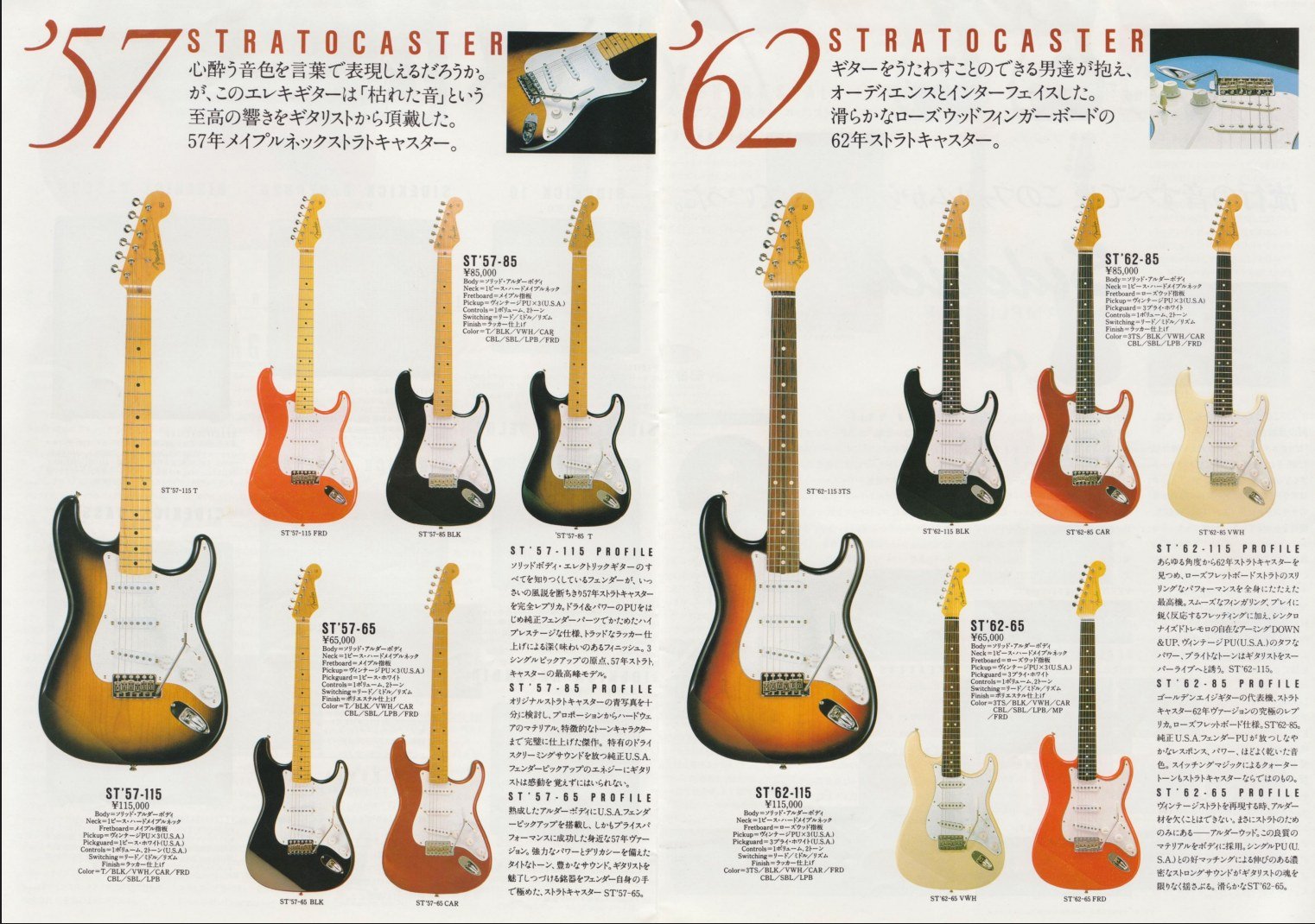
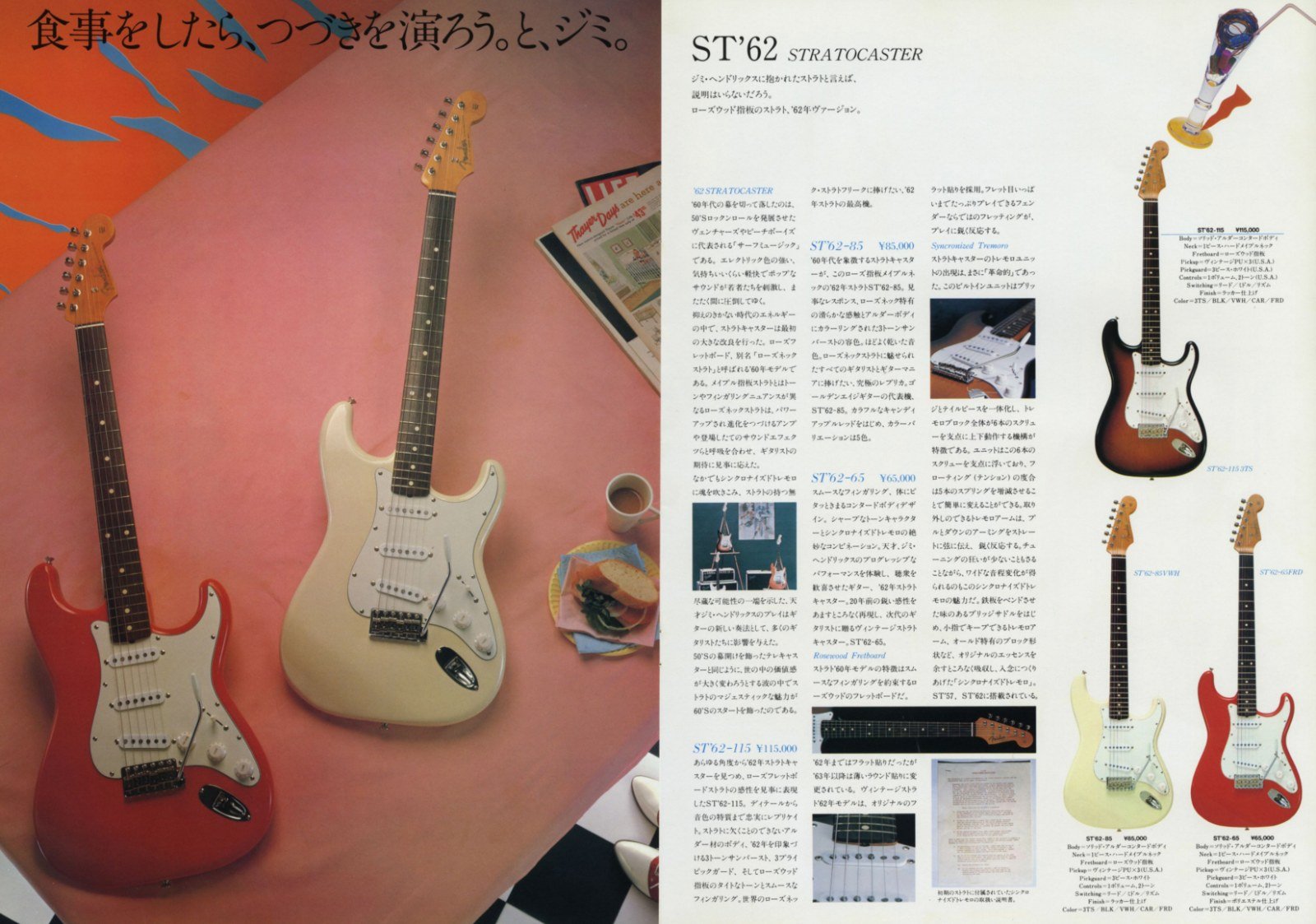
The catalog opens the ST’57 pages with a question: can an intoxicating tone ever be put into words? Its answer is that guitarists gave this guitar the highest praise, a “dry” sound (kareta oto, literally a seasoned, withered tone). It also calls the ST’57 the Strat that witnessed and lived through “the new wave called rock ‘n’ roll.”
The copy retells the origin story too. In 1953 Leo Fender asked a Hawaii-born musician and engineer, a young Freddie Tavares, to help design a new kind of guitar: easy to play, with three pickups for three tone characters, accurate tuning and a tremolo built into the body. It took a year to go from rough sketch to finished guitar.
Here is how the catalog pitches each grade:
- ST’57-115 (¥115,000): “a complete replica of the 1957 Stratocaster,” built with genuine Fender parts and a traditional lacquer finish. The catalog calls it the top ’57 model.
- ST’57-85 (¥85,000): made after studying the original blueprints, from proportions and hardware materials to the tone. The catalog singles out the “dry, screaming sound” of its U.S.A. Fender pickups.
- ST’57-65 (¥65,000): an aged alder body with U.S.A. Fender pickups, pitched as the ’57 that got the price-performance balance right.
Beyond the grades, the catalog points to the offset contoured body, cut away where it meets the player’s body, and to the pickups’ staggered pole pieces and off-white covers. The ST’57-115 came in tobacco sunburst, black, vintage white, candy apple red and fiesta red.
ST62: The 1962 Rosewood Strat, According to the Catalog
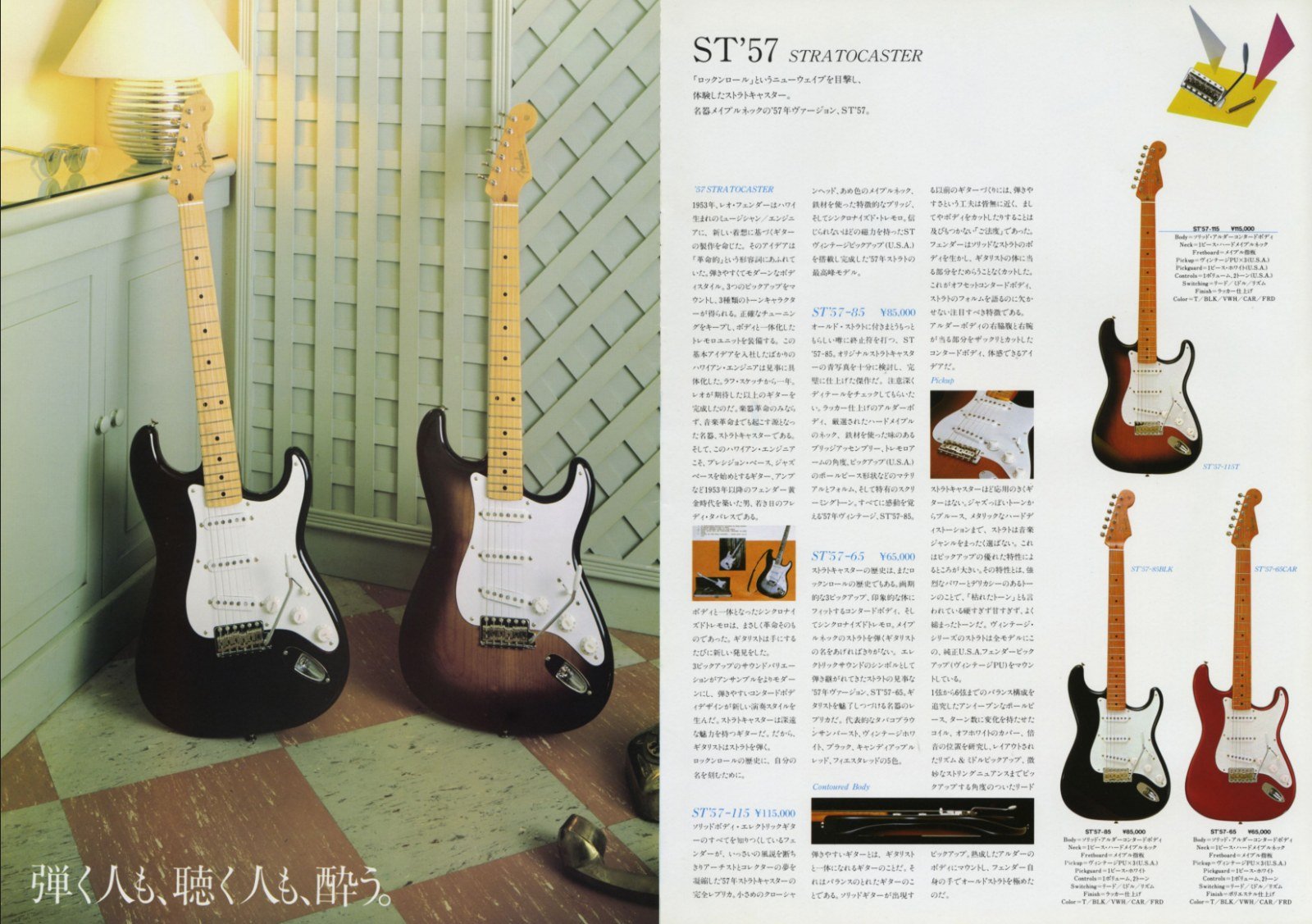
The ST’62 pages lead with Jimi Hendrix: “Say the Strat Jimi Hendrix held, and no explanation is needed.” The headline adds, “After we eat, let’s keep playing, says Jimi.”
The catalog places the ’62 at the start of the 1960s, when surf music from the Ventures and the Beach Boys was taking over. It explains that the rosewood “rose neck” arrived with the 1960 model and gave the Strat a different power and fingering feel from the maple neck.
And here is how it describes each grade:
- ST’62-115 (¥115,000): a ’62 studied “from every angle,” with smooth fingering, frets that respond sharply to your playing, a synchronized tremolo for up and down bends, and tough U.S.A. vintage pickups with a tone that is bright yet subdued.
- ST’62-85 (¥85,000): “the ultimate replica” of the golden-age ’62, with a supple response and a “moderately dry” tone. The catalog also mentions the in-between “quarter tones” from the switching.
- ST’62-65 (¥65,000): “You can’t recreate a vintage Strat without alder.” An alder body matched with U.S.A. single coils for a strong, dense sound.
The ST’62 pages also explain the synchronized tremolo, with the bridge and tailpiece as one unit pivoting on six screws and floating tension set by up to five springs. They note that rosewood boards were flat-glued (slab) until ’62 and changed to thin round boards from ’63, and that the ST’62 follows the original. There is even a photo of the tremolo instruction sheet that came with early Strats. The ST’62 uses a 3-ply pickguard and came in 3-tone sunburst, black, vintage white, candy apple red and fiesta red.
JV Model Numbers and Grades: 115, 85 and 65
| Model | Type | Recreates | Neck |
|---|---|---|---|
| ST57 | Stratocaster | 1957 | One-piece maple neck |
| ST62 | Stratocaster | 1962 | Rosewood fingerboard |
| TL52 | Telecaster | 1952 | – |
| TL72 | Telecaster | 1972 | – |
(TL = Telecaster)
(1957 specs)
(¥115,000)
The Three Grades
| Grade | List price | Finish | U.S.A.-made parts (catalog) |
|---|---|---|---|
| 115 | ¥115,000 | Lacquer | Pickups, pickguard and controls |
| 85 | ¥85,000 | Lacquer | Pickups |
| 65 | ¥65,000 | Polyester | Pickups |
What the JV catalog tells you
- Every grade gets the good stuff: a solid alder body and three U.S.A. vintage pickups, even on the ¥65,000 model.
- What 115 adds: a U.S.A.-made pickguard and controls. The 65 swaps lacquer for a polyester finish.
About the pickups:
- The catalog lists U.S.A. vintage pickups on every grade. It doesn’t say where the other parts were made; for the period, I’d assume Japanese.
- They were either grey-bobbin Fullerton or red-bobbin Fender USA pickups.
- In 1982 the type seems to have depended partly on the production month; from 1983 both appear mixed.
- Telecasters and basses came in only two grades.
How to Tell Your JV Grade
Remove the neck and look for a red stamp in the body’s neck pocket:
| Stamp | Stratocaster | Telecaster / bass |
|---|---|---|
| A | 115 | Top grade |
| B | 85 | Not used |
| C | 65 | Lower grade |
- Headstock back: a small round sticker with a number can also help identify the grade.
- Neck end: there is usually a penciled date, such as May 14, 1982.
There are exceptions. According to a detailed Japanese study of JV serials, some very early JV guitars, including examples made around April 1982, may have no stamp at all. That page also has photos of the stamps and pencil dates.
The Story Behind JV Serial Guitars
In the 1970s, cheap but surprisingly well-made Japanese copies were threatening Fender, while CBS-era Fender quality had become inconsistent. So in 1982 Fender stopped fighting Japan and partnered with it: official Fender models could now be built there under license.
How Fender Japan got the details right
- Reportedly 243 vintage Stratocasters studied with engineers of the time
- Original design drawings checked against disassembled guitars
- About 100 spec points on the Strat and 70 on the Tele
- Example: an early “single-ply” pickguard was really two thin layers of plastic
- Alder and ash bodies, when many Japanese guitars used sen ash
Many players felt the result had better neck work, finishing and setup than Fender USA guitars of the same years. For the full story, see our Squier History.
Fender JV vs Squier JV
Squier launched alongside Fender Japan as the budget line, and its early guitars carry JV serials too.
| Fender JV | Squier JV | |
|---|---|---|
| Main market | Japan | Export |
| Parts | Full spec | Some parts downgraded |
| Wood and build | Vintage-correct | Often very similar |
That is why some JV Squiers are shockingly good, and viewers often praise theirs in my comment section.
Should You Buy a JV Serial Fender?
I’ve had the chance to play one a few times, and it was a very well-made guitar, so it is still one I would gladly recommend. That said, not every JV serial guitar is an automatic must-buy. Before you buy a used one, keep these in mind:
- Don’t trust the plate alone: neck plates with JV serials are sold on their own, so some guitars have a JV plate fitted later. Check the neck pocket stamp, the pencil date on the neck and the other details too.
- Not every JV sounds like its reputation: after four decades, wear and a previous owner’s modifications can leave a guitar that doesn’t deliver the tone JVs are famous for.
- Hear it before you buy: check the condition carefully and, if you can, play or listen to the guitar yourself.
FAQ
What does JV mean on a Fender Japan serial?
JV stands for Japanese Vintage. It marks the earliest Fender Japan and Squier guitars, built mainly from 1982 to 1984.
Who made JV serial guitars?
FujiGen, one of Japan’s most respected guitar factories, built them under license from Fender.
What is the difference between the ST57 and ST62?
The ST57 recreates a 1957 Stratocaster with a one-piece maple neck; the ST62 recreates a 1962 Stratocaster with a rosewood fingerboard.
What do the numbers in a Fender Japan model name mean?
In a name like ST57-115, ST is the body style, 57 is the year being recreated and 115 is the grade, which was also the list price: ¥115,000.
How can I tell the grade of my JV Stratocaster?
Remove the neck and look for a red stamp in the body’s neck pocket: A usually means 115, B means 85 and C means 65. A small round numbered sticker on the back of the headstock can also help.
Are JV Squiers as good as JV Fenders?
Often very close. Some parts were downgraded to separate the lines, but the wood selection and overall build quality were frequently similar.
More Fender Japan Articles
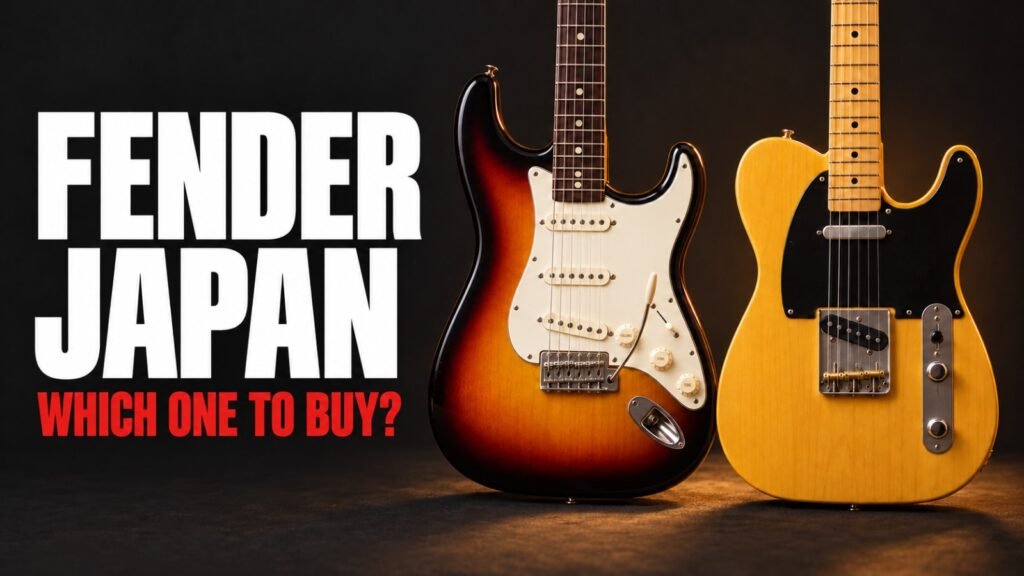
Fender Japan Guitars: JV, Serial Numbers, Rare Models and Which One to Buy

Fender Kintsugi Guitars: Beautiful Stratocasters Inspired by Japan’s Golden Repair
Fender kintsugi guitars bring a traditional Japanese repair art to the Stratocaster. From a one-off…
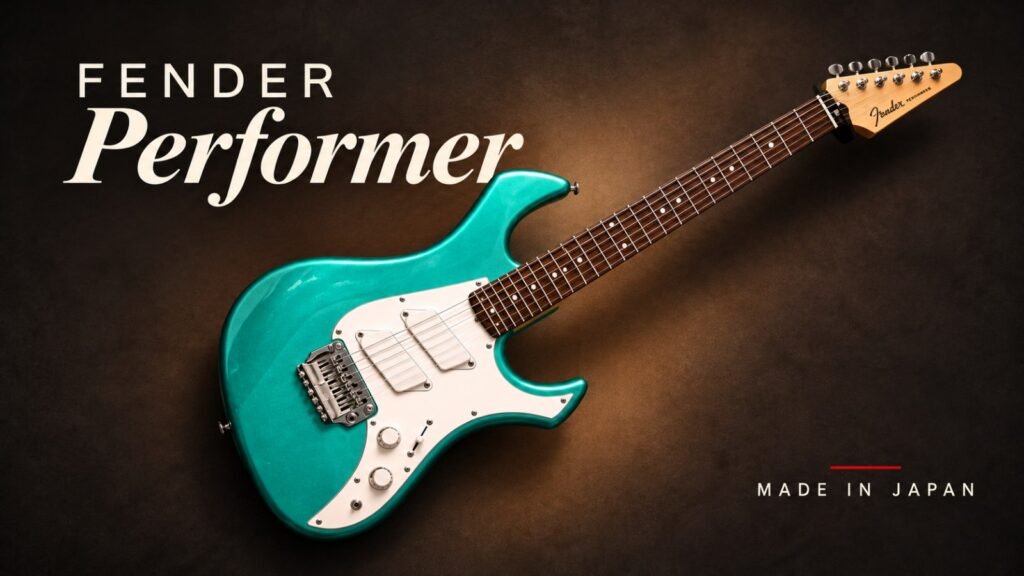
Fender Performer: The Strange 24-Fret Boxer Series Guitar from Fender Japan
The Fender Performer is one of the strangest-looking guitars ever to wear the Fender name….
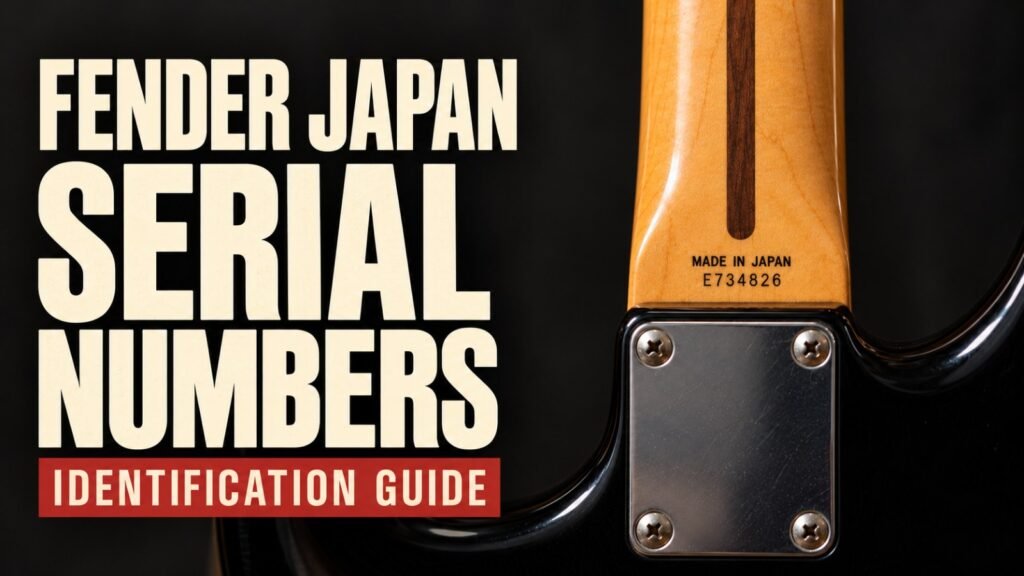
Fender Japan Serial Numbers: The Essential Guide from JV to JD (1982-2015)
Fender Japan serial numbers are much easier to remember than most brands’. A letter prefix…
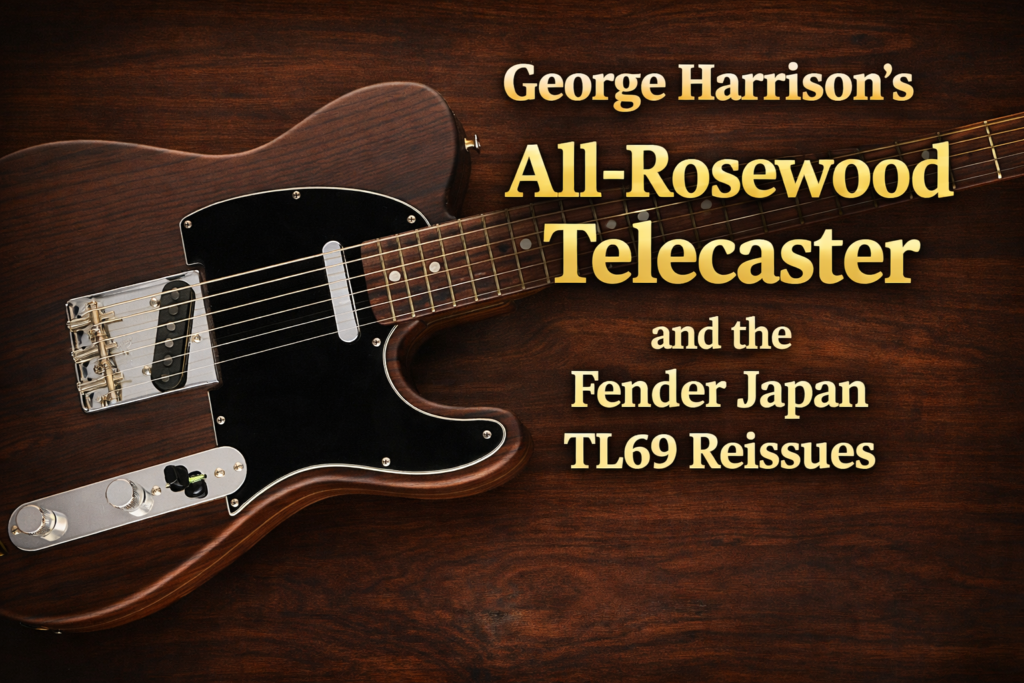
George Harrison’s All-Rosewood Telecaster and the Fender Japan TL69 Reissues
The George Harrison all rosewood Telecaster is one of the most visually distinctive guitars ever…

Fender Japan Guitars Used by 3 Legends
Overview & Key Points Fender Japan guitars are Japanese-made Fender instruments known for their consistent…