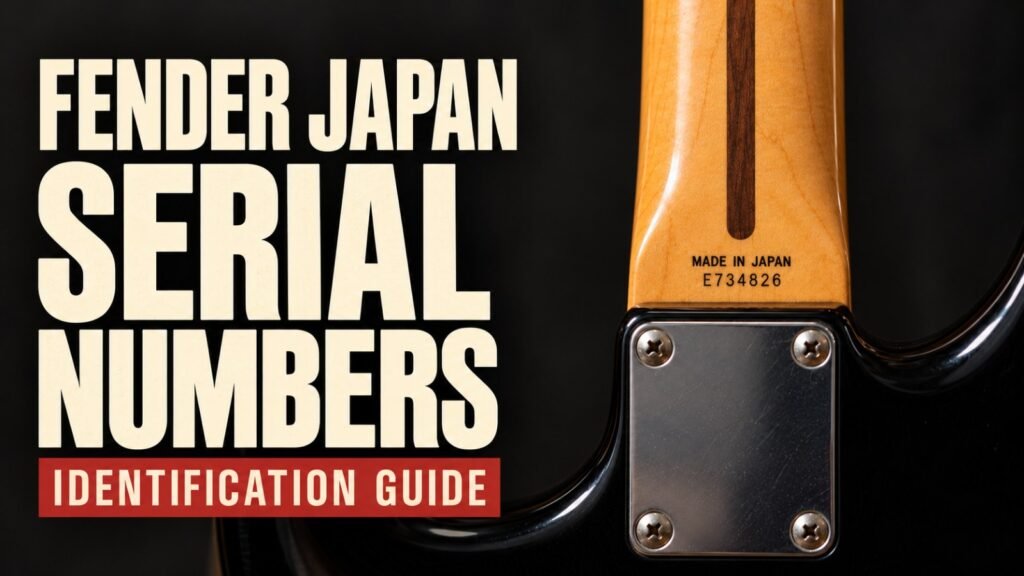
Fender Japan serial numbers are much easier to remember than most brands’. A letter prefix tells you roughly when your guitar was made, and the wording on it hints at which factory built it. This guide walks through every prefix from JV in 1982 to JD in the 2010s.
Fender Japan Serial Quick Facts
- First serials: JV (1982–1984) and SQ (from around 1983)
- Six digits from: the E serial (1984–1987)
- Then: F from 1986, alphabetically up to V in 1997
- Factories: FujiGen first; Dyna Gakki from around 1995
- JD serials: from 2012; JD12 means 2012
- How to Read Fender Japan Serial Numbers
- FujiGen Era: JV, E and the Alphabet Serials (1982–1997)
- Dyna Gakki, Phase One: Crafted in Japan (from around 1995)
- Dyna Gakki, Phase Two: Made in Japan and JD (from 2007)
- Fender Japan vs Fender Made in Japan
- Are Dyna-Made Fender Japans Worse?
- FAQ
- More Fender Japan Articles
How to Read Fender Japan Serial Numbers
All Fender Japan serial numbers follow the same idea: a letter prefix plus a number, together with a “Made in Japan” or “Crafted in Japan” marking. Find which of these four patterns yours matches, then narrow it down in the sections below.
| Period | Serial format | Marking | Built by |
|---|---|---|---|
| 1982–1997 | Letter + 5 digits (JV, SQ), then letter + 6 digits (E onward) | Made in Japan | FujiGen |
| From around 1995 | Letter + 5 or 6 digits, then letter + 0 + 5 digits (e.g. P0xxxxx) | Crafted in Japan | Dyna Gakki assembly, outsourced woodwork |
| From 2007 | Letter + 0 + 5 digits (e.g. U0xxxxx) | Made in Japan | Dyna Gakki |
| From 2012 | JD + 2-digit year + 6 digits (e.g. JD15xxxxxx) | Made in Japan | Dyna Gakki |
FujiGen Era: JV, E and the Alphabet Serials (1982–1997)
Everything here was mainly FujiGen-made, from the first JV serial to the V serial in 1997.
| Serial | Marking | Years | Notes |
|---|---|---|---|
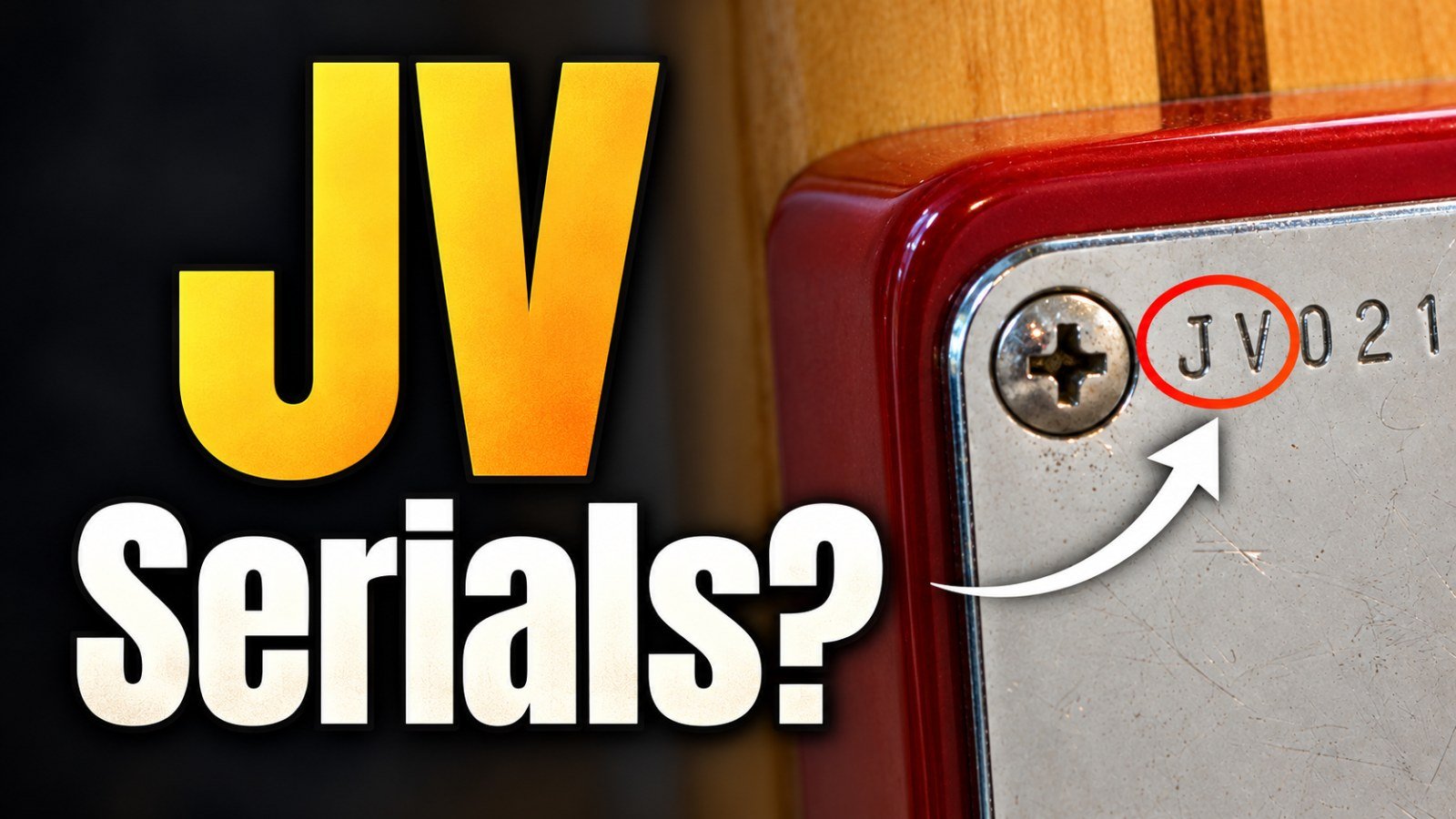
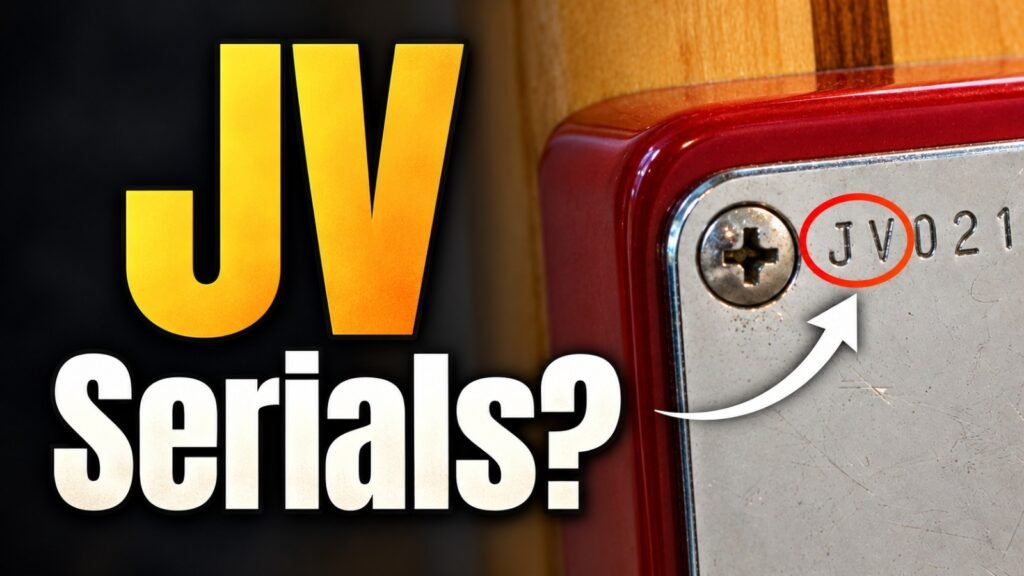
| JV + 5 digits | Made in Japan | 1982–1984 | Often said to mean Japan Vintage |
| SQ + 5 digits | Made in Japan | From around 1983 | Squier, or sequential numbering |
| E + 6 digits | Made in Japan | 1984–1987 | “Eighties”; the six-digit format begins |
| A, B, C + 6 digits | Made in Japan | Around the E period | No clear explanation found |
| F + 6 digits | Made in Japan | From 1986 | Fender; possibly the CBS-to-FMIC change |
| G, H, I … V + 6 digits | Made in Japan | Through 1997 | Alphabetical; no R serial confirmed |
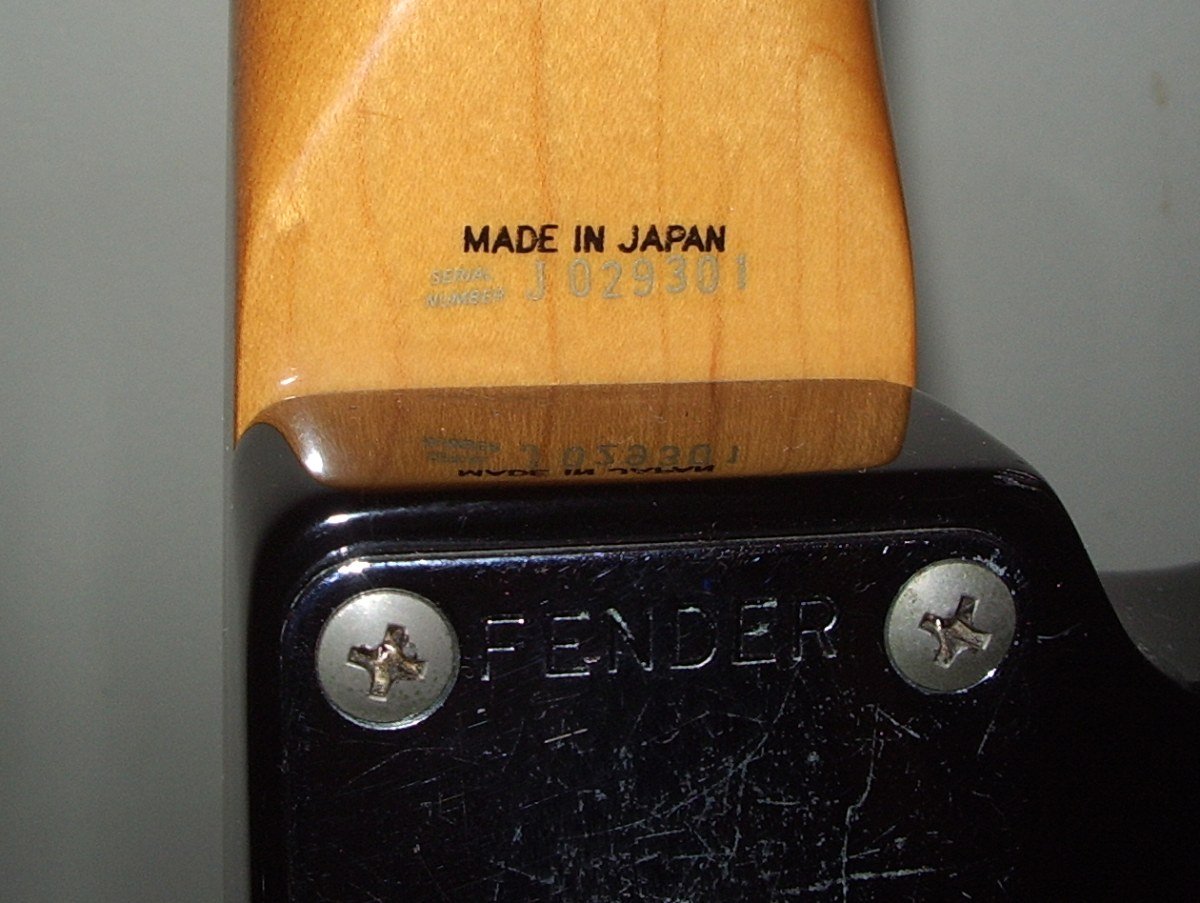
JV guitars are the most collectible Fender Japans, with their own grades and model numbers; see Fender Japan JV Serial. If you know what the A, B and C serials meant, I would love to hear it.
ExTrad (1986): The Semi-Custom Fender Japan
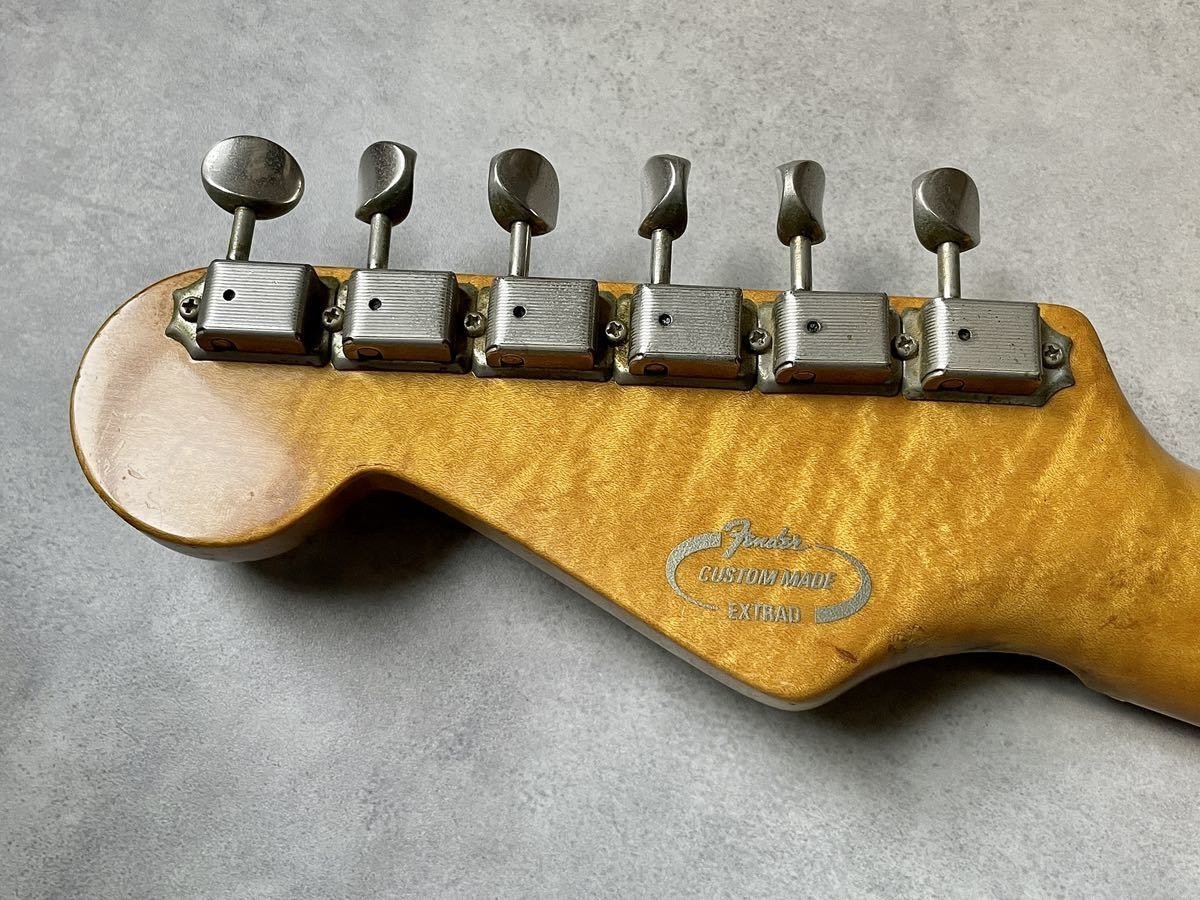
1986 also brought the higher-end ExTrad series: almost semi-custom guitars with selectable woods and colors, yet only around ¥70,000 at the time.
How to spot an ExTrad
- The ExTrad logo on the back of the headstock
- Or the ExTrad name engraved on the neck plate
- If you have one, it is a pretty rare model
Dyna Gakki, Phase One: Crafted in Japan (from around 1995)
From around 1995, guitars built by Dyna Gakki start to appear. In this first phase, woodwork was outsourced to companies such as Tokai, while final assembly was handled by Dyna Gakki.
| Serial | Marking | Years |
|---|---|---|
| N + 5 digits | Crafted in Japan | 1995–1996 |
| A + 6 digits | Crafted in Japan | 1997–1998 |
| O0 + 5 digits | Crafted in Japan | 1997–2000 |
| P0 + 5 digits | Crafted in Japan | 1999–2002 |
| Q0 + 5 digits | Crafted in Japan | 2002–2004 |
| R0 + 5 digits | Crafted in Japan | 2004–2006 |
| S0 + 5 digits | Crafted in Japan | 2006–2008 |
| T0 + 5 digits | Crafted in Japan | 2007–2008 |
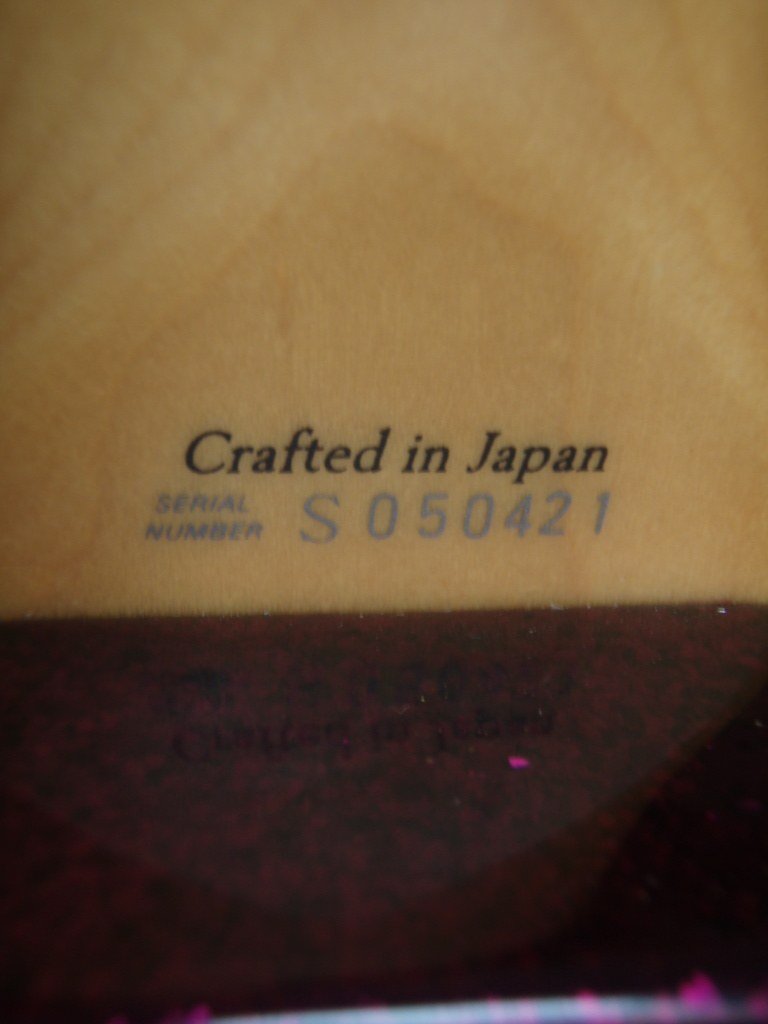
Years overlap during the changeovers, so treat them as ranges. Two prefixes appear twice: an A serial marked Made in Japan is a FujiGen guitar from the E period, while one marked Crafted in Japan is from 1997–1998; and T0 serials exist with both markings. The marking is what tells them apart.
Dyna Gakki, Phase Two: Made in Japan and JD (from 2007)
From 2007, guitars fully built and assembled at Dyna Gakki were marked Made in Japan. From 2012 the serial starts with JD, followed by a number for the year.
| Serial | Marking | Years | Notes |
|---|---|---|---|
| T0 + 5 digits | Made in Japan | 2007–2010 | Fully built at Dyna Gakki |
| U0 + 5 digits | Made in Japan | 2010–2012 | Fully built at Dyna Gakki |
| JD + 2-digit year + 6 digits | Made in Japan | From 2012 | JD12 = 2012; remember it as “Japan Dyna” |
Fender Japan vs Fender Made in Japan
Fender Japan ended in 2015 and shifted into the MIJ line under Fender Music Corporation, but these guitars are still often said to have continued being built by Dyna Gakki. The Fender Japan entry on Wikipedia covers the company side of the story.
Are Dyna-Made Fender Japans Worse?
It is true that Dyna-made guitars are often rated below FujiGen-built ones. Still, they are highly regarded guitars in their own right. If you own one, I would not worry too much; I would simply keep enjoying it.
Deep dive
Fender Japan JV Serial: The Legendary 1982-1984 Guitars, Model Numbers and Grades
The first Fender Japans: ST57, ST62, grades and how to check yours.
FAQ
How do I date a Fender Japan guitar by serial number?
Start with the prefix letter. JV means 1982–1984, E means 1984–1987, F appears from 1986, and the letters then run alphabetically up to V in 1997. From 2012, JD plus two digits gives the year: JD12 is 2012.
What does the E serial mean on Fender Japan?
E serials run from 1984 to 1987 and are commonly said to stand for “Eighties.” This is where the six-digit serial format really begins.
What does Crafted in Japan mean?
It usually marks the Dyna Gakki period from around 1995, when woodwork was outsourced to companies such as Tokai and final assembly was done at Dyna Gakki.
What is the difference between Crafted in Japan and Made in Japan?
Crafted in Japan guitars were assembled at Dyna Gakki with outsourced woodwork. From 2007, guitars fully built and assembled at Dyna Gakki were marked Made in Japan.
What is a Fender Japan ExTrad?
A higher-end, almost semi-custom series from 1986 with selectable woods and colors, priced around ¥70,000. Look for the ExTrad logo on the back of the headstock or the name engraved on the neck plate.
Are Dyna-made Fender Japan guitars bad?
No. They are often rated below FujiGen-built guitars, but they are highly regarded in their own right.
More Fender Japan Articles
Fender Japan Guitars: JV, Serial Numbers, Rare Models and Which One to Buy

Fender Kintsugi Guitars: Beautiful Stratocasters Inspired by Japan’s Golden Repair
Fender kintsugi guitars bring a traditional Japanese repair art to the Stratocaster. From a one-off…
Fender Performer: The Strange 24-Fret Boxer Series Guitar from Fender Japan
The Fender Performer is one of the strangest-looking guitars ever to wear the Fender name….
Fender Japan JV Serial: The Legendary 1982-1984 Guitars, Model Numbers and Grades
Fender Japan JV serial guitars are the first Fender-licensed instruments built in Japan, made mainly…

George Harrison’s All-Rosewood Telecaster and the Fender Japan TL69 Reissues
The George Harrison all rosewood Telecaster is one of the most visually distinctive guitars ever…

Fender Japan Guitars Used by 3 Legends
Overview & Key Points Fender Japan guitars are Japanese-made Fender instruments known for their consistent…