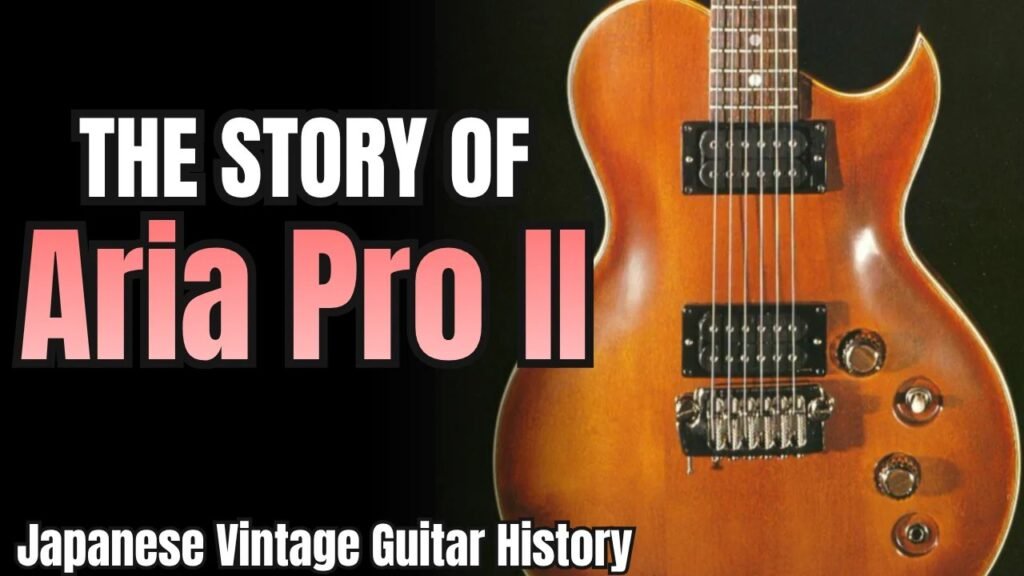
Aria Pro II history begins not with a guitar maker but with one young man in Nagoya who loved the classical guitar. This article follows the story from Shiro Arai’s first imports in the 1950s, through the Matsumoku years and the birth of Aria Pro II in 1975, to the brand today. For the guitars themselves and which one to buy, see the Aria Pro II guide.
Aria Pro II History Quick Facts
- Period covered: 1954 to today
- Founder: Shiro Arai, a classical guitarist from Nagoya
- Company: Arai & Co. (Arai Trading), founded 1956
- Name: “Aria” is an anagram of Arai
- Factory: Matsumoku in Matsumoto, Nagano, until 1987
- Aria Pro II launched: 1975
- Today: still active, with Japan-made high-end models
Prefer to watch? This article is based on my own video below.
- Aria Pro II History Timeline at a Glance
- Around 1954: A Classical Guitarist Turns Importer
- 1959: Exports and the Fight Against Cracked Guitars
- Where the Name “Aria” Comes From
- 1960s: Matsumoku and the Aria Diamond
- 1968: A Les Paul Reissue and an Original Twist
- 1970: Gibson, Epiphone and Matsumoku
- Early 1970s: The Copy Boom and a Decision
- 1975: Aria Pro II Is Born
- Late 1970s: Serious Copies Under the Aria Pro II Name
- 1976–1981: The Original Era
- 1987: Matsumoku Closes
- Today: Legend, Blitz and the Aria Pro II Name
- Final Thoughts
- FAQ
- More Aria Pro II guitar articles
Aria Pro II History Timeline at a Glance
| Year | What happened |
|---|---|
| Around 1954 | Shiro Arai starts importing classical guitars and sheet music |
| 1955–1956 | Trading business set up in Nagoya, reorganized as Arai & Co. |
| 1959 | Exports begin |
| 1964 | Arai visits the Matsumoku factory; the partnership begins |
| Around 1967 | Aria Diamond sold as “Arai Diamond” due to a trademark issue |
| 1968 | Arai sees Gibson’s Les Paul reissue at a US guitar show |
| 1970 | Arai & Co. becomes Gibson’s distributor in Japan; Epiphone production goes to Matsumoku |
| 1975 | Aria Pro II is born |
| 1976–1977 | PE-1500 announced, then launched |
| 1987 | Matsumoku closes; main production moves to Korea |
| 2025 | AP2 series ends; Aria Pro II continues |
Around 1954: A Classical Guitarist Turns Importer
Aria’s founder, Shiro Arai (1930–2019, interviewed for the NAMM Oral History program), once aimed to become a professional classical guitarist. He gave up that dream, but not the guitar. In 1950s Japan, most music shops didn’t stock guitars, sheet music or even strings, so what he imported for himself was exactly what other players wanted.
| Year | Step |
|---|---|
| Around 1954 | Imports classical guitars and sheet music, at first for himself |
| — | Said to be the first to import Augustine nylon strings into Japan |
| 1955 | Requests pour in; sets up a trading business in Nagoya |
| 1956 | Reorganized as Arai & Co.: classical guitars, sheet music, instruction books |
1959: Exports and the Fight Against Cracked Guitars
Exports began in 1959, and they quickly ran into a problem. Arai’s answer set the tone for everything Aria did after.
How Arai tackled cracked export guitars
Where the Name “Aria” Comes From
Around this time, classical guitars under the company’s own brand began to appear. “Aria” is an anagram of Arai, and it also happens to be a musical term for a solo song, which was a big reason it was chosen.
1960s: Matsumoku and the Aria Diamond
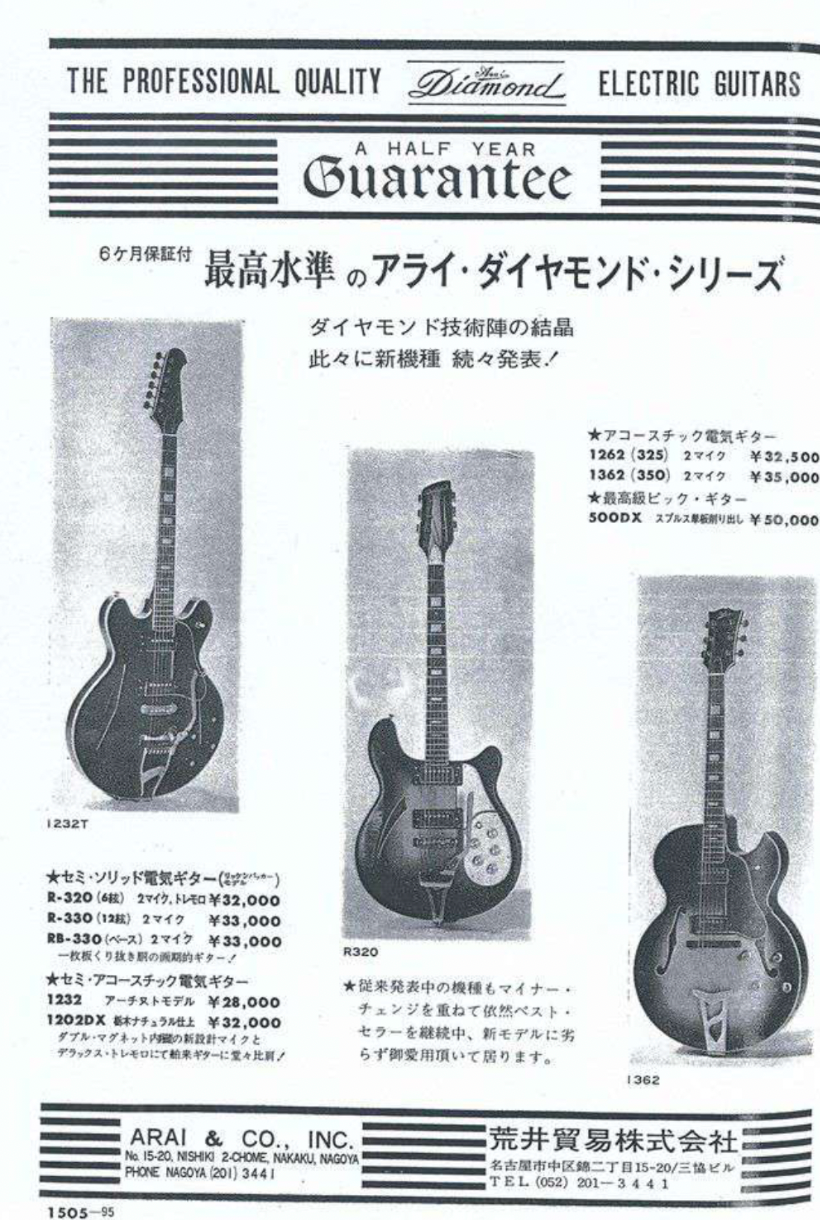
In the early 1960s, Japan’s first electric guitar boom made solid bodies from makers like Guyatone and Teisco the hot item. Arai & Co. bet on the next wave instead: semi-acoustics. Shiro Arai visited Matsumoku in Matsumoto in 1964, a factory then subcontracting for FujiGen.
Two wishes that lined up perfectly
The “Arai Diamond” Detour
Why the spelling changed
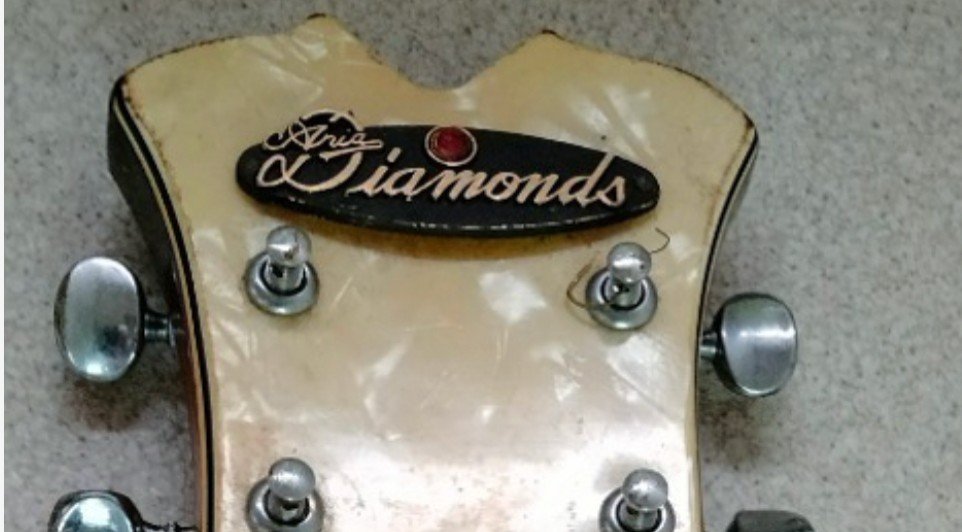
- Around 1967: Kawai already owned “Aria” as a keyboard trademark
- So: the guitar was sold as Arai Diamond for a few years
- Later: the company acquired the trademark from Kawai and went back to Aria
1968: A Les Paul Reissue and an Original Twist
| Step | Detail |
|---|---|
| What Arai saw | Gibson’s newly unveiled Les Paul reissue at a 1968 US guitar show, a shape even he was seeing for the first time |
| What he built | A Les Paul-style guitar with an original blade-type pickup, so it wouldn’t be just a copy |
| What happened | It didn’t sell at all around 1969 |
| Why | Proper copies were still rare in Japan; an original twist was even harder to accept |
1970: Gibson, Epiphone and Matsumoku
In 1970, Arai & Co. acquired the rights to distribute Gibson in Japan, and production of Gibson’s Epiphone brand was handed to Matsumoku. Aria’s factory partner was now building Epiphones in Matsumoto too.
Early 1970s: The Copy Boom and a Decision
As domestic copy models multiplied and patents became an issue, other companies dealt with it by changing headstock shapes. Aria reached a stronger conclusion: break away from copies and pursue originals. By then it was counted among Japan’s big three veteran brands, alongside Greco and Fernandes.
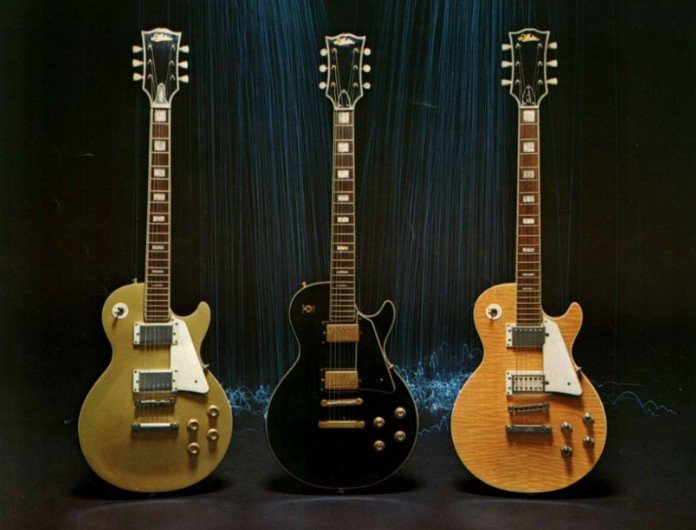
1975: Aria Pro II Is Born
What the name Aria Pro II means
The new name drew a clear line between Aria’s acoustic guitars and its electrics, and declared a step up to pro-oriented instruments.
Late 1970s: Serious Copies Under the Aria Pro II Name
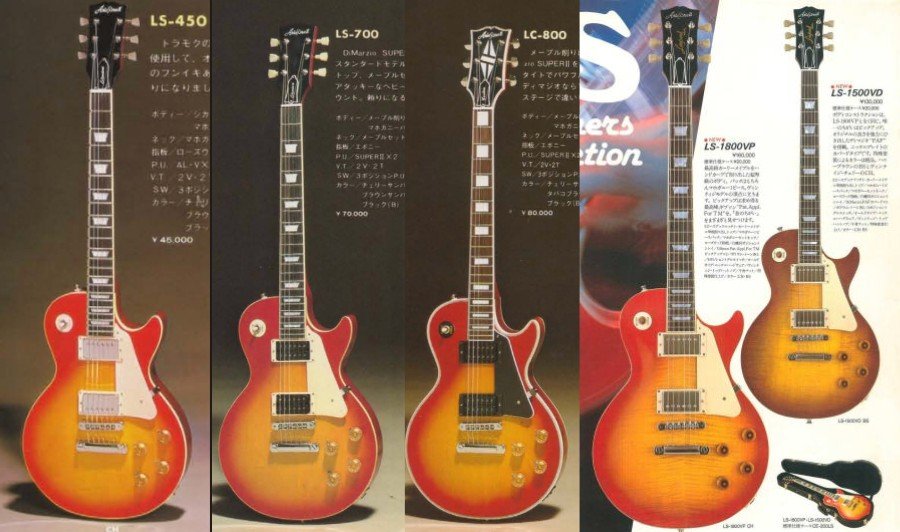
Going original didn’t mean Aria Pro II dropped copies. During the Lawsuit Era of the late 1970s it still built them, but once the Aria Pro II name arrived, its Les Paul copies changed character: no longer just looking the part, they aimed for the real thing.
| Typical cheap copy | Aria LS-400 (40,000 yen) | |
|---|---|---|
| Looks | Like a Les Paul | Like a Les Paul |
| Construction | Often nothing like the original inside | Genuine set neck and solid body |
| Range | — | From the pancake-body LS-450 up to the LS-1800VP |
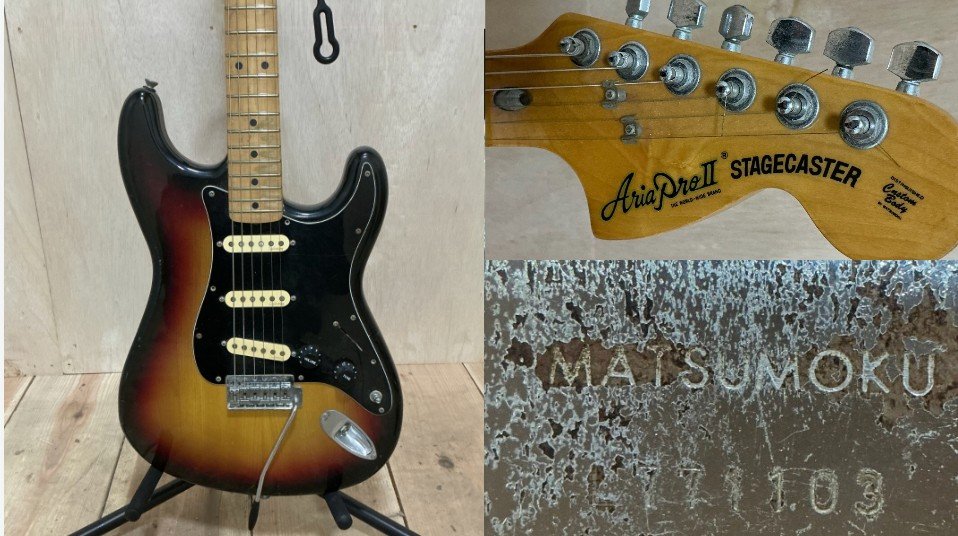
Aria Pro II’s Strat copies, with lines like Strikin’ Sound and Stagecaster, were Matsumoku-built too, using Japanese ash (sen) or alder. Some even carry the factory’s name stamped on the neck plate.
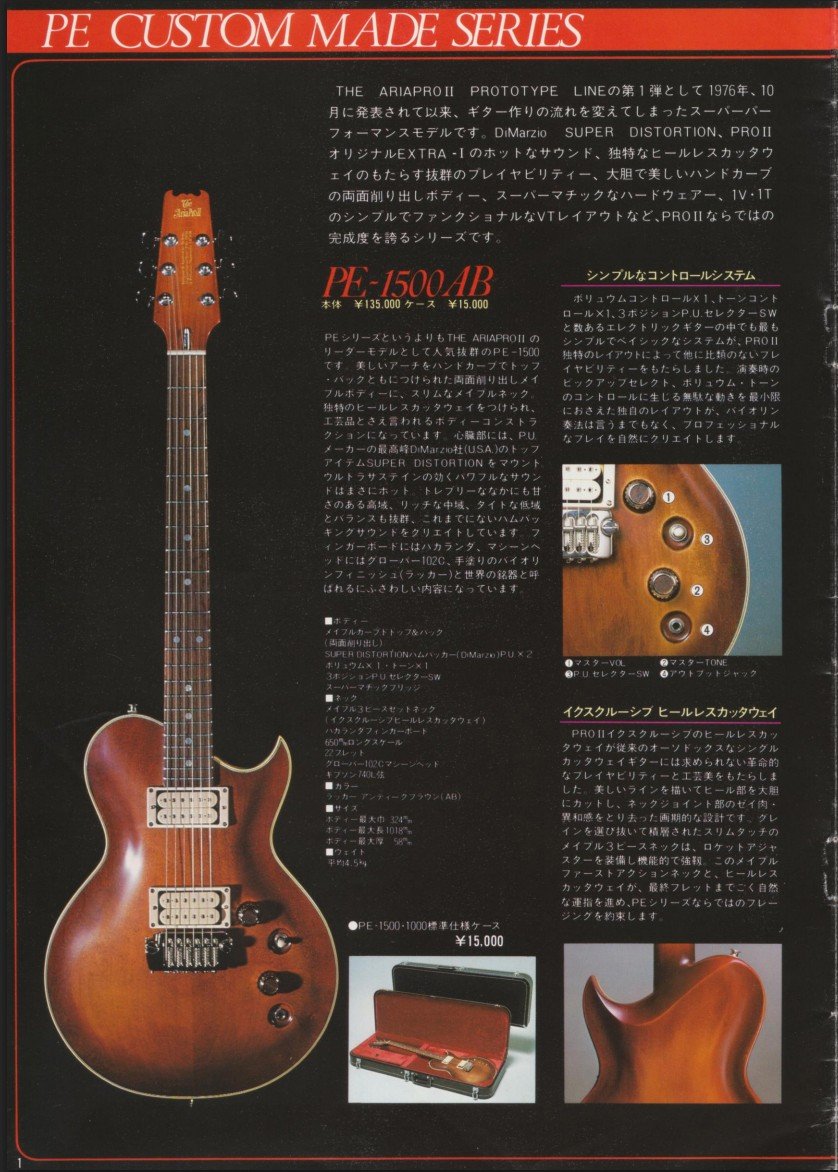
1976–1981: The Original Era
This is the part of Aria Pro II history most players know. By the late 1970s, the lineup centered on original models, praised in Japan and all over the world.
| Year | Model | Why it mattered |
|---|---|---|
| 1976–1977 | PE-1500 | Carved top, heel-less cutaway; designed by Matsumoku’s Nobuaki Hayashi |
| Late 1970s | SB-1000 bass | Neck-through bass that became a worldwide hit |
| 1979 | RS and TS | Neck-through guitars with active circuits |
| 1981 | CS and the PE-R series | Affordable originals and the celebrated PE-R80 |
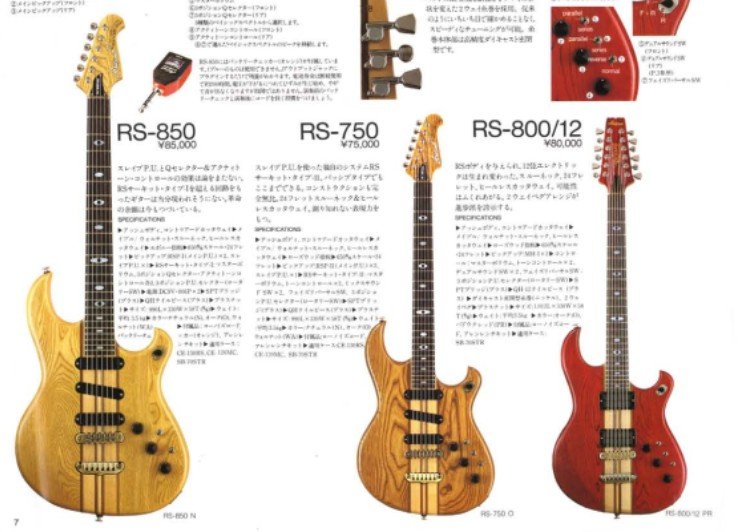
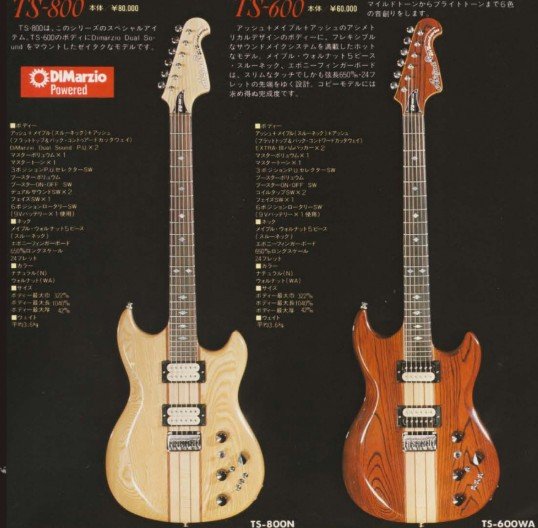
The neck-through RS and TS originals. Image: Aria Pro II catalog
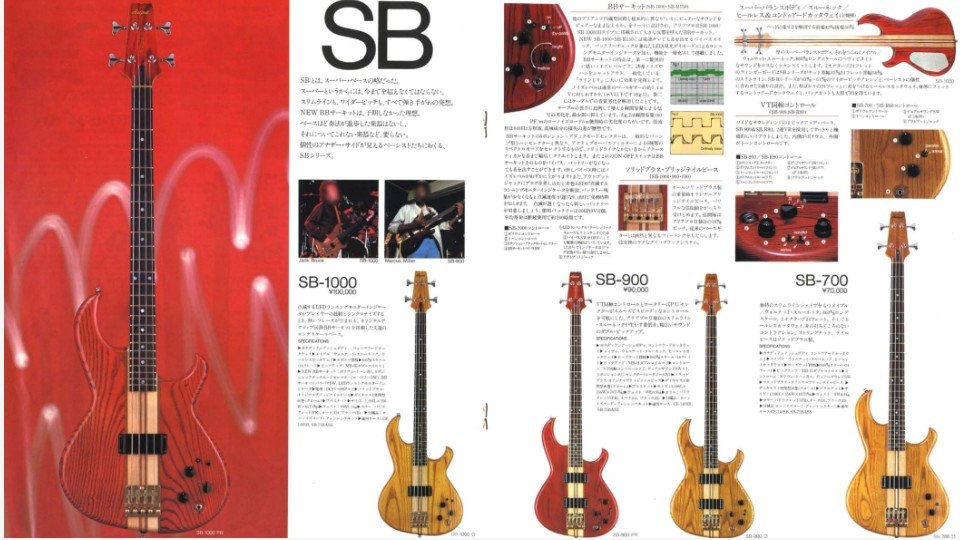
Top players followed, from Neal Schon of Journey to Yngwie Malmsteen and Cliff Burton of Metallica. For the full PE story, see Aria Pro II PE Series.
1987: Matsumoku Closes
| Matsumoku era (to 1987) | After 1987 | |
|---|---|---|
| Main production | Matsumoku, Matsumoto, Nagano | Korea, plus some Japanese factories |
| From the 1990s | — | Low-priced models from Korea and China; high end made in Japan |
| Image | Original designs played worldwide | For a while, a “beginner bundle” brand |
| Today’s view | Prized as Japan vintage | — |
Today: Legend, Blitz and the Aria Pro II Name
Aria has since tidied up its brands to shake off the budget image:
| Name | What it covers |
|---|---|
| Aria Pro II | Original models only, such as the PE |
| Legend and Blitz | Copies of famous overseas models, split off into separate names |
Myth vs fact: did Aria Pro II shut down?
- Myth: Aria Pro II went out of business in 2025
- Fact: what ended in 2025 was the AP2 series, a high-end custom shop-style line
- Why the mix-up: AP2 sounds like Aria Pro II, and Fernandes had been reported going under the year before
- Today: the Aria Pro II brand continues
Final Thoughts
What I love about Aria Pro II history is that it starts with one man’s love of the classical guitar and a stubborn focus on dry wood. My father used to own an Aria Pro in an SG shape, sen ash under a thick clear coat, which to me is the Matsumoku look. Born in the copy era, Aria went on to make originals the world recognized, and it is still making guitars today.
Keep reading
- Aria Pro II guide: the models and which one to buy
- Aria Pro II PE Series: Japan’s Les Paul-style icon
- Matsumoku: the factory behind it all
FAQ
Who founded Aria?
Shiro Arai, a classical guitarist from Nagoya who once aimed to become a professional player. He began importing guitars and sheet music around 1954 and founded Arai & Co. in 1956.
Where does the name Aria come from?
It is an anagram of the founder’s family name, Arai. Swapping the letters gives Aria, which also happens to be a musical term for a solo song.
When did Aria Pro II start?
In 1975. Arai & Co. added Pro for professional and II for going one step beyond the earlier Aria era, to separate its refined electric guitars from its acoustic line.
Who made vintage Aria Pro II guitars?
The Matsumoku factory in Matsumoto, Nagano, built Aria guitars from the 1960s until it closed in February 1987. After that, main production moved to Korea.
Why was Aria Diamond once spelled Arai Diamond?
Because Kawai had already registered the name Aria as a trademark for a keyboard. Aria used the Arai spelling for a few years from around 1967, until it acquired the trademark from Kawai.
Has Aria Pro II gone out of business?
No. What ended in 2025 was the AP2 series, a high-end custom line. Some people mistook AP2 for Aria Pro II, but the brand itself continues today.
More Aria Pro II guitar articles
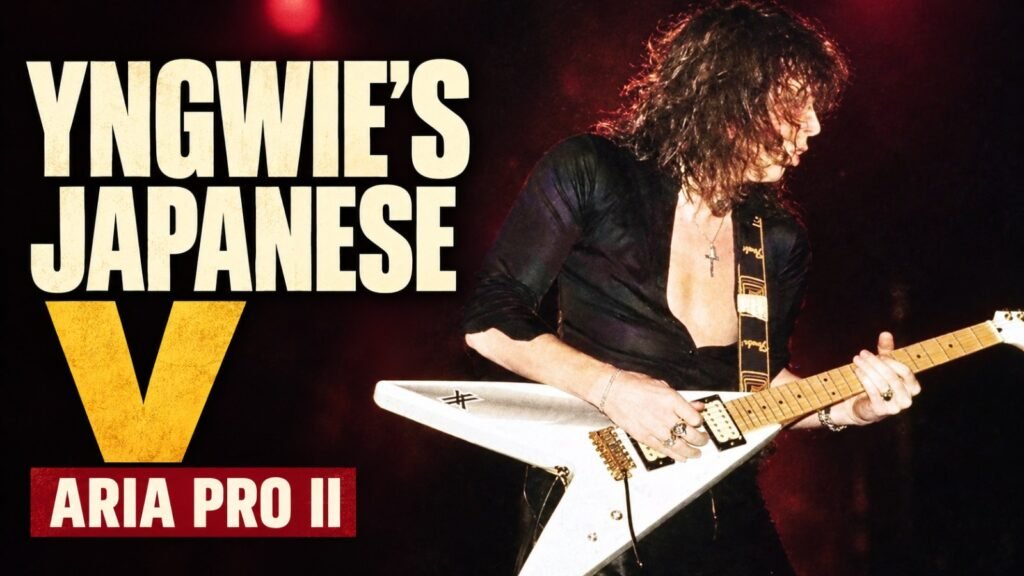
Yngwie Malmsteen Aria Pro II: The Surprising Japanese Flying V of the Alcatrazz Era (1983-1984)
The Yngwie Malmsteen Aria story surprises many fans: he is the last guitarist most people…
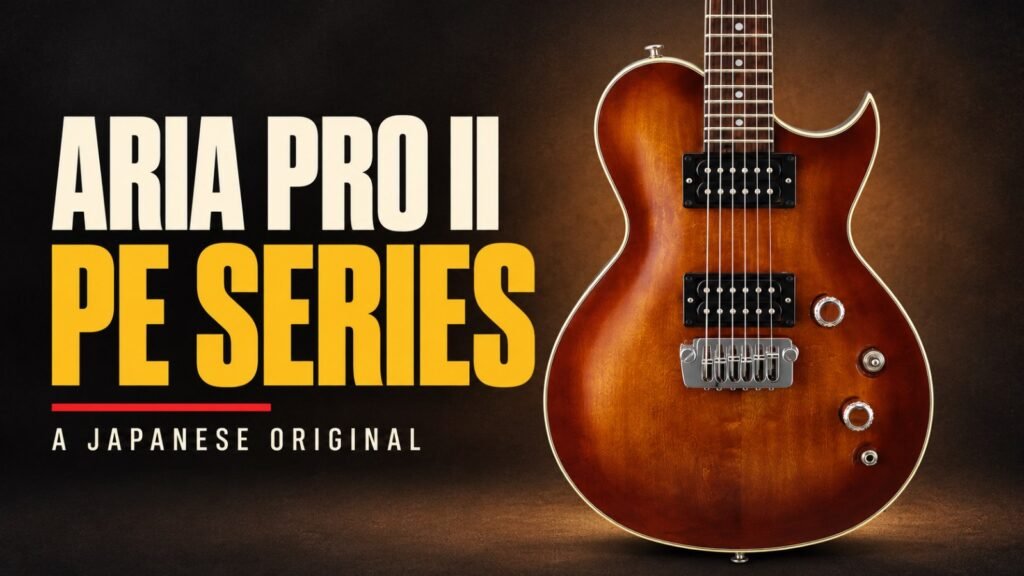
Aria Pro II PE Series: Japan’s Legendary Les Paul-Style Icon
The Aria Pro II PE is Japan’s own take on the Les Paul-style guitar: developed…
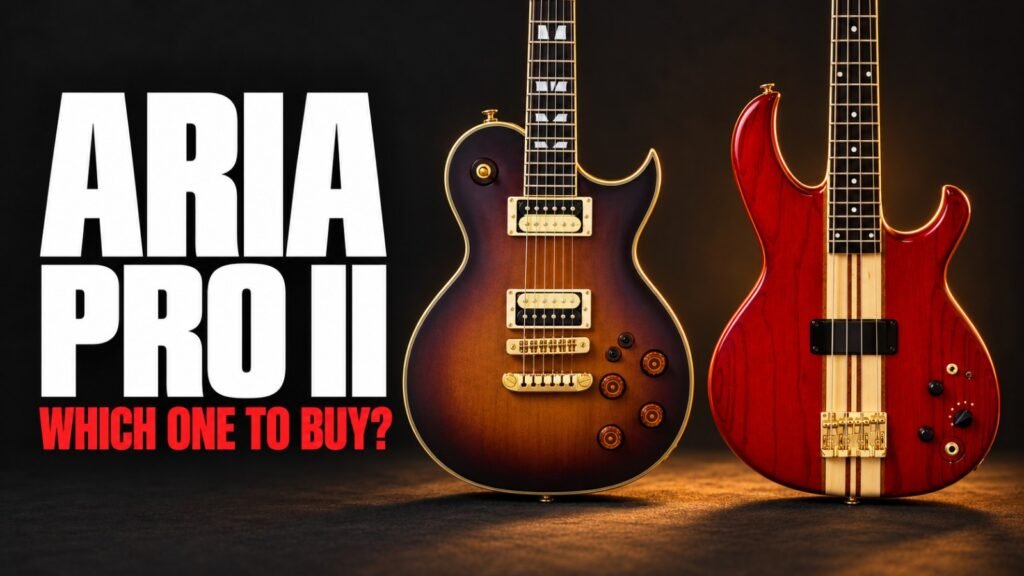
Aria Pro II Guitars: PE, RS, SB and Which One to Buy
Aria Pro II is the Nagoya brand that turned Japan’s copy-guitar boom into original designs,…