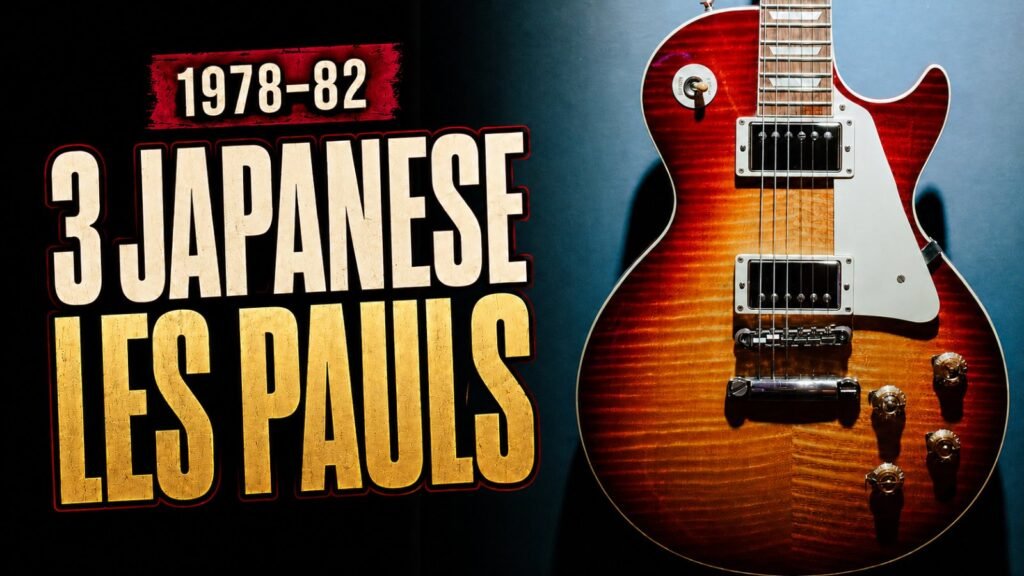
Japanese Les Paul copies from the late 1970s are some of the most faithful Les Paul replicas ever built, and three brands defined them: Tokai, Greco and Burny. This guide covers their golden era, roughly 1978 to 1982, compares the three side by side with period catalogs, and ends with the licensed Orville by Gibson that followed.
Japanese Les Paul Copies Quick Facts
- Period covered: 1971–1982, with the golden era 1978–1982 (Orville 1988–1998 at the end)
- The big 3: Tokai LS series, Greco Super Real, Burny FLG / Super Grade
- What they copied: Tokai and Burny a 1958 Les Paul Standard; Greco’s flagship a 1960
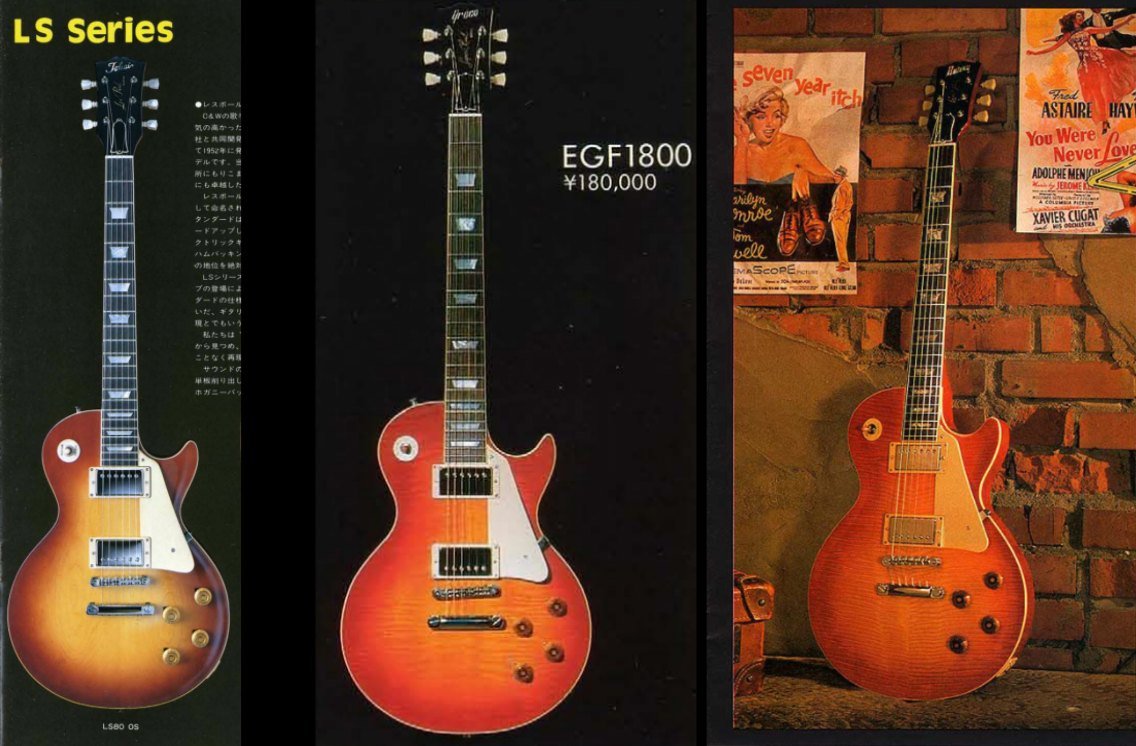
- Top catalog prices: Tokai LS200 ¥200,000, Greco EGF1800 ¥180,000, Burny FLG-240 ¥240,000 (made to order)
- Who built them: Tokai in its own factory, Greco at FujiGen, Burny by outside factories (which ones is debated)
- Why it ended: around 1982 all three moved away from exact copies
Key takeaways
- Before 1978, Japanese Les Paul copies only looked the part. Tokai’s 1978 LS series started the race to copy a real 1958.
- The biggest difference between the three is the pickups: DiMarzio (Tokai), Maxon DRY (Greco), Seymour Duncan ’59 (Burny).
- A brand is a signboard, not a factory. Your Burny and your friend’s Tokai may come from the same workshop.
Prefer to watch? This article is based on my own video below.
- Japanese Les Paul Copies Compared: Tokai vs Greco vs Burny
- 1971–1977: Early Japanese Les Paul Copies Only Looked the Part
- 1978: Tokai LS Series Starts the Faithful-Copy Race
- 1979–1982: Greco Super Real, Greco's 1960 Answer
- 1979–1981: Burny FLG, the 1958 Copy With Tokai Rumors
- Who Built Japanese Les Paul Copies? Brands vs Factories
- 1982 and After: Why the Golden Era Ended
- How to Identify Japanese Les Paul Copies by the Headstock
- 1988–1998: Orville by Gibson, the Licensed Japanese Les Paul
- Which Japanese Les Paul Copy Should You Buy?
- Final Thoughts
- FAQ
Japanese Les Paul Copies Compared: Tokai vs Greco vs Burny
Here is the short version before the history. The table pulls the points that actually differ between the three, taken from 1979–1981 catalogs. Specs varied by model and year, so treat it as a map of each brand’s main golden-era Les Pauls.
| Tokai | Greco | Burny | |
|---|---|---|---|
| Golden-era series | LS series (Reborn, Reborn Old, Love Rock) | Super Real (EG / EGF) | FLG-90 / 150 / 240, then Super Grade |
| Years | 1978 on | 1979–1982 | c.1979–1982 |
| Model copied | 1958 Standard | 1960 (flagship); ’58-type models too | 1958 Standard |
| Catalog price | ¥50,000 (LS-50) to ¥200,000 (LS200) | ¥85,000 (EGF850) to ¥180,000 (EGF1800) | ¥90,000 (FLG-90) to ¥240,000 (FLG-240) |
| Headstock angle | 18° from LS-80 up (14° below) | 18° (Greco later said 17° was correct) | 18° |
| Finish | Nitro lacquer from LS-80 up | Lacquer across Super Real | Lacquer |
| Pickups | Tokai humbuckers; DiMarzio from LS-100 up | Maxon DRY, DiMarzio PAF, Screamin’ | L-8001 Vintage (FLG-90); Seymour Duncan ’59 (FLG-150/240) |
| Built by | Tokai’s own factory | FujiGen | Outsourced (Tokai or Terada, later others) |
| Character | Widest lineup; good wood even at entry level | Millimeter-level detail; pickups as part of the obsession | Small premium range with imported pickups and tuners |
One detail to notice: like Tokai, Greco and Burny put the list price in the model number. An FLG-150 cost ¥150,000 and a Greco EGF1200 cost ¥120,000, so the number on a used listing tells you where the guitar sat in the catalog.
1971–1977: Early Japanese Les Paul Copies Only Looked the Part
Why Japan Started Copying the Les Paul
In the 1970s, Gibson and Fender guitars were extremely expensive in Japan and imports were limited. At the same time, more and more young players wanted to sound like their overseas rock heroes. A real Les Paul was out of reach, so domestic makers built copies and sold them cheaply.
Gibson itself didn’t treat its 1950s specs as sacred back then. When the Les Paul came back, one of the results was the mini-humbucker Les Paul Deluxe. The story goes that Gibson fitted small humbuckers into bodies routed for P-90s. Japanese makers were among the first to see the value in the late-’50s Burst. There is even a story, best treated as an anecdote, that this Japanese movement helped push Gibson and Fender toward the vintage reissues their custom shops began building in the late 1980s.
Greco EG360 (1971): The First Japanese Les Paul Hit
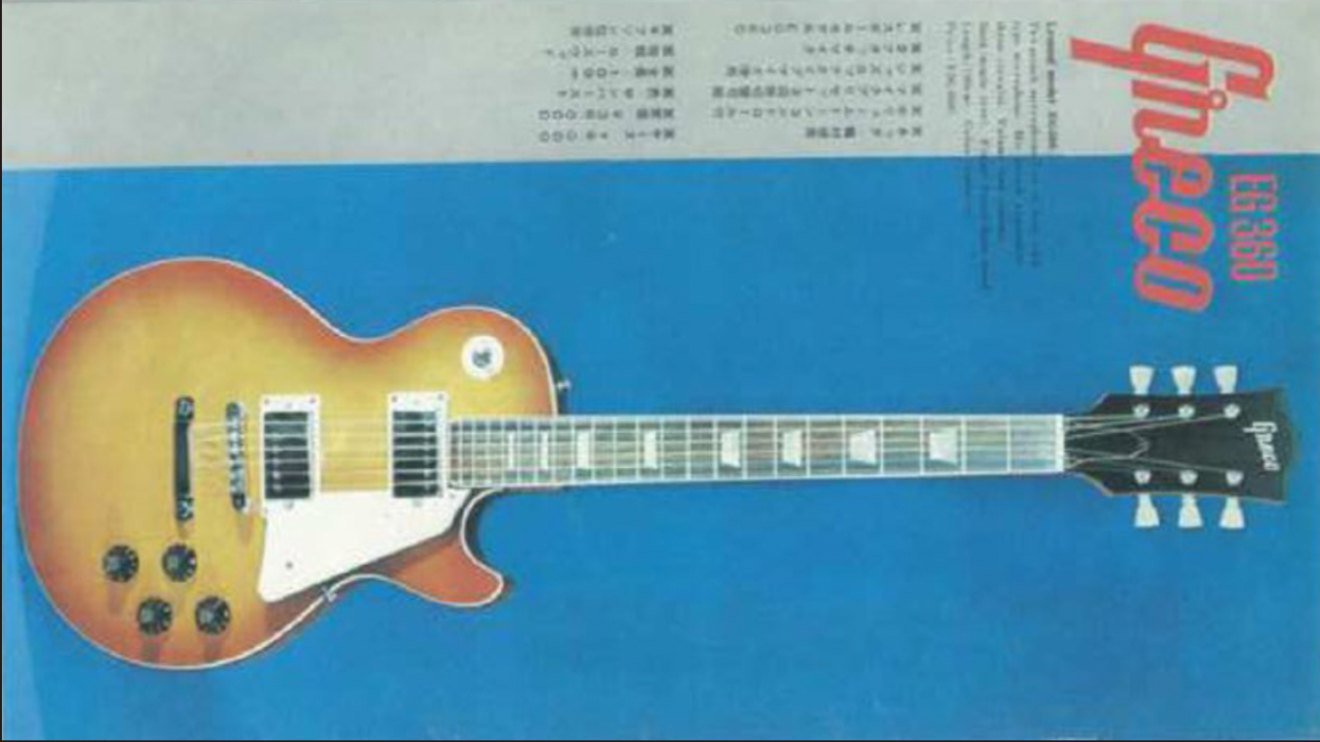
Greco was almost certainly first out of the gate. In 1971 it released the EG360, essentially the first Japanese Les Paul copy that caught on. Les Paul-style guitars had appeared before, but they were poorly made and expensive. The EG360 cost ¥36,000, an unheard-of price then, and anyone could recognize its outline. It became a huge hit and made Greco Japan’s top domestic electric guitar brand.
But the EG360 only looked like a Les Paul. It is actually a semi-hollow body with a bolt-on neck: a Les Paul on the outside, something else inside.
Burny FLG (1975): “Les Paul Model” in Gold
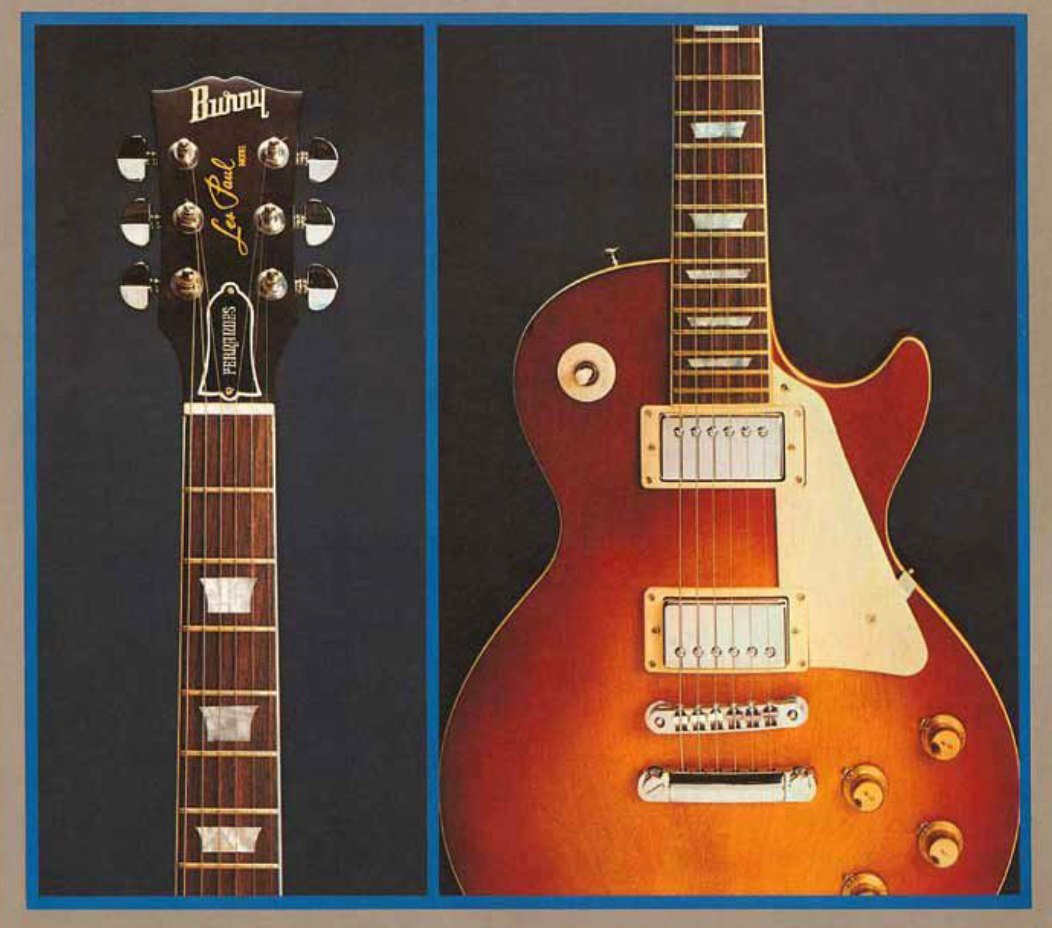
Burny, the brand Fernandes used for its Gibson-style models, followed with the first FLG Les Pauls in 1975. These early Burnys are often described as loose on the details: hardware, pickups and finishing. Yet the headstock proudly carried “Les Paul Model” in gold script, which is hard to imagine today. That sums up the early ’70s: the look came first, delivered cheaply.
1978: Tokai LS Series Starts the Faithful-Copy Race
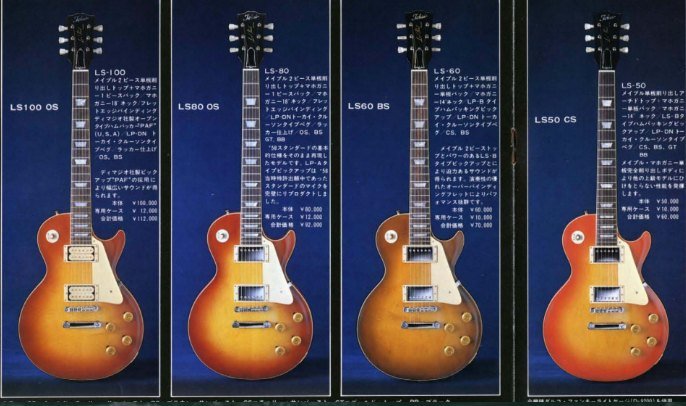
In 1978 Tokai Gakki launched the LS series, and I think this is where the history of the Japanese Les Paul changed for good. Tokai acquired a 1958 Les Paul, analyzed it thoroughly and rebuilt it. The concept wasn’t the look; it was the 1958 itself.
Even the cheapest LS-50 (¥50,000) had a carved solid maple top on a solid mahogany back. The original four grades, LS-50, LS-60, LS-80 and LS-100, used essentially the same woods. Nitro lacquer started at the LS-80 and DiMarzio pickups, a premium item in Japan at the time, at the LS-100. The headstock read “Les Paul Reborn,” then briefly “Reborn Old” in 1980, then “Love Rock,” along with the higher-grade LS150 and made-to-order LS200.
Tokai’s arrival set the whole Japanese Les Paul copy industry in motion. Here is how the other two answered.
1979–1982: Greco Super Real, Greco’s 1960 Answer
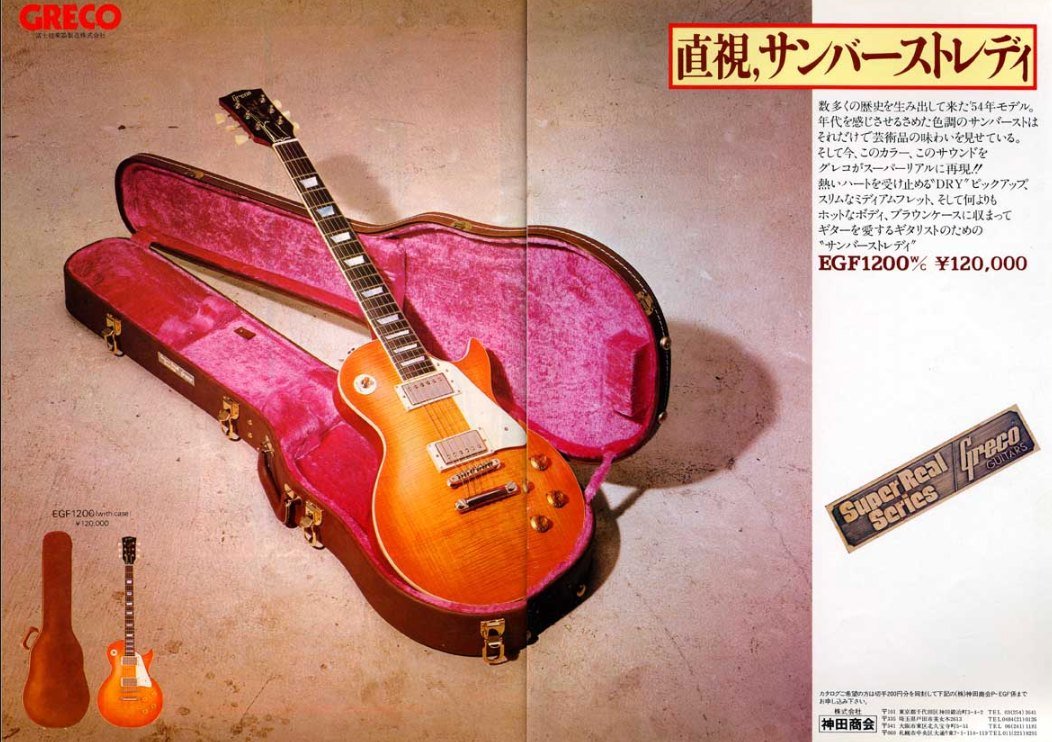
When the LS series appeared, Greco was already one of Japan’s top brands. After the EG360 it had built up real skill, including an order-made system for one-off guitars and the Project Series, effectively Greco’s custom shop. Even so, Greco was frankly overwhelmed by Tokai’s quality. Its EG models had copied Gibson’s then-current Les Pauls; they were old style, not a true vintage recreation. Greco’s response was to throw out that lineup and start again.
The result, in 1979, was the Super Real series. As the catalogs of the time put it, Tokai had rebuilt a 1958; Greco took an original 1960 model, dismantled it completely and rebuilt it. That meant the headstock material, truss rod position, bridge and tailpiece, top arch, neck profile, fret shape, electronics, capacitors and pickup mounting angle: everything that affects sound and feel, not just the outside.
DRY Pickups: Greco’s Japanese Humbucker
Tokai put DiMarzios in its top models, so Greco went the other way and made its stand with a Japanese pickup: the DRY (often called the Dry Z), developed by Nisshin Onpa, the company later known as Maxon. It sits at the end of a development line that ran through the U-1000 and U-4000. Prototypes were refined with input from musicians in Japan and abroad, and the final version used US-made coil wire. Among Japanese vintage collectors it is a legendary pickup, and I think it was the finest Japanese humbucker of its day.
Then there is a really fine detail. On the bridge pickup, Greco’s catalog describes a special mounting that brings the treble side about 1 mm closer to the bridge, a spec aimed at the 1960 sound. Whether 1960 Les Pauls were really built that way, and how much it changes the sound, I honestly can’t tell you. But it shows how much Greco cared.
EGF Models: Flame Tops and the 1981 Lineup
The EGF models, with “Flame Grain Finish” maple tops, aimed to recreate the original’s visual presence as well as its sound. The 1981 spec table below shows something the story usually leaves out: Greco offered both ’60-type and ’58-type Super Reals. The flagship EGF1800 was the ’60 type; the EGF1200 “Sunburst Lady” was a ’58 type.
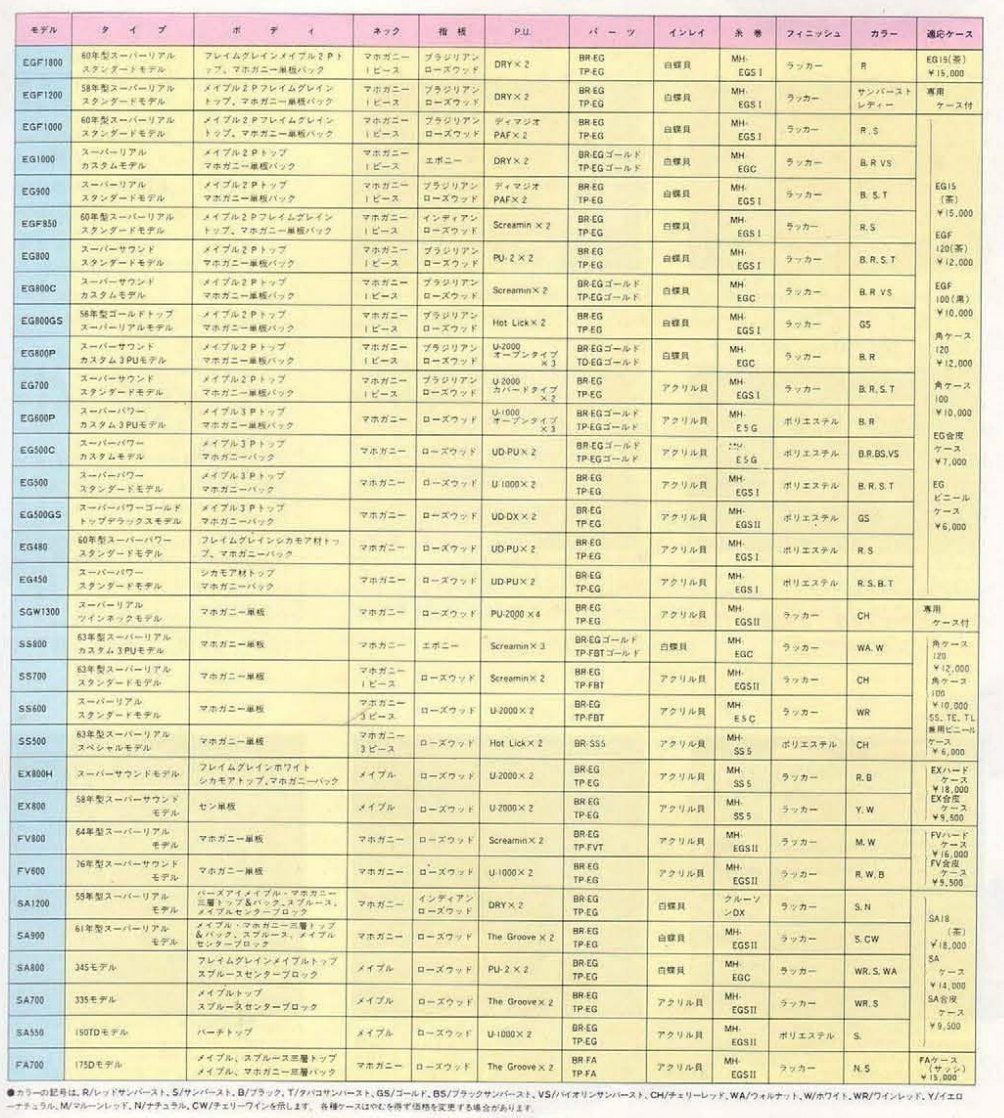
English translation: Greco Super Real Les Pauls (1981)
| Model | Type | Top / back | Fingerboard | Pickups |
|---|---|---|---|---|
| EGF1800 | ’60 Super Real Standard | Flame maple 2-pc / solid mahogany | Brazilian rosewood | DRY x2 |
| EGF1200 | ’58 Super Real Standard | Flame maple 2-pc / solid mahogany | Brazilian rosewood | DRY x2 |
| EGF1000 | ’60 Super Real Standard | Flame maple 2-pc / solid mahogany | Brazilian rosewood | DiMarzio PAF x2 |
| EG1000 | Super Real Custom | Maple 2-pc / solid mahogany | Ebony | DRY x2 (gold hardware) |
| EG900 | Super Real Standard | Maple 2-pc / solid mahogany | Brazilian rosewood | DiMarzio PAF x2 |
| EGF850 | ’60 Super Real Standard | Flame maple 2-pc / solid mahogany | Indian rosewood | Screamin’ x2 |
All six: one-piece mahogany neck, mother-of-pearl inlays, lacquer finish. Model number = list price in hundreds of yen (EGF1200 = ¥120,000).
Like the others, the Super Real series didn’t last: it ran from 1979 to 1982.
1979–1981: Burny FLG, the 1958 Copy With Tokai Rumors
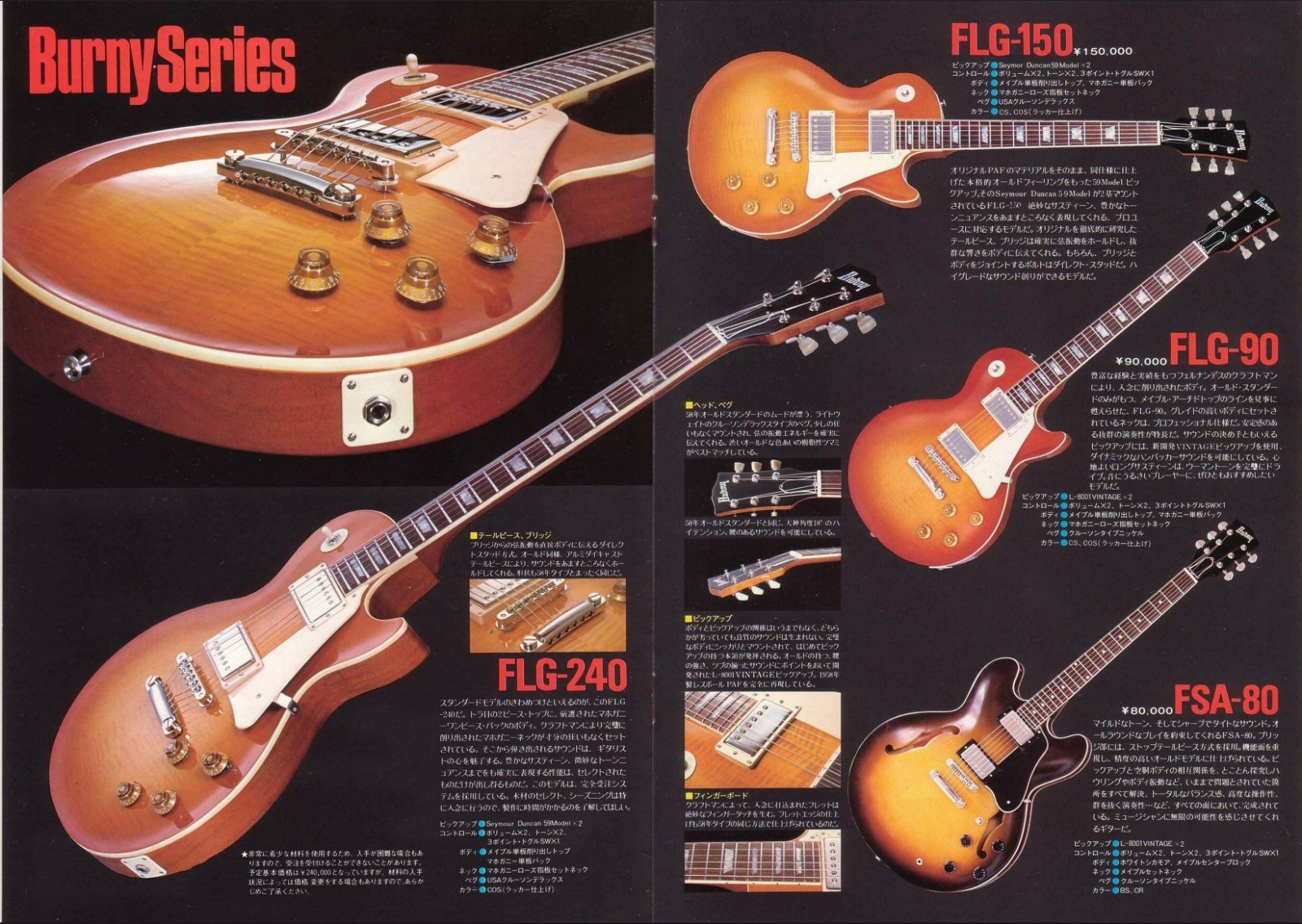
One more company joined the vintage Les Paul race. Around 1979–1980, Burny gave its Les Pauls a full model change, and the new FLG-240, FLG-150 and FLG-90 were faithful copies of a 1958. Burny paid attention not only to the woods but to parts like the tuners and plates, and like the other two it copied the headstock angle, top arch and neck joint. The 1980 catalog states the 18° headstock pitch “the same as a ’58 Old Standard.”
The FLG-240 was fully made to order, with careful wood selection and seasoning, genuinely handmade by Japanese craftsmen. The production version, the FLG-150, has comparable specs, including the same Seymour Duncan ’59 pickups and USA Kluson Deluxe tuners. From what I have seen, far more of them are out there. If you are shopping, the FLG-150 is the realistic target.
English translation: Burny FLG specs (1980 catalog)
| Model | Price | Pickups | Tuners | Notes |
|---|---|---|---|---|
| FLG-240 | ¥240,000 (planned base price) | Seymour Duncan ’59 Model x2 | USA Kluson Deluxe | Made to order only. Flamed 2-piece top, one-piece mahogany back |
| FLG-150 | ¥150,000 | Seymour Duncan ’59 Model x2 | USA Kluson Deluxe | Production model |
| FLG-90 | ¥90,000 | L-8001 Vintage x2 | Kluson-type, nickel | L-8001 billed as a full recreation of a 1958 PAF |
All three: carved solid maple top, solid mahogany back, mahogany set neck with rosewood fingerboard, 2 volume / 2 tone / 3-way toggle, lacquer finish. The catalog warns that FLG-240 orders may be refused, or the price changed, because its rare materials are hard to obtain.
Was the Burny FLG Built by Tokai?
Here is the interesting part. Burny Les Pauls from this period are often said to have been built by Tokai Gakki, the rival. People point to how close they are to the Reborn Old that Tokai was making at the same time: almost identical specs, and even similar serial number stamping. Not every source agrees, though. Wikipedia’s Burny entry credits the 1980–1981 FLG-240/150/90 to Terada, and Kasuga for the 1982–1984 RLG. Treat “made by Tokai” as a strong collector theory, not a settled fact.
No Script, Then Super Grade (1981)
The FLG headstock first carried a Les Paul script, then dropped it entirely; collectors call this the “no script” period. In 1981 Burny started the Revival series, and “Super Grade Model” began appearing on the headstock. I have also heard that production moved to Matsumoku around this time. In the catalogs, every model had switched from FLG to RLG codes by 1982 (some sources date the change as early as late 1980).
Who Built Japanese Les Paul Copies? Brands vs Factories
This is worth keeping in mind about the Japanese guitar industry: a brand is a signboard, not a manufacturer. Tokai, which built everything in its own factory, was the exception rather than the rule.
| Brand | Company behind it | Who built the golden-era Les Pauls |
|---|---|---|
| Tokai | Tokai Gakki (manufacturer) | Its own factory in Hamamatsu |
| Greco | Kanda Shokai (trading company) | FujiGen |
| Burny | Fernandes | Outsourced: Tokai (collector theory) or Terada for FLG; Matsumoku or Kasuga later |
| Orville (1988–) | Yamano Gakki, under Gibson license | Terada (c.1988–1993), FujiGen (1992 on) |
So the story of these three companies is competition between separate businesses, and at the same time specs and techniques moving between the same groups of craftsmen. Your Burny and your friend’s Tokai might have come out of the same factory. Once you see it that way, arguing over which brand is better starts to feel like arguing about a logo rather than a guitar.
1982 and After: Why the Golden Era Ended
Around 1982 the accuracy race began to change. All three brands moved away from faithful copies at roughly the same time, and the names changed with them.
- Greco: Super Real became the Mint Collection. The truss rod cover changed, “Super Real” left the headstock, some models lost the binding over the fret ends, and the nitro finish went away.
- Burny: the RLG models kept the faithful-copy approach on top grades, but from the mid-’80s, after the lawsuit era, the truss rod cover shape changed and the split-diamond headstock inlay on Custom models was swapped for a lightning bolt.
- Tokai: continued the LS as the Love Rock model, but effectively went bankrupt in 1985 and turned to original designs like the Talbo.
That is why the window around 1980 gets the highest praise today. It was the only time all three competed on the same ground, over vintage Les Paul accuracy.
How to Identify Japanese Les Paul Copies by the Headstock
The fastest way to date Japanese Les Paul copies is the headstock script. Model names on used listings are often wrong; the logo rarely lies.
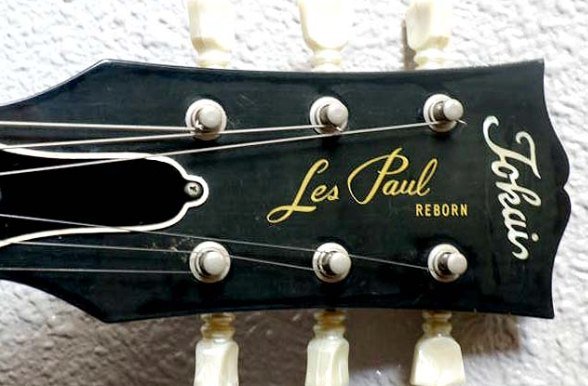
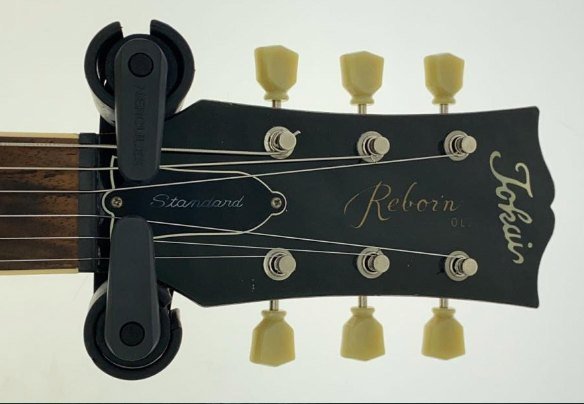
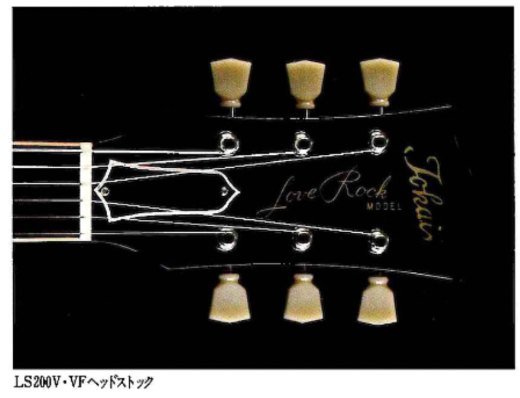
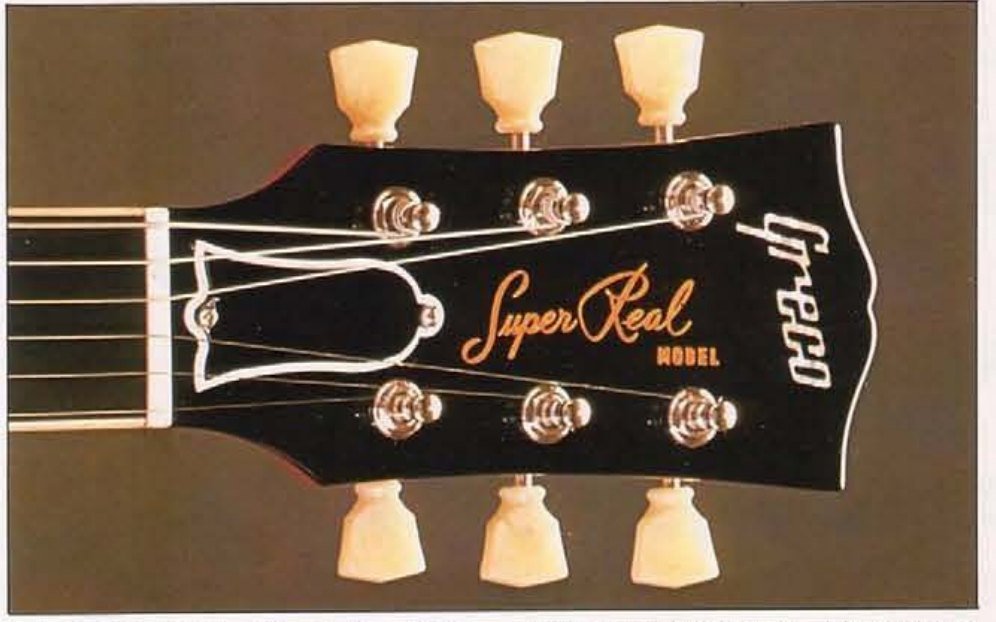
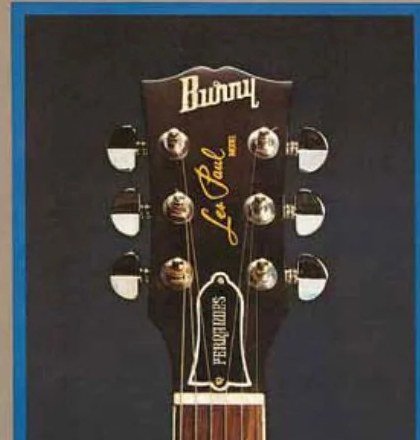
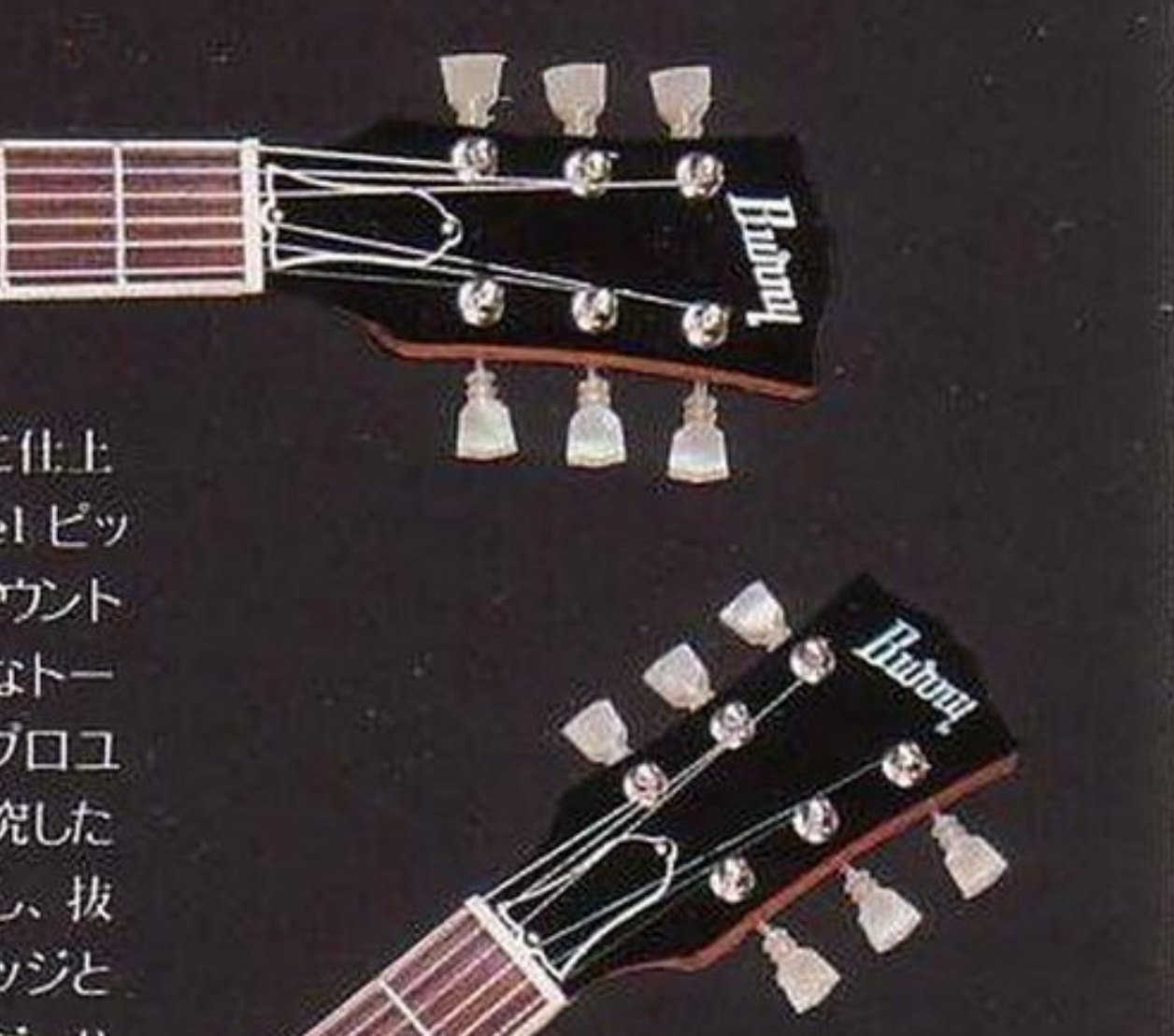
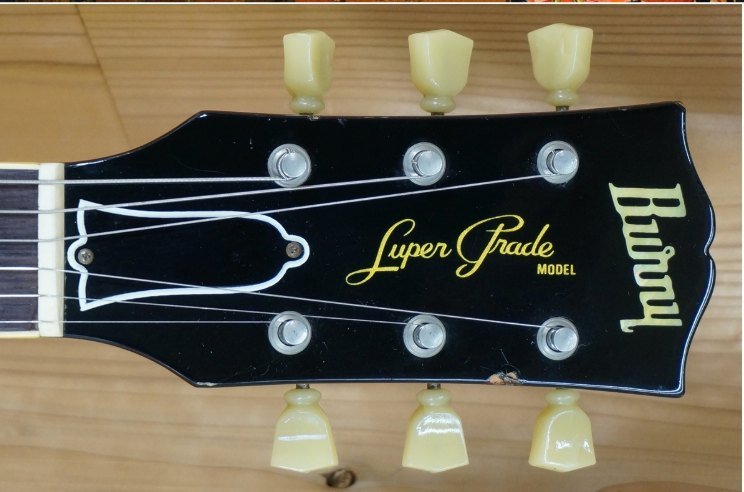
Images: Tokai, Greco, Burny and Orville catalogs unless noted.
1988–1998: Orville by Gibson, the Licensed Japanese Les Paul
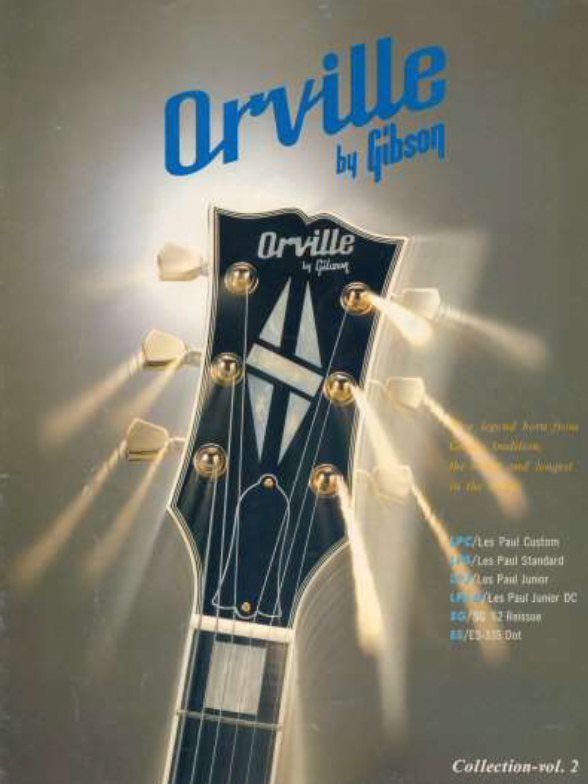
One brand we haven’t covered yet is Gibson’s officially licensed Orville. In 1987 Yamano Gakki became Gibson’s official distributor in Japan and began expanding the Japanese-made Epiphone line. Out of that came the idea of a separate Japanese Gibson brand without the Epiphone name, named after Gibson’s founder, Orville Gibson. It sat between Korean-made Epiphones and Gibson USA in price and, like Fender Japan, is generally seen as a countermeasure against Japanese Les Paul copies and other copy models.
What makes Orville special is that it wasn’t a copy. It was a Japanese guitar Gibson formally licensed by name, with the trademarked open book headstock and “Les Paul Model” on it. I can’t claim to have researched every guitar brand on earth, but I suspect Japan’s Orville is about the only overseas brand Gibson ever allowed to do that.
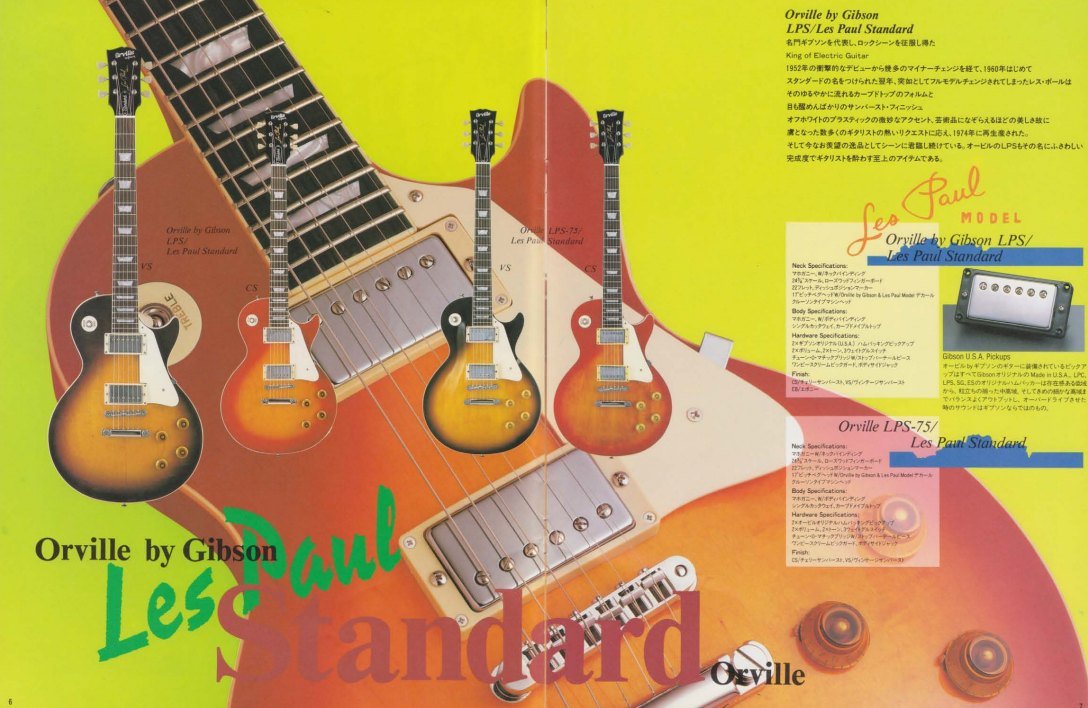
There were two grades. Orville by Gibson models carry that name on the headstock and use Gibson USA humbuckers (typically ’57 Classics) and nitro finishes, with US-made pots and switches and a Japanese Gotoh bridge and tailpiece. Plain Orville models use Japanese pickups. Builders varied by instrument and body type, but roughly Terada built them from about 1988 to 1993 and FujiGen from 1992 on. FujiGen is the factory that built Greco, so in a sense a later Orville is a FujiGen Greco with Gibson pickups.
Orville by Gibson production ended in 1995, and the Orville brand in 1998. That short run feeds the collector instinct, and because they carry the Gibson name, they trade high on the vintage market.
Which Japanese Les Paul Copy Should You Buy?
My pick
A Greco Super Real with DRY pickups
The pickups are the biggest real difference between the three, and a DRY-loaded Greco gives you a sound current DiMarzios can’t. If you want a Japanese Les Paul where the pickups were part of the obsession, start here.
A current Gibson Les Paul is a valid option too, of course, and I hear the weight relief players complained about is gone: the current Les Paul Standard ’50s is listed with no weight relief. But if you want something different for the price of a current Standard, or simply want a Japanese-made Les Paul, look at the 1978–1982 Japanese Les Paul copies. Just knowing these names changes how you search.
| Search for | Years | Best for |
|---|---|---|
| Tokai LS (Reborn / Reborn Old) | 1978–1980 | The widest choice; solid woods even at entry level. Aim for LS-80 and up for nitro and the 18° head. |
| Greco Super Real | 1979–1982 | Detail obsessives and anyone chasing the DRY pickup sound. |
| Burny FLG-150 | c.1979–1981 | A ’58 copy with Seymour Duncan ’59s and Kluson tuners from the factory. |
| Burny Super Grade | 1981 on | Fans of Matsumoku-era Japanese builds. |
| Orville by Gibson | 1988–1995 | A Japanese Les Paul with the Gibson name and pickups. Expect to pay for the name. |
Final Thoughts
My take on each: Tokai’s lineup is extremely wide, and even the lower-priced models use surprisingly good timber. Burny’s made-to-order FLG-240 is genuinely eye-catching, but honestly I find Burny less distinctive than the other two. Greco, I think, copied the original down to the millimeter. Shifting a pickup by about 1 mm is unique to Greco; neither of the other two catalogs mentions anything like it, and the fact that Greco sold it as a feature shows how proud they were of that craft.
If an Orville is out of budget, an older Greco is a perfectly good way to get the essence of a Les Paul for less. After all, FujiGen went on to build guitars good enough to carry the Gibson name. Tokai’s Reborn-era LS, Greco’s Super Real and Burny’s FLG fought the same war in the same few years, and those years were the hottest period for Japanese Les Paul copies. I’d love to review these with the actual guitars in hand, and I plan to once the channel grows a bit more.
Do you own a Burny, Tokai, Greco or Orville? Tell me about it in the video comments. Additions and corrections are always welcome.
FAQ
Which is better, Tokai, Greco or Burny?
None is simply better. Tokai has the widest lineup and good woods even at entry level, Greco’s Super Real is the most detail-obsessed and offers Maxon DRY pickups, and Burny’s FLG-150 and FLG-240 come with Seymour Duncan ’59 pickups. Pick by pickups and budget, not by logo.
What are the best years for Japanese Les Paul copies?
Roughly 1978 to 1982. Tokai launched the LS series in 1978, Greco the Super Real in 1979 and Burny the new FLG around 1979-1980. Around 1982 all three moved away from exact copies.
Were Burny Les Pauls made by Tokai?
Golden-era Burny FLGs are often said to be Tokai-built because they are close to Tokai’s Reborn Old in specs and serial stamping. Other sources credit Terada, so treat it as a collector theory rather than a confirmed fact.
Who made Greco guitars?
Greco was a brand of the trading company Kanda Shokai. Its guitars, including the Super Real series, were built by FujiGen.
Are Japanese Les Paul copies lawsuit era guitars?
They overlap with what collectors call the lawsuit era. After trademark complaints, the copies changed their headstock scripts, truss rod covers and later inlays, which is why the logo is a useful way to date them.
Is an Orville a real Gibson?
Orville was a Japanese brand licensed by Gibson and sold by Yamano Gakki from 1988 to 1998. Orville by Gibson models used Gibson USA pickups and the open book headstock, but they were built in Japan by Terada and later FujiGen.