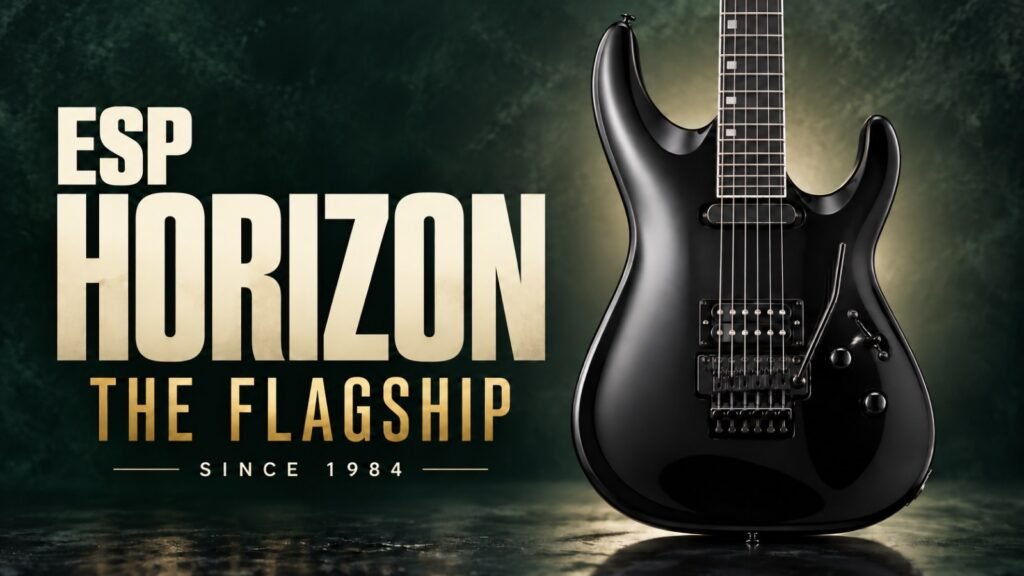
The ESP Horizon is the guitar ESP itself calls its symbolic flagship: a model that sums up the company’s history in one body shape. It began as a Strat-style custom model in the mid-1980s and grew into a family of neck-through and set-neck guitars built by hand in Tokyo. This guide traces the Horizon from 1984 to today and explains the differences between the HORIZON-I, II NT, III and CTM. For ESP as a whole, see our ESP Brand Guide.
ESP Horizon Quick Facts
- Period covered: 1984 to today
- First appearance: 1984 overseas catalog, as a Strat-style custom model
- Japan debut: 1987, in the NEW YORK SERIES
- Construction: Neck-through on the I, II NT and III; set neck on the CTM and PT (since 2012)
- Made in: Tokyo, as part of the ESP Original Series
- Affordable relative: Edwards E-HORIZON-I (2025)
- What Is the ESP Horizon?
- Neck-Through: The Strength and the Catch
- 1984-1987: From Strat-Style Custom to the NEW YORK SERIES
- 1992-2000: Figured Tops, the California Series and HORIZON-III
- 2002-Today: Knife Headstock, II NT and the Set-Neck CTM
- HORIZON-I vs II NT vs III vs CTM: Which Horizon Is Which?
- HORIZON-CTM 50th Anniversary: 30 Guitars for ESP's 50 Years
- Edwards E-HORIZON-I: The Affordable Horizon
- Which ESP Horizon Should You Look For?
- Final Thoughts
- FAQ
- More ESP guitar articles
What Is the ESP Horizon?
ESP has many famous guitars, but most of them are tied to a player: the Random Star, the KH-2, the Alexi V. The Horizon is different. It is ESP’s own design, and ESP’s Japanese site describes it as the flagship that condenses the company’s history.
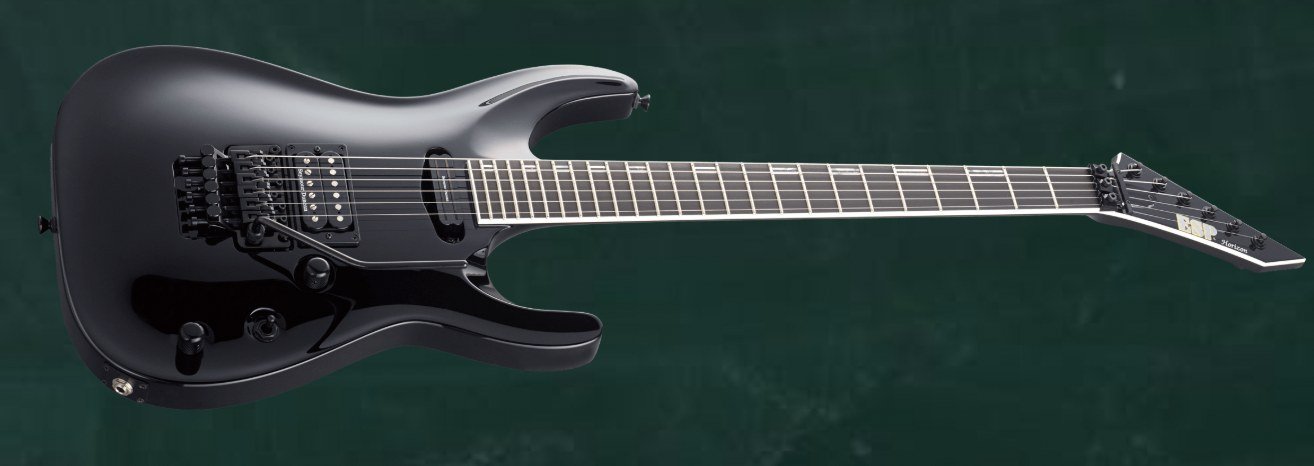
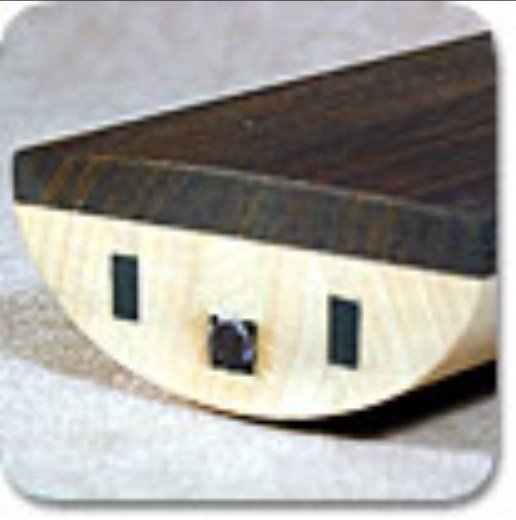
What defines it today is a contoured, Strat-derived body, 24 frets and, on most models, neck-through construction: the neck runs the full length of the body, with body wings glued to each side.
Neck-Through: The Strength and the Catch
Neck-through is the heart of the Horizon, so it is worth knowing what it gives you and what it costs.
| What you gain | What you give up |
|---|---|
| Longer sustain: no neck joint to interrupt the vibration | No easy neck swap: the neck cannot simply be replaced if it is damaged |
| Easy upper-fret access: no bulky heel where the neck meets the body | Harder repairs: neck problems take more work to fix |
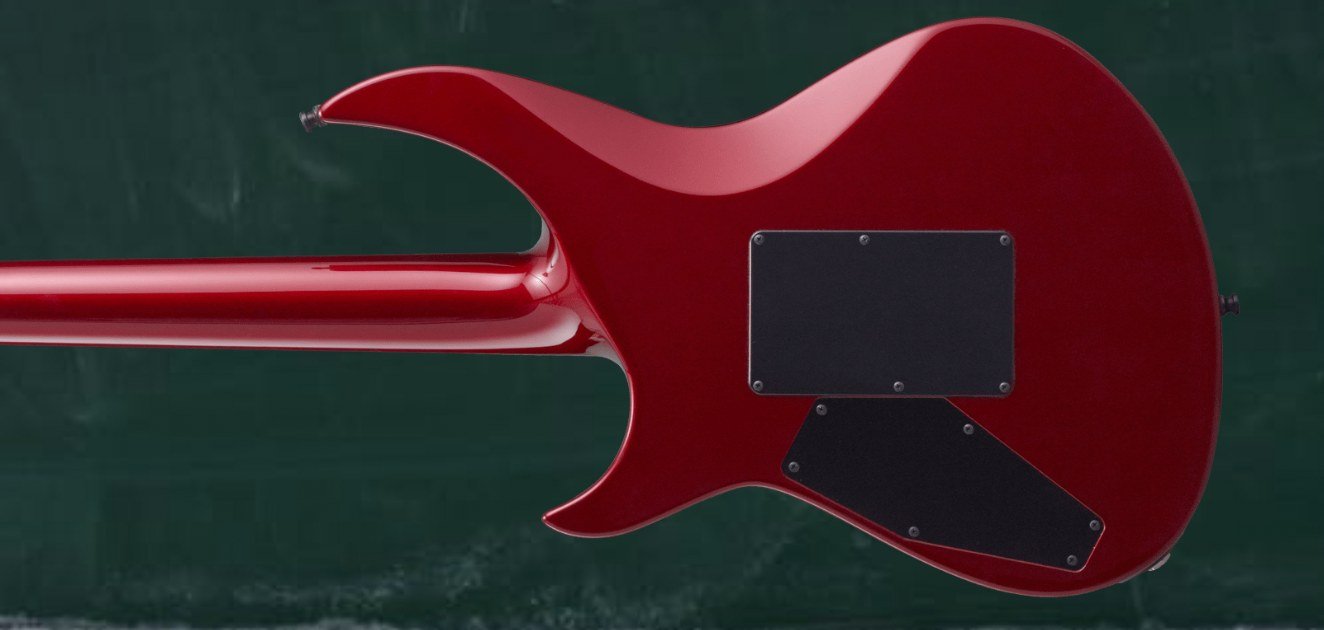
Not being able to swap the neck matters on a guitar that costs this much. ESP’s answer is to reinforce its necks with carbon support rods, so the neck stays stable over the years.
1984-1987: From Strat-Style Custom to the NEW YORK SERIES
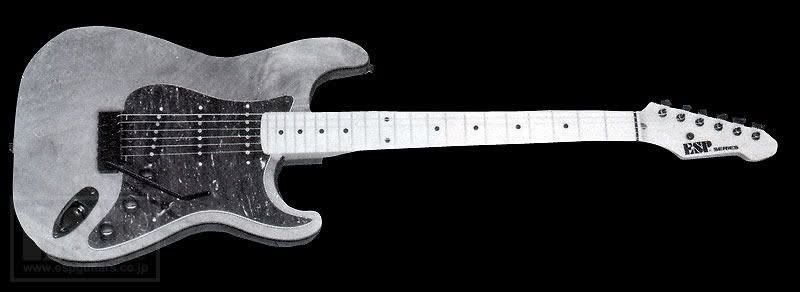
The Horizon came out of the mid-1980s hard rock boom, when makers were looking for more stylish shapes. ESP’s New York office developed a range sold in Japan as the NEW YORK SERIES, and the Horizon was one of them.
The first Horizon appeared in a 1984 overseas catalog as a Strat-style custom model with three single-coils and a FLICKER-II tremolo. When it reached the Japanese catalog in 1987, it had the arched top and deep neck construction that still define it, plus an ESP Sinclair locking tremolo. Players such as Bruce Kulick of KISS helped raise its profile.
1992-2000: Figured Tops, the California Series and HORIZON-III
In 1992 the HORIZON-CUSTOM brought quilted and flamed maple tops to the model for the first time, and the 3+3 headstock started to appear. In 1993 the line moved to the CALIFORNIA SERIES: the original became the HORIZON-I, and an ash-top HORIZON-II joined it.
1998 brought the HORIZON CLASSIC, a set-neck, mahogany-neck version with a Tune-O-Matic bridge aimed at a Les Paul-like tone. Then in 2000 the HORIZON-III arrived with an offset body inspired by the Horizon bass.
2002-Today: Knife Headstock, II NT and the Set-Neck CTM
In 2002 ESP added the HORIZON-I 3S (three single-coils) and HORIZON-I S (with a sustainer), and introduced the pointed knife headstock that is now an ESP signature. In 2005 the II returned as the HORIZON-II NT: all mahogany, with a Tune-O-Matic and stop tailpiece instead of a locking tremolo.
In 2012 the top-of-the-line HORIZON-CTM switched from neck-through to a set neck, and in 2016 the HORIZON-PT offered the CTM design with a plain hard maple top.
| Year | What happened |
|---|---|
| 1984 | First Horizon in an overseas catalog: Strat-style, three single-coils |
| 1987 | Japan debut in the NEW YORK SERIES, arched top |
| 1992 | HORIZON-CUSTOM with figured maple tops |
| 1993 | CALIFORNIA SERIES: HORIZON-I and ash-top HORIZON-II |
| 1998 | HORIZON CLASSIC (set neck, Tune-O-Matic) |
| 2000 | HORIZON-III with an offset body |
| 2002 | Knife headstock; HORIZON-I 3S and I S |
| 2005 | HORIZON-II NT: all mahogany, Tune-O-Matic |
| 2012 | CTM moves to a set neck |
| 2016 | HORIZON-PT (plain hard maple top) |
| 2025 | HORIZON-CTM 50th Anniversary, 30 pieces worldwide |
| 2026 | HORIZON-I adds a two-humbucker version (February) |
HORIZON-I vs II NT vs III vs CTM: Which Horizon Is Which?
Today’s ESP Horizon line splits into neck-through models and set-neck models. Here is how they differ.
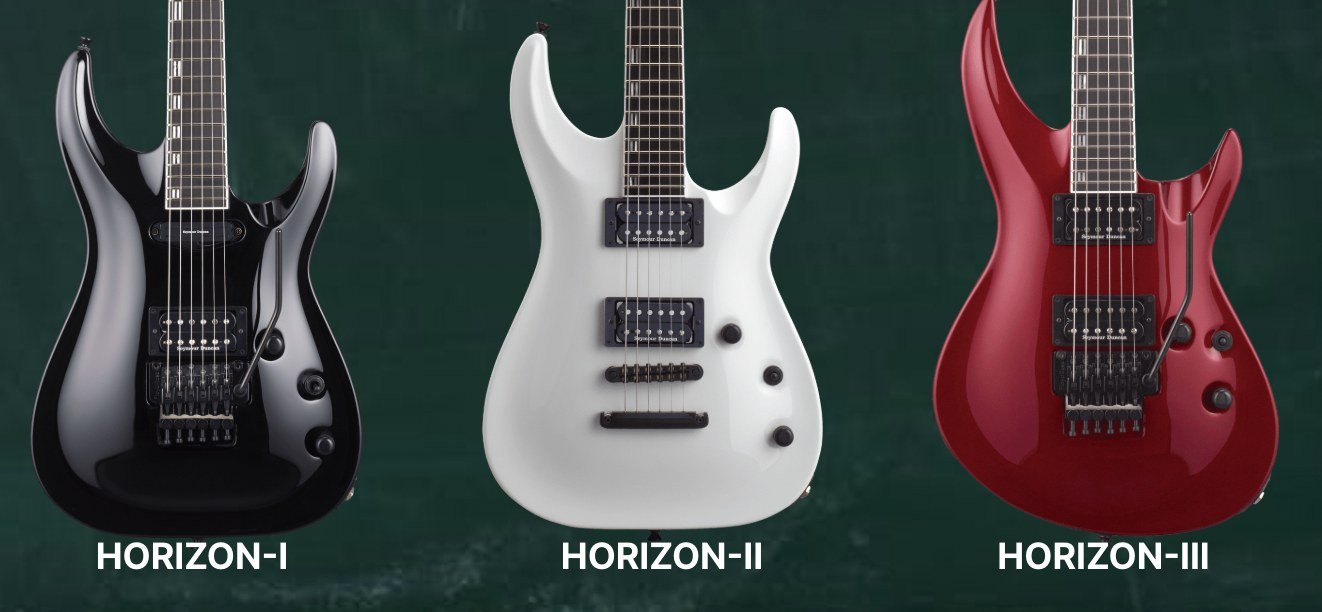
| Model | Construction | Body | Bridge | Character |
|---|---|---|---|---|
| HORIZON-I | Neck-through | Alder wings | Floyd Rose | The classic Horizon: bright, tight and versatile |
| HORIZON-II NT | Neck-through | Mahogany | Tune-O-Matic | Thicker, warmer mids; no locking tremolo |
| HORIZON-III | Neck-through | Alder, asymmetric shape | Floyd Rose | HORIZON-I spec in a more aggressive offset body |
| HORIZON-CTM (FR / NT) | Set neck | Figured top, rare woods | Floyd Rose or Tune-O-Matic | The top of the line |
| HORIZON-PT (FR / NT) | Set neck | Hard maple top | Floyd Rose or Tune-O-Matic | CTM design with a clear, focused top |
Quick tip
The model name tells you the bridge on the set-neck models: FR means Floyd Rose, NT means a Tune-O-Matic-style fixed bridge.
HORIZON-CTM 50th Anniversary: 30 Guitars for ESP’s 50 Years
For ESP’s 50th anniversary in 2025, the company did something telling. Earlier anniversary models had been based on its classic shapes, but this time ESP chose the Horizon. The HORIZON-CTM 50th Anniversary was limited to 30 guitars worldwide: 15 with a buckeye burl top and 15 with a flamed maple top.
Edwards E-HORIZON-I: The Affordable Horizon
If a Tokyo-built Horizon is out of reach, ESP’s Japan-market brand Edwards released the E-HORIZON-I in November 2025, presented as a direct descendant of the ESP Horizon. It uses a maple-topped alder body, a set neck with a smoothed joint, a Floyd Rose 1000 bridge and Seymour Duncan pickups. The tiers are explained in our ESP vs LTD guide.
Which ESP Horizon Should You Look For?
| You want… | Look for |
|---|---|
| The classic Horizon with a tremolo | HORIZON-I |
| Warm tone and tuning stability | HORIZON-II NT |
| A more striking shape | HORIZON-III |
| The best woods and finish | HORIZON-CTM |
| A Horizon on a smaller budget | Edwards E-HORIZON-I or a used Horizon |
Final Thoughts
ESP is often seen through its artists, but the Horizon shows the company’s own idea of a great guitar. Neck-through construction, a carved body and a neck reinforced for the long run: it is ESP’s custom-shop thinking turned into a standard model.
In my view, that is why ESP picked it for the 50th anniversary. It is the guitar that best explains what ESP is, without needing a famous name on the headstock.
FAQ
When did the ESP Horizon come out?
The first Horizon appeared in a 1984 overseas catalog as a Strat-style custom model. It reached the Japanese catalog in 1987 as part of the NEW YORK SERIES.
Is the ESP Horizon neck-through?
The HORIZON-I, HORIZON-II NT and HORIZON-III are neck-through. The HORIZON-CTM and HORIZON-PT use a set neck; the CTM switched to a set neck in 2012.
What is the difference between the HORIZON-I and HORIZON-II NT?
The HORIZON-I has alder wings and a Floyd Rose tremolo. The HORIZON-II NT has a mahogany body and a Tune-O-Matic-style fixed bridge for a warmer tone.
What does NT mean on an ESP Horizon?
On current models, NT means a Tune-O-Matic-style fixed bridge, while FR means a Floyd Rose tremolo.
Where is the ESP Horizon made?
ESP Horizon guitars are part of the ESP Original Series, built by hand in Tokyo, Japan.
Is there a cheaper ESP Horizon?
Yes. The Edwards E-HORIZON-I, released in November 2025, is presented by ESP as a direct descendant of the Horizon at a lower price.
More ESP guitar articles
Alexi Laiho ESP Guitars: Arrow Head, Sawtooth, Scythe and the Final Ripped and Hexed
Alexi Laiho’s ESP guitars are some of the most recognizable V-shapes in metal: an offset…
ESP vs LTD: The Essential Guide to E-II, Edwards, GrassRoots and Navigator
ESP vs LTD is the first question most people ask when they start shopping for…
Kirk Hammett ESP Guitars: From Zorlac and the KH-2 to the Legendary Mummy and Ouija
Kirk Hammett ESP guitars are some of the most iconic instruments in his huge collection….
ESP Random Star: How Japan’s Iconic Star Guitar Really Began (1981-Today)
The ESP Random Star is one of ESP’s defining guitars of the 1980s, and most…
ESP History: The Founding Years, 1975 to 1989
ESP is known worldwide as a metal brand, but the company started in 1975 as…
ESP Guitars Explained: Models, Brand Tiers and Which One to Buy
ESP is a Japanese guitar maker founded in Tokyo in 1975. It began as a…