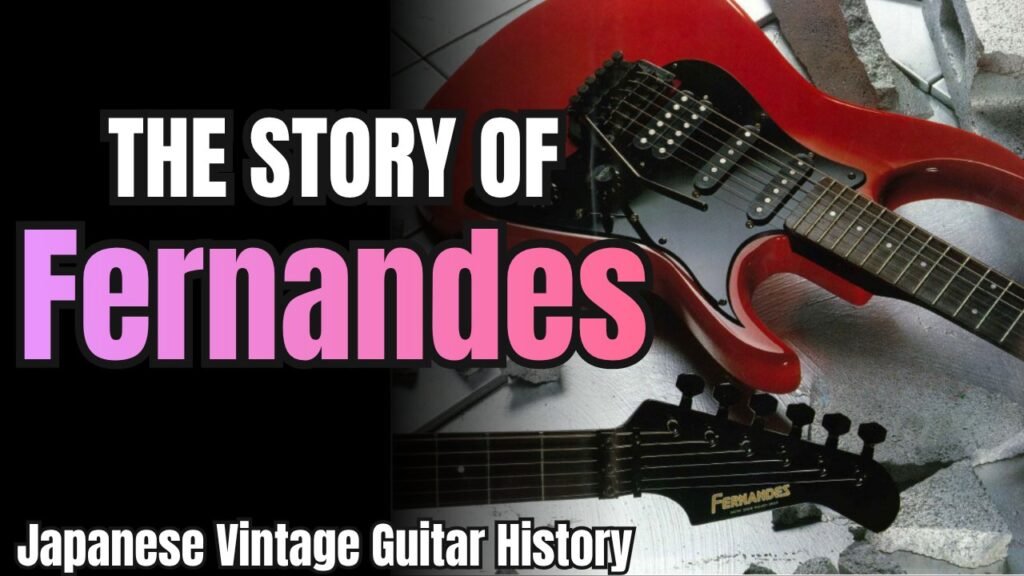
Fernandes guitars gave the world some of its most surprising models and inventions, mostly in the 1980s and 1990s, and then, sadly, lowered the curtain on its history. This Fernandes guitars history traces nearly half a century of the company, decade by decade, from a classical guitar workshop in Tokyo to the bankruptcy that ended it. For the brand at a glance and its lineup, see the Fernandes Brand Guide.
Fernandes History Quick Facts
- Period covered: 1969–2025
- Began as: Saito Gakki, a classical guitar maker in Ochanomizu, Tokyo (1969)
- Brands: Fernandes (Fender-style and originals) and Burny (Gibson-style)
- Inventions: the Fernandes Sustainer (early 1990s) and the ZO-3 elephant guitar (1990)
- Peak: sales above ¥4 billion, late 1990s to early 2000s
- End: operations suspended July 2024; bankruptcy decision 2025
Key takeaways
- Fernandes designed and sold guitars while partner factories built them, and it ran two brands: Fernandes and Burny.
- Its peak came from originals, not copies: the FR series, the ZO-3, hide’s Mockingbird and the Sustainer.
- The pandemic didn’t sink Fernandes on its own. A sales slump had already left it without the funds to catch the guitar boom.
Prefer to watch? This article is based on my own video below.
- Fernandes Guitars History at a Glance
- 1969–1979: From Classical Guitars to Copies
- 1980s: The Golden Age of Fernandes
- 1990s: hide, the ZO-3 and the Sustainer
- Mid-1990s–2010s: Decline and Comeback Attempts
- 2020s: Why Fernandes Closed
- Key Fernandes Models by Era
- Final Thoughts
- FAQ
- More Fernandes guitar articles
Fernandes Guitars History at a Glance
1969–1979: From Classical Guitars to Copies
The story begins in 1969 in Ochanomizu, Tokyo, with a company called Saito Gakki. At this point it wasn’t an electric guitar maker at all: its first business was building classical guitars. In 1972 Saito Gakki changed its name to Fernandes and, that same year, stepped into electric guitars for real, riding the rock boom spreading across Japan.
Fernandes didn’t own a big factory. It focused on design and sales and left manufacturing to various Japanese factories. It wasn’t hands-off, though: in-house staff handled product development and built samples and artist instruments.
Two Brands: Fernandes and Burny
The first Fernandes products were copies of Fenders and Gibsons, sold under two names. Fender-style copies, led by the FST series, went out as Fernandes; Gibson-style copies went out as Burny. Among the many Japanese makers imitating overseas guitars, Fernandes rose to the top on precision and consistent quality, so pros and amateurs alike lined up behind it.
The Stone Logo (c.1978)
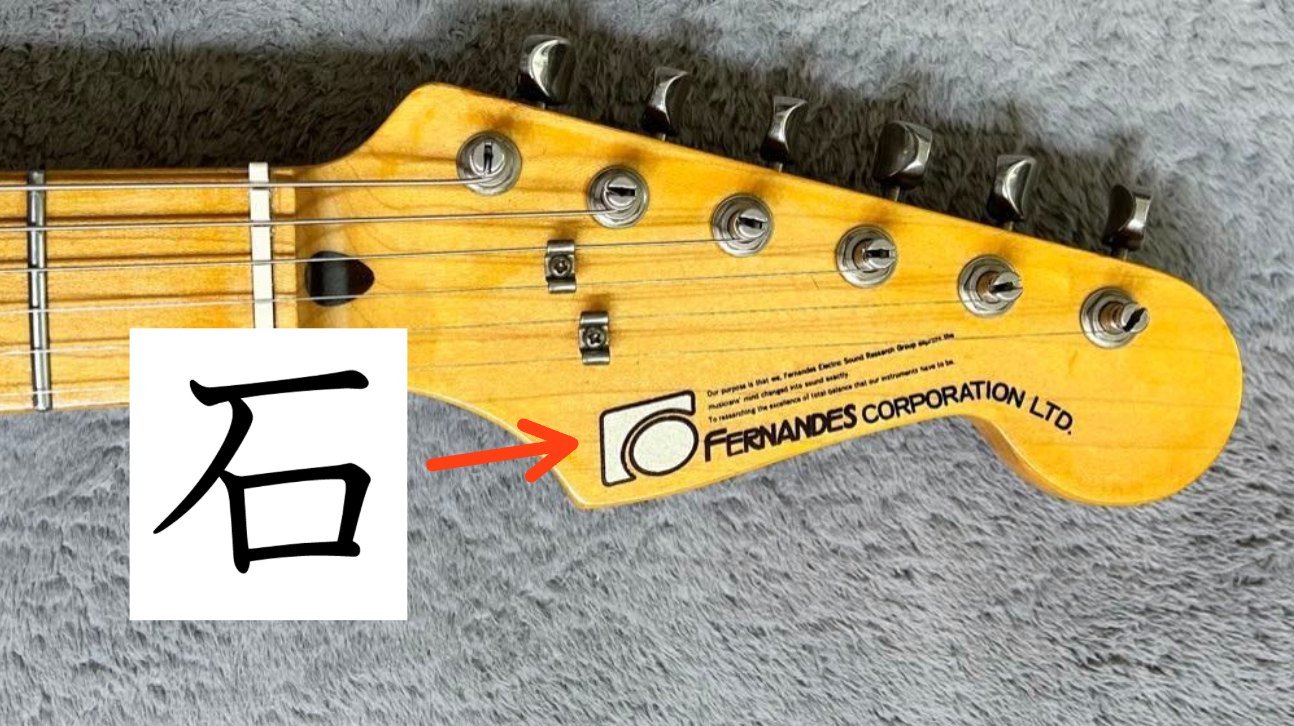
Being a copy maker came with an unavoidable problem. Early Fernandes guitars mirrored the real thing right down to the logo, and the lettering was close enough to Fender’s to draw a complaint. Fernandes changed it. The new capital F looked like the Japanese character for stone, ishi, so it became known as the stone logo. Guitars with it, from around 1978 on, are now sought after in the Japan Vintage market.
1980s: The Golden Age of Fernandes
The 1980s were when Fernandes shone brightest, and arguably when Japanese domestic brands as a whole did. Fender Japan was only established in 1982, a real Gibson was out of reach, ESP was still a small Shibuya workshop and Ibanez focused on export. If you wanted a guitar in Japan, your choices were mostly domestic: Fernandes, Greco, Aria, Tokai, Yamaha, Morris. Fernandes was one of the leads.
The Revival Series and the Musician Limited Copies
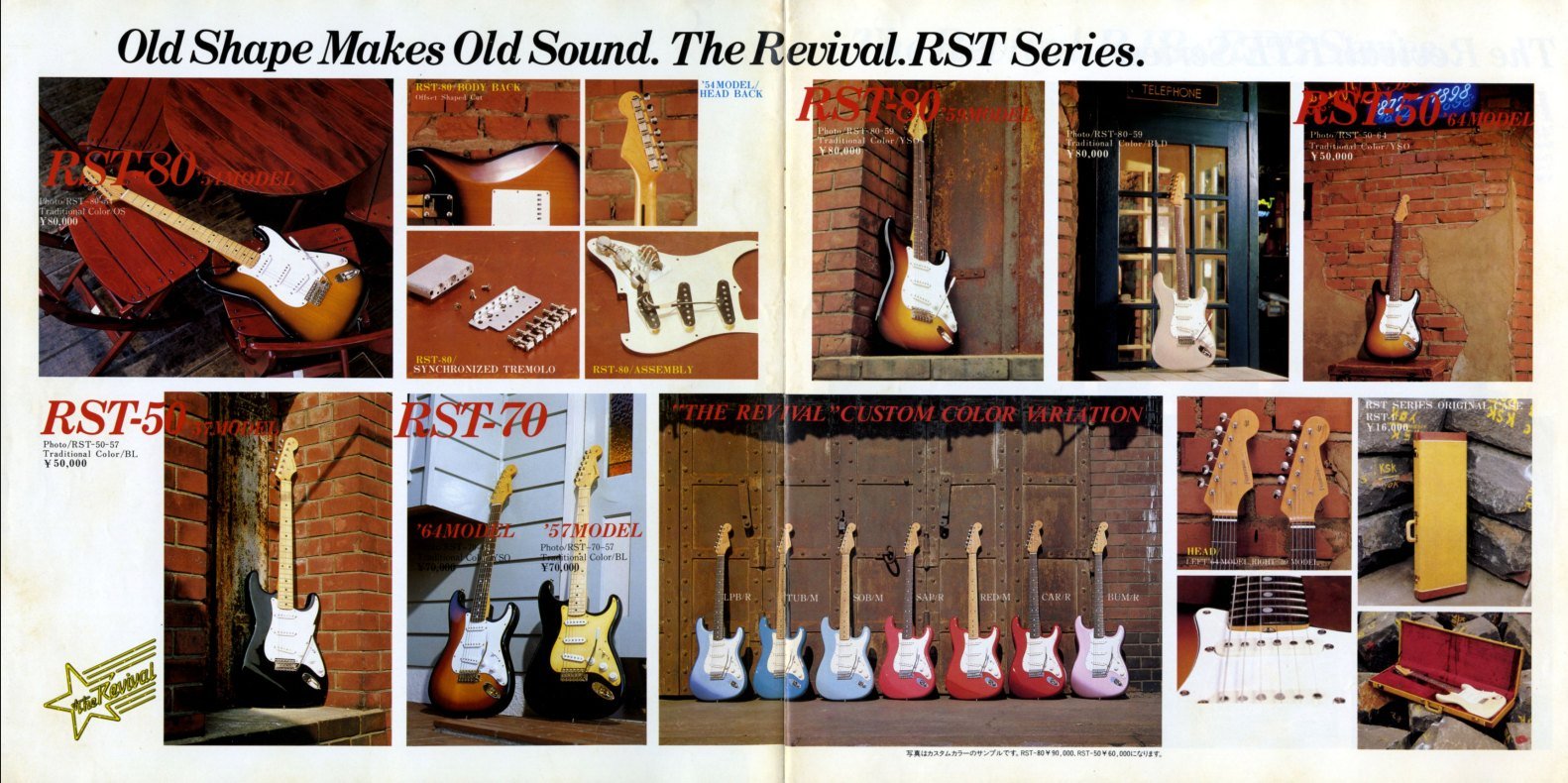
The symbol of the era was The Revival series, which arrived with the 1981 catalog. Vintage Stratocasters were studied down to the smallest detail and rebuilt, and the quality helped drive the Japan Vintage boom. Alongside it came the Musician Limited series, copies of famous players’ guitars with the artist’s name right in the catalog. By today’s standards it would be a step too far, but those models are still popular on the used market.
From around 1983, Fernandes was also officially licensed to build Floyd Rose units for the Japanese market. You can spot them by the Headcrusher stamp.
Original Designs: FR, TEJ and the FGI Pickup
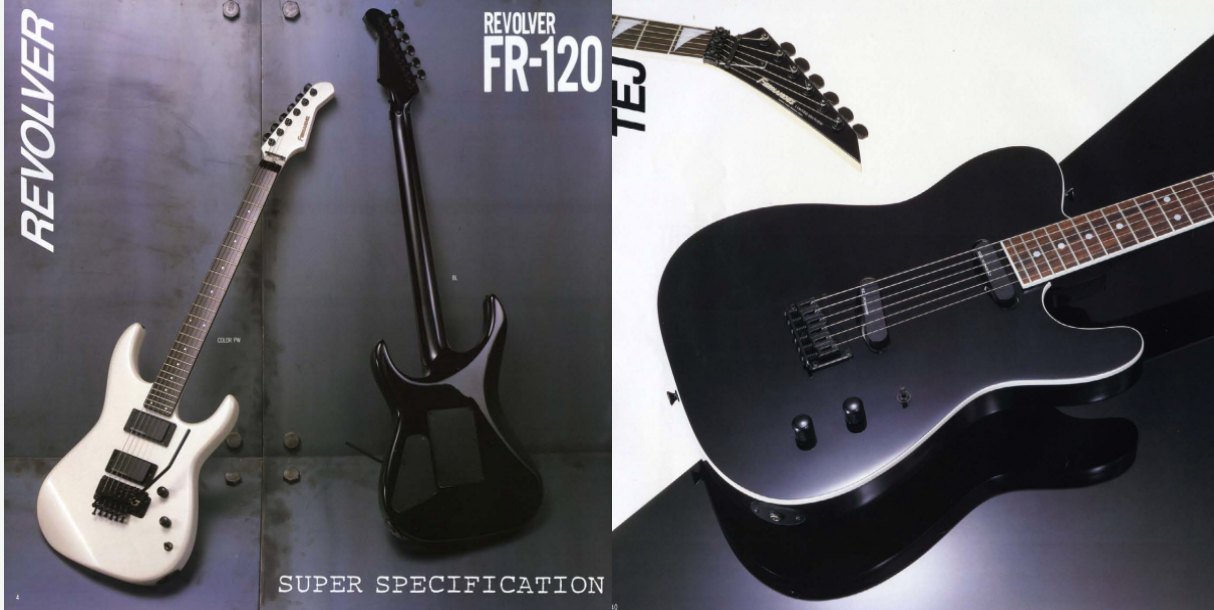
Fernandes then started competing with its own designs. The FR series, from around 1985, was a slimmed-down Strat shape with a bolt-on neck, the so-called Dinky style. As the heavy metal boom hit, its Floyd Rose-loaded models won over technical players, and by the late ’80s it was an established original style rather than a copy of Fender or Jackson. These guitars often carried the FGI active pickup, jokingly called the “fake EMG” because the look and model name were so close.
Brad Gillis, Adrian Vandenberg and Tomoyasu Hotei
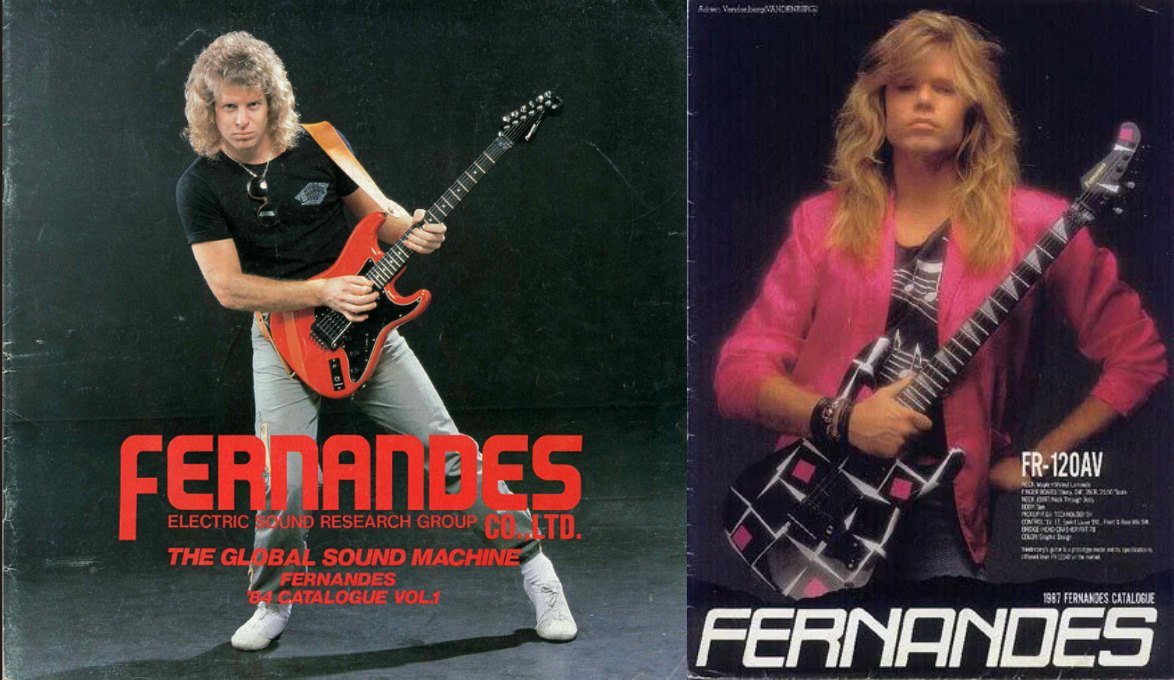
Fernandes was more aggressive than other domestic brands about teaming up with musicians. Overseas there were Brad Gillis and Adrian Vandenberg. At home came a defining model for Tomoyasu Hotei, guitarist of BOØWY, a Japanese band at the absolute peak of its popularity. His guitar carried a hand-drawn paint job known as the G pattern and became a true icon.
Put it all together: a deep lineup from entry to high-end, popular players everywhere, heavy ads in the music magazines and quality domestic builds. For the guitar kids of the day, Fernandes was a dream brand, the one you wanted as your first guitar.
1990s: hide, the ZO-3 and the Sustainer
X and hide’s Mockingbird
In the 1990s Fernandes teamed up with the band with the most heat behind it: X (later X JAPAN). Guitarist hide had played a Fernandes Mockingbird type even before joining. The shape became so tied to him that people who didn’t know B.C. Rich assumed it was his own design, and his signature model became the company’s flagship artist guitar. Bassist Taiji used an early Warlock-type copy, Pata later got his own model and Fernandes even built live guitars for drummer Yoshiki.
Later hide models got wild, including an acrylic body. For longtime fans, the psychedelic paint jobs and the Yellow Heart of his final years, a vivid yellow Mockingbird with a painted heart, hold especially strong memories.
ZO-3: The Elephant Guitar (1990)
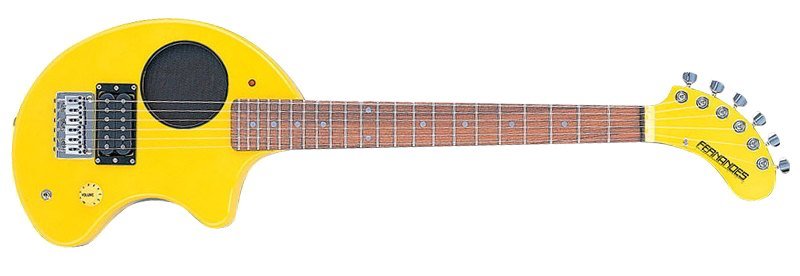
In 1990 came the ZO-3, a speaker-equipped guitar shaped like an elephant (zo-san in Japanese). Its looks and built-in amp made it a runaway hit, with over 350,000 sold, and it spawned tie-ins with Ultraman, Kamen Rider and Hello Kitty. It carried the Fernandes name even to people who don’t play.
The Fernandes Sustainer
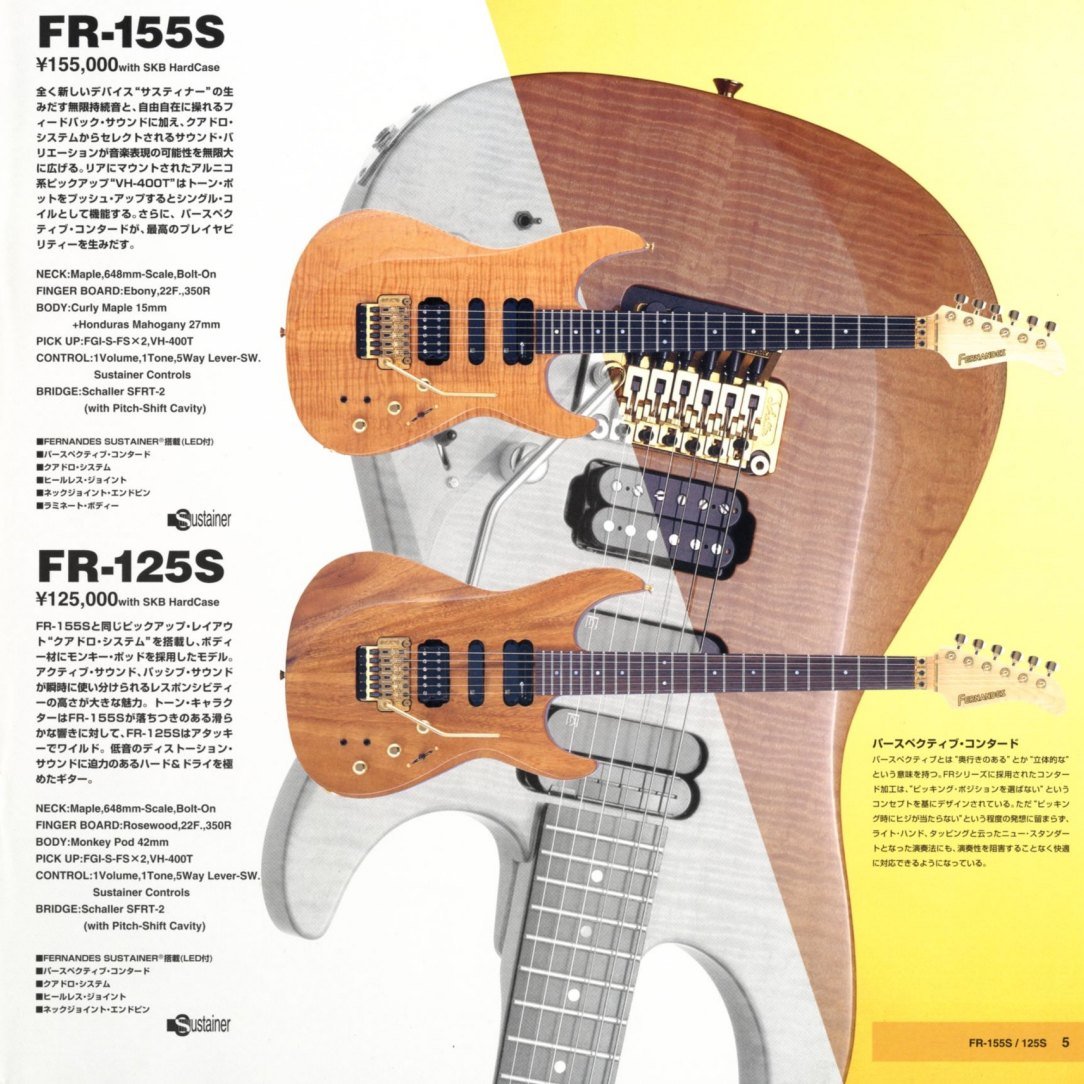
The invention that made the Fernandes name ring out worldwide was its own Sustainer, which keeps a string vibrating electromagnetically. It grew from the Sustainiac, developed by the American Alan Hoover; Fernandes acquired the patent, refined it and released it in the early ’90s. It won over Steve Vai, Robert Fripp and other adventurous players.
As a company, the late 1990s to the early 2000s were the peak. Sales topped ¥4 billion, making Fernandes one of Japan’s largest guitar brands, and it pushed hard overseas as a real original brand.
Mid-1990s–2010s: Decline and Comeback Attempts
Even in the golden age, a shadow was creeping in. By the mid-’90s, overseas brands like Charvel and Jackson ramped up OEM production in Japan. Fernandes answered with the high-end P Project custom line and beginner lines, but its share shrank at home and abroad, and the lineup narrowed to mostly low- and mid-priced guitars outside the artist models.
In the 2000s Fernandes slid into the image of a cheap, third-rate brand, and a lost reputation doesn’t come back easily, even with X JAPAN models and visual kei endorsements. It also fell behind rivals expanding overseas. In the 2010s, as domestic brands brought production home and reissued their ’80s classics, Fernandes followed with reissues and limited runs. The ELT series of the mid-2010s sat above the STD and DLX lines as the flagship, focused on fret-edge finishing and paintwork only Japanese factories could deliver. Around 2019 came the Sustainer II, a thin plate at the neck end that finally freed up the neck pickup position.
2020s: Why Fernandes Closed
The pandemic was one trigger. Osaka Fernandes, a closely tied partner, saw demand shrink under restrictions on live music and went bankrupt in 2023. Fernandes’s own creditworthiness slipped. In July 2024 it suspended operations, and in 2025 it received the decision to commence bankruptcy.
My take
The pandemic and rising material costs may be part of it, but every maker faced those, and Fernandes was one of the bigger brands. Small makers and one-person workshops, with fewer supply routes, should have had it harder.
And with people stuck at home, guitar demand actually rose: Fender posted record sales in 2020. My view is that Fernandes, already in a sales slump, simply lacked the funds to catch that new current.
Key Fernandes Models by Era
From copies to originals, these are the Fernandes lines worth knowing, in roughly the order they appeared. Burny’s Les Pauls are covered in the Burny Brand Guide.
| Series | Era | What it is | Good to know |
|---|---|---|---|
| FST | 1970s | Fender-style copy built to play easier than the pricey originals; later big-headstock and spaghetti-logo versions | The original Fernandes Strat |
| RST (The Revival) | 1981 on | Vintage Strat recreation, down to Oregon and Washington alder and tuner backs | Santana reportedly bought five in 1982; Billie Joe Armstrong’s “Blue” is a Revival Strat |
| FR | c.1985 on | Dinky superstrat, 24 frets, often Floyd Rose or Sustainer | Technical players; FR-EXL MBS has a 666 mm scale |
| TEJ | 1980s on | Tele body with a pointed Jackson-style head | Hotei fans; TEJ-DELUXE 2S has EMGs |
| MG (hide) | 1990s on | Mockingbird-type signature line | X JAPAN fans; Yellow Heart and psychedelic versions |
| ZO-3 | 1990 on | Elephant-shaped travel guitar with built-in speaker | Practice anywhere; 609 mm scale |
| BSV | – | A smaller V on a 609 mm short scale | Players with smaller hands |
| APG / Dragonfly | – | PRS-style shape, medium scale | Les Paul tone with easier upper frets |
| Ravelle | 2000 on | Les Paul with a bold twist, developed in the US | Rock players; Ravelle ELT and Steeler variants |
| ELT | Mid-2010s | Japan-made flagship above STD and DLX | The best-finished late Fernandes |
Final Thoughts
Starting from copies, rising to the top of Japan with originals and a Sustainer the world came to recognize, and then quietly lowering the curtain after half a century: that is the arc of Fernandes. If you ever spot one in the corner of a guitar shop, or on somebody’s stage, do yourself a favor and give it a listen.
Got a Fernandes of your own, or a memory tied to one? Share it in the video comments.
FAQ
What happened to Fernandes guitars?
Fernandes suspended operations in July 2024 and received the decision to commence bankruptcy in 2025. A closely tied partner, Osaka Fernandes, had gone bankrupt in 2023, and the company’s sales had already fallen sharply from their peak.
When was Fernandes founded?
Fernandes began in 1969 as Saito Gakki, a classical guitar maker in Ochanomizu, Tokyo. It took the Fernandes name and moved into electric guitars in 1972.
Is Fernandes the same company as Burny?
Yes. Burny was a brand name used by Fernandes, mainly for Gibson-style guitars, while Fender-style copies and most originals carried the Fernandes name.
What is the Fernandes Sustainer?
It is a system that keeps a string vibrating electromagnetically. Fernandes developed it from Alan Hoover’s Sustainiac and released it in the early 1990s; the Sustainer II followed around 2019.
Who played Fernandes guitars?
Famous users include hide of X JAPAN, Tomoyasu Hotei of BOOWY, Brad Gillis, Adrian Vandenberg, Billie Joe Armstrong of Green Day, and Sustainer users such as Steve Vai and Robert Fripp.
Are Fernandes guitars still made?
No. Fernandes stopped trading in 2024, so only used guitars are available today.
More Fernandes guitar articles
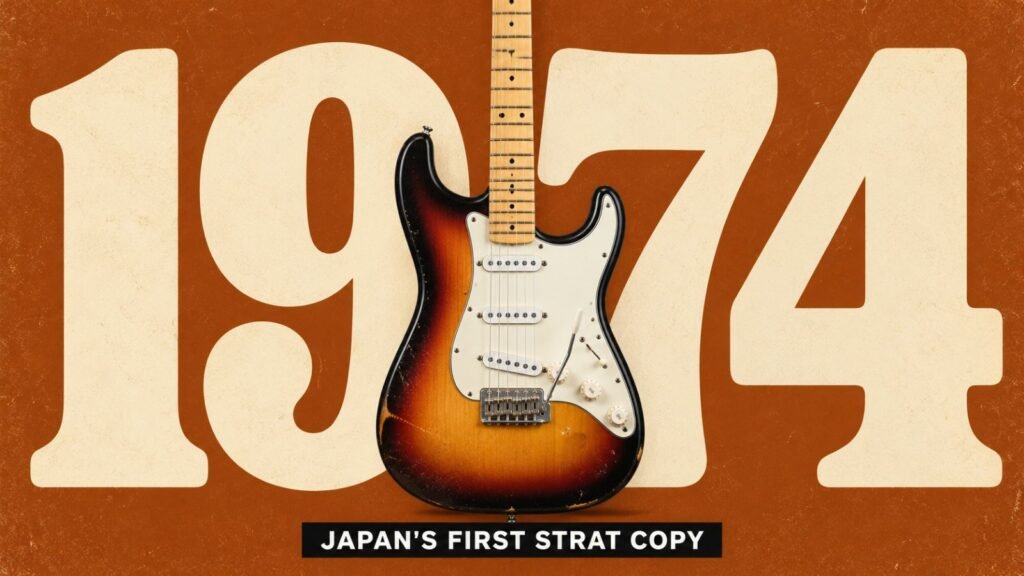
Fernandes FST-80 and The Revival RST: Japan’s First Strat Copy and What Came Next
In December 1974, Fernandes released the FST-80, which many consider Japan’s first real attempt at…

Billie Joe Armstrong’s Blue: The Japanese Fernandes Strat Behind Green Day
Billie Joe Armstrong’s “Blue” is one of the most famous guitars in punk rock, and…
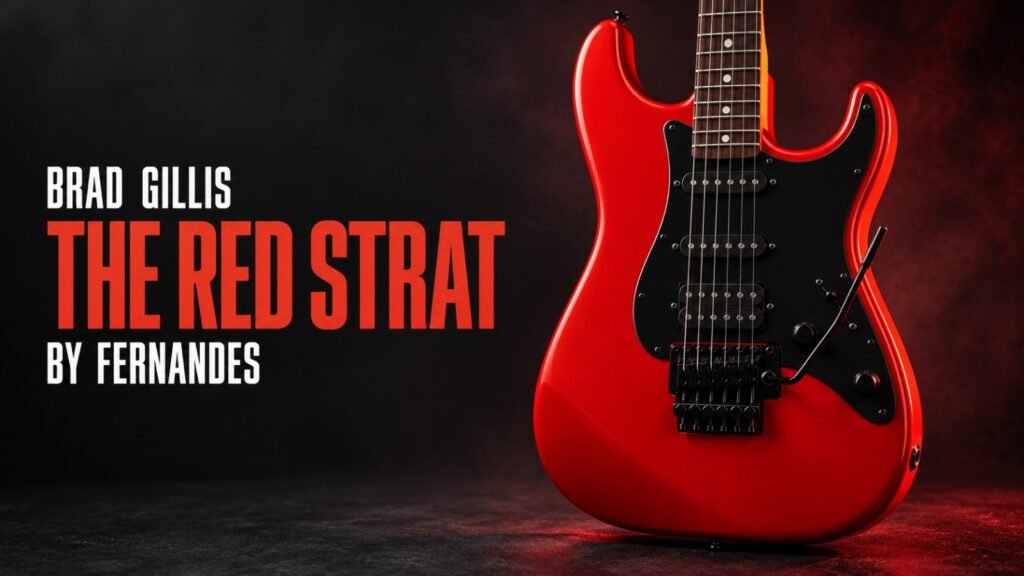
Fernandes Brad Gillis Model: The Red Strat (ST-155BG, ST-120BG, ST-80BG)
The Fernandes Brad Gillis model is the red Strat-style signature guitar of Night Ranger’s Brad…
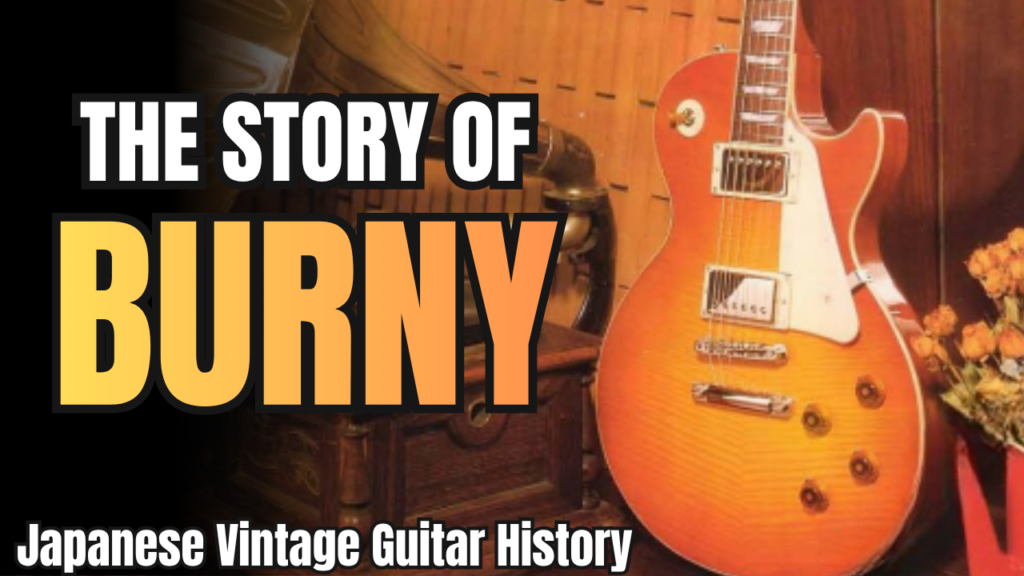
Burny History: From FLG Les Paul Copies to the Final Bow (1975-2025)
Burny history is the story of the Gibson-copy brand of Fernandes, running from the first…
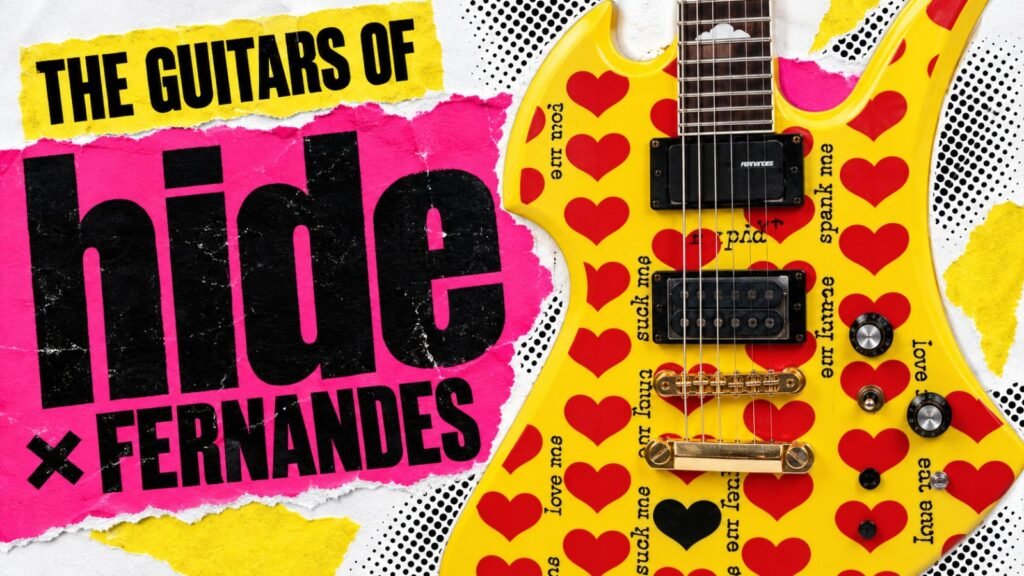
hide Fernandes Guitars: Army Panther, Ameba and Yellow Heart Explained
The hide Fernandes guitars are some of the most recognizable Japanese guitars ever made. In…
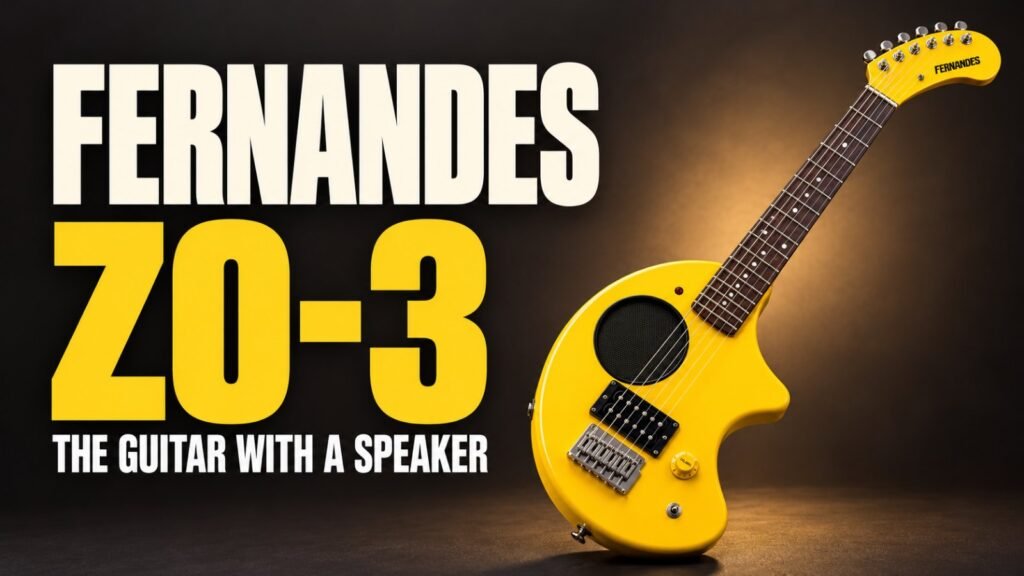
Fernandes ZO-3: The Elephant Guitar, 10 Variations and Famous Collaborations
The Fernandes ZO-3 is a long-running mini guitar with a built-in amplifier, and its elephant-like…