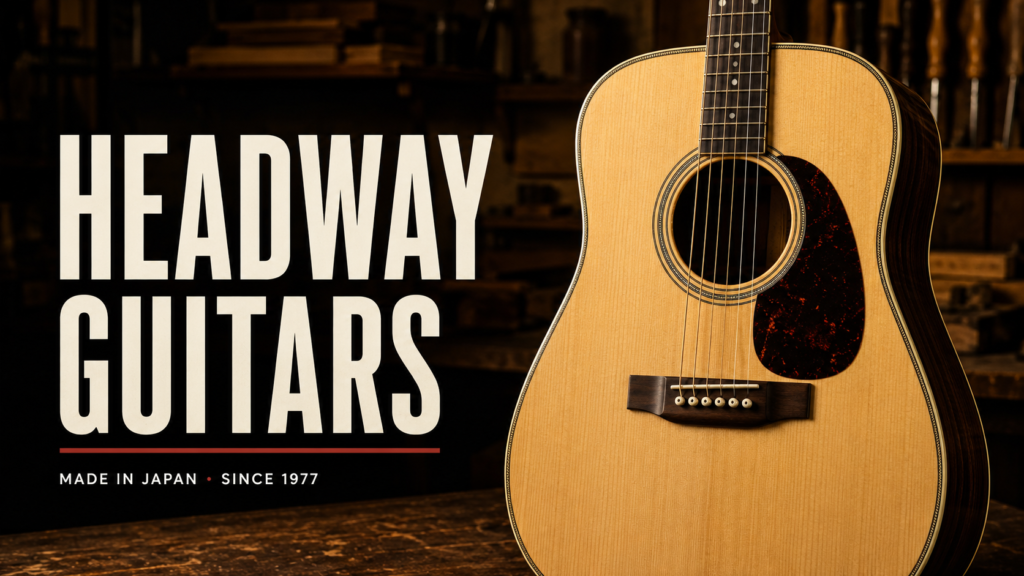
Headway is the acoustic brand of Deviser in Matsumoto, Nagano, and the brand the whole company grew out of in 1977. Its flagship HD-115 began with a Martin D-28 taken apart and studied for a year.
Headway Guitars at a Glance
- Founded: 1977, Matsumoto, Nagano Prefecture, Japan
- Parent company: Deviser, a manufacturer that builds its own guitars at the Aska factory
- Claim to fame: studied a Martin D-28 for a year to create the HD-115 dreadnought
- Signature model: HD-115, the flagship dreadnought
- Signature tech: Semi-Forward Shifted X bracing; post-fitted, one-piece necks
- Also known for: guitars built from Japanese woods such as sakura (cherry)
- Brand family: Bacchus, Momose, Headway, Seventy Seven, STR, Rosetta, JRP, Sakura Ukulele
Start here
- What Makes Headway Special: the body and the neck
- The Headway Lineup: from Essential Edition to Custom Shop
- Buying a Headway: where and what to look for
- Headway FAQ: quick answers
History in Brief: The Brand Deviser Was Built On
Headway is where today’s Deviser begins. Yasuo Momose worked as a furniture craftsman until he was twenty, then joined Fujigen in 1964 and became a guitar builder. His work at Hayashi Guitar caught the eye of Kei Yatsuzuka, later Deviser’s chairman, who set out to build the highest-quality guitars in Japan. In 1977 they founded Headway in Matsumoto, got hold of a Martin D-28, and out of it came the HD-115.
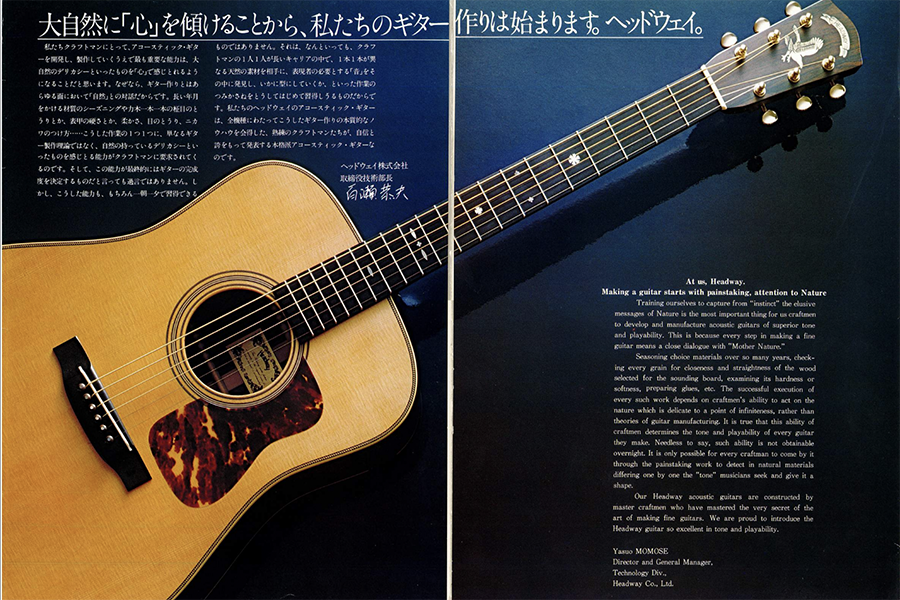
Then, in 1983, the factory burned down, taking the jigs, the machines and most of the wood stock with it. Japan was deep in its metal boom, so the company rebuilt as an electric-guitar factory, which is how Bacchus (1994) came to exist. Acoustic production only restarted in 1999, reportedly triggered by a letter from a single devoted customer, and the revived HD-115 was built from wood that had somehow survived the fire sixteen years earlier.
What Makes Headway Guitars Special
Headway guitars talk about two things more than anything else: the body and the neck. Almost every design decision traces back to one of them.
The Body: A Top That Moves Well and Stays Strong
A great top has to do two things that fight each other. Thinner wood moves more freely and sounds livelier; thicker wood holds up better over time. Headway’s answer is a top that gradually gets thinner as it goes from the center outward, lively where it needs to vibrate, strong where it needs to survive.
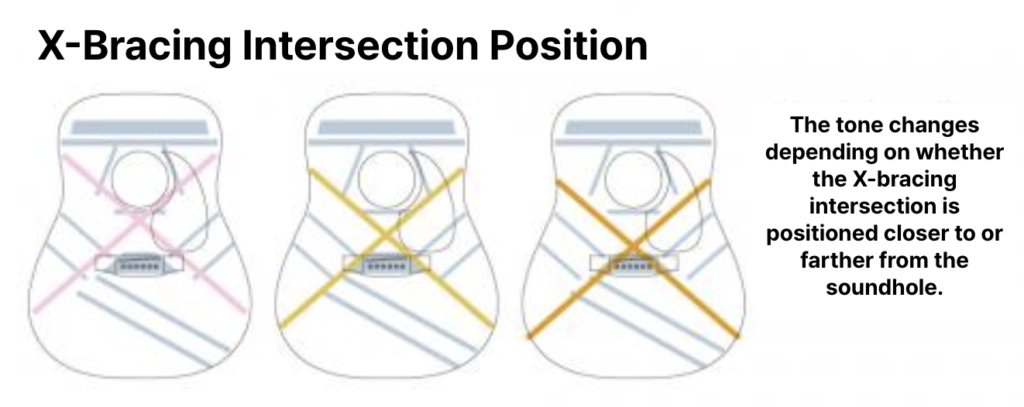
The bracing is its own story. Across the upper models, Headway uses what it calls Semi-Forward Shifted X bracing. The point where the X crosses is the stiffest part of the top, so it is the part that least wants to move. Push that crossing closer to the soundhole (a “forward shift”) and you get a softer, warmer voice, but you give up strength, so you cannot do it on every guitar. Headway splits the difference, placing the X between a full forward shift and a standard position: the focused power of standard X bracing plus some of the warmth of a forward shift.
There is more going on in there, scalloped braces to free up the top, and finish stripped cleanly off every glue surface before the bridge goes on. Small decisions, everywhere. This is a lot of why people say Headway guitars “sound like a Headway.”
The Neck: Built to Survive Thirty Years of Playing
The neck is where the founder’s own obsessions live. What Yasuo Momose was after was an instrument that holds up over twenty or thirty years of hard playing, and a rock-solid neck is one of the defining Headway traits.
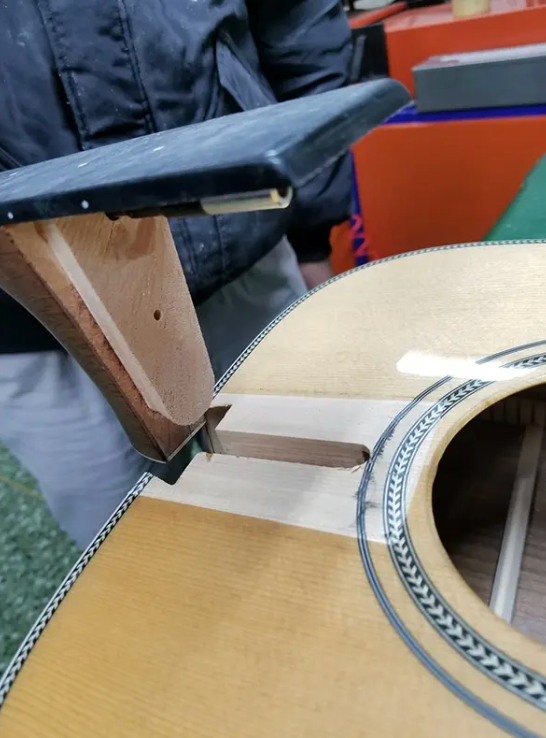
The joint is a conventional dovetail, but cut oversized and machined to very tight tolerances. Headway also builds “post-fitted”: the body and neck are finished before assembly, on purpose. That means you cannot hide the joint line under a coat of finish afterwards, there is nowhere to cover a sloppy fit. It is a choice that only makes sense if your joinery is genuinely that good. From the Standard grade up, and on every Custom Shop guitar, the neck is a single piece, which resists twisting and warping.
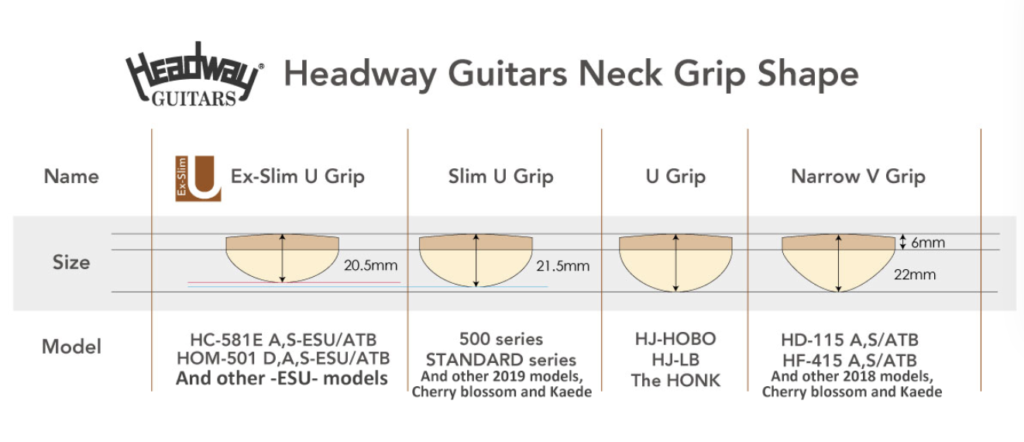
The grip is shaped around Japanese hands, a slimmer profile that lets you set the action really low. That is not only a Japanese-player thing: if you play technically, or you are coming over from electric, it is an easy neck to get along with.
My Take
What draws me to Headway is the build: acoustics made to last for decades, with a balance of price and quality that’s hard to beat for a Japan-made guitar.
The Headway Lineup, Grade by Grade
Like Bacchus, Headway guitars split into several grades that run from genuine beginner instruments to one-off master builds. Here is how they stack up. Prices are Japanese street prices; USD is rough, at about ¥150 to the dollar.
Headway grades by price
Made in Japan Built or assembled overseas
(~$1,670)¥500,000
(~$3,330)¥750,000
(~$5,000)¥1,000,000
(~$6,670)
Chart: MIJ Guitar Guide, based on Headway list prices before tax (Essential Edition: street price). USD at about ¥150 to the dollar.
| Grade | Price (approx.) | Who it is for |
|---|---|---|
| Essential Edition | ¥36,000 (~$240) | A real solid-top first acoustic on a budget |
| Japan Tune-up | ¥95,000–165,000 (~$630–1,100) | Best first acoustic: overseas build, Japanese setup |
| Standard | ¥200,000-250,000 (~$1,300-1,700) | A Japanese-made acoustic to keep for decades |
| Aska Team Build | ¥330,000–380,000 (~$2,200–2,500) | The upper regular line; the Eagle series |
| Custom Shop | ¥600,000 (~$4,000) to ¥1,000,000+ | One-off master builds; you buy the builder |
Essential Edition: The Entry Point That Isn’t a Toy
Formerly the Universe series, now sold as Essential Edition. This is not a stripped budget line; it keeps the things that actually matter, a guitar you want to keep playing and a rich response, and gets the price down. You get a solid-wood body rather than laminate, a bone nut and saddle instead of the plastic you normally see at this price, and even multi-ply binding. That solid top is the difference between a guitar that opens up over the years and one that never does. Around ¥36,000 (~$240), and the value pick if you just want a real acoustic to start on.
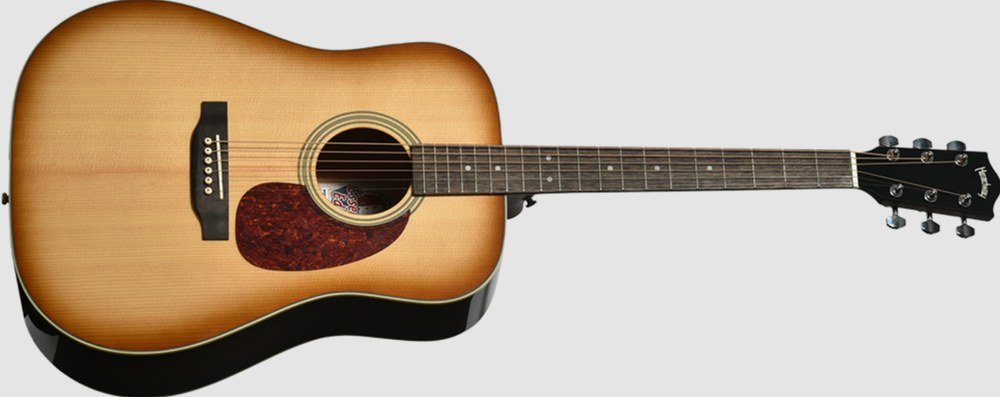
Japan Tune-up: Asian Build, Japanese Setup
Same concept as the Bacchus Japan Tune-up line. The guitar is assembled at an Asian factory, then Headway’s own workshop in Japan tunes it up so it plays like a much pricier instrument. In practice that means the action is set and checked by a Japanese craftsman, the nut slots are cut to the correct depth, the fret ends are rounded off, and the fingerboard is polished and treated with lemon oil rather than shipped as-is. The setup is the whole point, the difference between “plays fine” and “plays great out of the box.” If it is your first acoustic, start here.
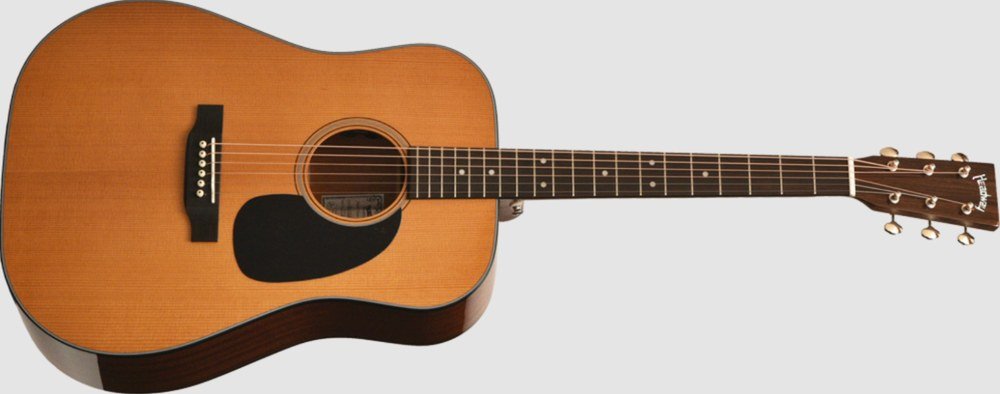
Standard Series: Japanese-Made, at a Reachable Price
You would assume Standard is just “the previous two grades, but better.” It is not quite. What Standard really does is take the high-precision assembly and reliability of the models above and bring it down to a better price by reconsidering the appointments and the woods. Crucially, these are Japanese-made, built at the Aska factory. And like Momose, Headway builds Standard from Japanese woods too, so even at this grade you can get a sakura (Japanese cherry) guitar. About ¥200,000 to ¥250,000 (~$1,300 to $1,700). If you want a Japanese-made acoustic you will keep for decades, start here.
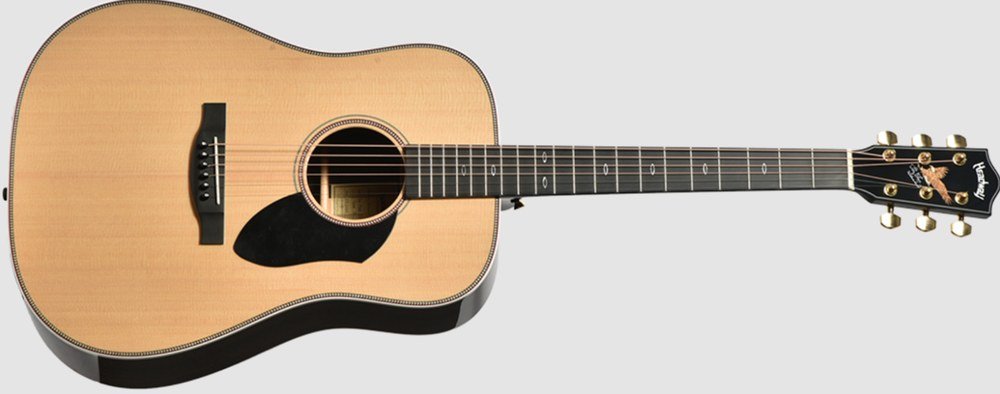
Aska Team Build: The Upper Regular Line
Built by three craftsmen, each with more than ten years under Yasuo Momose. The current models are the Eagle series, which follows the style of the flagship HD-115 but was reworked spec by spec, developed from scratch by the Aska Team Build craftsmen together with Momose himself. They took the name literally: there is an eagle inlay on the headstock and eagle feathers scattered across the fingerboard, and it uses the Semi-Forward Shifted X bracing described above.
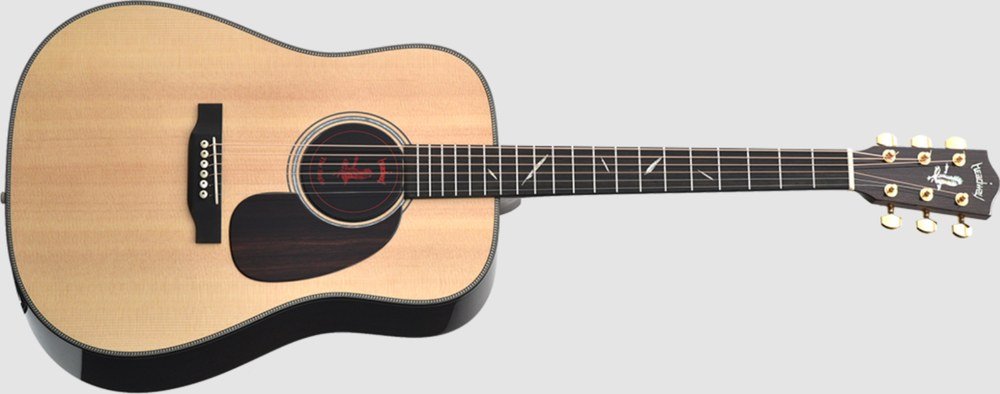
Custom Shop: You’re Buying the Builder, Not Just the Brand
At the top are one-off instruments from Headway’s master builders, Masato Yasui (recognized as a master builder in 2016, the second after Momose) and Arata Furihata, alongside the legacy of Yasuo Momose. At this level you are not really buying “a Headway” anymore; you are buying that particular builder’s guitar, and each one carries its own character. From about ¥600,000 (~$4,000), with pieces above ¥1,000,000 (over $6,700). Go look at them on Deviser’s official site; they are worth the browse.
How to Choose Your Headway
The clean dividing line: if it is your first acoustic, go Japan Tune-up. If you want a Japanese-made guitar you will keep for decades, go Standard or above.
| You want… | Headway pickgrade | Whywhat you get |
|---|---|---|
| Your first acoustictight budget | Essential Edition | A solid top and bone nut and saddle for about ¥36,000 |
| The best first acousticplays great out of the box | Japan Tune-up | Every guitar set up by hand in Japan |
| A Japan-made keeperfor decades | Standard | Aska-built, post-fitted neck, Japanese woods available |
| The upper regular lineextra detail | Aska Team Build | The Eagle series and Semi-Forward Shifted X bracing |
| A one-offbuy the builder | Custom Shop | Master builders, from about ¥600,000 |
My Take
If you’re looking for an alternative to Martin or Gibson, Headway is well worth a look.
Headway’s Family: The Deviser Brands
Headway is one of a family of brands, all built by the same company in Matsumoto. Here is where it sits.
| Brand | What it is |
|---|---|
| Headway | Acoustic guitars (this page) |
| Bacchus | Electric guitars and basses that punch above their price |
| Momose | The handmade electric brand, built from Japanese woods |
| Deviser | The parent company, plus Seventy Seven, STR, Rosetta, JRP and Sakura Ukulele |
Buying a Headway
New, Headway guitars are easiest to find inside Japan, where the whole range is stocked. Roughly, the current grades run: Essential Edition around ¥36,000 (~$240); Japan Tune-up around ¥95,000 to ¥165,000 (~$630 to $1,100); Standard about ¥200,000 to ¥250,000 (~$1,300 to $1,700); Aska Team Build above that; and Custom Shop from ¥600,000 (~$4,000) into seven figures.
If you are overseas, the reliable routes are Japanese retailers that ship internationally, Ishibashi Music and Ikebe among them, plus Reverb and eBay for used pieces. Because Headway spent the mid-1980s as an electric factory, you will also occasionally spot vintage oddities on the used market (the Riverhead brand from that era turns up now and then). For an acoustic that will be played for decades, buying a used Standard or Aska Team Build in good health is often the sweet spot between price and pedigree.
My Take
Most players outside Japan know Yamaha, and those who dig deeper may know Morris or Takamine. Headway feels more like a boutique brand, with an attention to detail you can feel across the range. If you get the chance, try one in person.
Final Thoughts
Headway guitars are a rare thing: one lineup that runs from an honest ¥36,000 first guitar to a five-figure master build, with the same body-and-neck philosophy threaded through all of it. The obsession that started with a dissected D-28 in 1977 is still the point, a top voiced to move, a neck built to last, and, increasingly, Japanese woods you will not find on anyone else’s acoustics. If you only remember one thing: this is the brand the rest of Deviser grew out of, and it still shows.
Headway Guitars FAQ
Are Headway guitars Japanese?
Yes. Headway guitars are made by Deviser in Matsumoto, Nagano. The Standard grade and above are built in Japan at the Aska factory; the Essential Edition and Japan Tune-up lines are assembled overseas, with Japan Tune-up guitars set up by Japanese craftsmen before they ship.
What is the Headway HD-115?
The HD-115 is Headway’s signature dreadnought and its flagship, originally developed in 1977 by studying a Martin D-28 for a year. The current Aska Team Build “Eagle” series is built in its lineage.
Which Headway guitars should a beginner buy?
Start with the Japan Tune-up line; it is assembled overseas but set up in Japan, so it plays well straight out of the box. If budget is tight, the Essential Edition still gives you a solid-wood top and a bone nut and saddle for around ¥36,000.
What is Semi-Forward Shifted X bracing?
It is Headway’s compromise bracing on its upper models. The X-brace crossing is placed between a full forward shift and a standard position, aiming to combine the focused power of standard X bracing with the warmth of a forward-shifted design.
Do Headway guitars come as electrics?
Not today; that is the job of its sister brands. Headway is Deviser’s acoustic brand, while Bacchus and Momose handle electrics. Historically, though, Headway spent the mid-1980s as an electric-guitar factory after its original workshop burned down.