
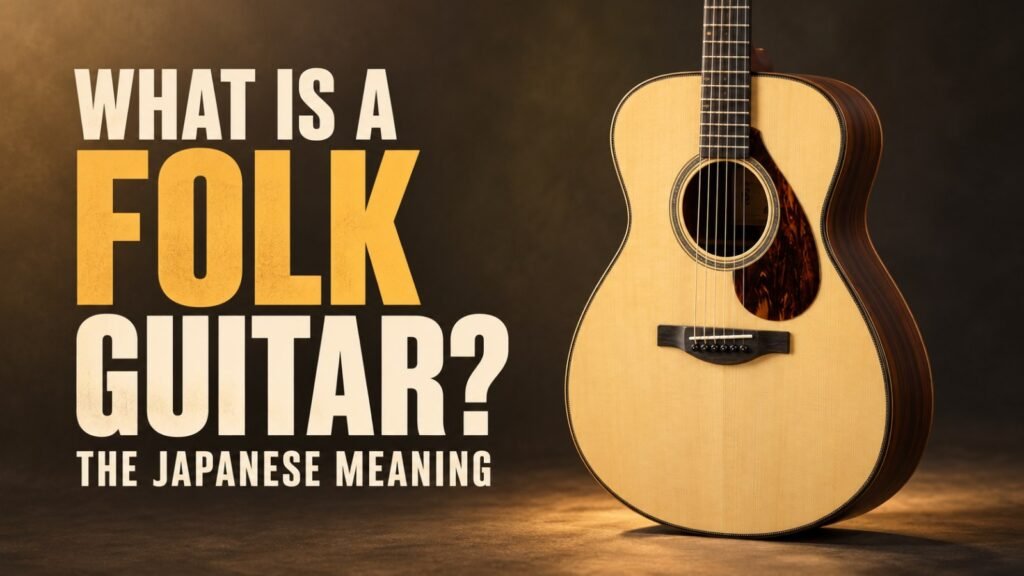
Browse Japanese acoustic guitars and you will see the term folk guitar everywhere. It sounds like a guitar made only for folk music, but in Japan it simply means a smaller steel-string acoustic with a narrow waist. This guide explains where the term came from, and how the Yamaha FG, Japan’s first homegrown folk guitar, grew from 1966 to today. For the brand as a whole, see our Yamaha Brand Guide.
Folk Guitar Quick Facts
- Meaning in Japan: A steel-string acoustic smaller than a dreadnought, with a deeper waist
- Rough size: Martin 00 to 000 territory
- Where it came from: The 1960s folk boom in Japan
- First Japanese folk guitar: Yamaha FG180 and FG150, October 1966
- What FG stands for: Folk Guitar
- Today: Yamaha uses FS for the folk shape and FG for dreadnoughts
Prefer to watch? This article is based on my own video below.
- What Is a Folk Guitar in Japan?
- Why Japan Calls It a Folk Guitar
- Yamaha FG180: Japan's First Folk Guitar (1966)
- Light Green Label vs Red Label: Dating an Early FG
- The Yamaha FG Series Timeline (1966-Today)
- FG vs FS Today: Which One Is the Folk Guitar?
- Which Yamaha Folk Guitar Should You Look For?
- Final Thoughts
- FAQ
- More Yamaha guitar articles
What Is a Folk Guitar in Japan?
In Japan, a folk guitar (フォークギター) is a steel-string acoustic with a smaller body than a dreadnought and a more pronounced waist. Think of a Martin double-O, or something between a double-O and a triple-O.
There is no strict definition. It is a size and shape idea, not a genre rule, and you can play any style on it.
| Japanese term | What it means | Strings |
|---|---|---|
| Folk guitar | Smaller body, deeper waist (roughly 00 to 000) | Steel |
| Dreadnought | Large, square-shouldered body; same English name as overseas | Steel |
| Jumbo | Largest round body; same English name as overseas | Steel |
| Classical guitar | Classical body, wide flat neck | Nylon |
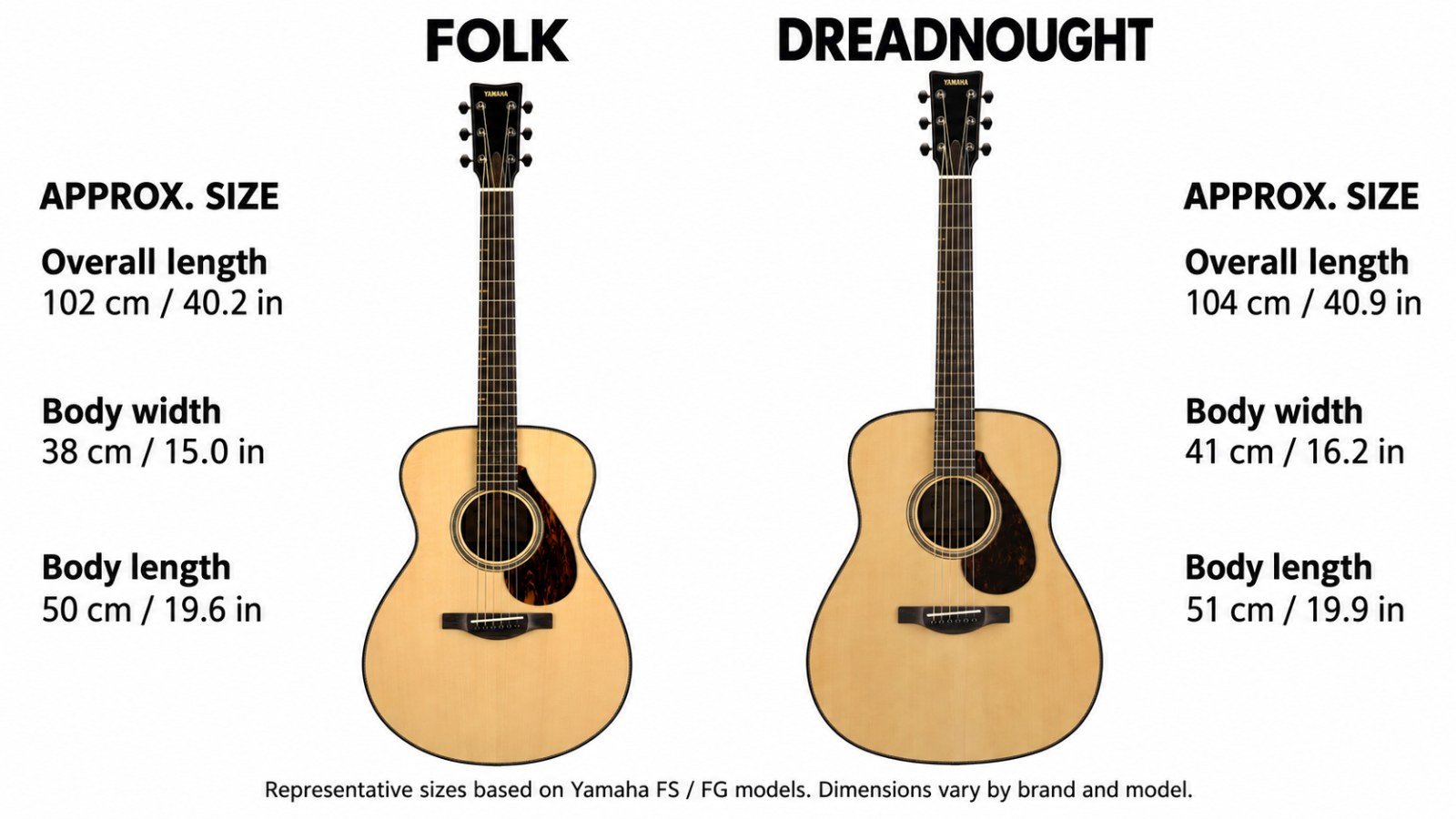
The difference looks small on paper, about 3 cm (1.2 in) in body width. In your lap it feels bigger: the folk shape’s narrower waist and shallower body sit closer to you, and Yamaha’s FS also uses a slightly shorter scale (634 mm vs 650 mm on the FG800), so it is easier to fret.
Even a Martin can end up called a “folk guitar”
In Japan the word is so familiar that some players casually call almost any smaller steel-string acoustic a folk guitar, even a Martin Grand Concert (00 size). It is not an official category, just a sign of how deeply the term has settled into everyday Japanese. Larger guitars usually keep their English names, such as dreadnought or jumbo.
Why Japan Calls It a Folk Guitar
In the 1960s, folk music became hugely popular in Japan. As steel-string acoustics took off, the common explanation is that makers such as Yamaha sorted guitars by the music they were meant for.
| Music | Guitar | Strings |
|---|---|---|
| Classical music | Classical guitar | Nylon |
| Folk music | Folk guitar | Steel |
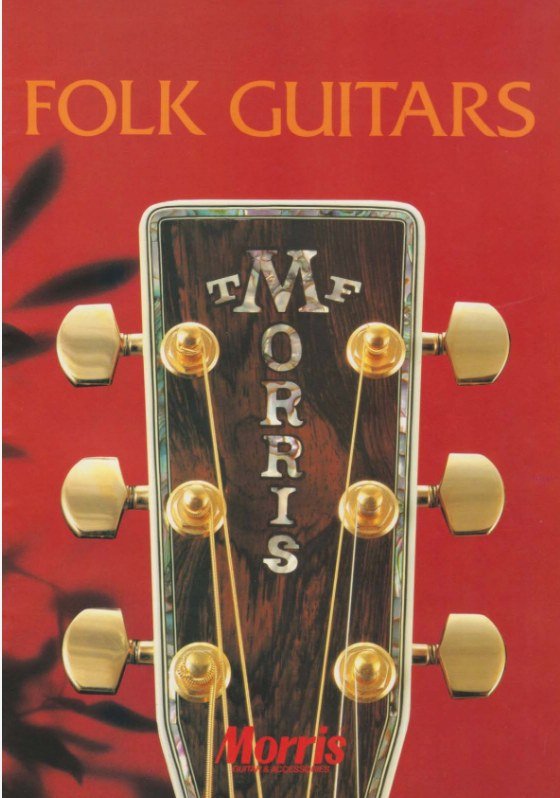
The name outlived the boom. Long after folk music faded from the charts, Japanese shops kept using “folk guitar” for smaller, waisted steel-string acoustics in general.
Yamaha FG180: Japan’s First Folk Guitar (1966)
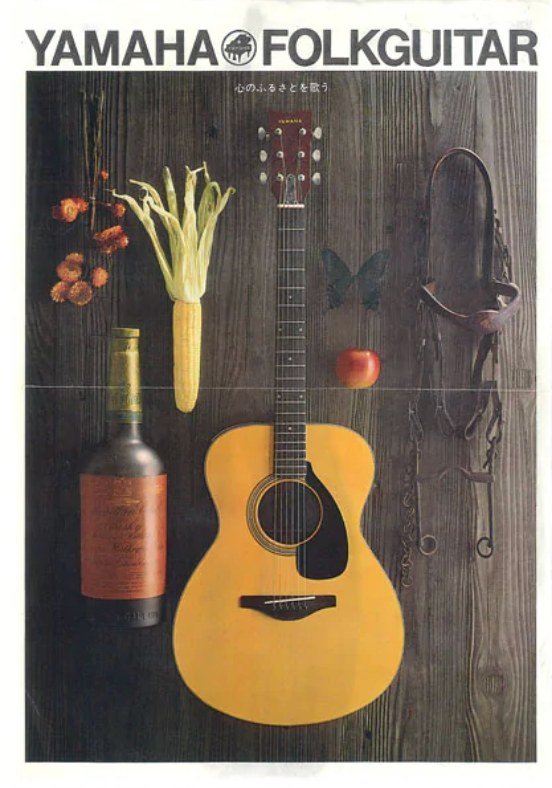
The guitar that put the term on the map was the Yamaha FG180, released with the FG150 in October 1966. Yamaha calls the FG180 its first folk guitar and the first made in Japan. Even the model name says it: FG stands for Folk Guitar.
According to Yamaha, developer Hideo Ueda’s team built more than a hundred prototypes, chasing a sound where the bass stands out and the treble stays sweet and sustained. Musicians loved the result, and the FG180 earned the nickname “the guitar of legends”.
Light Green Label vs Red Label: Dating an Early FG
The quickest way to date an early FG is the label inside the soundhole. Yamaha says the famous Red Label ran from about 1968 to 1972. The very first guitars before that carry a light green label.
| Label | Years | What to know |
|---|---|---|
| Light green | 1966 to about 1968 | The earliest FGs |
| Red (“Aka Label”) | About 1968 to 1972 | The most sought-after vintage FGs |
| Later colors | From the 1970s | Green, black and other labels followed through later model changes |
The Yamaha FG Series Timeline (1966-Today)
| Year | Model | Why it matters |
|---|---|---|
| 1966 | FG180 / FG150 | Japan’s first domestically made folk guitars |
| 1971 | FG1500 / FG2000 / FG2500 | High-end FGs; the FG2500 is a 12-string |
| 1972 | FG350E | Yamaha’s first folk guitar with a pickup |
| 2016 | FG800 / FS800 | Today’s affordable best-seller line |
| 2019 | FG / FS Red Label | A modern revival of the FG180 spirit, with A.R.E.-treated tops |
| 2023 | FG9 | The top of the current FG range |
For the wider story, see our Yamaha guitars history.
FG vs FS Today: Which One Is the Folk Guitar?
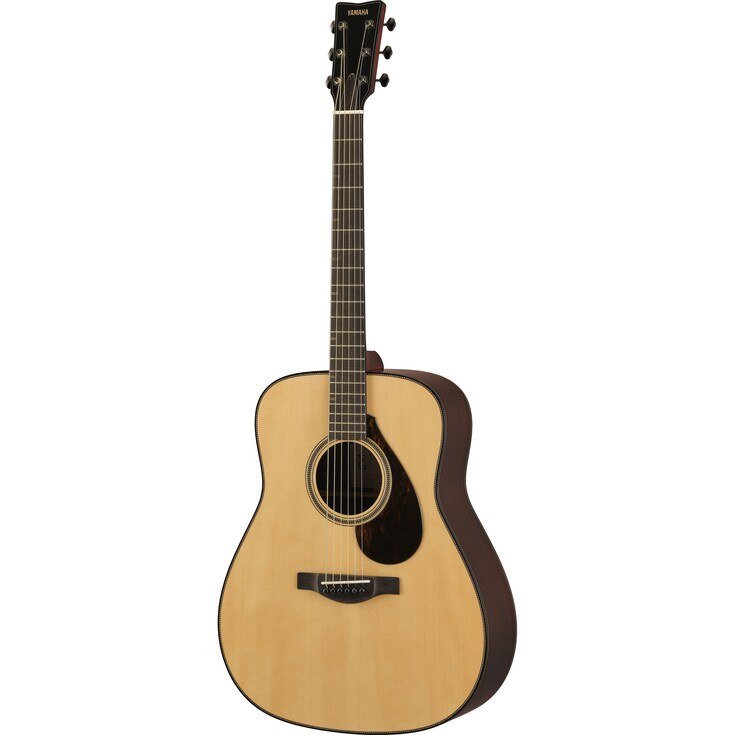
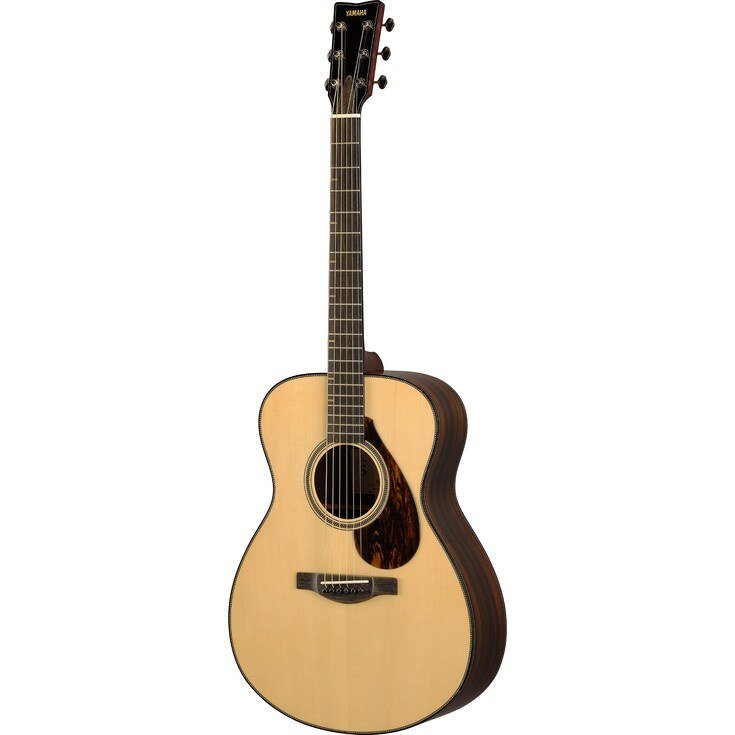
Here is the twist. In today’s lineup, Yamaha uses FG for its dreadnought shape and FS for the smaller concert shape. So the guitar that matches the Japanese meaning of “folk guitar” is now the FS, not the FG.
| Line | Body | Feels like |
|---|---|---|
| FG | Dreadnought | Bigger, bassier strumming sound |
| FS | Concert (smaller, deeper waist) | Comfortable to hold, balanced and clear: the classic Japanese folk guitar feel |
Which Yamaha Folk Guitar Should You Look For?
| You want… | Look for |
|---|---|
| Vintage Japanese character on a budget | Red Label FG180 |
| The best vintage FG build | FG1500 or FG2000 |
| A new, affordable folk guitar | FS800 series |
| A modern take on the original | FG / FS Red Label |
Final Thoughts
“Folk guitar” is one of those Japanese guitar terms that confuses people abroad, but the idea is simple: a smaller steel-string acoustic with a waist. Think of it as smaller than a dreadnought, with a deeper waist.
And if you ever see an old Yamaha with a red label in the soundhole, you are looking at the guitar that made the term part of everyday Japanese.
FAQ
What is a folk guitar?
In Japan, a folk guitar is a steel-string acoustic smaller than a dreadnought, with a deeper waist, roughly Martin 00 to 000 size. There is no strict definition.
Is a folk guitar the same as an acoustic guitar?
A folk guitar is a type of steel-string acoustic guitar. In Japan the term usually refers to the smaller, waisted shape, while larger guitars are called dreadnoughts or jumbos.
What is the difference between a folk guitar and a classical guitar?
A folk guitar uses steel strings and a narrower neck. A classical guitar uses nylon strings and a wider, flatter neck.
What does FG mean on a Yamaha guitar?
FG stands for Folk Guitar. The first models, the FG180 and FG150, came out in October 1966.
What is a Yamaha Red Label?
Red Label refers to early Yamaha FG guitars with a red label inside the soundhole, made from about 1968 to 1972. Yamaha also revived the name for its FG and FS Red Label series in 2019.
Is the Yamaha FS a folk guitar?
Yes. In today’s lineup the FS is Yamaha’s smaller concert shape, which matches the Japanese meaning of a folk guitar, while FG is used for dreadnoughts.
More Yamaha guitar articles
Yamaha BB Bass: The Legendary Broad Bass From the 1977 BB1200 to Today
The Yamaha BB bass has been one of the most trusted working basses since 1977….
Yamaha Pacifica: The Session Guitar That Became Everyone’s First Electric (1990-Today)
The Yamaha Pacifica is the guitar many players own as their first electric, but it…
Yamaha Revstar: The Cafe Racer Guitar Explained, From 2015 to the Second Generation
The Yamaha Revstar is Yamaha’s modern electric guitar, designed around the look of 1960s London…
Yamaha Logo: Why the Guitar and Motorcycle Logos Are Surprisingly Different
Look closely at the Yamaha logo on a guitar and on a motorcycle, and you…
Yamaha Free Art Model: The 1992 Guitar With a Pickguard You Could Redesign
In Yamaha’s 1992 catalog there was a guitar that looked like just another graphic superstrat….
Yamaha SX Series: The Forgotten 1970s Yamaha Played by Tommy Bolin (1974-1979)
The Yamaha SX is one of the forgotten Yamaha electrics of the 1970s. Built for…
