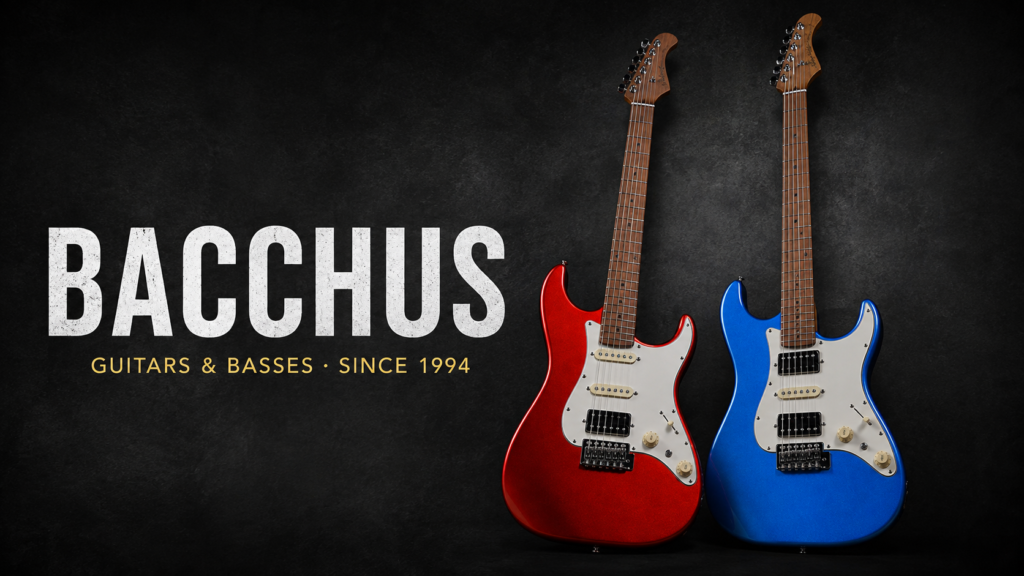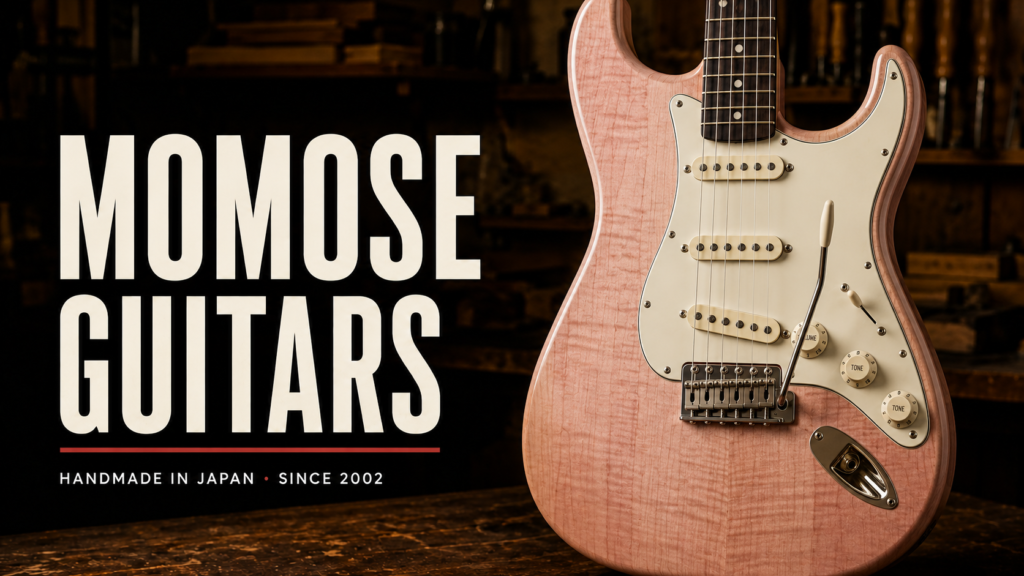
Momose guitars are the handmade brand of Deviser, built at the Aska factory in Matsumoto, Nagano, the same workshop behind Headway and Bacchus. Launched in 2002 and named after Deviser’s senior master builder Yasuo Momose, this is the line where Japanese woodworking meets traditional electric-guitar design.
If you had to compress the whole brand into one sentence, it would be this: traditional designs run through genuine Japanese woodworking. And the thing that sets Momose guitars apart from every other Strat-and-Tele builder is the wood itself, which is often Japanese too.
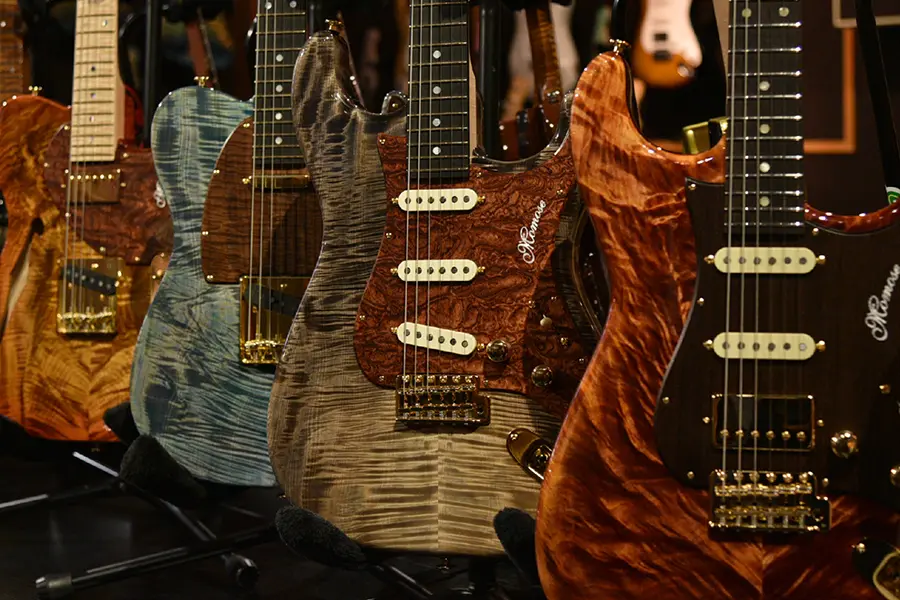
Momose Guitars at a Glance
- Launched: 2002, as Momose Custom Craft Guitars
- Built at: Deviser’s Aska factory, Matsumoto, Nagano, Japan
- Named after: Yasuo Momose, Deviser’s senior master builder (and Headway founder)
- Claim to fame: handmade electrics built from Japanese woods such as sakura (cherry) and tochi
- Core lineup: Original and Modern Virtuoso (Strat- and Tele-based)
- Signature tech: Thermowood heat-treatment; the 2026 “Awake” single-coils
- Brand family: Bacchus, Momose, Headway, Seventy Seven, STR, Rosetta, JRP, Sakura Ukulele
History in Brief: The Master Builder’s Brand
The name comes from Yasuo Momose, the craftsman who had already founded Headway back in 1977 and become the guiding hand of Deviser’s whole workshop. Momose Custom Craft Guitars launched in 2002, and Satoru Yatsuzuka, the Aska factory’s future master builder, did the woodwork on roughly the first thousand instruments, learning to build directly under Momose. In 2004 Deviser set up Aska as its dedicated custom shop to handle the top-tier work.
In 2015 Yasuo Momose was named a Master Craftsman of Shinshu, an award for the region’s most outstanding artisans. He kept teaching right to the end: Masato Yasui, who led the Aska Team Build group, was recognized as a master builder in 2016. Momose passed away on March 19, 2024, at the age of 80, but the skills of the man who is, in a real sense, the history of Deviser are still alive inside the company.
| Year | Milestone |
|---|---|
| 2002 | Momose Custom Craft Guitars launched |
| 2004 | Aska established as Deviser’s in-house custom shop |
| 2015 | Yasuo Momose named a Master Craftsman of Shinshu |
| 2016 | Masato Yasui recognized as a master builder |
| 2024 | Yasuo Momose passes away, aged 80 |
| 2026 | Lineup renewed with the new “Awake” single-coil pickups |
What Makes Momose Guitars Special
The founding idea behind Momose is that every piece of wood is different: different mass, different stiffness, different response. So you cannot work them all the same way; you work each one according to what it is. That philosophy shows up in three places.
Japanese Woods You Won’t See Anywhere Else
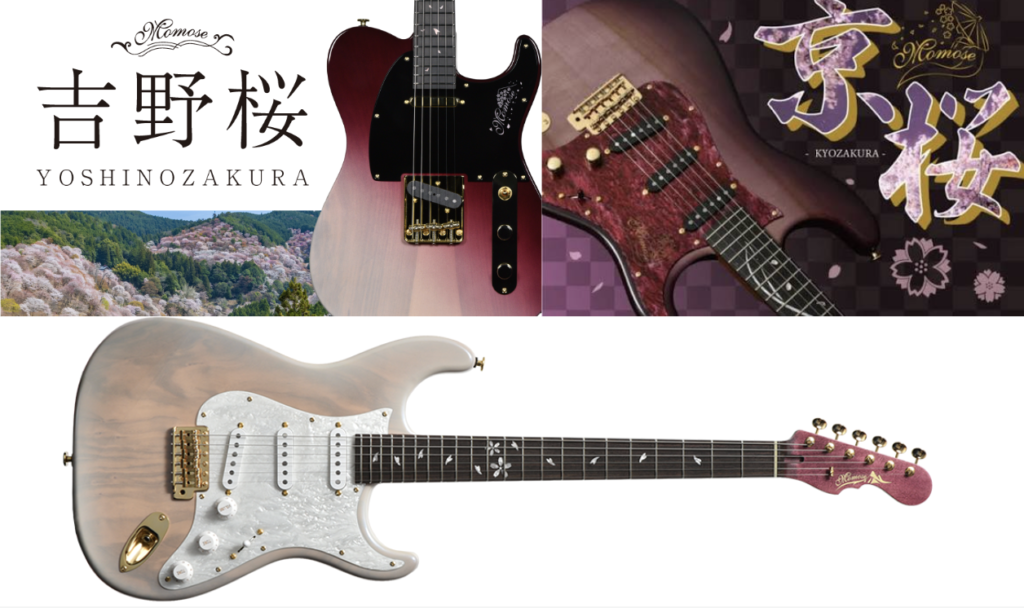
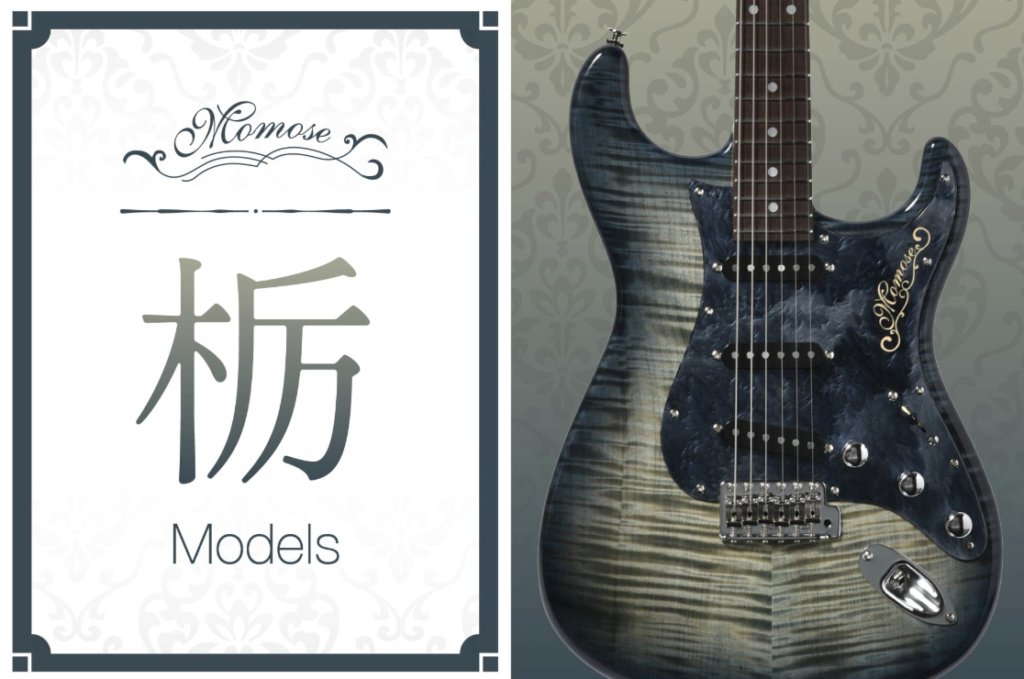
Plenty of makers offer Japanese craftsmanship applied to imported timber, and that is a fine thing. Momose goes one step further and uses Japanese species. The signature one is sakura, or Japanese cherry, and they do not just leave it at “cherry”: you will see Yoshino-zakura and yamazakura (wild mountain cherry) called out as separate varieties. Beyond that there is tochi (Japanese horse chestnut), sen (castor aralia), keyaki (Japanese zelkova) and kurogaki (black persimmon). The finish is then chosen to work with the material and to match what each guitar is meant to be. It is about as made-in-Japan as an electric guitar gets.
Thermowood: A Vintage Voice From a Brand-New Guitar
Momose also chases technique. Take Thermowood, a Finnish process originally developed for construction lumber. The wood is heat-dried at close to 180°C (around 355°F), which buys stability, meaning far less warping and twisting over the years. It also turns the wood a deep brown that lets you spot a Momose instantly, and on the sound side the company’s claim is that you get a vintage-like tone straight out of a brand-new instrument. Spec to effect: heat-treated wood is drier and lighter, so it responds more like a guitar that has already had decades to open up.
One Piece of Wood at a Time
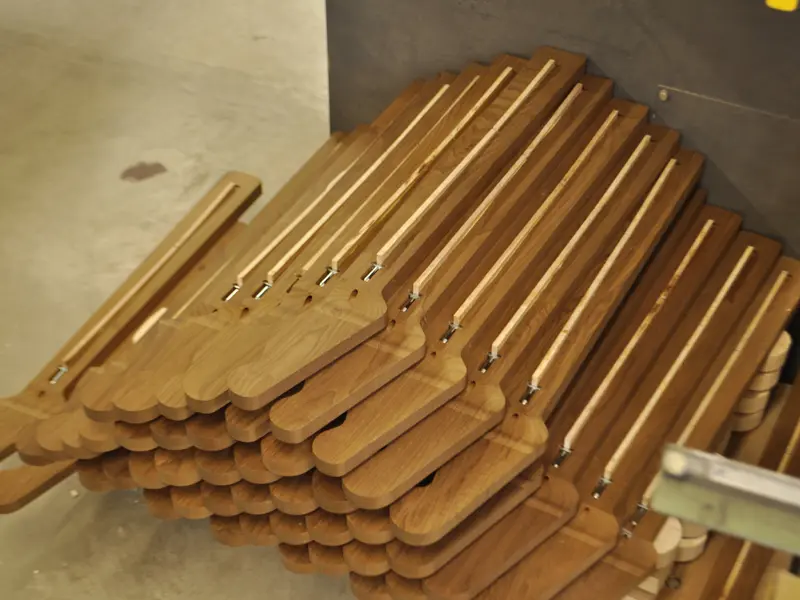
The reason Momose can lean so hard on unusual timber is the hand-build approach. Because each blank is assessed and worked on its own terms rather than run through a fixed process, the shop can take on woods a production line would reject. That is also why the limited and showcase models, where the rarest Japanese species appear, are where the brand really shows its face.
The Momose Lineup
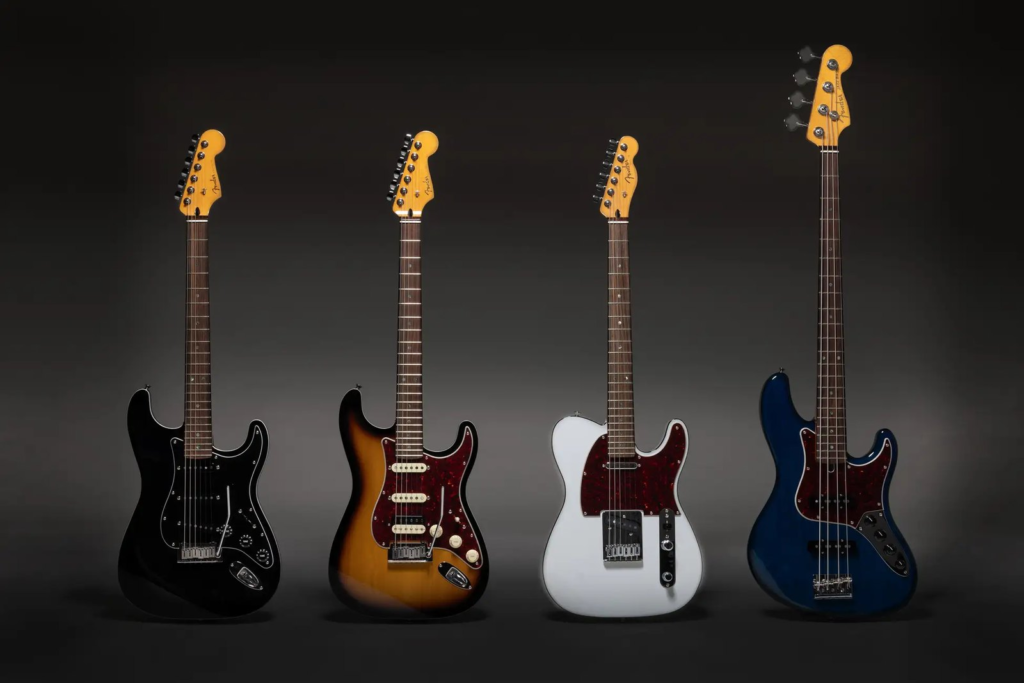
The regular range splits in two, Original and Modern Virtuoso, both mostly built on Fender-style Strat and Tele platforms. Prices are Japanese street prices; USD is rough, at about ¥150 to the dollar.
| Series | Price (approx.) | What you get |
|---|---|---|
| Original | ¥260,000-300,000 (~$1,700-2,000) | Traditional construction with modern updates; alder or ash body; colors from standards to pure Momose |
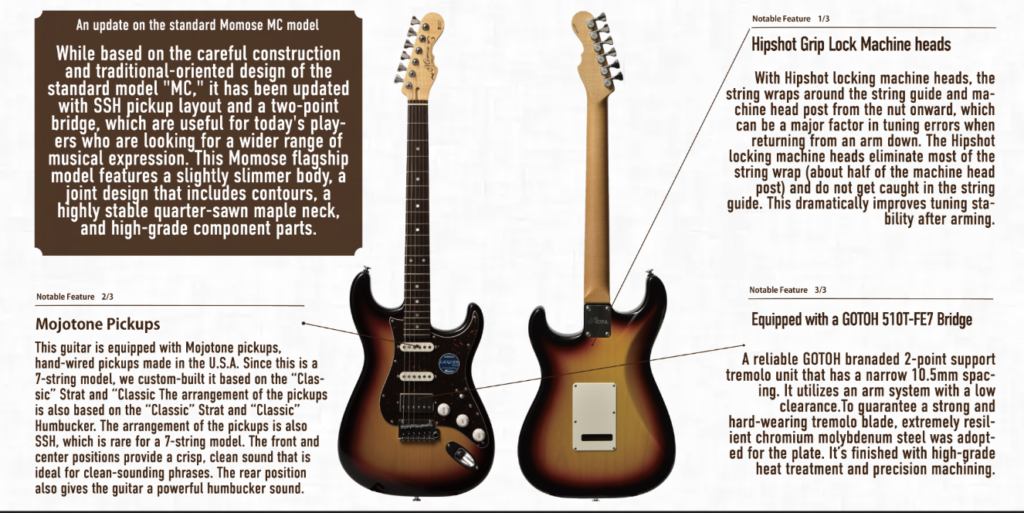
| Modern Virtuoso | ~¥350,000 (~$2,300) | Original, upgraded: quartersawn maple neck, buffalo-bone nut, Mojotone pickups, Hipshot tuners, Gotoh bridge |
Original: The Traditional Core, Quietly Modernized
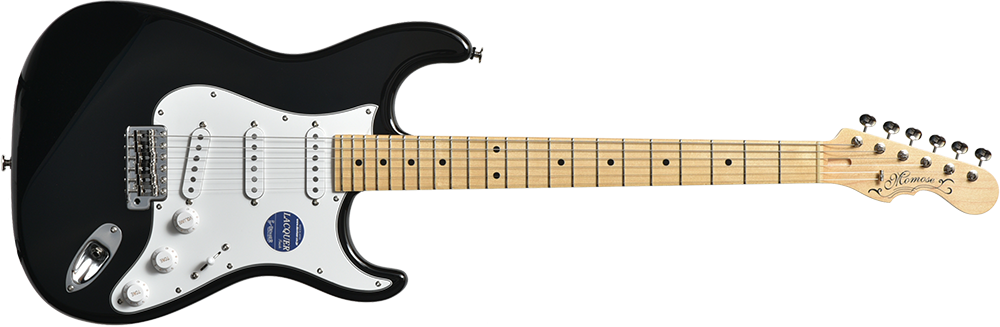
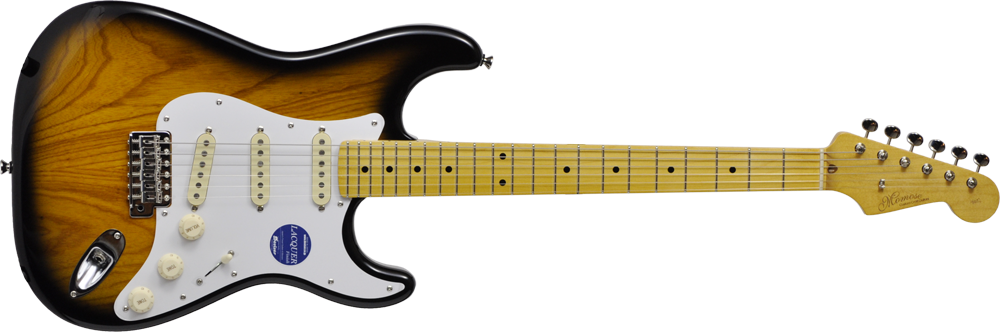
Original keeps the fundamental construction of a traditional electric guitar, with modern updates worked in throughout. It is mostly Fender-based, so Strats and Teles, and you pick alder or ash for the body. The colors run from the usual standards all the way out to finishes that are pure Momose. At roughly ¥260,000 to ¥300,000 (~$1,700 to $2,000), this is the entry point into the handmade range and, for most players, the one to start with.
Modern Virtuoso: The Spec-Sheet Upgrade
Think of Modern Virtuoso as Original with the hardware and materials pushed up a level. You get quartersawn maple necks, high-density buffalo-bone nuts, Mojotone pickups, Hipshot Grip-Lock open-back tuners and Gotoh bridges. That quartersawn maple choice tells you how seriously these builders take grain orientation: quartersawn necks are stiffer and more stable than flatsawn, so tuning holds and the neck resists seasonal movement. Around ¥350,000 (~$2,300).
Limited & Showcase Models: The Rare-Timber Stuff
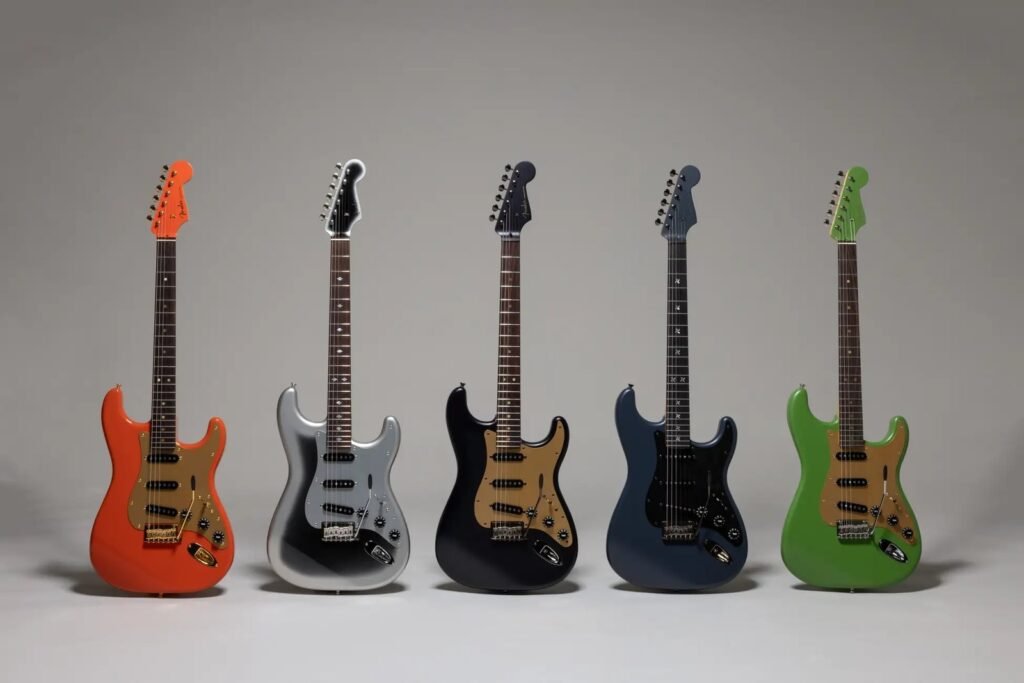
Beyond the regular lineup, Momose puts out limited and showcase models, and that is where the brand is loudest and most unmistakable. The secret is the wood, because these are Japanese species.
| Wood (Japanese) | English | Notes |
|---|---|---|
| Sakura | Japanese cherry | The signature; incl. Yoshino-zakura and yamazakura (wild mountain cherry) |
| Tochi | Japanese horse chestnut | Rarely seen outside Japan |
| Sen | Castor aralia | Ash-like grain |
| Keyaki | Japanese zelkova | Prized in traditional Japanese woodwork |
| Kurogaki | Black persimmon | Dramatic dark streaking, very rare |
A couple of models have come and gone, too. There was once a Momose Vintage series aimed at ’50s and ’60s tones, specifying the body woods, fingerboards and even dedicated pickups era by era; it is discontinued now. Original also used to include a Les Paul type, but that is gone as well, so there is no Les Paul shape in the regular 2026 lineup.
2026 Renewal: The New “Awake” Single-Coils
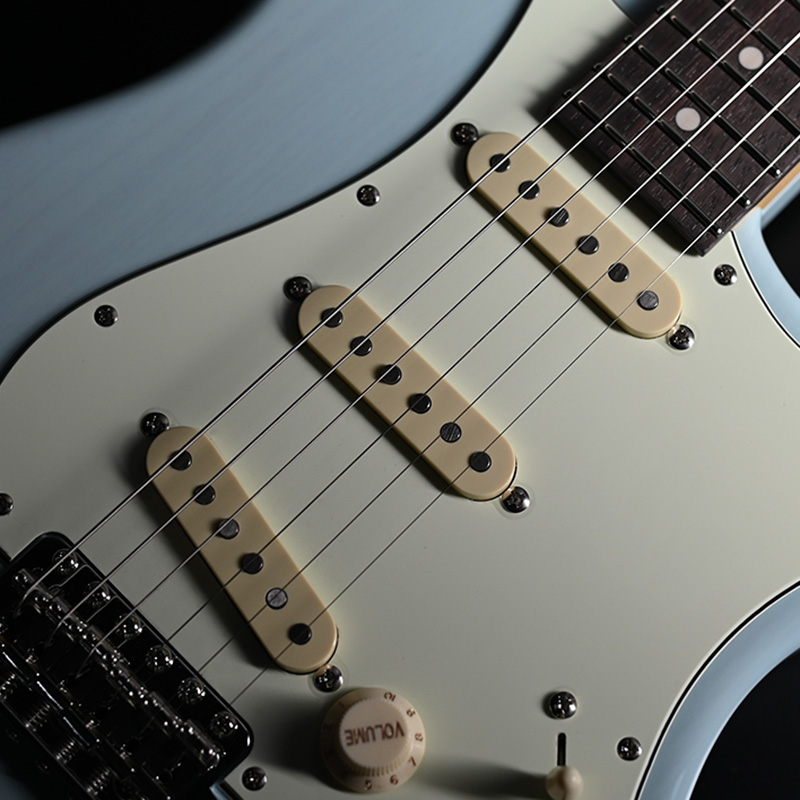
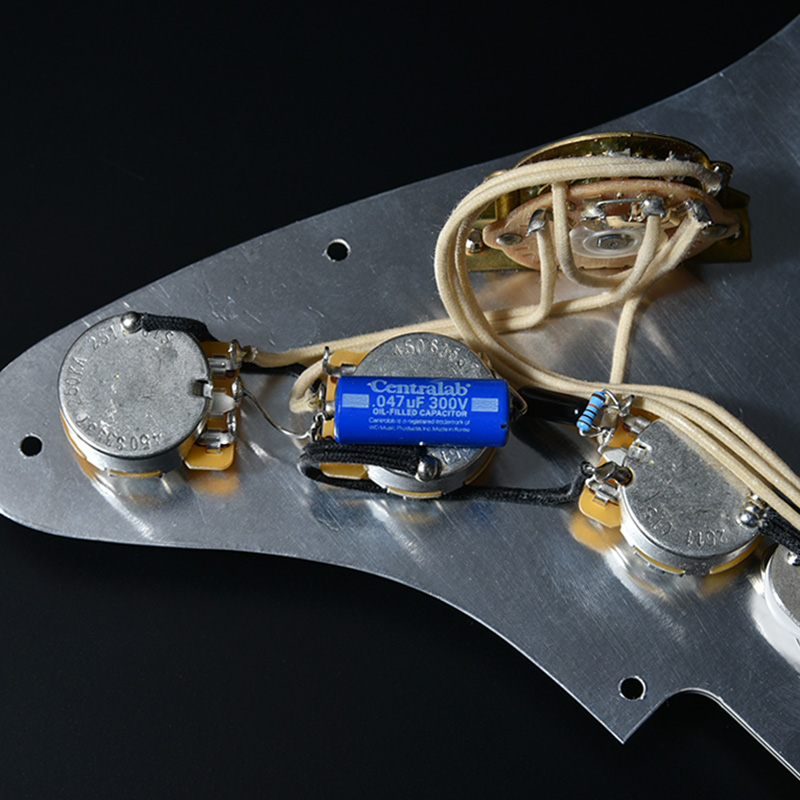
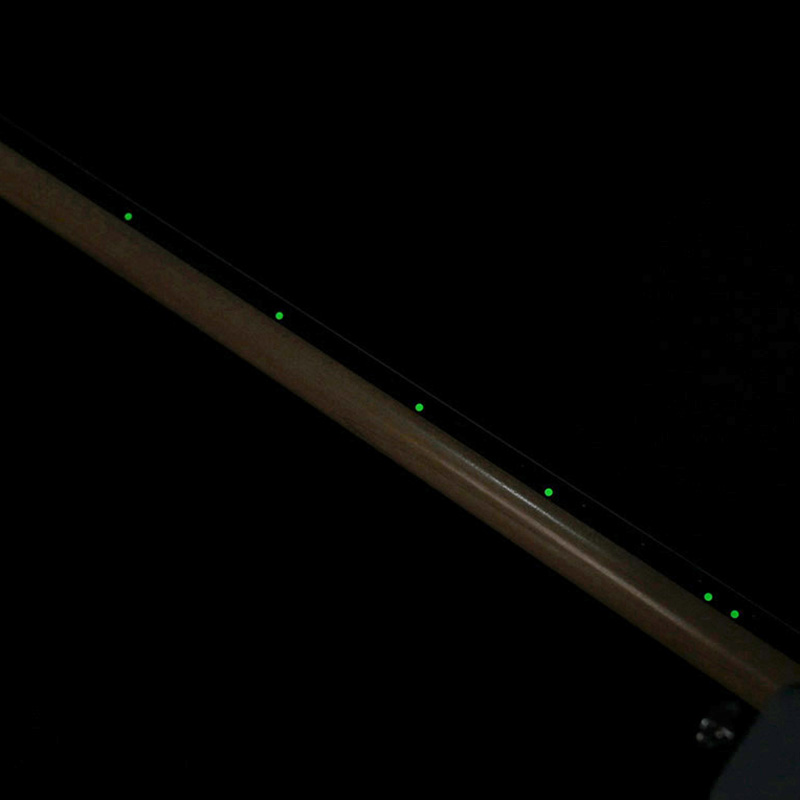
In the summer of 2025 the Aska factory’s backlog got tight enough that Momose paused new orders for a while, and it used that break to go back through the base specs. The headline change is a new single-coil pickup called Awake: magnets, wiring, materials and winding count were all reworked, with Alnico 4 in the neck and middle for a sweeter voice and Alnico 5 in the bridge for power and edge. The oil capacitor changed as part of developing it, and there are a couple of modern touches too, like luminescent side dots and Pure Tone output jacks. Old Momose versus new Momose is now mostly down to preference, which makes comparing the used market against the current lineup a genuinely interesting exercise.
How to Choose Your Momose
The simple map: start with Original if you want a handmade Japanese Strat or Tele with unusual finishes at the most reachable price; step up to Modern Virtuoso if the upgraded neck, nut and hardware matter to you; and watch the limited and showcase models if the Japanese-timber angle is what pulled you in. If you love the older voicing, a used pre-2026 Momose is now its own distinct option next to the new Awake-equipped guitars.
Momose’s Family: The Deviser Brands
Momose is one of a family of brands, all built by the same company in Matsumoto. Here is where it sits.
| Brand | What it is |
|---|---|
| Momose | The handmade electric brand (this page) |
| Bacchus | Electric guitars and basses that punch above their price |
| Headway | The acoustic brand the whole company grew out of |
| Deviser | The parent company, plus Seventy Seven, STR, Rosetta, JRP and Sakura Ukulele |
Buying a Momose
New, Momose guitars sit in the boutique bracket: roughly ¥260,000 to ¥300,000 (~$1,700 to $2,000) for Original, around ¥350,000 (~$2,300) for Modern Virtuoso, with limited and showcase pieces going higher depending on the timber. The rarest builds surface at the Deviser Special Showcase, an event that gathers every Deviser brand in one place; since 2020 the exhibited models have been published on a dedicated website (this year’s went up on May 22).
If you are overseas, the routes are the Japanese retailers that ship internationally, Ishibashi Music and Ikebe among them, plus Reverb and eBay for used pieces and authorized Deviser dealers abroad. Because the 2026 renewal drew a clean line between old and new, a used pre-Awake Momose in good health is a smart buy if you specifically want the earlier voicing.
Final Thoughts
Momose guitars occupy a spot almost no one else does: traditional Strat-and-Tele designs, built by hand, from woods that are themselves Japanese. Here is my own regret, for the record. Momose once built a recreation of an early 1958 Flying V in korina, and at the time it was about ¥200,000 (~$1,300); a Gibson Custom Shop ’58 korina V today lists near $10,000, and even a used one runs $7,000 or more. I thought about that Momose long and hard, and then I passed on it, and I regret it every single time I see the brand. Learn from me: when a Momose you love turns up, especially a limited-timber one, do not overthink it.
Momose Guitars FAQ
Are Momose guitars handmade in Japan?
Yes. Momose guitars are hand-built at Deviser’s Aska factory in Matsumoto, Nagano, the same custom shop that produces Deviser’s top-tier work. The brand launched in 2002 and is named after master builder Yasuo Momose.
What woods do Momose guitars use?
Standard models use alder or ash, often heat-treated with the Finnish Thermowood process for stability and a vintage-like voice. The limited and showcase models go further, using Japanese species such as sakura (cherry), tochi (horse chestnut), sen (castor aralia), keyaki (zelkova) and kurogaki (black persimmon).
What is the difference between Original and Modern Virtuoso?
Original is the traditional core, built on Strat and Tele platforms with modern updates, in alder or ash, at about ¥260,000 to ¥300,000. Modern Virtuoso is that same guitar upgraded with a quartersawn maple neck, buffalo-bone nut, Mojotone pickups, Hipshot tuners and a Gotoh bridge, at around ¥350,000.
What is the 2026 “Awake” pickup?
Awake is Momose’s new single-coil, introduced when the lineup was revised for 2026. It uses Alnico 4 in the neck and middle for a sweeter voice and Alnico 5 in the bridge for power and edge, and it arrived alongside a new oil capacitor, luminescent side dots and Pure Tone output jacks.
Who was Yasuo Momose?
Yasuo Momose was Deviser’s senior master builder and the founder of Headway in 1977. The Momose brand carries his name. He was named a Master Craftsman of Shinshu in 2015 and passed away in 2024, aged 80, having trained the next generation of Aska builders.
Can you buy Momose guitars outside Japan?
Yes, through authorized Deviser dealers abroad and Japanese retailers that ship internationally, such as Ishibashi and Ikebe, plus Reverb and eBay for used pieces. The rarest limited builds are shown at the Deviser Special Showcase, published online each year.
More Momose guitar articles
No post found!