SAITO GUITARS is a small Japanese maker from Kawaguchi, Saitama, near Tokyo, that builds modern guitars and basses with its own hand-wound pickups. Its stated goal is “Beautility”: simple, beautiful tools with nothing extra, designed only around playability and function.
This guide covers where SAITO came from, what makes its guitars different, the S series and the rest of today’s lineup, and which SAITO guitar suits which kind of player.
SAITO GUITARS Quick Facts
- Company: Saito Gakkikoubou Inc. (齋藤楽器工房), founded by Masaaki Saito
- Founded: 1991 as a repair shop; the SAITO GUITARS brand launched in 2014
- Where it’s made: Kawaguchi, Saitama, Japan
- Known for: The modern S series and hand-wound SAYTONE pickups
- Status: Active, with new artists and the Heritage Series in 2026
Start here
- From Repair Shop to Brand: how SAITO began
- SAYTONE Pickups: why SAITO winds by hand
- The SAITO Lineup: S series, SR, BEYOND, Heritage and basses
- Which SAITO Guitar Is Right for You?: the quick finder
From Repair Shop to Guitar Brand
SAITO’s founder, Masaaki Saito, was in the first class of the Fernandes engineering school. He then worked for about four years as a repairman at Crews, the Tokyo maker covered in our guide to Japanese boutique guitar brands, and was sent to Headway in Matsumoto to learn finishing. In 1991 he went independent and opened Saito Gakkikoubou, a repair workshop.
The move into building came out of the workshop itself. In a 2016 interview with Guitar Hakase, Saito explained that repair alone did not pay well, so he decided to do what he loved. His team’s archtop work led to the first original archtops, and at the 2014 Musical Instruments Fair in Japan, the workshop debuted as SAITO GUITARS with the M series archtops and the LS-4 mini lap steel. The solid-body S series followed in 2015.
What Makes SAITO Different
Beautility: Functional Beauty
SAITO’s official site describes its approach as stripping away everything that is not needed, pursuing only function and playability, and letting a simple, beautiful design come out of that. It wants its instruments to be tools that bring out a player’s full potential in any genre. You can see it in the S series: clean lines, matte finishes and no decoration for its own sake.
SAYTONE Hand-Wound Pickups
Every SAITO S series guitar carries SAYTONE pickups, wound by hand in the workshop. Saito told Guitar Hakase that, from his repair experience, hand-wound and machine-wound pickups sound completely different. The workshop owns a computer-controlled winder, but got better results winding by hand. In the same 2016 interview, he said the pickups account for about a third of a guitar’s price.
SAYTONE pickups are also sold separately, and Crews Maniac Sound took about two years to adopt them as standard on its OS series. Each set has its own voice: the Scream single coil, for example, uses #42 plain enamel wire, Alnico 5 magnets and varied pole heights for a bright, standard tone.
Precise Builds, Thin Finishes
In that interview, Saito also explained that S series bodies are shaped on an NC router for consistency, the finish is sprayed thin, and keeping the number of steps down is how a small workshop keeps its prices lower than similar workshops. Guitar Hakase also notes that the guitars ship with 10-46 strings, but are set up carefully enough that they never feel hard to play.
The SAITO Lineup
SAITO names its S series by strings and frets: an S-622 is a 6-string with 22 frets, an S-724 a 7-string with 24. Letters after the number mark the variation, such as MS for multi-scale.
S-622: The Core Model

The S-622 is the model the brand is built around. It has a modern archtop alder body 45mm thick, a 648mm scale with 22 Jescar frets, a 10-to-12-inch compound radius and a 42mm nut. GOTOH SD91 locking tuners and a GOTOH 510T-FE1 tremolo keep it stable, and it comes in SSH, HH or HSH SAYTONE layouts with one volume and a tone knob that doubles as a coil tap. Luminlay side markers and a thin matte urethane finish complete it.
Variations include the S-622CS and S-622CST with classic-style bodies (the CST is a T-style with a GOTOH BS-TC1S bridge and SAYTONE Stax pickups), and the S-622JMC and S-622TLC.
My Take
What draws me to SAITO is the modern design and the playability the brand is known for. It looks like a tool made to be played, not a showpiece.
S-624MS and S-724MS: Multi-Scale
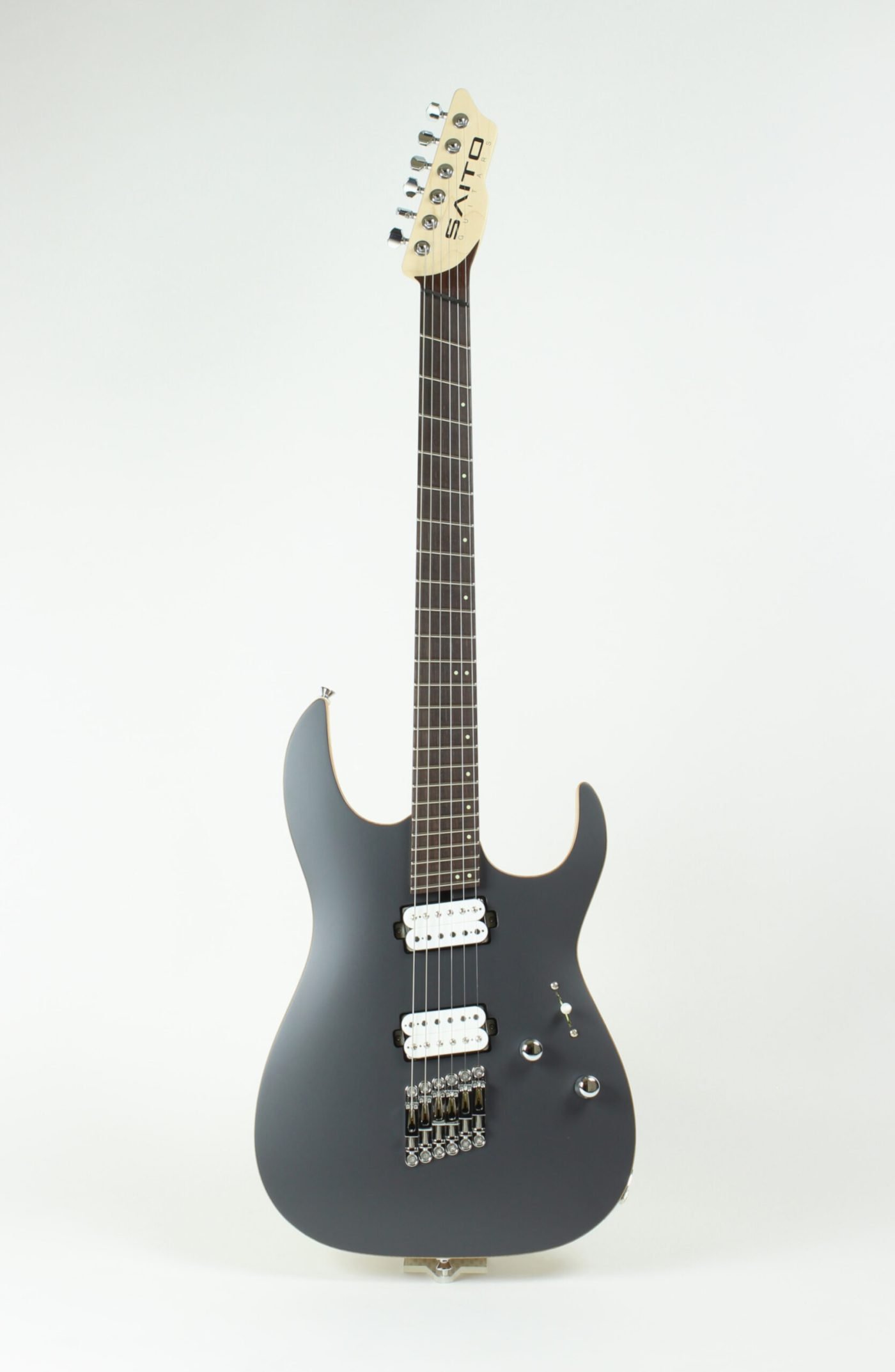
The S-624MS is a 24-fret multi-scale running from 648mm to 673mm (25.5 to 26.5 inches), with a flatter 14-to-16-inch radius, GOTOH SG381 locking tuners and the SAITO HTI bridge with a brass insert plate. It pairs a SAYTONE Sledge α at the neck with a Bore Up at the bridge. Saito has said the multi-scale is there for pitch stability and even string tension, not just for looks.
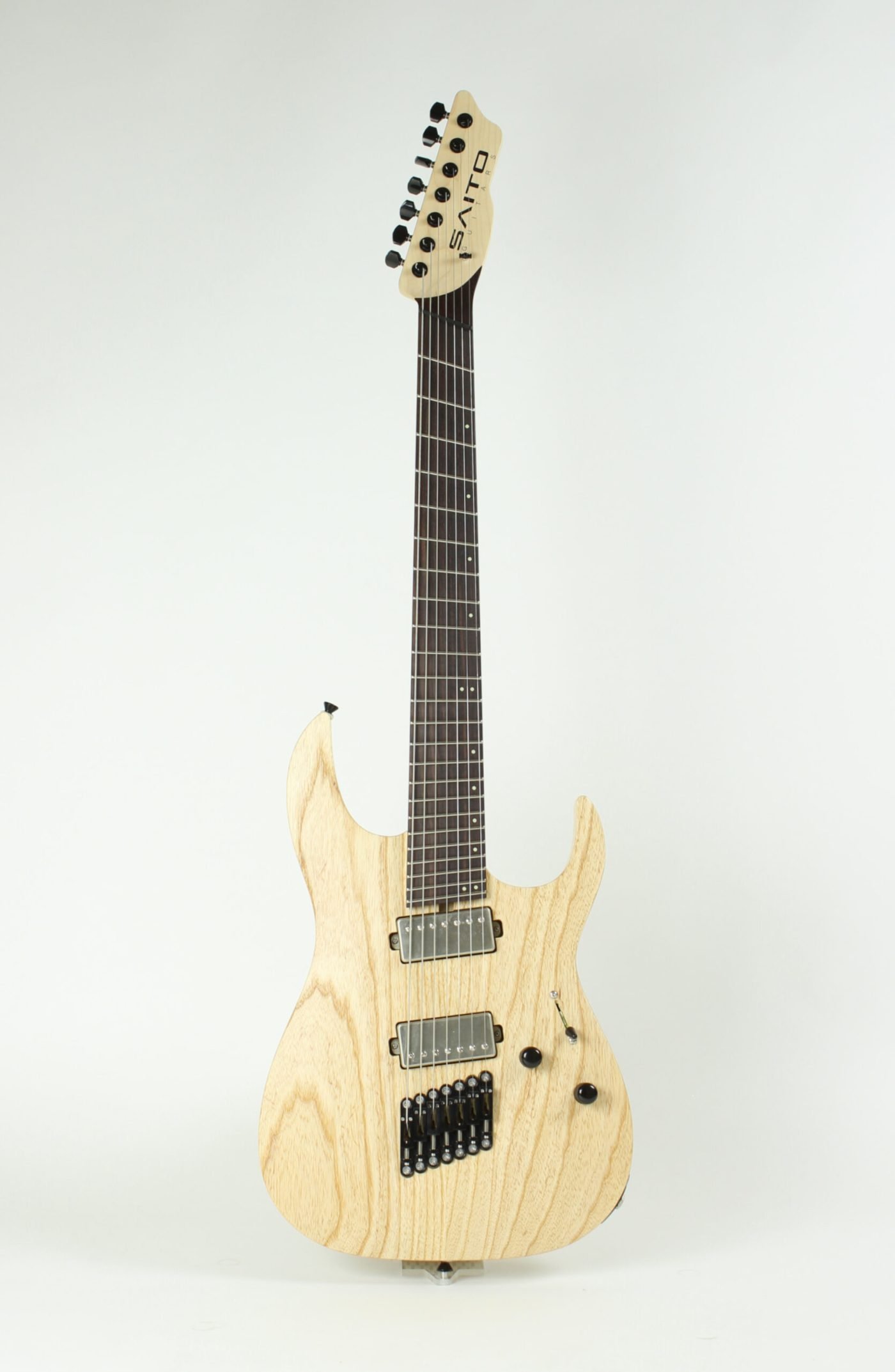
The S-724MS takes the same idea to seven strings, and in the 2016 interview the natural, unpainted “Naked” finish was the most popular choice.
SR Series: The Simpler SAITO
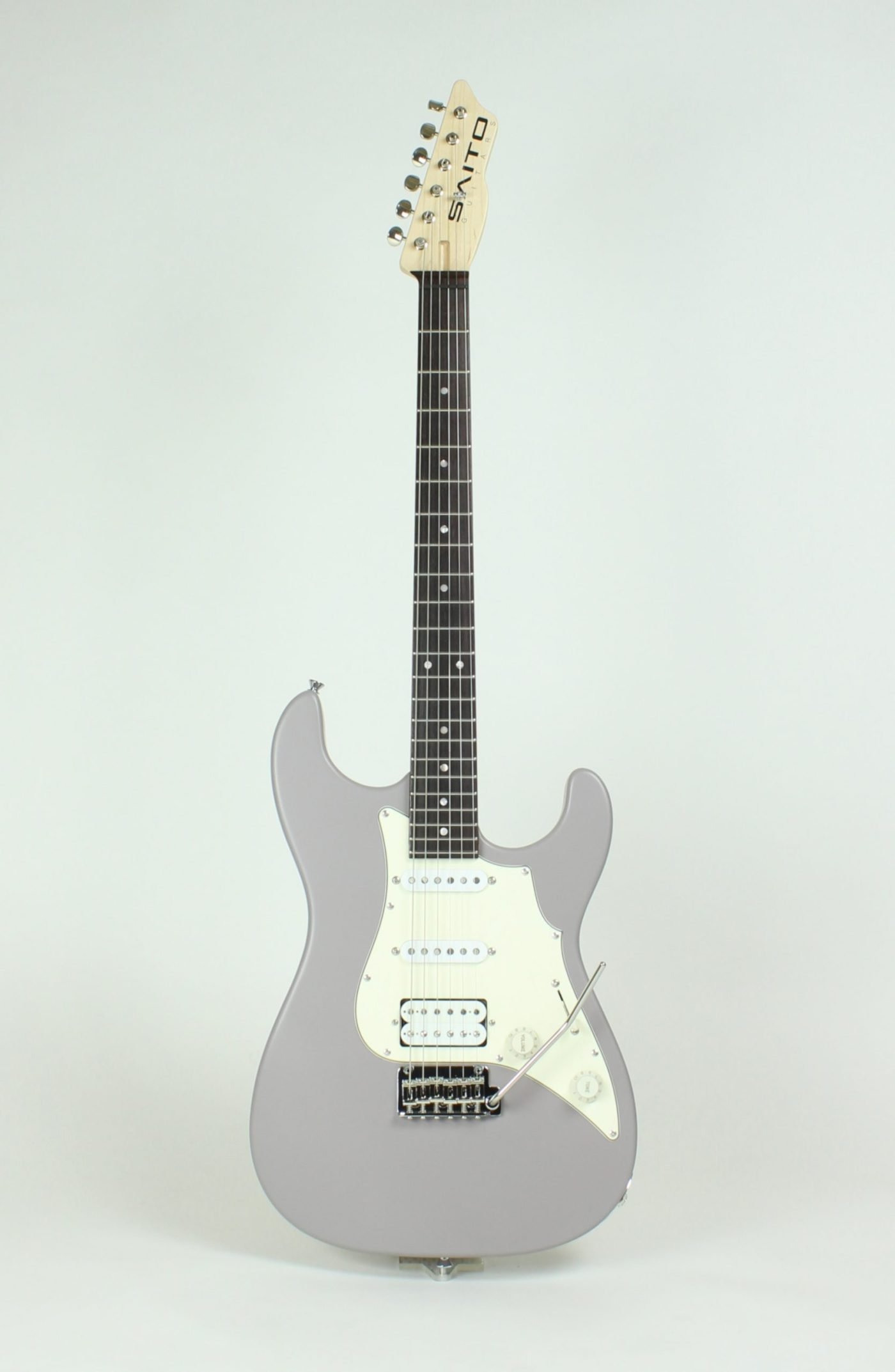
The SR-22 keeps the S-622’s 648mm scale, 42mm nut and compound radius, but simplifies the parts: a pau ferro fingerboard, GOTOH SD91 tuners, a GOTOH 510T-SF1 tremolo, and SAYTONE “Robo Winding” pickups, machine-wound versions of the SAYTONE designs, with an automatic coil tap on the 5-way switch. It comes in Berry and Greige.
622BEYOND: Spruce and Mahogany
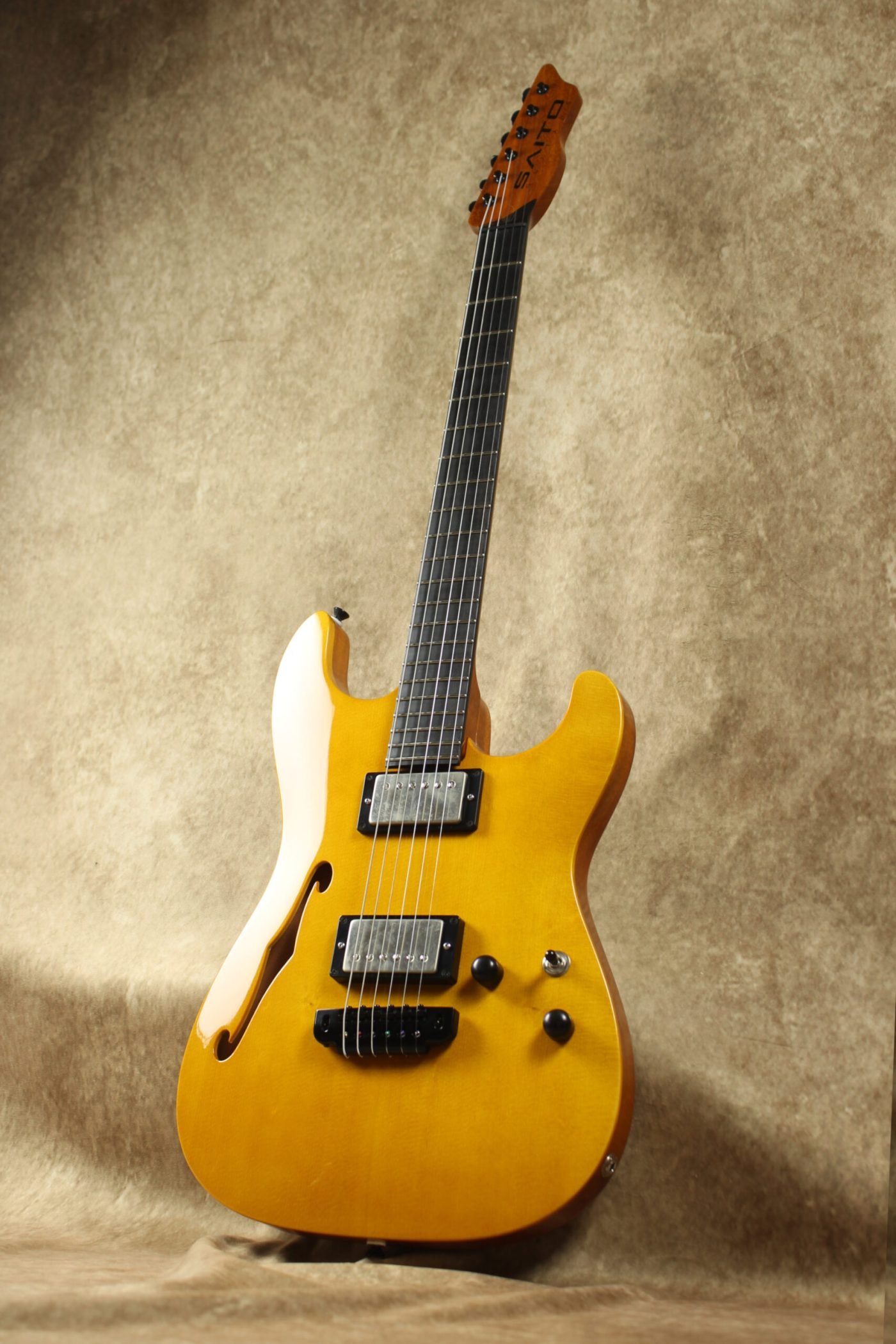
The 622BEYOND puts a Sitka spruce or curly maple top over a Honduras mahogany back, with an ebony fingerboard, ebony knobs and a GOTOH 510UB bridge. It comes with SAYTONE Sledge 58C humbuckers or Vanquish single coils, and ships in a TSA-lock hard case.
Heritage Series: The Classic Side
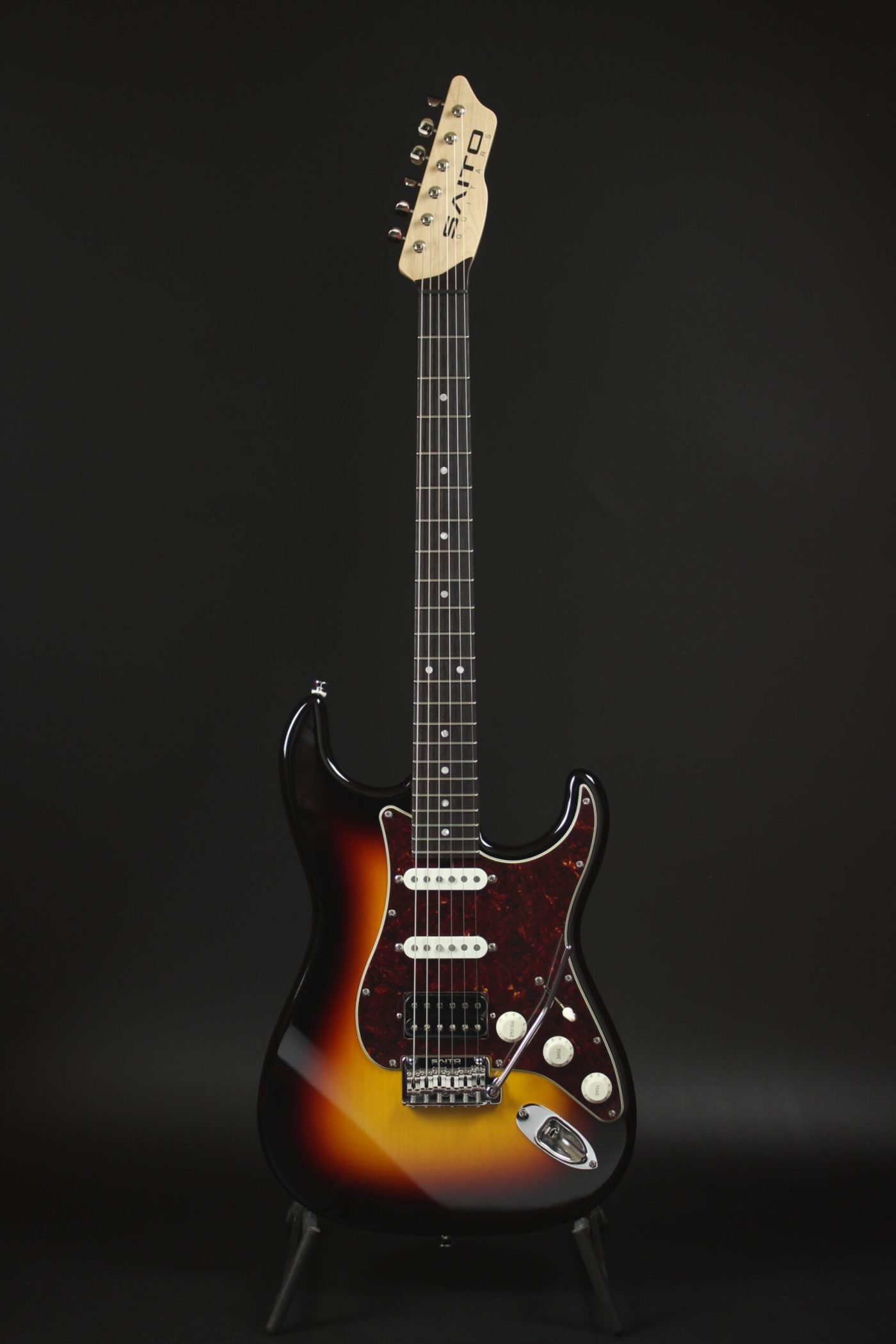
Orders for the Heritage Series opened in August 2026. It covers the S-622CS Heritage and S-622CST Heritage guitars and the S-420bCSJ and S-521bCSJ Heritage basses, with alder or swamp ash bodies, nitrocellulose lacquer and an optional aged finish. The S-622CS Heritage comes with SSS or SSH SAYTONE layouts.
Basses
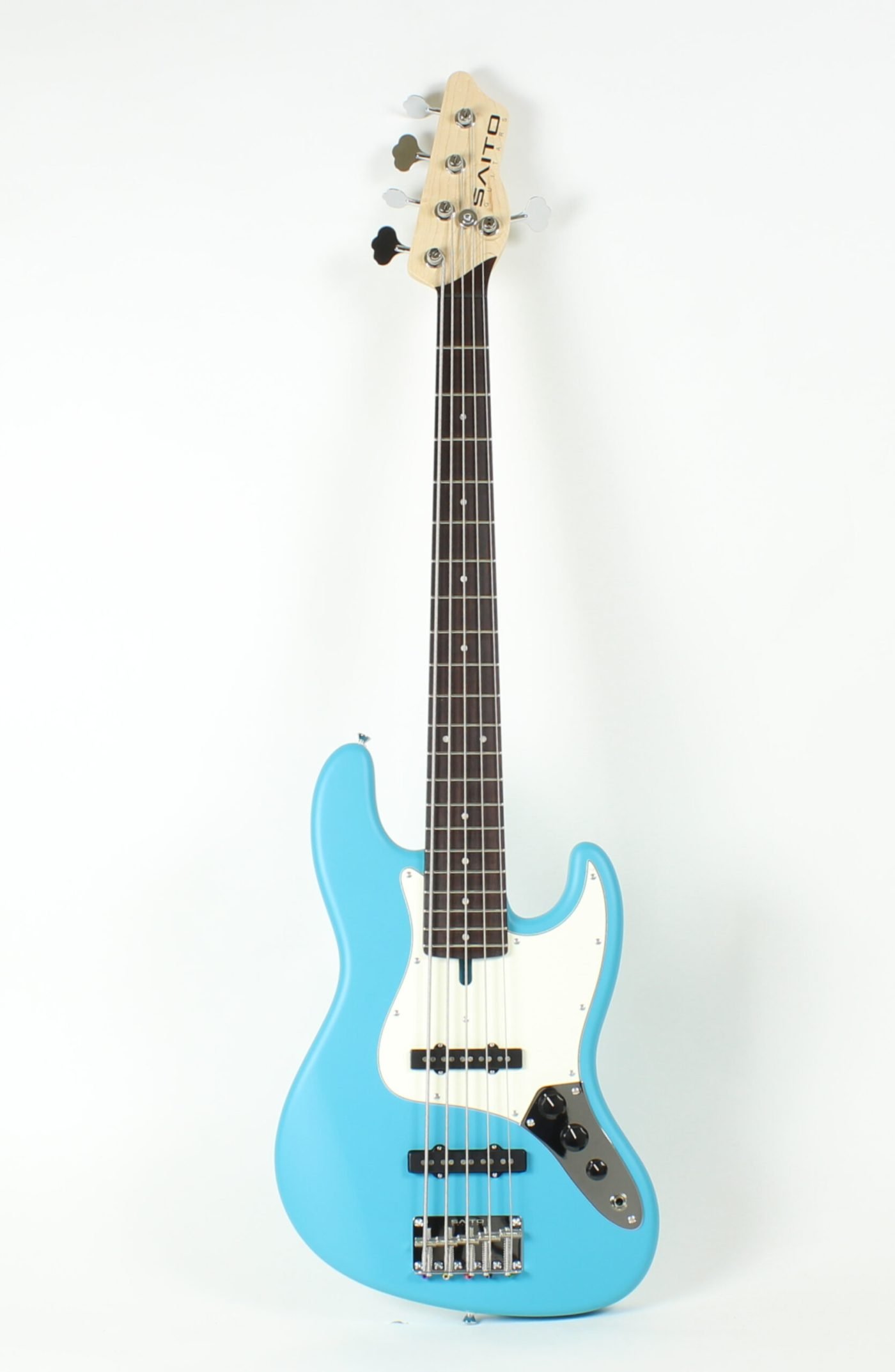
SAITO also builds basses: the 4-string S-420bCSJ and the 5-string S-521bCSJ, with a 34-inch scale, 21 frets and a classic J-style neck grip.
Which SAITO Guitar Is Right for You?
| You want… | SAITO pickmodel | Whywhat you get |
|---|---|---|
| A modern all-rounderone guitar for everything | S-622 | SSH, HH or HSH, locking tuners, hand-wound pickups |
| Extended rangetight lows, even tension | S-624MS or S-724MS | Multi-scale, 24 frets, HTI bridge |
| A simpler SAITOcore specs, fewer extras | SR-22 | Same scale and neck, machine-wound SAYTONE |
| Warmer, woodier tonespruce or maple top | 622BEYOND | Mahogany back, ebony board |
| Classic looksvintage-style finish | Heritage Series | Nitro lacquer, optional aging |
My Take
If you want to play technical music but don’t want a guitar that looks like heavy metal gear, a SAITO is a perfect fit. I’d also recommend it to modern fusion players and anyone who leans on technique.
Where to Buy
SAITO sells through dealers listed on its official dealer page, and through its own official web shop, which also handles orders for the Heritage Series. Saito has said he wants players to try his guitars in shops whenever possible, so if you are in Japan, look for one on a shop wall.
The brand has also been growing its artist roster, with several new artists announced in 2026.
Final Thoughts
SAITO GUITARS grew out of a repair bench into a brand with its own pickups, its own design language and a clear idea of what a modern guitar should be. Clean, functional and easy to play, it is one of the most interesting modern makers in Japan today.
My Take
SAITO deserves to be far better known outside Japan.
Frequently Asked Questions
Where are SAITO guitars made?
In Kawaguchi, Saitama, Japan, at Saito Gakkikoubou, the company founded by Masaaki Saito.
What does S-622 mean?
The S series is named by strings and frets: S-622 is a 6-string with 22 frets, S-724 a 7-string with 24 frets. MS means multi-scale.
What are SAYTONE pickups?
SAITO’s own pickups, wound by hand in the workshop. They are also sold separately, and Crews Maniac Sound uses them on its OS series. The SR series uses machine-wound “Robo Winding” versions.
When did SAITO GUITARS start?
Saito Gakkikoubou opened as a repair shop in 1991. The SAITO GUITARS brand debuted in 2014, and the S series launched in 2015.
What is the Heritage Series?
A classic-style line with nitrocellulose lacquer and an optional aged finish, covering the S-622CS and S-622CST Heritage guitars and two basses. Orders opened in August 2026.
Does SAITO make basses?
Yes, the 4-string S-420bCSJ and 5-string S-521bCSJ, plus Heritage versions.