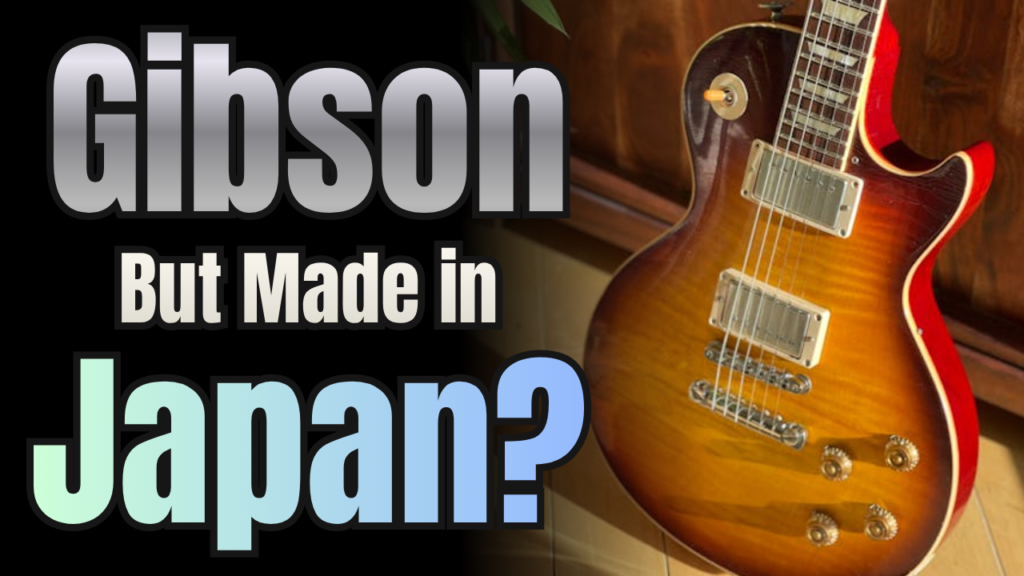
Orville by Gibson was a Japanese-made guitar line officially authorized by Gibson, produced from 1988 to 1998. Named after founder Orville Gibson, it paired Terada- and FujiGen-built bodies with genuine Gibson USA pickups — the only Gibson-sanctioned Made-in-Japan Les Paul line ever offered.
Orville by Gibson Quick Facts
- Production years: 1988–1998 (Orville by Gibson line ended 1995)
- Name origin: Gibson founder Orville Gibson
- Factories: Terada (1988–1993), FujiGen (1992 onward)
- Two tiers: Orville by Gibson (Gibson USA ’57 Classic pickups, nitro finish) / Orville (Japanese pickups, polyurethane)
- Trademarks: Open-book headstock, “Les Paul Model” silkscreen, Gotoh hardware
- Current market value: $2,000–$3,000+ for Orville by Gibson models
Prefer to watch? This article is based on my own video below.
What Is Orville?
Orville was Gibson’s Japanese-made lineup, produced for only about ten years starting in 1988. Combining high-quality Japanese-built bodies with genuine Gibson USA pickups, these guitars became hugely popular among players and collectors alike. The brand name comes from Gibson’s founder, Orville Gibson — a clear sign this was a serious, legitimate line.
The Lineup
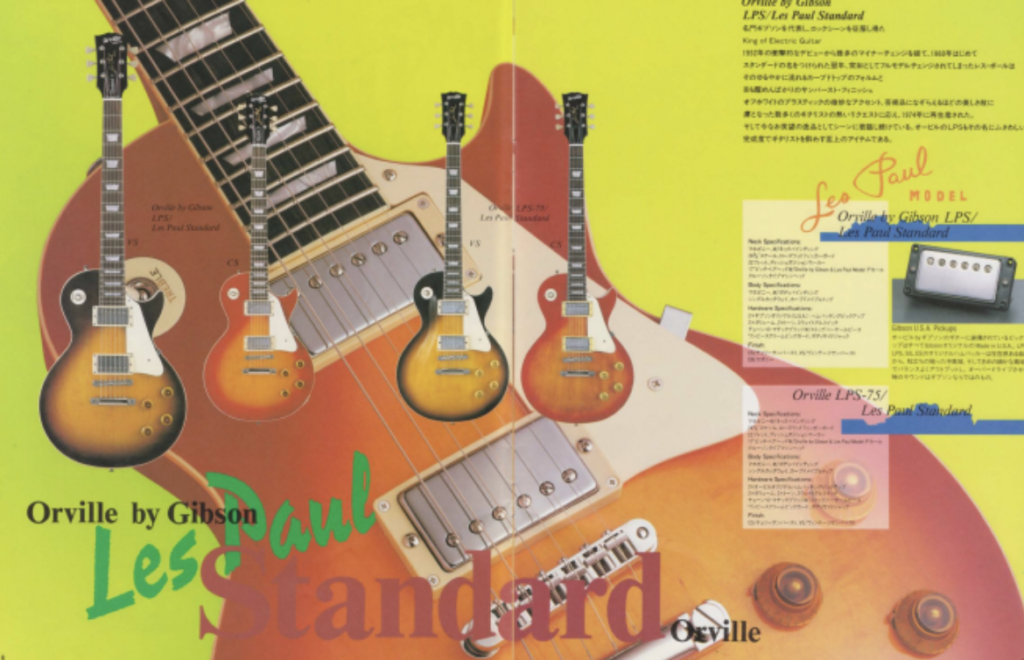
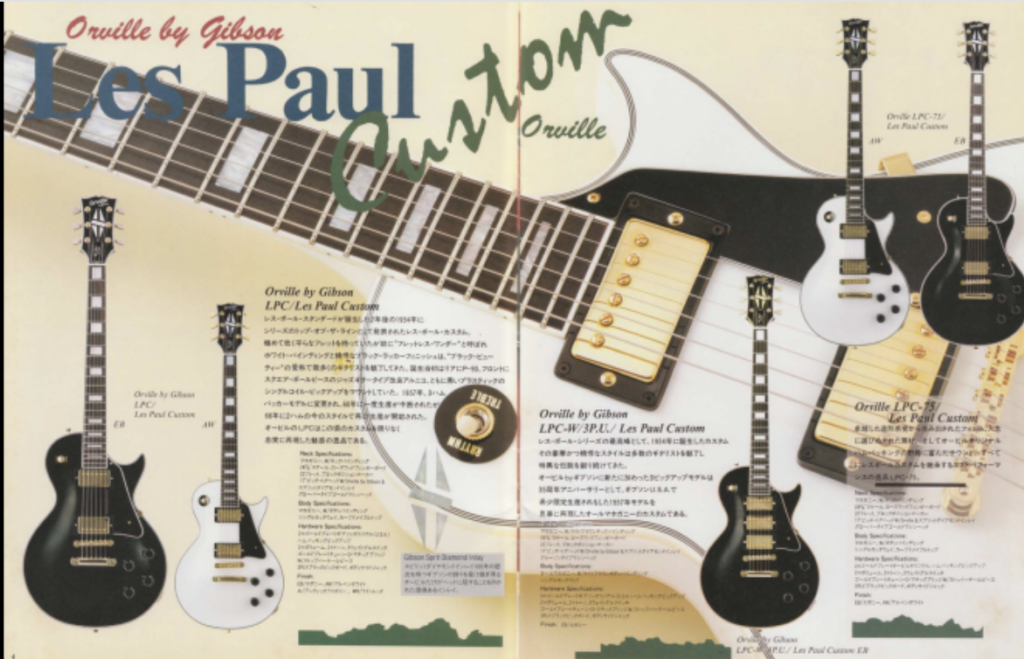
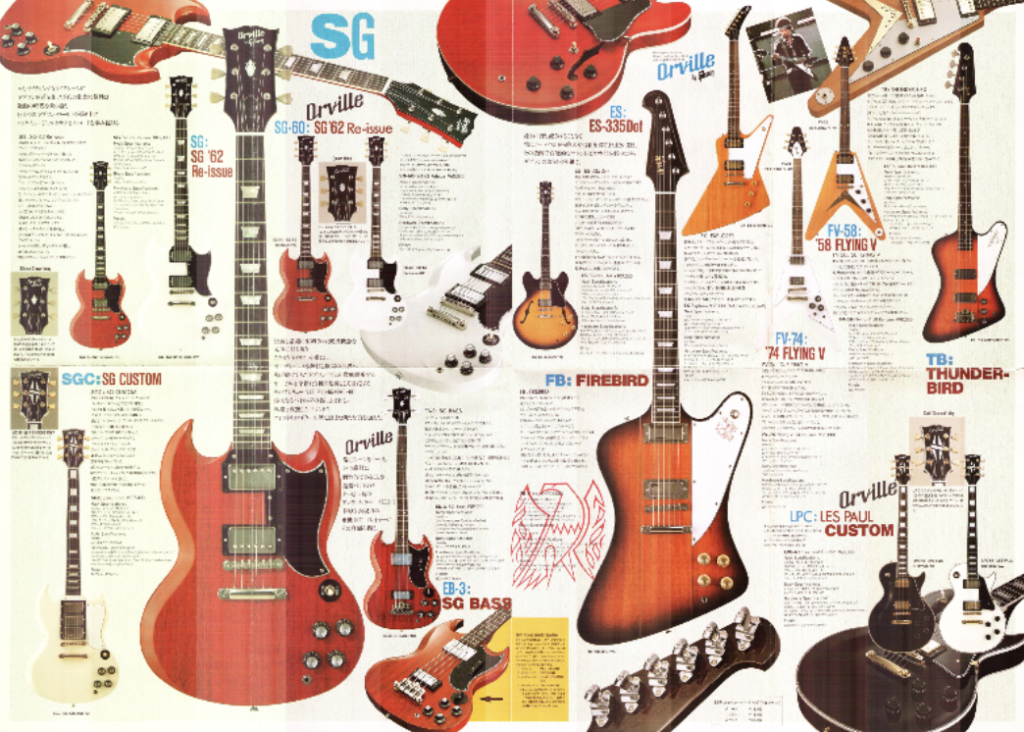
The Les Paul Standard was the most widely produced model and the one you’ll encounter most often. Many models were vintage-inspired, and beyond the Burst models, the Custom “Black Beauty” was also reissued. The Custom models (LPC) in particular faithfully reproduced the multi-ply binding.
But it didn’t stop at Les Pauls — nearly every major Gibson model was released under the Orville name.
- SG: Excellent reputation — despite its very lightweight body, it’s remarkably well balanced and resists neck dive.
- Firebird, Explorer, Flying V: Offered in very small numbers, making them popular collector’s items today.
- Acoustics: J-160, Dove, and Hummingbird.
- Basses: Thunderbird and EB-3.
Orville by Gibson vs. Orville: Two Tiers
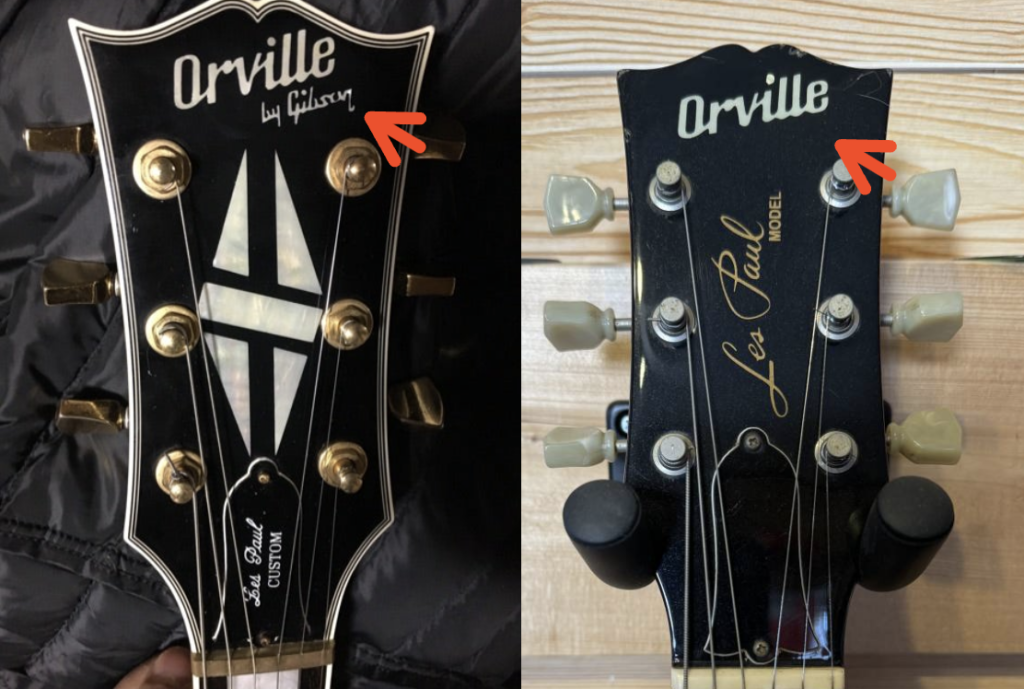
The brand launched as “Orville by Gibson,” and in the mid-1990s a more affordable line under the standalone “Orville” name was added. The big differences are the pickups and the finish: Orville by Gibson pairs Gibson USA ’57 Classics with nitro finishes — specs faithful to a real Les Paul — while standard Orvilles use Japanese pickups and polyurethane, closer to a typical Asian budget spec.
| Spec | Orville by Gibson (OBG) | Orville |
|---|---|---|
| Pickups | Gibson USA (’57 Classic; some Bill Lawrence “The Original” HB-R/HB-L) | High-quality Japanese-made |
| Finish | Nitrocellulose (especially Reissue series) | Thin polyurethane |
| Pots & switches | US-made (Orange Drop capacitors, Switchcraft) | Japanese-made |
| Bridge & tailpiece | Gotoh (both tiers) | |
Both tiers use Gotoh hardware for the bridge and tailpiece. Gotoh is Japan’s gold standard, offering excellent tuning stability and tonally neutral bridges.
Made in Japan or Korea?
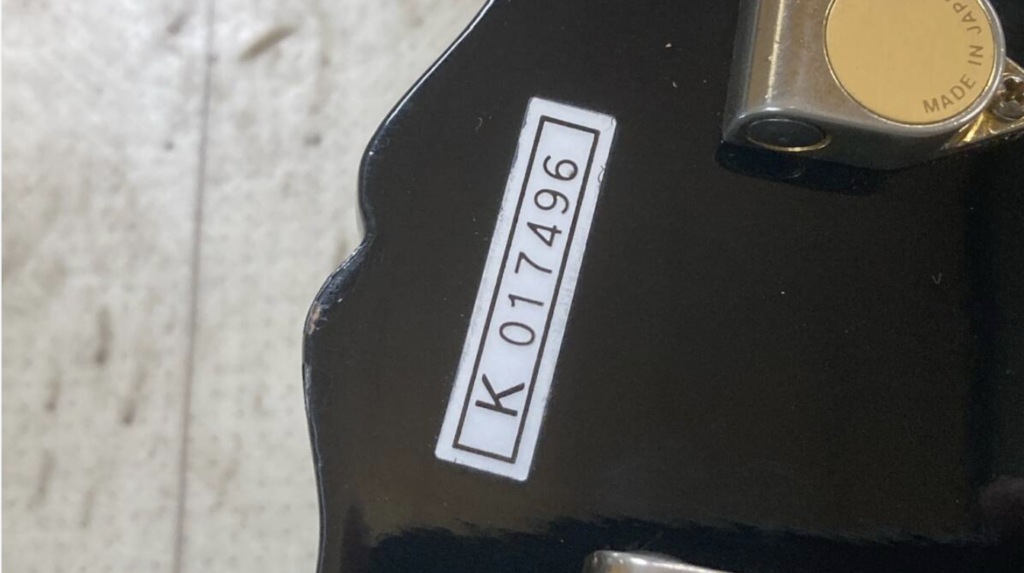
Both lines are, of course, made in Japan. Or at least, that’s what we’d like to say definitively. Rumors have long circulated that some Orvilles were made in Korea. Serials beginning with “K” were long believed to be Korean-made, but in recent years that theory has been largely rejected — the prevailing view now is that these were Japanese-made as well. Opinions vary, so if you know more, let us know in the comments.
The Factories: Terada and FujiGen
From 1988 to around 1993, production was handled by Terada Gakki; from 1992 onward, FujiGen took over.
On “by Gibson” models, the logo differs between factories — the “by” lettering is the easiest tell (e.g., a 1994 FujiGen logo vs. a 1991 Terada logo).
There’s also said to be a difference in neck construction. Terada-era guitars used a short tenon, matching the Les Paul Standard spec of the early ’90s. FujiGen guitars used a long tenon, closer to Gibson’s 1950s specification.
Serial Number Guide
You can also identify a guitar by its serial number:
| Brand | Serial Format | Factory / Notes |
|---|---|---|
| Orville by Gibson | G + 6 digits (e.g., G88xxxx) | Terada, 1988–1993. First digit after “G” = year (8 = 1988). |
| Orville by Gibson | No letter + 6 digits (e.g., 210xxx) | FujiGen, from c. 1992. First digit = year (2 = 1992). |
| Orville | J + 6 digits | Terada. |
| Orville | K + 6 digits | K series (Kanda Shokai). Often printed logo instead of inlay. |
| Orville | No letter + 6 digits | Late FujiGen, 1993 onward. First digit = year. |
Why Did Gibson Create Orville? A Brief History
The story goes back to the 1970s. Japanese manufacturers were producing large numbers of low-priced copy models with quality that rivaled — or even exceeded — genuine Gibsons and Fenders. This was a serious problem for the American brands, both of which were losing sales.
Fender responded first. Kanda Shokai, FujiGen, and Yamano Gakki partnered to establish Fender Japan: the logic being that official, affordable guitars with a real Fender decal on the headstock could suppress the copy market.
So what about Gibson? In the early 1970s, Gibson had partnered with Aria (Arai Trading) to develop and sell Japanese-made Epiphone Japan guitars. But that partnership ended in 1983, after which export Epiphones shifted entirely to Korean production, and Japanese-made Epiphones disappeared domestically.
In 1987, Yamano Gakki became the import distributor for Gibson and Epiphone. In 1988, Yamano expanded the Japanese Epiphone lineup beyond semi-hollows into solid-body models. Within that expanded lineup, a new brand was born — one that dropped the Epiphone name and instead bore the name of Gibson’s founder: Orville by Gibson. It was a Gibson-sanctioned brand for the Japanese market, priced between Korean-made Epiphones and Gibson USA. Like Fender Japan, it’s widely seen as a countermeasure against copy models.
Key Milestones in Orville History
| Year | Event | Significance |
|---|---|---|
| 1983 | Gibson–Aria partnership ends | Japanese-made Epiphone production ceases; export Epiphones move to Korea. |
| 1987 | Yamano Gakki becomes Gibson/Epiphone distributor | Sets the stage for a new Gibson-sanctioned Japanese line. |
| 1988 | Orville by Gibson launched | Gibson’s official Made-in-Japan brand debuts, built by Terada Gakki. |
| 1992 | FujiGen takes over production | Long-tenon neck joint closer to 1950s Gibson spec. |
| Mid-1990s | Standalone Orville line expands | More affordable tier with Japanese pickups and poly finish. |
| 1995 | Orville by Gibson discontinued | Premium tier ends after roughly seven years. |
| 1998 | Orville brand ends | Production transfers to Epiphone Japan (Elite series), keeping the same model codes. |
Why Orville Guitars Are So Popular
Official Gibson authorization. These aren’t mere copies — they’re seen as Japanese-made models within Gibson’s legitimate lineage. Being built by Terada and FujiGen inspires strong confidence in quality, and the combination of a Japanese body with American pickups is hard to resist.
Short production run. Orville by Gibson in particular was made for only about ten years, making these guitars genuinely scarce.
Gibson has no equivalent today. While Gibson offers budget-friendly lines like the Tribute and Studio, there is currently no “mid-priced Japanese-made line with official backing” of the kind other brands offer.
They play beautifully. Anyone who has played a FujiGen-made Les Paul understands. The medium-C neck offers excellent playability, and the fretwork often needs almost no adjustment even after 30 years.
Current Market Prices
All of this has driven prices sharply upward. Orville by Gibson models now trade for $2,000–$3,000 or more — enough to buy a brand-new Les Paul Standard.
Alternatives Worth Considering
Greco Les Pauls
If you want a cheaper Les Paul that still captures the essence, consider Greco. Given that Orvilles were built by FujiGen, an Orville is arguably just a Greco Les Paul — which FujiGen had been building since the 1970s — with Gibson pickups added. Many Grecos reproduce vintage specs even more faithfully, and good examples can be found for around $1,000.
Epiphone Japan Elite Series (Post-1998)
Another option is the post-1998 Epiphone Elite series. After Orville ended, production transferred to Epiphone Japan, which continued using the same model codes — an LPS-80F, for example, carried the same numbering system straight over. Japanese-made models were even permitted to keep the Gibson-style headstock shape. Finding a good one takes effort, but they’re well worth checking out.
Final Thoughts
Faithful Japanese copies have existed since the Lawsuit Era, but Orville remains the only line ever officially sanctioned by Gibson. The open-book headstock and “Les Paul Model” lettering give it that unmistakable “real thing” feel.
When I lived in Japan about 15 years ago, used Orvilles were common in guitar shops — you’d even find several at bargain prices in secondhand stores. That’s no longer the case. Online, you’ll find plenty of people regretting that they passed on Orville, dismissing it as “just a budget model like Epiphone.”
Originally a licensed Gibson line built exclusively for the Japanese domestic market, Orvilles now appear more often overseas — especially in the US on marketplaces like Reverb — than in Japan itself. Prices have climbed, but if you’re after a Japanese-made Les Paul with authentic Gibson pedigree, an Orville is absolutely worth picking up.
FAQ
What is Orville by Gibson?
Orville by Gibson was a Gibson-authorized guitar brand made in Japan from 1988 to 1995. Named after Gibson founder Orville Gibson, it featured the open-book headstock, “Les Paul Model” silkscreen, and genuine Gibson USA pickups, making it the only officially sanctioned Made-in-Japan Gibson line.
What is the difference between Orville by Gibson and Orville?
Orville by Gibson models use Gibson USA pickups (mostly ’57 Classics) and often nitrocellulose finishes, while standalone Orville models use Japanese-made pickups and thin polyurethane finishes. Both tiers share Gotoh bridges and tailpieces and were built in Japan.
Where were Orville guitars made?
Orville guitars were made in Japan by Terada Gakki (1988 to around 1993) and FujiGen (1992 onward). Serials starting with “K” were long rumored to be Korean-made, but the prevailing view today is that these were also built in Japan.
How do I date an Orville guitar by its serial number?
For Orville by Gibson, “G” plus 6 digits indicates Terada (the first digit after G is the year, e.g. 8 = 1988), while 6 digits with no letter indicates FujiGen (first digit = year). For Orville, “J” prefixes are Terada, “K” prefixes are the Kanda Shokai K series, and no letter means late FujiGen production from 1993 onward.
How much is an Orville by Gibson Les Paul worth today?
Orville by Gibson models typically sell for $2,000 to $3,000 or more on the used market, roughly the price of a new Gibson Les Paul Standard. Prices have risen sharply due to scarcity, Gibson authorization, and the reputation of Terada and FujiGen craftsmanship.
What replaced Orville after the brand ended?
After Orville ended in 1998, production transferred to the Japanese-made Epiphone Elite series, which continued the same model codes (such as LPS-80F) and was permitted to keep the Gibson-style headstock shape. Greco Les Pauls, also built by FujiGen, are another popular alternative.