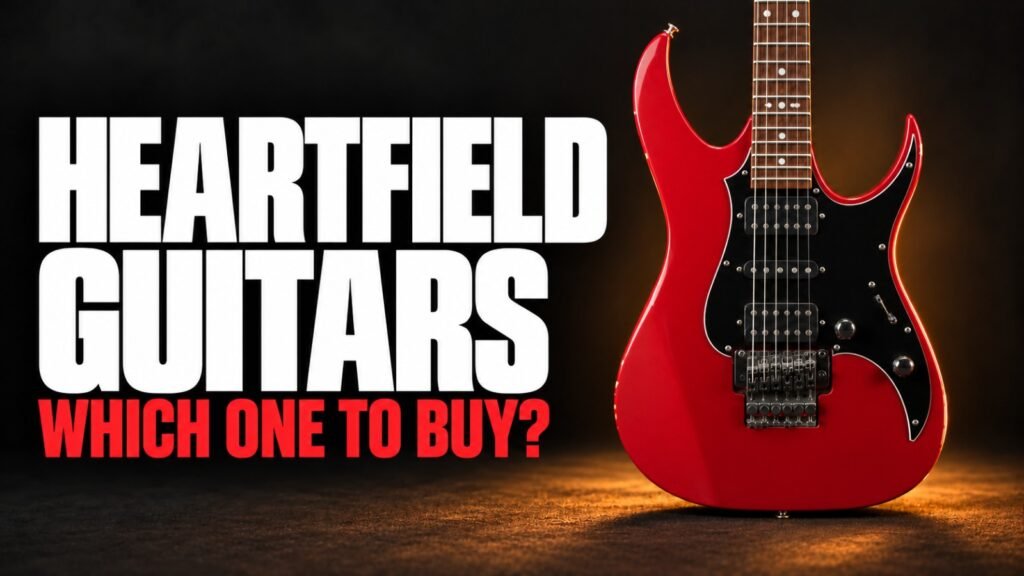
Heartfield was a short-lived Fender sub-brand made in Japan, active from 1989 to 1993, with most of its guitars built by Fujigen. It was aimed squarely at hard-rock players, and its specs were far more modern than you would expect from the early 1990s.
This guide covers the four guitar models, the DR and Prophecy basses, the players who used them, and which Heartfield to look for today.
Heartfield Quick Facts
- Active: 1989 to 1993
- Who: A Fender sub-brand, built in Japan, mostly by Fujigen
- Guitars: Talon, Elan, EX and RR
- Basses: DR series (4 to 6 strings) and Prophecy
- Players: Vinnie Moore, Tracii Guns, Russ Parrish and Steve Bailey
Start here
- Fujigen: the factory that built most Heartfields
- Fujigen History: from three cows to 14,000 guitars a month
- The Heartfield Lineup: Talon, Elan, EX, RR and the basses
- Which Heartfield Should You Buy?: the quick finder
History in Brief
Heartfield was launched by Fender in 1989 and built in Japan, mostly at Fujigen, the same factory behind Fender Japan. Its guitars were developed for players Fender’s traditional models did not reach: the hard-rock and shred guitarists of the late 1980s, with superstrat shapes, locking tremolos and active electronics.

It did not last. Heartfield ended in 1993, and as many people say, it was basically killed by grunge, as rock moved away from the shred guitars the brand was built around.
Who Played Heartfield
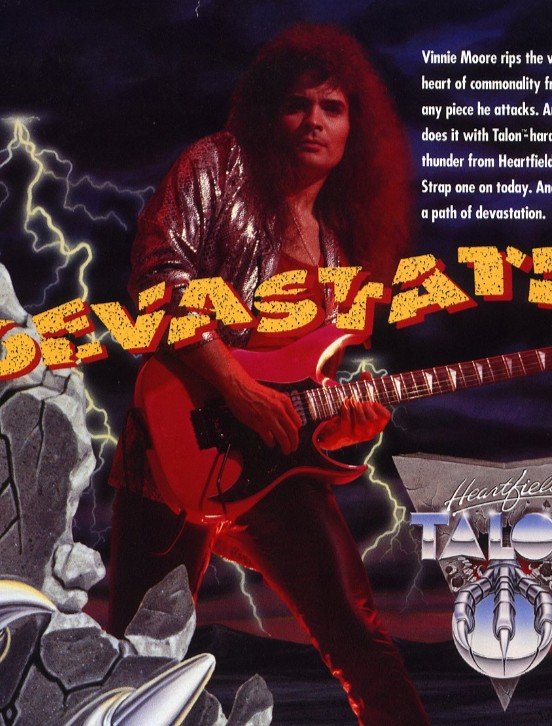
Heartfield’s catalogs featured Vinnie Moore, and Tracii Guns also appeared in some of the promotional materials. Alongside them was Russ Parrish, before he took the name Satchel in Steel Panther. Their presence showed that the brand clearly aimed at hard-rock players.
On the bass side, Steve Bailey appeared in promotions holding a fretless six-string DR, which felt like a contrast to the hard-rock focus of the guitar lineup.
The Heartfield Lineup
The guitar lineup centered on four major models, with two bass lines alongside them.
Talon: Heartfield’s Full-On Superstrat

The Talon was Heartfield’s take on a full-on superstrat: locking tremolo, hot humbucker-equipped pickup layouts and a fast neck built for shred. If you want the most typical late-80s hard-rock Heartfield, this is it.
Elan: The Carved, Arched-Top Model

The Elan featured a carved, arched-top body. It is the Heartfield for players who want a more classic carved-top look with modern playability.
EX: An Original Frequency-Control System

The EX was equipped with an original frequency-control system and has a very unusual control layout. The rear pickup looks like a humbucker, but it is actually two separate single coils.
| Control | What it does |
|---|---|
| Pickup selector | Front, both or rear pickup |
| 3-way mini switch | Sets the middle pickup to off, parallel or series |
| Volume and Fender TBX | Volume plus Fender’s TBX tone control |
| Boost mini toggle and knob | Turns on a gain boost, adjustable up to 10 dB |
That feels way more modern than you would expect from the early ’90s: one guitar can move from clean single-coil sounds to a boosted lead without touching a pedal.
RR: A Simple Guitar With Built-In Distortion
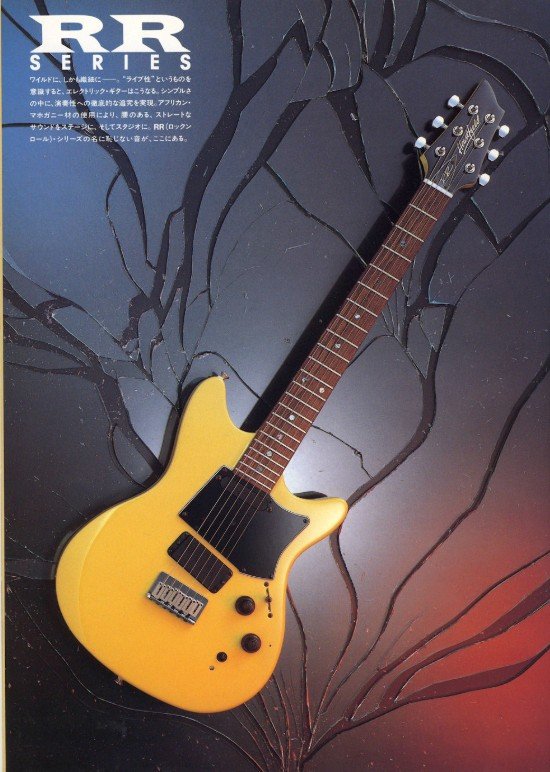
The RR was a simple-looking model that even came with a built-in distortion on/off button. You could adjust its gain, tone and level from the back of the guitar.
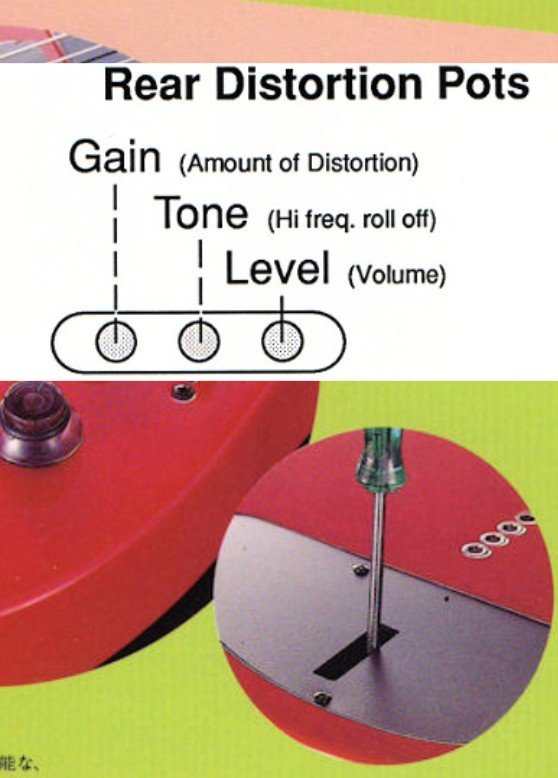
Lower-grade models had one humbucker and three buttons, switching between single coil, humbucker, and humbucker with distortion. In practice, that is a guitar and an overdrive pedal in one body.
DR Bass: 4 to 6 Strings With Hidden Features

On the bass side, the DR series ranged from 4-string to 6-string models, and it had hidden features of its own. A mini toggle changed how wide the boost was, and a knob moved it across different frequencies.
It even had an XLR output, so you could plug straight into a mixer or PA. Heartfield was clearly thinking about recording, not just live playing.
Prophecy: The Other Heartfield Bass
Heartfield also made a Prophecy bass. I was surprised to learn this: for a brand remembered for shred guitars, the bass lineup was surprisingly broad.
Which Heartfield Should You Buy?
| You want… | Look atModel |
|---|---|
| Shred and hard rockSuperstrat | Talon |
| A carved topArched body | Elan |
| The most unusual electronicsBoost, series/parallel | EX |
| Simple, with drive built inOne humbucker | RR |
| Bass for stage and recording4 to 6 strings, XLR out | DR series |
Buying a Used Heartfield
- Test every switch and knob: the EX, RR and DR rely on active electronics, so check the boost, distortion and mini switches with a fresh battery.
- Check the tremolo: on a Talon, make sure the locking tremolo returns to pitch and the knife edges are not worn.
- Look at the headstock: some later instruments carry “Heartfield by Fender” rather than the Heartfield logo alone.
- Confirm it is original: with a brand this short-lived, replacement parts can be hard to find, so check that pickups and electronics are stock.
Related Brands and Factories
Final Thoughts
Heartfield was short-lived, but the specs were seriously interesting: a guitar with distortion built in, a boost you could dial up to 10 dB, a bass with an XLR output. For a brand that lasted only four years, it left behind some of the most inventive Japanese-built instruments of its era.
Frequently Asked Questions
What is Heartfield?
A Fender sub-brand made in Japan from 1989 to 1993, aimed at hard-rock players. Most of the guitars were built by Fujigen.
Who made Heartfield guitars?
Fender developed the brand, and most of the guitars were built in Japan by Fujigen.
Why did Heartfield end?
The brand ended in 1993. As many people say, it was basically killed by grunge, as rock moved away from shred guitars.
What Heartfield models were there?
Four main guitars, the Talon, Elan, EX and RR, plus the DR and Prophecy basses.
Who played Heartfield guitars?
Vinnie Moore appeared in the catalogs, Tracii Guns and Russ Parrish (later Satchel of Steel Panther) in promotional materials, and Steve Bailey with a fretless six-string DR bass.
What is special about Heartfield electronics?
The RR had a built-in distortion, the EX had series/parallel switching and a boost of up to 10 dB, and the DR bass had a sweepable boost and an XLR output.