Ibanez, Fender Japan, Greco: many of the most collectible Japanese guitars came out of one factory in Matsumoto, Nagano. This article follows Fujigen from 1960, when a farmer sold three cows to start a violin workshop, to the world’s largest guitar output in 1983 and beyond.
Fujigen History Quick Facts
- Period covered: 1960 to 2026
- Founded: 1960, by Yutaka Mimura and Yuichiro Yokouchi
- First products: violins, then classical guitars (1961) and electric guitars (1962)
- Peak: 14,000 electric guitars a month in 1983, the most in the world at the time
- Firsts: the GR-500 guitar synthesizer with Roland (1978) and NC routers in guitar production (1981)
- Built for: Greco, Fender Japan, Ibanez and many more
Prefer to watch? This article is based on my own video below.
- 1960: Three Cows and a Violin Workshop
- 1961: The Switch to Classical Guitars
- 1962 to 1966: Electric Guitars and the Boom
- 1968: The Greco Brand
- 1970s: The Copy Era and the 1977 Gibson Lawsuit
- 1978 to 1983: World Firsts, Fender Japan and Record Output
- 1990s: Competing on Quality
- 2001 Onward: Custom House and Woodwork Beyond Guitars
- Fujigen Timeline at a Glance
- Final Thoughts
- Frequently Asked Questions
- More Fujigen Articles
1960: Three Cows and a Violin Workshop
Fujigen was founded in 1960 through a joint investment by Yutaka Mimura and Yuichiro Yokouchi. Yokouchi had originally been a farmer, and he sold three cows to help raise the money to start the company. He had no real background in musical instruments, but he wanted to build the best maker in the world out of Japan. That is where the name came from, inspired by Mt. Fuji.
In the beginning, they rebuilt a cowshed and started making violins. But the domestic market for violins was small, and the business did not really take off.
1961: The Switch to Classical Guitars
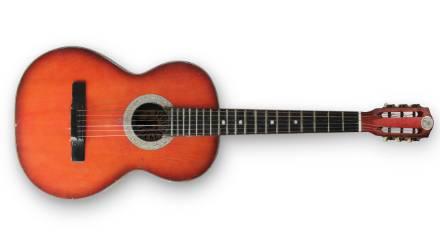
While making violins, Fujigen spotted growing demand for guitars through market research and changed direction. After overcoming early setbacks, including the return of 1,000 guitars, the company released classical guitars in 1961 and began establishing its place in the Japanese market.
1962 to 1966: Electric Guitars and the Boom
In 1962 Fujigen moved into electric guitars. As it expanded classical guitar production, a buyer from New York visited the factory and told the founders that electric guitars were the future. That led Fujigen toward electric guitar production, and the company soon secured a major order.
Around that same period, Yasuo Momose joined the company. Yes, that Momose: the same builder whose name would later become the Momose brand under Deviser. He worked there for about two years in his younger days.
By 1965, Japan was in the middle of a major electric guitar boom. The popularity of bands like The Beatles and The Ventures pushed demand sharply upward, and just three years after starting electric guitar production, Fujigen caught that wave. The next year it opened a new factory that could handle key parts of the process in house, including wood drying and woodworking. That was a major step forward.
1968: The Greco Brand
Then in 1968 the Greco brand began. The story is a little complicated: Greco itself had originally started overseas, and Fujigen, which had been producing the guitars as an OEM maker, acquired the trademark in Japan. Later, the distributor Kanda Shokai took over the brand. The full story is in the Greco history.
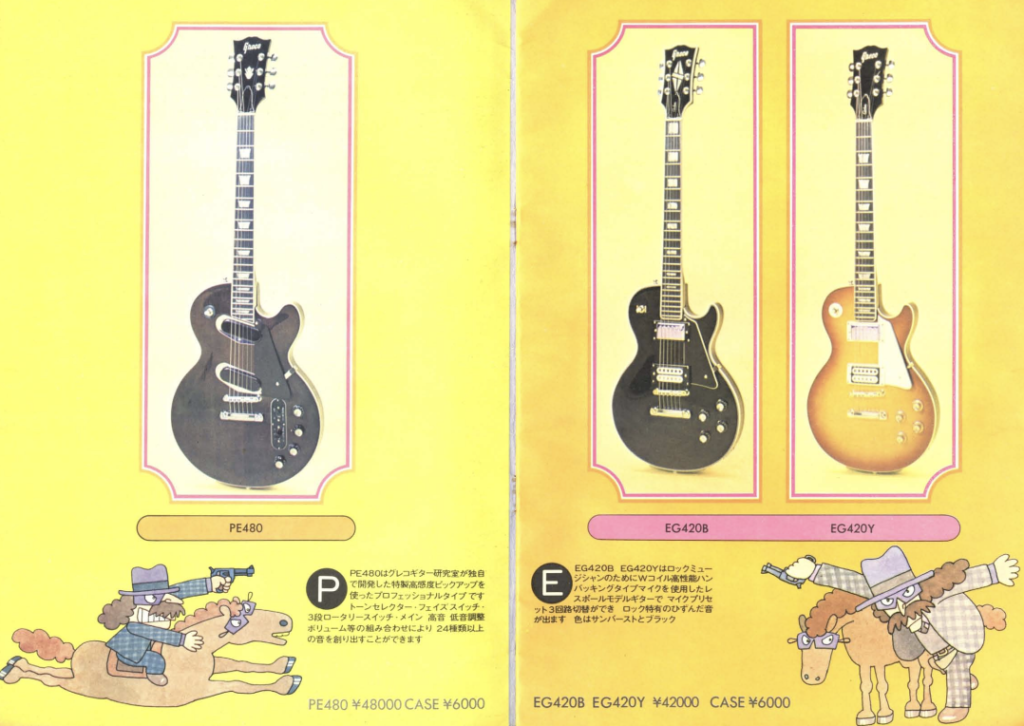
Fujigen-made Grecos were known for solid prices with the kind of precise construction people associate with Japanese instruments. Even today, many players still love those older Grecos. Some people are not even chasing the original brand; they specifically want the Greco version.
1970s: The Copy Era and the 1977 Gibson Lawsuit
Once the 1970s began, Fujigen started producing many copy models. It was not alone: a lot of Japanese makers were building copies of imported Fender and Gibson guitars at the time, and Fujigen ended up producing a huge number of OEM instruments.
Not just at Fujigen, some manufacturers still do not openly disclose OEM production. Sometimes it is about keeping the product image neutral, and sometimes it is about avoiding problems if the production partner changes later. If people start saying the old factory was better, that can affect sales.
In 1977, Fujigen was sued by Gibson. You could say it was partly about protecting market share, but either way it made one thing clear: a lightly inspired model might be one thing, but openly selling direct copies on a large scale was another.
1978 to 1983: World Firsts, Fender Japan and Record Output
In 1978 Fujigen was involved in another world-first initiative. Through a joint investment with Roland Corporation, it established Fuji Roland and introduced the GR-500 guitar synthesizer. In 1981 it brought NC routers into guitar production, also a first for the guitar industry, making high-speed, high-precision machining possible.
Then in 1982, Fujigen officially began building guitars for Fender. Like Gibson, Fender had become increasingly concerned about falling market share and the rising quality of Japanese copy models. As a countermeasure, Fender Japan was launched through a partnership of Fender, Yamano Gakki, Kanda Shokai and Fujigen. The early guitars from this period are now known as JV serial models, and among Japanese guitar fans they have become almost legendary.

The following year, Fujigen recorded the highest guitar production volume in the world: an incredible 14,000 guitars a month. That is staggering on its own, but remember that it was building for several brands at the same time, including Fender Japan, Fender for the US market, Greco and Ibanez. This was not just a busy factory. It was one of the most important guitar manufacturing sites in the world.
1990s: Competing on Quality
The changing market of the late 1980s set the next chapter. Lower-priced guitars made in Korea and China were spreading quickly, and orders for Fujigen began to drop. So instead of competing on volume, it chose to compete on quality, and through the 1990s it moved toward its own brands. Guitars under the FUJIGEN name followed in 1999 and the FGN brand in 2000.
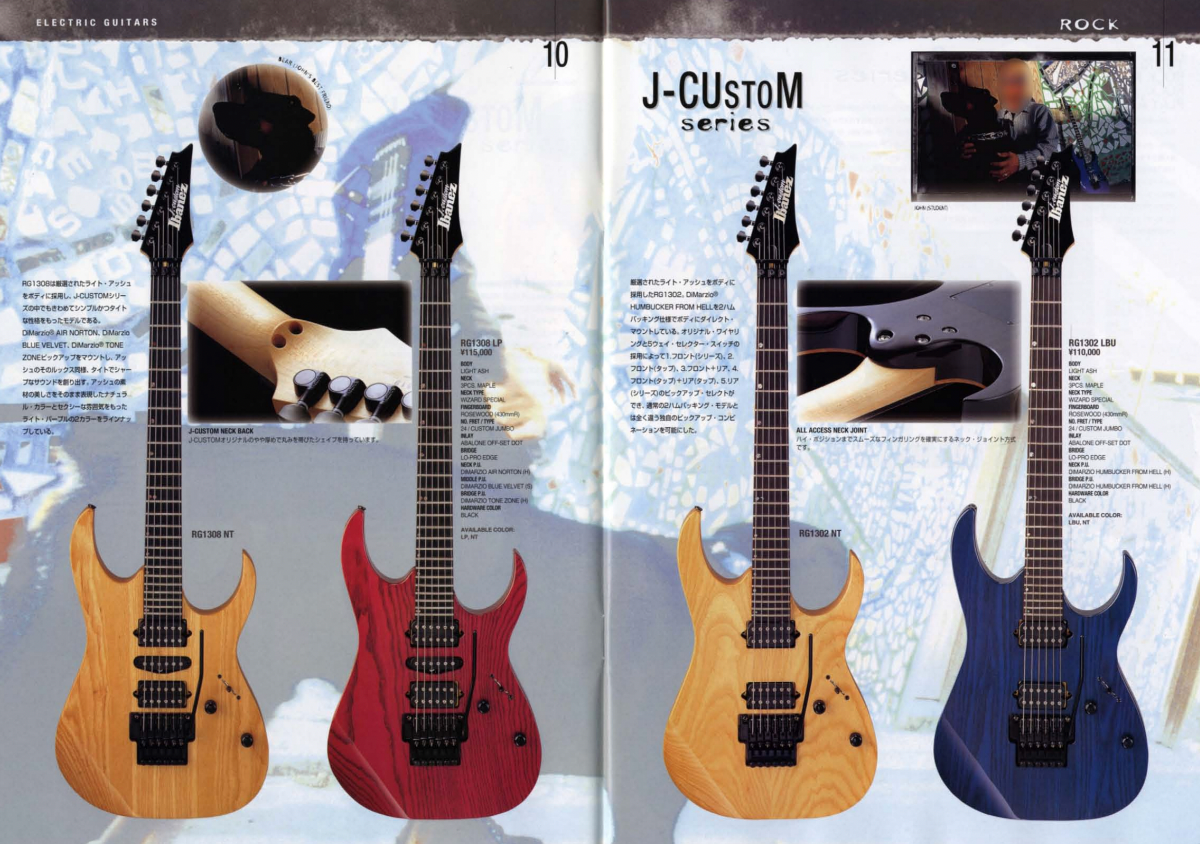
The same approach showed in Fujigen’s OEM work for Ibanez in the 1990s. As lines like J.Custom and various signature models built strong reputations, Fujigen itself came to be seen as a maker of high-quality guitars.
2001 Onward: Custom House and Woodwork Beyond Guitars
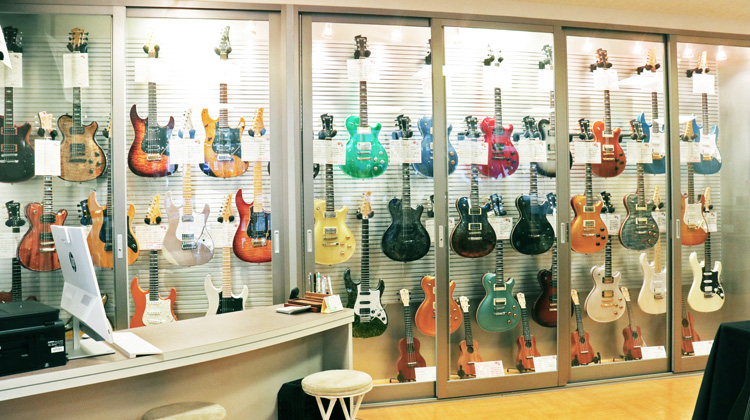
In 2001 Fujigen opened its directly operated store, Custom House Ikebukuro, a specialty shop focused on Fujigen and FGN guitars. A lot of guitar fans from overseas already visit Fender’s flagship store in Harajuku, but if you are interested in Japanese-made guitars, this is another place absolutely worth checking out.
Once Fujigen entered the 2000s, it was no longer just building guitars. It also began producing wooden interior panels for Lexus and Toyota vehicles, wood panels for audio products, Japanese taiko drums, cooking equipment and other wood-related products outside the instrument world.
Fujigen has now been building guitars for more than 65 years. In April 2026, founder Yuichiro Yokouchi died at 98.
Fujigen Timeline at a Glance
| Year | Milestone |
|---|---|
| 1960 | Founded by Yutaka Mimura and Yuichiro Yokouchi; violins in a rebuilt cowshed |
| 1961 | Classical guitars |
| 1962 | Electric guitars after a New York buyer’s visit |
| 1965 | Electric guitar boom |
| 1966 | New factory with in-house wood drying and woodworking |
| 1968 | The Greco brand begins |
| 1977 | Sued by Gibson over copies |
| 1978 | Fuji Roland and the GR-500 guitar synthesizer |
| 1981 | First NC routers in guitar production |
| 1982 | Fender Japan and the JV serial guitars |
| 1983 | 14,000 guitars a month, the world’s highest |
| 1990s | Shift to quality and own brands; Ibanez J.Custom |
| 2001 | Custom House Ikebukuro opens |
| 2000s | Car interior panels, audio panels, taiko drums |
Final Thoughts
Fujigen’s reputation is tied not only to the history of Japanese instrument making but to the history of some of the biggest guitar brands in the world. There are many models and specs that only existed because this factory existed. If you are interested in Japanese guitar history, this is one of the names you really need to know.
Frequently Asked Questions
When was Fujigen founded?
In 1960. It started with violins, then moved to classical guitars in 1961 and electric guitars in 1962.
Who founded Fujigen?
Yutaka Mimura and Yuichiro Yokouchi. Yokouchi, a farmer, sold three cows to help raise the money.
Did Fujigen make Fender Japan guitars?
Yes. Fender Japan was launched in 1982 through a partnership including Fujigen, and its early guitars are the JV serial models.
How many guitars did Fujigen make?
In 1983 it reached 14,000 electric guitars a month, the highest output in the world at the time.
When did Fujigen start its own brand?
Fujigen began selling guitars under its own name in 1999 and launched the FGN brand in 2000.
Why was Fujigen sued by Gibson?
In 1977 Gibson sued Fujigen over the copy models of the era, partly to protect its market share. It made clear that selling direct copies on a large scale was not acceptable.
More Fujigen Articles

FGN Guitars: Expert, J-Standard, Neo Classic and Which One to Buy
FGN is the own brand of Fujigen, the Japanese factory behind Fender Japan, Greco and…

Fujigen: The Japanese Guitar Factory Behind Fender Japan, Greco and Ibanez
Fujigen is the guitar factory in Matsumoto, Nagano, behind many of the most respected Japanese…