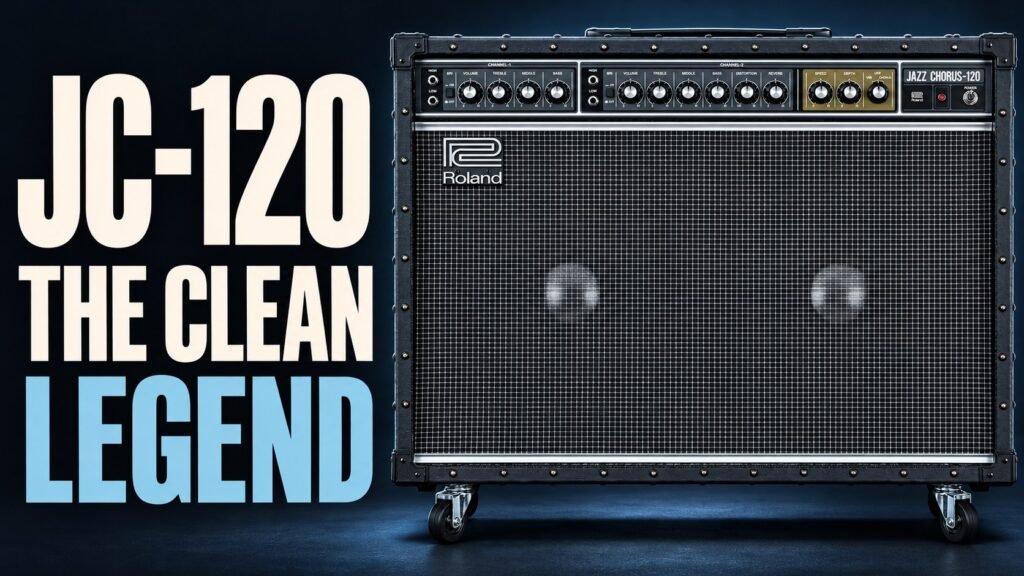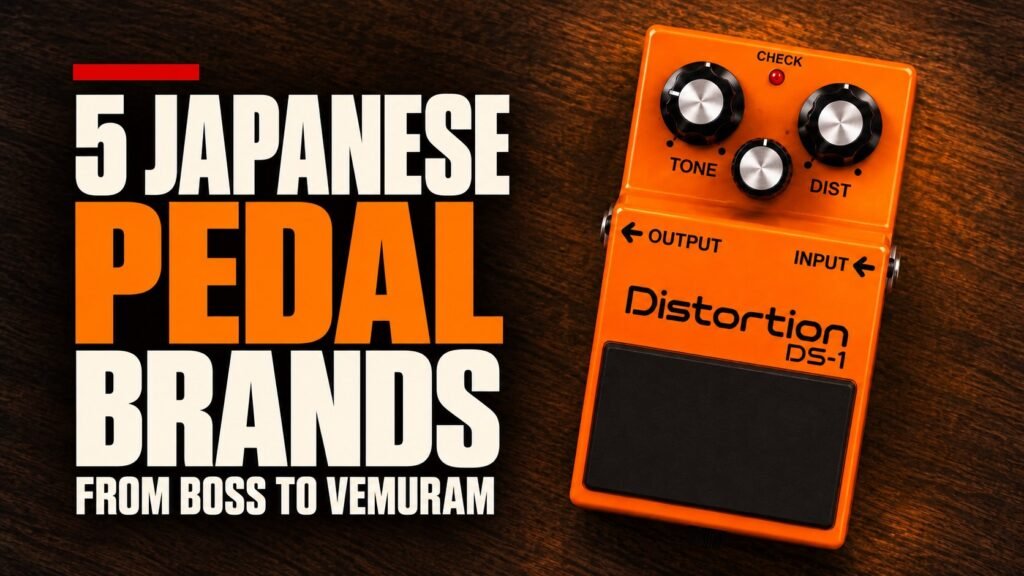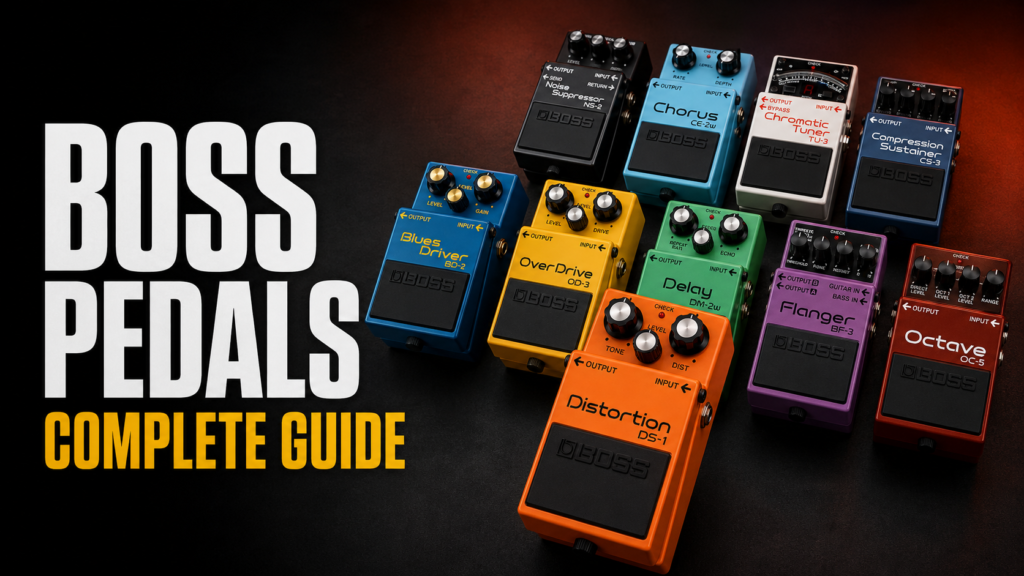
BOSS is the guitar and bass brand of Roland, the Japanese company behind the JC-120 Jazz Chorus. It invented the compact pedal format in 1977, and that same enclosure is still on almost every pedalboard today.
This guide explains what sets BOSS apart, how its pedal lines differ, how to tell a vintage Japan-made unit, and which BOSS to buy first.
BOSS Quick Facts
- Roots: MEG Electronics, Osaka, 1973; merged into Roland in 2018
- Famous for: the compact pedal (1977) and the DS-1, its best-selling model
- Lines: Compact, Waza Craft, 200 and 500 series, GT multi-effects, RC loopers, Katana amps
- Model numbers: letters for the effect (DS = distortion), a W suffix for Waza Craft
- Where made: Japan until the late 1980s for most compacts, then overseas
Start here
- BOSS History: fifty years from the CE-1 to the PX-1
- Which BOSS Should You Buy?: the quick finder
- Waza Craft: all 13 models at a glance
- Vintage BOSS: how to date a Japan-made pedal
- History in Brief
- What Makes BOSS Different
- Which BOSS Should You Buy?
- The BOSS Lineup
- Compact Series: The Pedals That Built Modern Tone
- Waza Craft: Classic BOSS Circuits, Redesigned
- 200 Series: Several Sounds From One Pedal
- 500 Series: Deep Editing for Studio Rigs
- GT, GX and ME: Multi-Effects for Every Budget
- RC Loop Station: Looping for Everyone
- TU Tuners: The Backline Standard
- Katana Amplifiers: BOSS Modeling in a Combo
- Brand Family
- Notable Players
- Buying a Used or Vintage BOSS
- Related Brands
- Final Thoughts
- Frequently Asked Questions
- All BOSS Articles
History in Brief
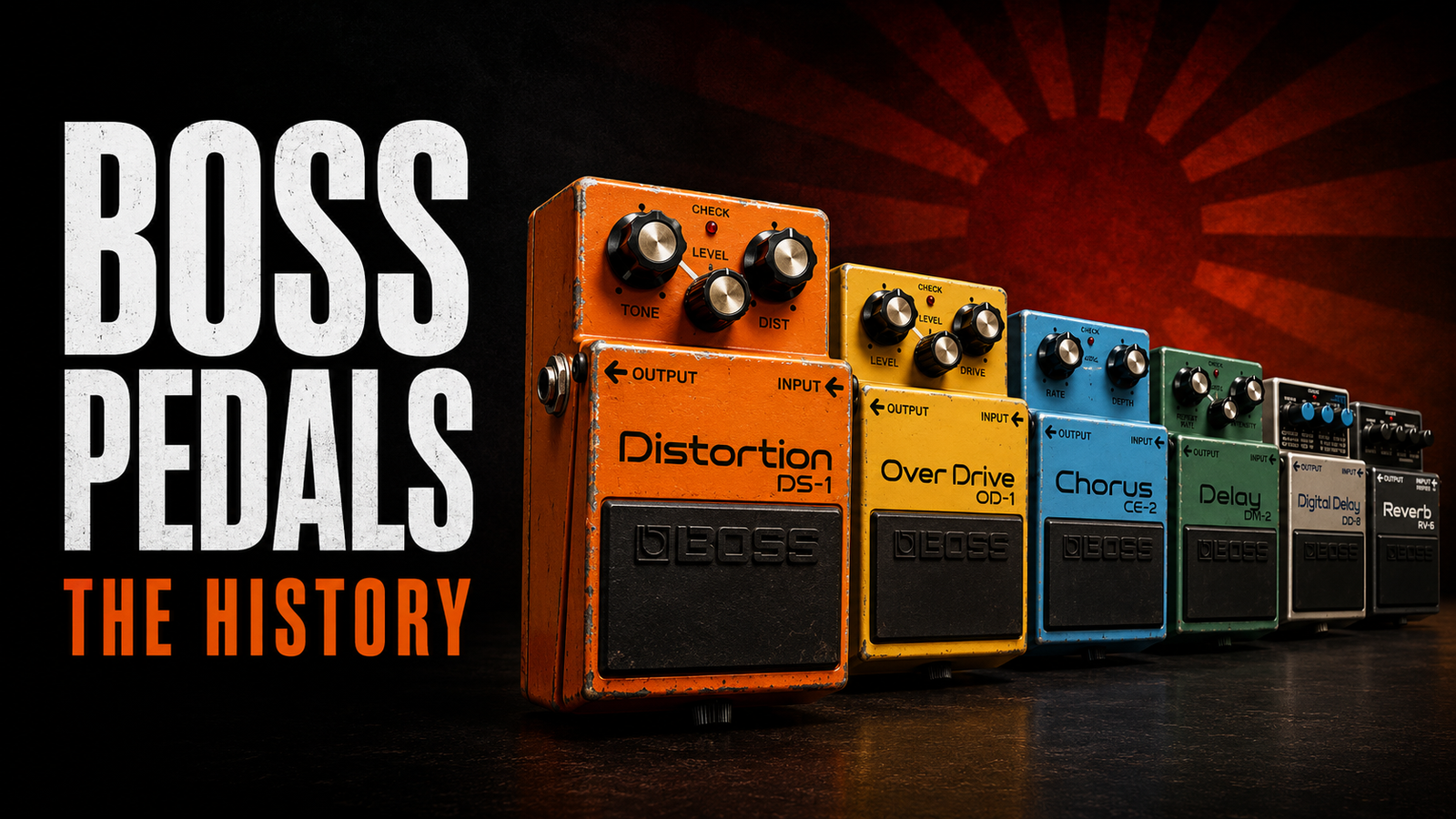
BOSS began as MEG Electronics in Osaka in 1973. Its first effect, the 1976 CE-1 Chorus Ensemble, put the chorus of the Roland JC-120 amp into a pedal, and in 1977 the OD-1, PH-1 and SP-1 launched the compact series that defines the brand.
Deep dive
BOSS History
Prefer the full story? Every key pedal from the CE-1 to the PX-1, with a full timeline.
What Makes BOSS Different
One Enclosure for Fifty Years
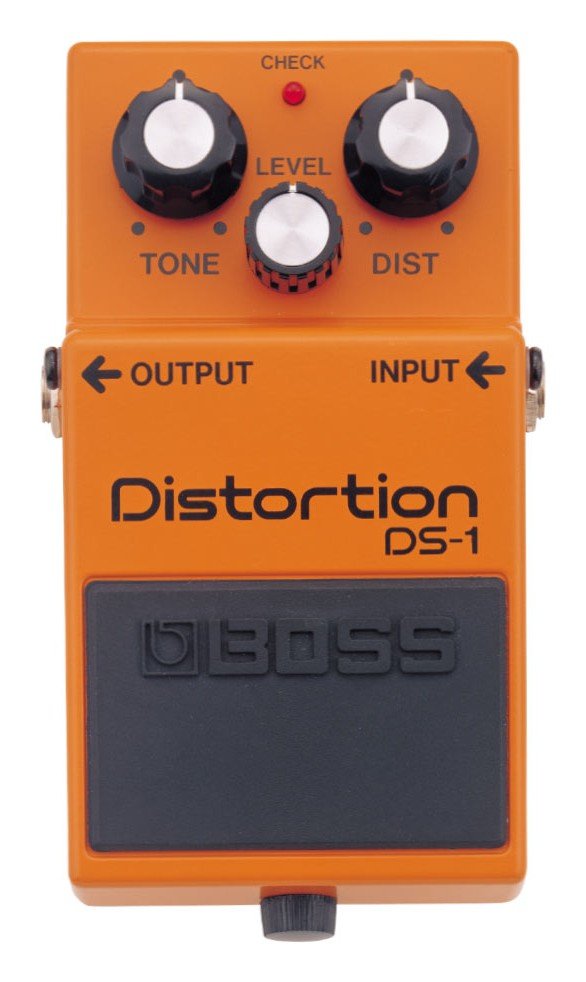
Every compact BOSS pedal shares the same die-cast body and the same large footswitch. That footswitch is a hinged plate that protects the switch inside and doubles as the battery cover, opened with a thumbscrew.
The result for you: learn one BOSS pedal and you can use them all, and a 1980 unit takes up exactly the same board space as a new one.
Buffered Switching: Quiet and Bright
BOSS compacts use electronic switching with a buffered bypass rather than true bypass. You lose the straight-wire signal when the pedal is off, but you gain silent switching, and the buffer keeps your high end intact over long cables and a full board.
Made in Japan, Then and Now
Most compacts were built in Japan until the late 1980s, after which production moved overseas. Parts and circuits changed along the way, so two pedals with the same model number can sound different depending on when they were made. That is the whole basis of the vintage BOSS market.
There is also a quieter Japanese story. Walk into almost any rehearsal studio in Tokyo and the house amp is a Roland JC-120, the amp whose chorus became the CE-1. When I was living in Japan, I do not think I ever booked a studio room that did not have one waiting.
Which BOSS Should You Buy?
| You want… | CompactStart here | Waza CraftRefined classic | 200 / 500 / GTPresets and depth |
|---|---|---|---|
| OverdriveDrive | SD-1, BD-2 | SD-1W, BD-2W | OD-200 |
| DistortionGain | DS-1, MT-2 | DS-1W, MT-2W, HM-2W | OD-200 |
| ModulationChorus and more | CH-1 | CE-2W, DC-2W | MD-200, MD-500 |
| DelayEcho | DD-8 | DM-2W | DD-200, DD-500 |
| TuningFirst on the board | TU-3 | TU-3W | TU-3W |
| Everything in oneMulti-effects | ME-90 | GX series | GT-1000 |
My pick
The SD-1 Super OverDrive
If you are buying your first BOSS, start with the SD-1. It works as a boost in front of a driven amp or as your main overdrive, and it is the easiest way to understand what BOSS is about.
The BOSS Lineup
Compact Series: The Pedals That Built Modern Tone
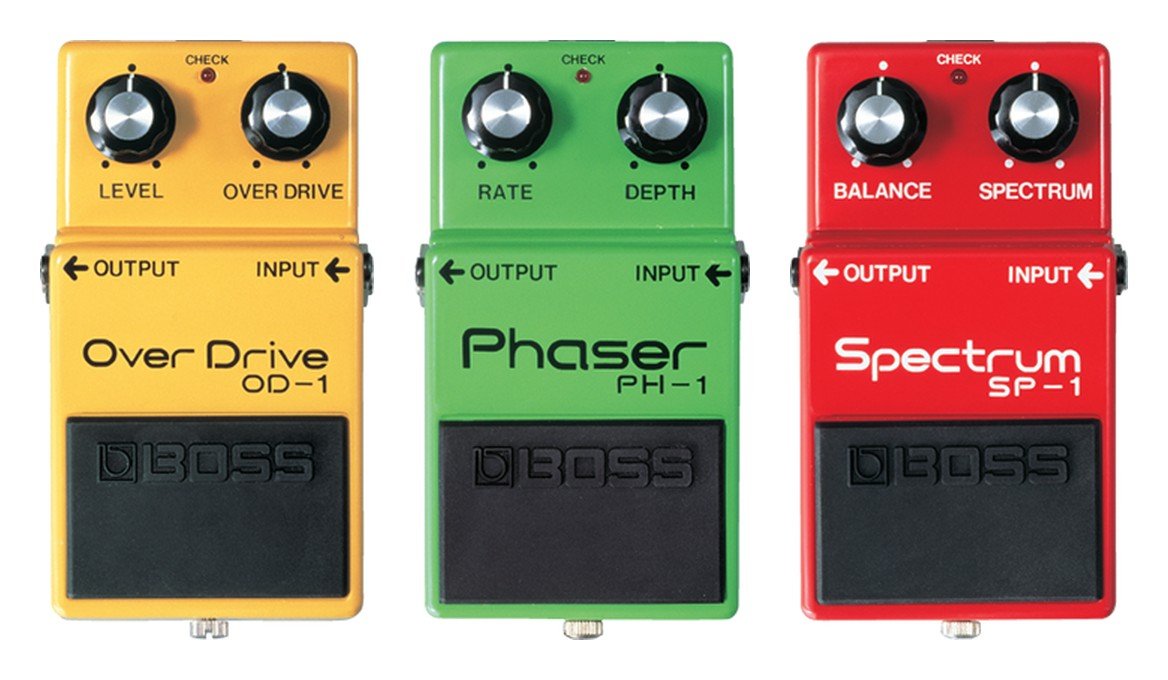
The core of the brand. More than 130 compact models have been released since 1977, covering drive, modulation, delay, reverb, EQ, tuning and utility, all in the same enclosure and all running on a standard 9V PSA adapter.
How to choose: the SD-1 is the safest first drive. The BD-2 is for amp-like touch response, the DS-1 for the classic distortion on countless records, and the MT-2 for maximum gain with a powerful EQ that takes some learning.
Waza Craft: Classic BOSS Circuits, Redesigned
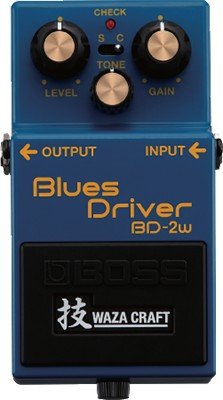
Launched in 2014, Waza Craft takes BOSS classics and rebuilds them with revised circuits and selected components. “Waza” is Japanese for art and technique. Most models have a Standard / Custom switch: Standard recreates the original sound, usually with lower noise, and Custom adds a new voice.
| Model | Based on | What the Waza version adds |
|---|---|---|
| DS-1W | DS-1 | Custom mode with focused mids for leads |
| MT-2W | MT-2 | Lower noise; bigger, more open Custom mode |
| HM-2W | HM-2 (1983-1991) | The chainsaw tone returns; Custom adds gain |
| BD-2W | BD-2 | All-discrete analog circuit, lower noise |
| SD-1W | SD-1 | All-discrete analog circuit; more gain in Custom |
| BP-1W | CE-1 and RE-201 preamps | Two vintage preamp voices plus a clean boost |
| FZ-1W | Vintage fuzz research | Vintage and Modern modes, stable silicon design |
| TB-2W | Tone Bender MK II | Built with Sola Sound; about 3,000 units |
| DM-2W | DM-2 (discontinued 1984) | Analog delay up to 800 ms in Custom mode |
| VB-2W | VB-2 (1982-1986) | A rare vibrato returns; deeper Custom mode |
| CE-2W | CE-2 and CE-1 | CE-2 chorus, CE-1 chorus and vibrato; stereo |
| DC-2W | DC-2 and Roland SDD-320 | 20 Dimension sounds across two modes |
| TU-3W | TU-3 | Premium buffer, true bypass option, High Brightness mode |
How to choose: buy Waza Craft when you already like the standard version and want more range from it. If you are not sure you like the effect yet, start with the regular compact, which shares the same core voice.
200 Series: Several Sounds From One Pedal
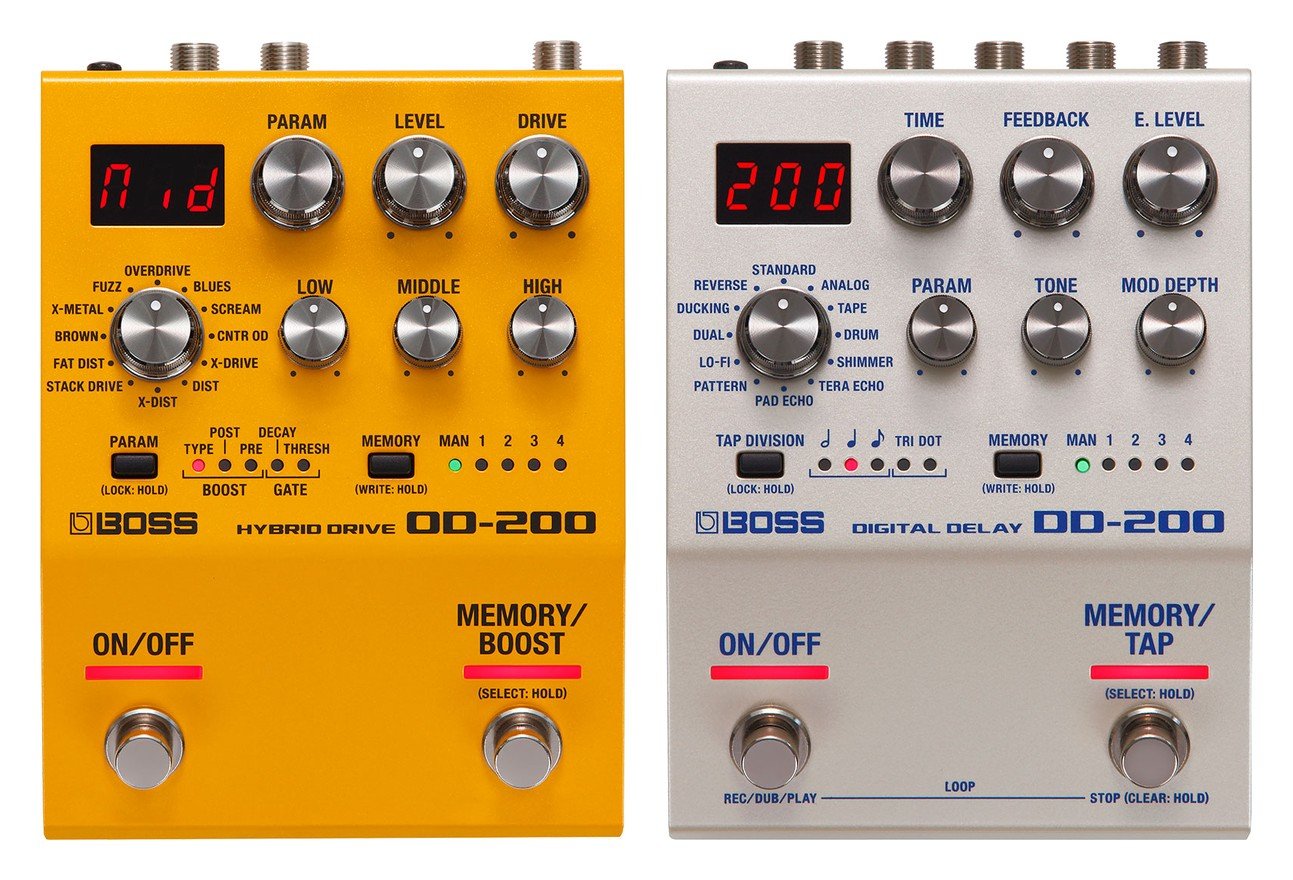
A slightly wider enclosure with a display, memory slots, stereo I/O and MIDI. Models such as the OD-200, DD-200, MD-200 and RV-200 give you several switchable sounds from one effect.
How to choose: take a 200 series pedal when you need two or three sounds from one effect. If you only ever use one setting, a compact does the same job for less.
500 Series: Deep Editing for Studio Rigs
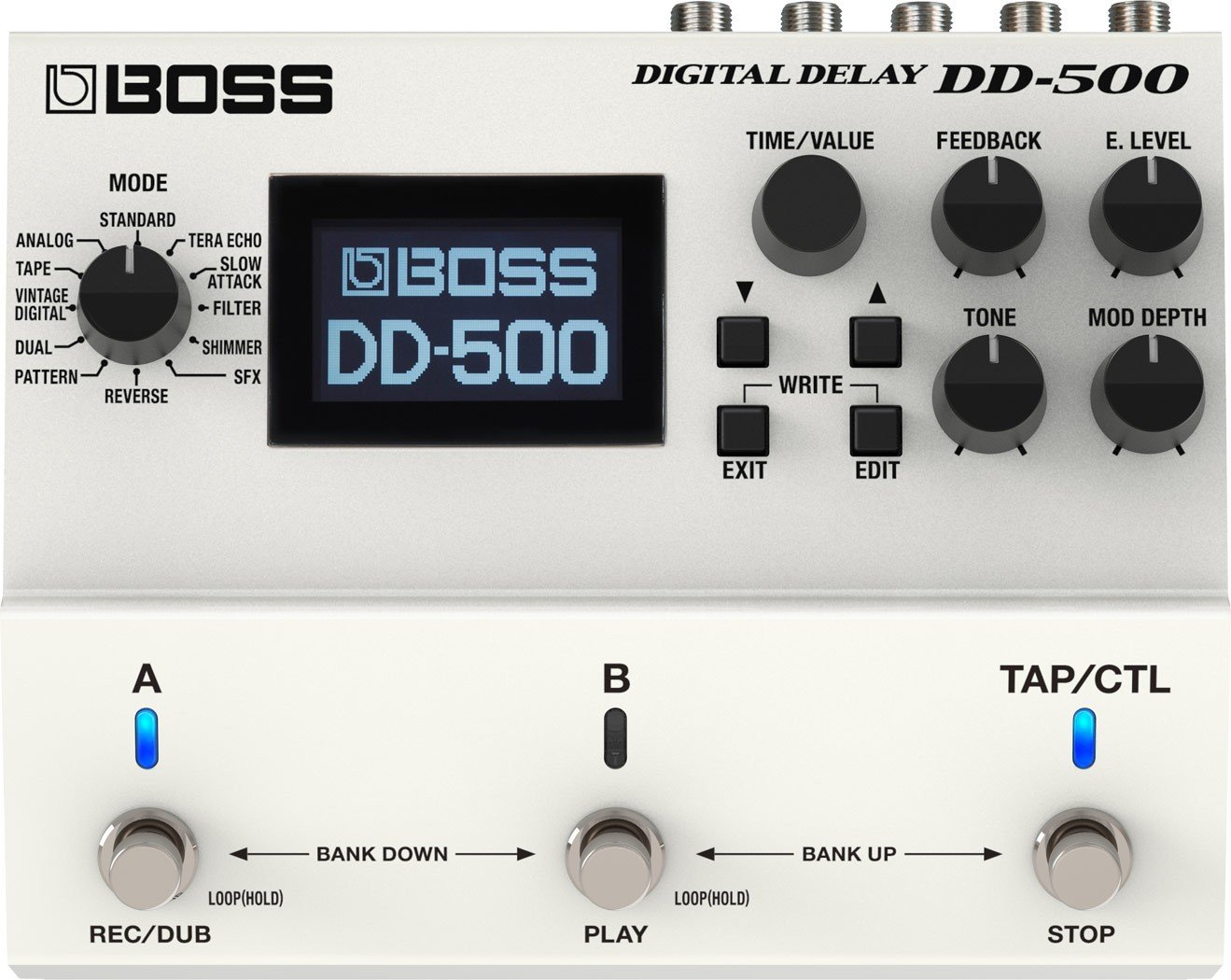
The DD-500, MD-500 and RV-500 go deep: many algorithms, detailed editing, patch memories and MIDI. They are for switched rigs and studio work where you recall precise settings. If you never save a preset, you will not use what you are paying for.
GT, GX and ME: Multi-Effects for Every Budget
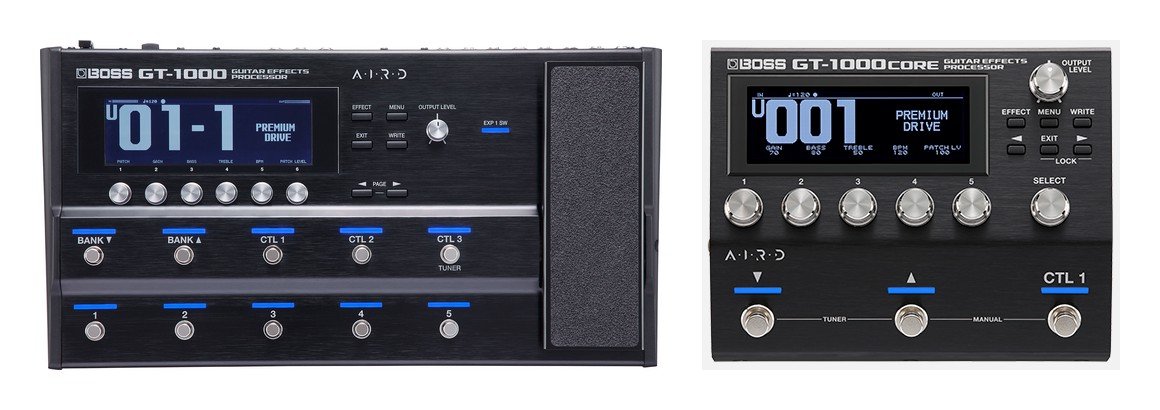
BOSS has built floor multi-effects since the 1987 ME-5. Today the ME line keeps a knob-per-function layout, the GX line covers the middle, and the GT-1000 sits at the top with studio-grade amp modeling and routing.
RC Loop Station: Looping for Everyone
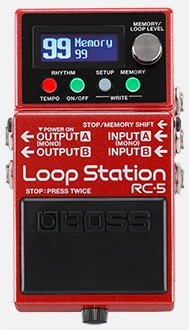
The 2001 RC-20 took looping from a studio trick to something players do anywhere. Today the range runs from the simple RC-1 to drum-equipped and multi-track models. Choose the RC-1 for practice over your own chords, and a model with rhythms if you want a drum pattern to lock to.
TU Tuners: The Backline Standard
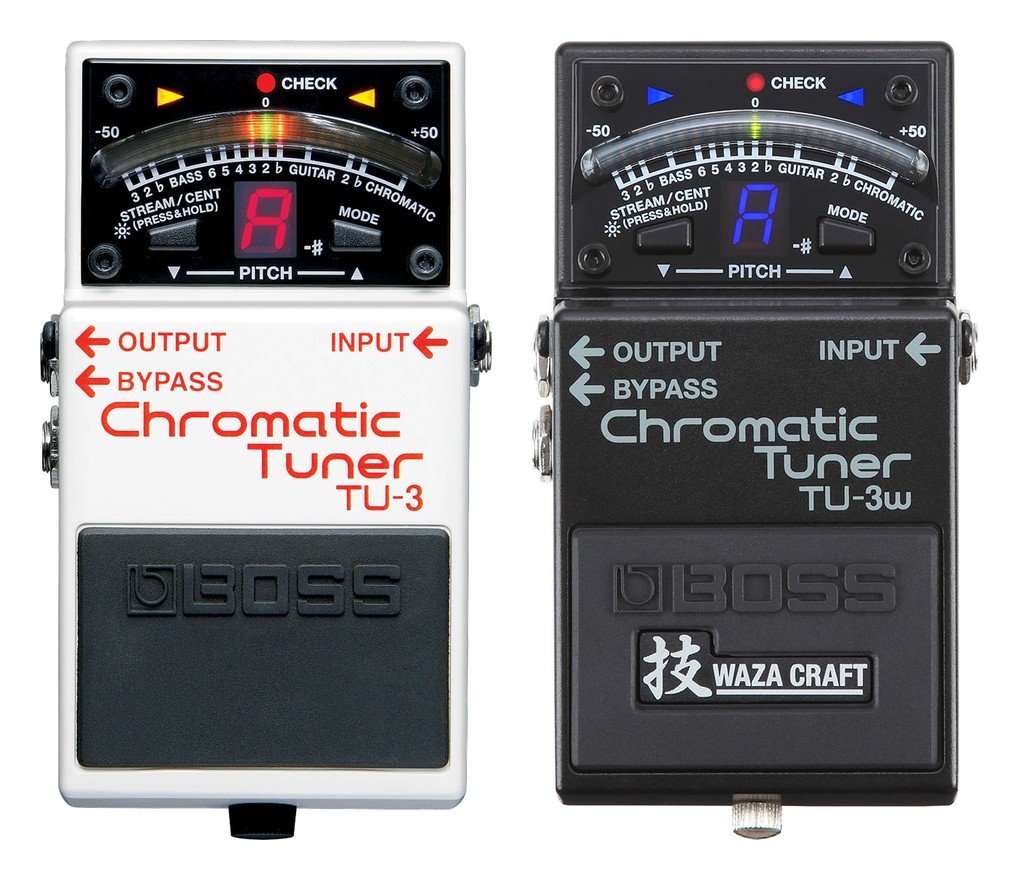
BOSS pedal tuners are the default on rental backlines worldwide. The TU-3 is the workhorse and also buffers your signal; the TU-3W adds a premium buffer you can switch off for true bypass.
Katana Amplifiers: BOSS Modeling in a Combo
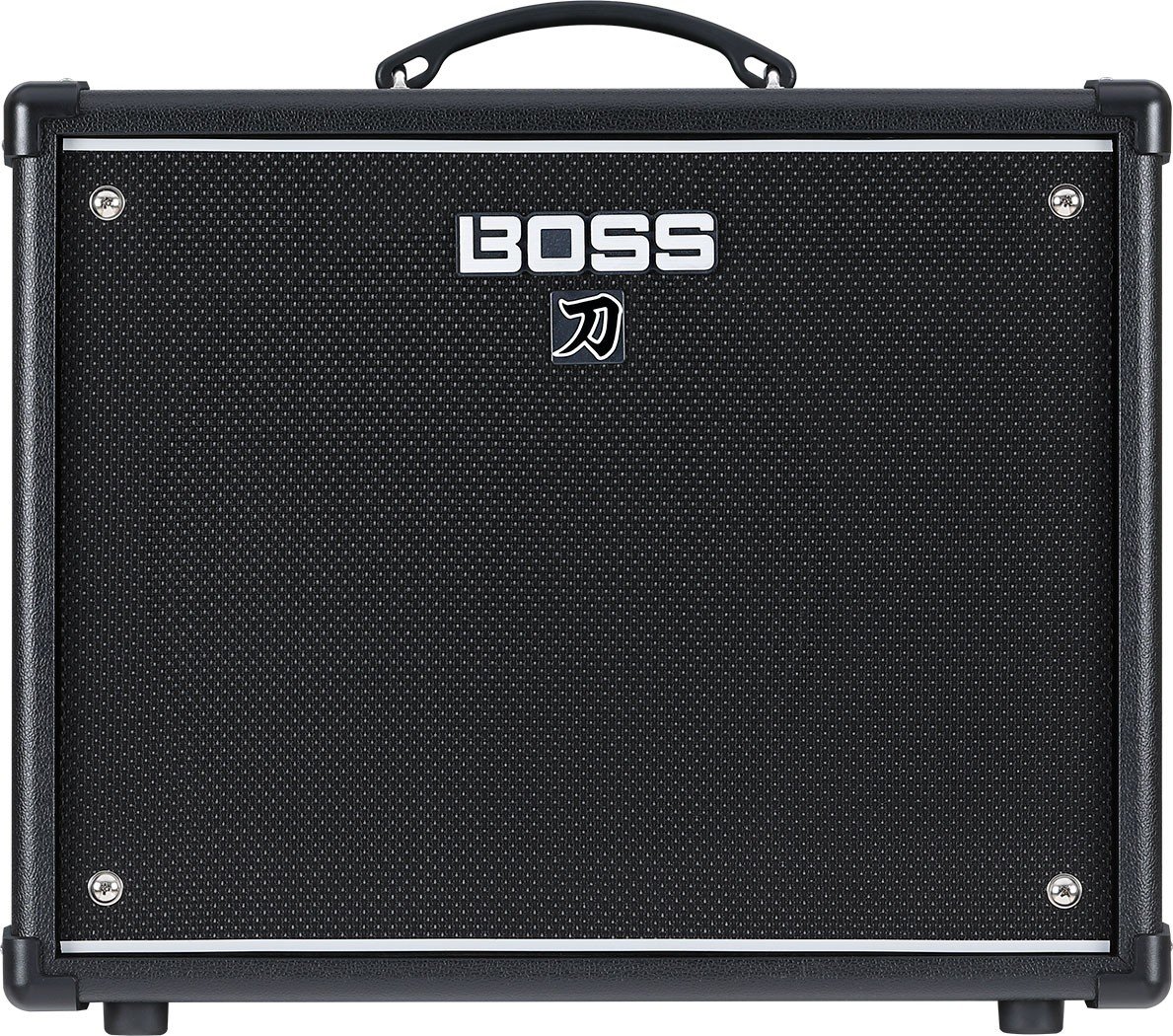
Launched in 2016, the Katana line puts BOSS amp modeling into conventional combos and heads, from small practice models to stage amps, with power control that keeps the same sound usable at home.
Brand Family
| Brand | Position |
|---|---|
| BOSS | Guitar and bass: pedals, multi-effects, loopers, tuners, Katana amps |
| Roland | Parent company: synths, drums and the JC-120 amp behind the CE-1 |
| Waza Craft | Premium line of redesigned BOSS classics |
| EURUS | BOSS guitars; the Japan-made GS-1 with onboard synth arrived in 2021 |
Notable Players
| Player | BOSS connection |
|---|---|
| Kurt Cobain (Nirvana) | DS-1 and DS-2 distortion |
| Entombed | HM-2 with the knobs maxed: the Swedish death metal chainsaw tone |
| John Frusciante (Red Hot Chili Peppers) | DS-2 and CE-1 |
Buying a Used or Vintage BOSS
BOSS is one of the few brands where the cheap pedal and the collectible pedal share the same model number. Check these before you pay vintage money:
- Country of origin: look for “MADE IN JAPAN” on the label on the base.
- Screws: the earliest units use a silver screw; collectors call this the silver screw era.
- Power marking: ACA marks older pedals designed for an adapter that is no longer made; PSA marks the modern standard.
- Serial number: found inside the battery compartment; use it to estimate the build date (see below).
- Model years: compare the date with when that model moved overseas; for many models this was around 1988.
BOSS has never published how its serial numbers work. The formats below are the ones collectors have documented, so treat them as a guide and cross-check with the other clues.
| Period | Format | How to read it |
|---|---|---|
| 1977-1981 | 4-5 digit batch number stamped in the battery compartment | 6300 = October 1977, rising by 100 each month; not unique to one pedal |
| 1981-1989 | 6-digit sticker | First two digits = month: 02 = January 1981, rising by one each month |
| 1989-2010 | Two letters + five digits | Second letter + first digit = month: A0 = March 1989, rising by one each month; unique per pedal |
Related Brands
Final Thoughts
Some players avoid BOSS because everyone has one, which gets it backwards. Because almost every guitarist has heard these circuits, the catalog works as a shared reference point for the whole pedal world.
If you are starting a board, start with an SD-1. If you are chasing something specific, the vintage Japan-made units are worth the hunt.
Are BOSS pedals still made in Japan?
Most compact pedals were made in Japan until the late 1980s and have been built overseas since. Check the label on the base of any pedal to see where it was made.
What is the difference between a BOSS compact and a Waza Craft pedal?
Waza Craft pedals redesign classic BOSS circuits with selected parts, and most add a Custom mode alongside a Standard mode that recreates the original sound.
Which BOSS pedal should a beginner buy first?
The SD-1 Super OverDrive. It works as a boost or as a main overdrive and is an easy way to learn what BOSS pedals do.
Do BOSS pedals have true bypass?
No. BOSS compacts use buffered bypass, which keeps switching silent and protects your high end over long cables. The TU-3W tuner lets you switch its buffer off for true bypass.
What power supply do BOSS pedals need?
Current BOSS compacts use a 9V PSA adapter. Some older pedals were designed for the ACA adapter, which is no longer made.
How can I tell how old a BOSS pedal is?
Check the serial number inside the battery compartment along with the country of origin, screw color and ACA or PSA marking. BOSS has not published its serial format, so use these clues together.
Frequently Asked Questions
All BOSS Articles
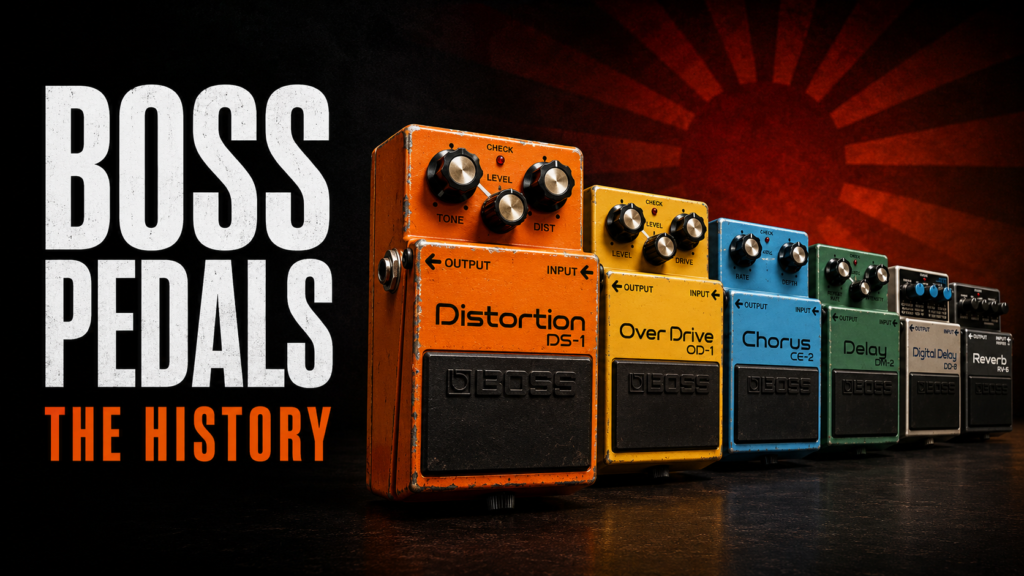
BOSS History: 50 Years of Japanese Compact Effects
Small, colorful and built to last: BOSS pedals are everywhere. Even if you have never…