Greco original models are the guitars Greco designed itself while it was famous for copying Gibson and Fender. From the 1960s Shrike to the RW-700, the MR, GO, Mirage and Boogie, this article covers each one, what the old catalogs show, and which modern Greco carries it on. For the brand’s full story, see Greco History.
Greco Original Models Quick Facts
- Earliest original: the Shrike (1960s), with a patented boomerang-shaped L split-coil pickup
- Main era: 1974 (RW-700) to 1979 (Boogie)
- First true original series: MR series (1975)
- Best known: the Mirage (1978), sold overseas as the Ibanez Iceman
- Wound down: during the 1980s; the MR series left the catalog in 1984
Greco Original Models at a Glance
| Model | Year | What made it original | Modern successor |
|---|---|---|---|
| Shrike | 1960s | Patented boomerang-shaped L split-coil pickup | – |
| RW-700 | 1974-1975 | Ron Wood model with a special “The Greco” headstock logo | – |
| MR series | 1975 | Symmetrical double-cutaway body with access to the 24th fret | – |
| GO series | 1977 | Neck-through construction and active circuitry | – |
| Mirage | 1978 | Japanese-born explorer-style body, co-developed with Hoshino Gakki | GM series |
| Boogie | 1979 | 628mm medium scale, reversed headstock, 2-and-1 single-coil layout | BGW series |
Before the Copies: The Shrike
Greco’s history goes back to the early 1960s, when it sold both acoustic and electric guitars. Even in that early lineup there was an inventive original called the Shrike. It carried a patented, boomerang-shaped, L-split coil pickup.
So even in its earliest days, alongside Telecaster-type and ES-335-style guitars, Greco already had ideas of its own. The originals below came later, out of the 1970s copy era.
The RW-700 (Ron Wood Model)
Released in 1974 and made only through 1975, the RW-700 was a signature model for Ron Wood, then huge with the Faces and later the Rolling Stones. Its headstock carries a special “The Greco” logo, likely a nod to the “The Gibson” logo used from the early 1900s into the 1930s.
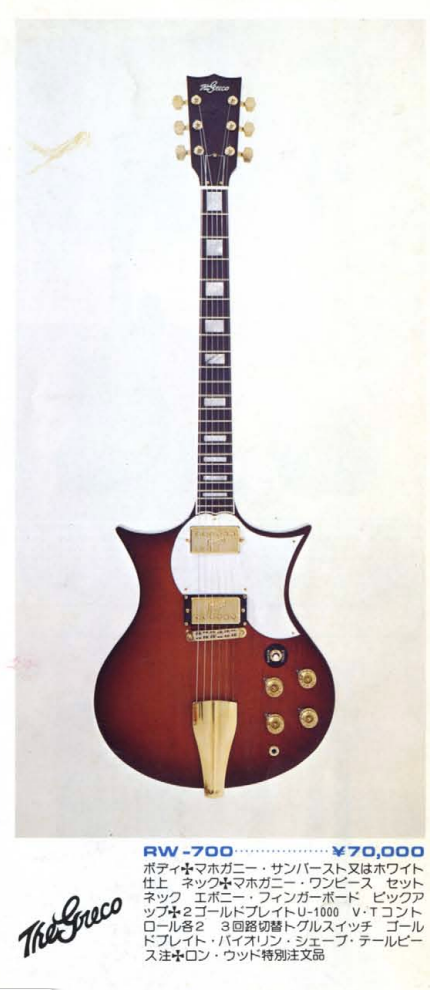
The catalog lists it at ¥70,000 with a mahogany body in sunburst or white, a one-piece mahogany set neck, an ebony fingerboard, gold-plated U-1000 pickups, two volume and two tone controls and a 3-way toggle. It also marks the guitar as a Ron Wood special-order model.
The MR Series (Mick Ralphs Model)
The 1975 MR series was Greco’s first true series of its own, growing out of an order from Bad Company guitarist Mick Ralphs. While keeping Gibson-style specs, it featured a bold symmetrical, double-cutaway body allowing easy reach all the way to the 24th fret.
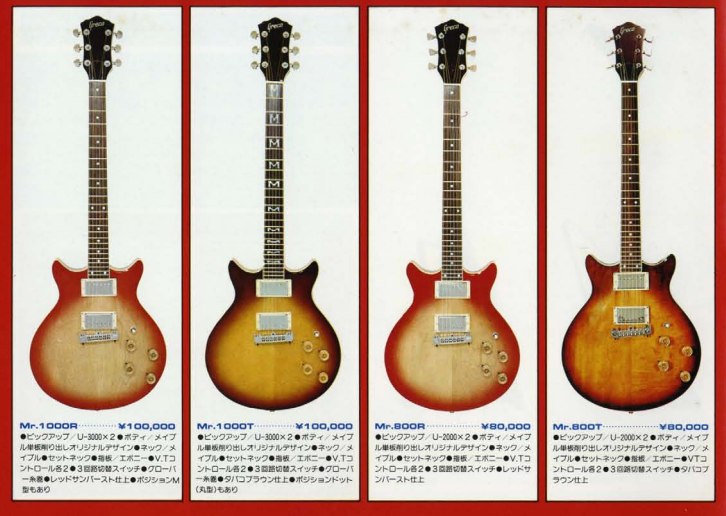
The catalog page shows two grades. The Mr.1000 has U-3000 pickups and the Mr.800 has U-2000 pickups. Both have a carved solid maple body, a maple set neck and an ebony fingerboard. “R” is red sunburst and “T” is tobacco brown.
The GO Series
Arriving in 1977, the GO series featured advanced specs for its time, including neck-through construction and active circuitry. Greco was heading in its own direction to handle styles from rock to fusion. The GO II followed in 1979 and the GO III in 1980.
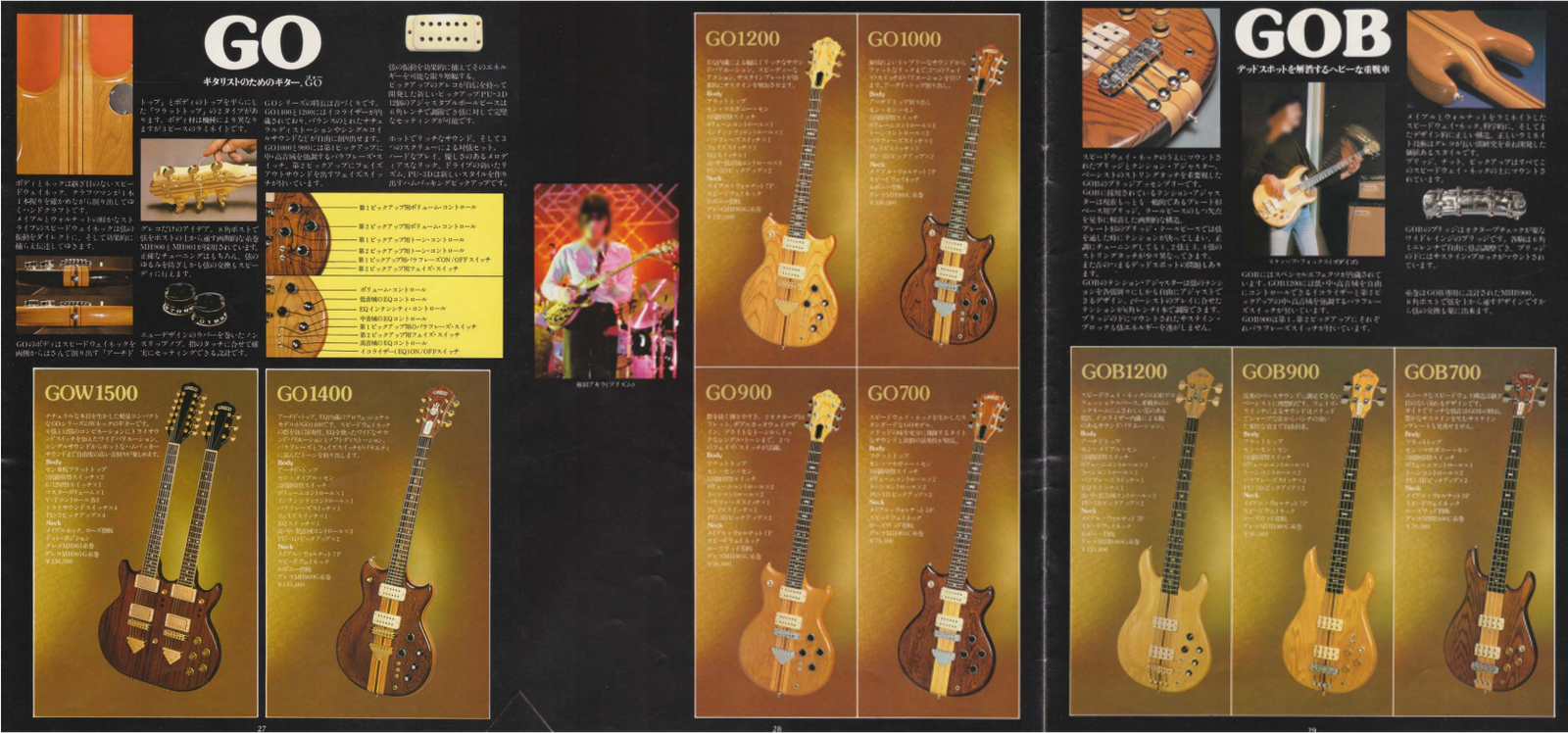
The catalog spread shows how far the idea went. There was a double-neck GOW1500 and a matching GOB bass line, and the control diagram lists pickup phase switches and EQ controls.
The Mirage
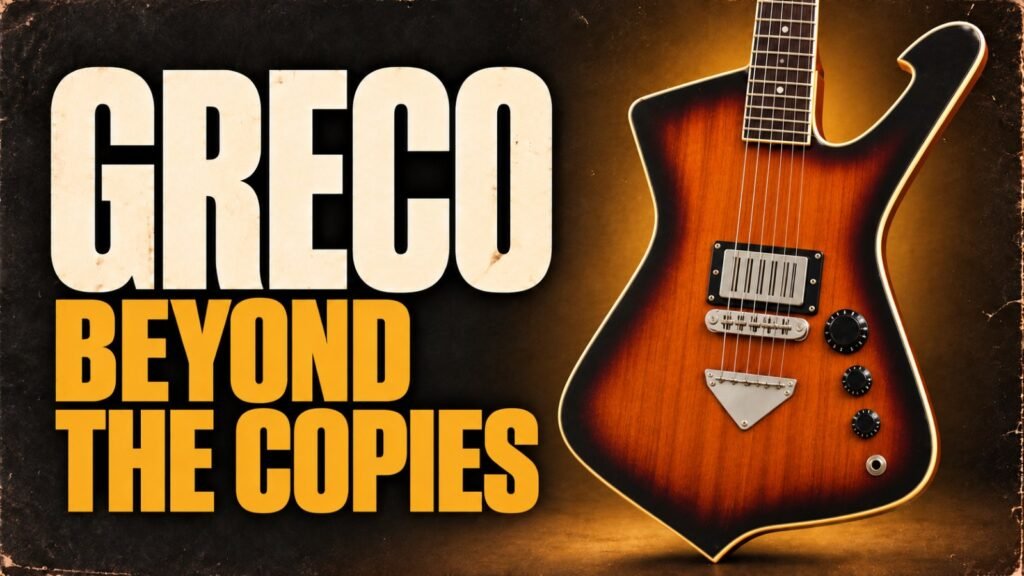
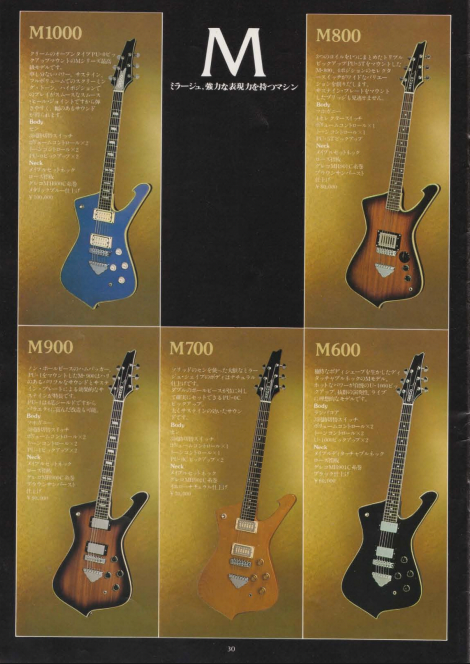
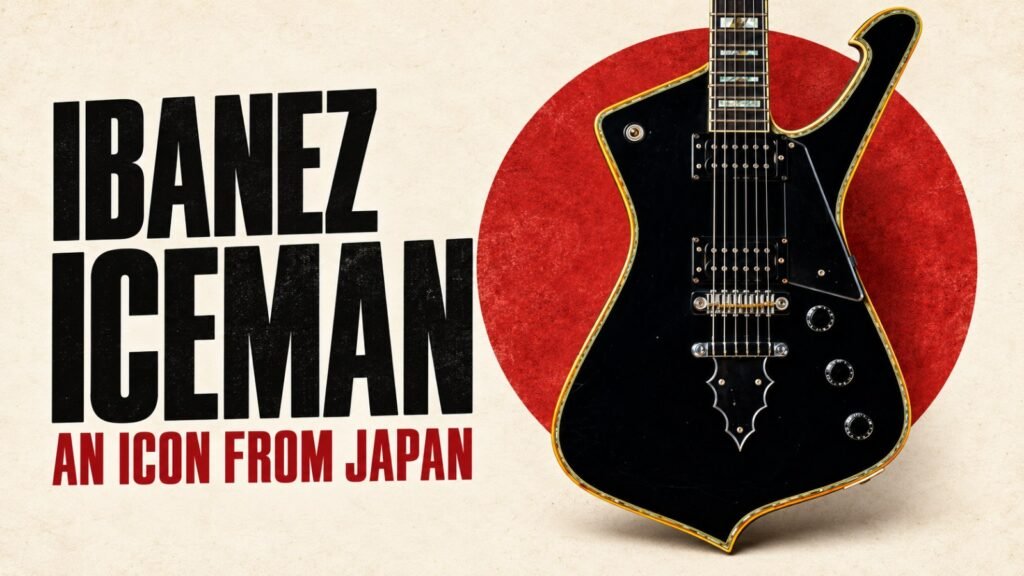
Launched in 1978, the Mirage was a Japanese-born explorer-style guitar developed jointly by Kanda Shokai, Hoshino Gakki and FujiGen. FujiGen built it. Kanda Shokai sold it in Japan as the Greco Mirage, while Hoshino Gakki sold it overseas as the Ibanez Iceman. The Iceman’s adoption by KISS’s Paul Stanley helped the Mirage take off at home. For the Ibanez side, see the Ibanez Brand Guide.
The Boogie
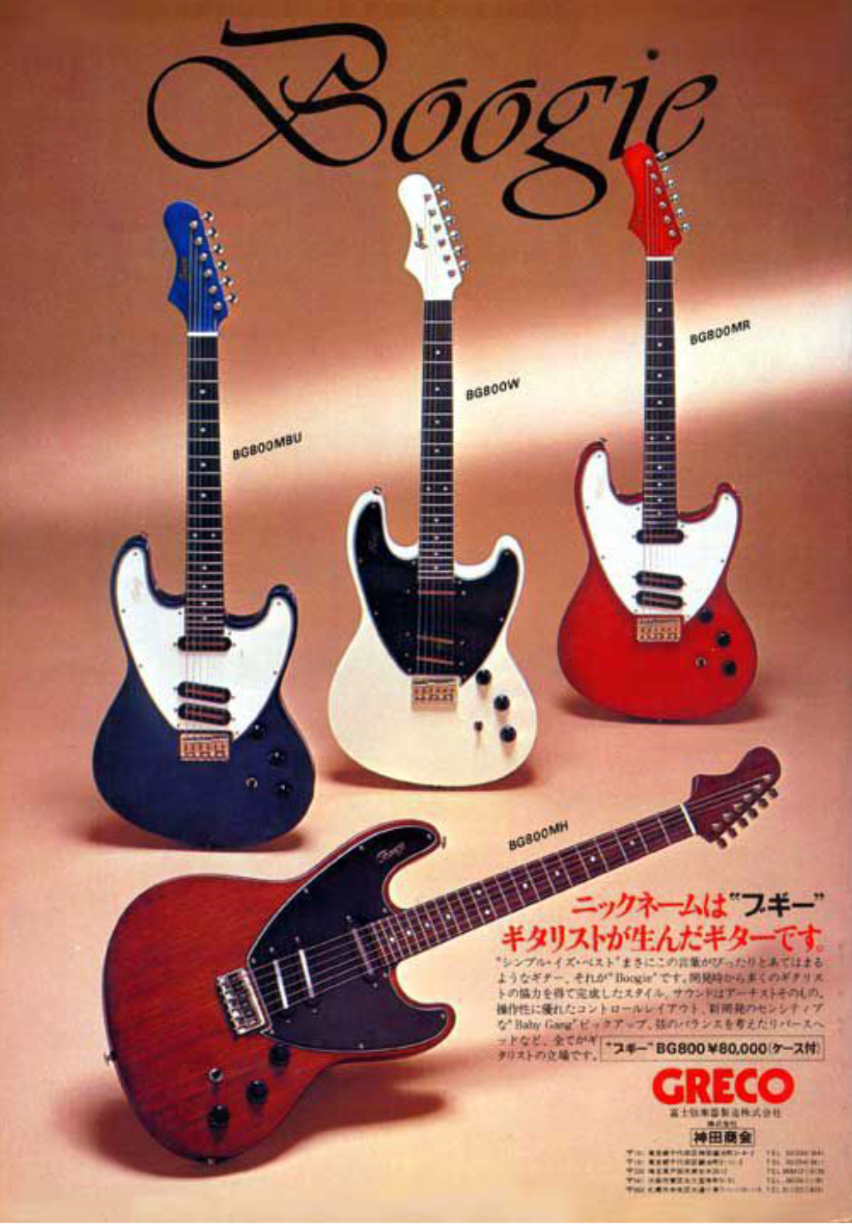
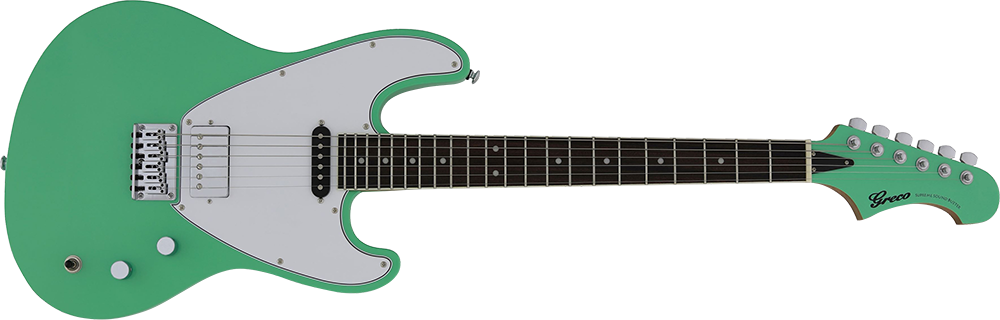
Born in 1979 with the fusion boom in mind, the Boogie had a Fender-ish but original design: a medium-scale neck (628mm), a wraparound pickguard, a reversed headstock, and an unusual 2-and-1 single-coil layout that is actually an S-H setup.
Why the Originals Were Wound Down
Fender Japan was founded in 1982 with Kanda Shokai and FujiGen. Alongside that partnership and the changing music trends of the 1980s, Greco’s original models were wound down: the Mirage, GO, GOB bass, GO II and GO III. In 1984, the entire MR series dropped out of the catalog.
Greco Originals Today: GM and BGW
Two of these designs live on in today’s lineup.
The GM Series (Modern Mirage)
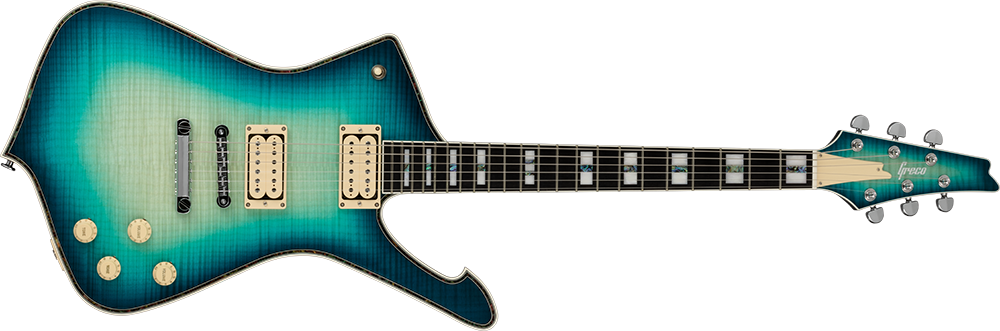
The GM-STD and GM-CST bring the classic Mirage up to modern spec: a mahogany body and neck, rosewood fingerboard, two volumes and two tones, and a pair of Alnico 5 humbuckers. The GM-CST adds multi-ply binding, gold parts and a figured top. The thin (about 40mm at the center) arched-top body looks deep but stays light.
The BGW Series (Modern Boogie)
The BGW series updates the Boogie with an alder body, roasted maple neck and pau ferro fingerboard on a bolt-on joint. The BGW22 SH runs a bridge humbucker with a push-pull coil split, while the BGWT22 goes the Telecaster route with two single coils. Both include locking tuners.
For which Greco to buy today, see the Greco Brand Guide. For a broader view of the brand’s timeline, the Greco guitars entry on Wikipedia is a useful companion.
FAQ
Is the Greco Mirage the same guitar as the Ibanez Iceman?
They come from the same project. Kanda Shokai, Hoshino Gakki and FujiGen developed it together and FujiGen built it. In Japan it was sold as the Greco Mirage; overseas it was sold as the Ibanez Iceman.
What was the first Greco original series?
The MR series of 1975. It grew out of an order from Bad Company guitarist Mick Ralphs and was Greco’s first true series of its own.
What made the Greco GO series different?
Neck-through construction and active circuitry, which were advanced specs in 1977. The GO II followed in 1979 and the GO III in 1980.
When did Greco stop making its original models?
During the 1980s. The Mirage, GO, GOB bass, GO II and GO III were wound down, and the whole MR series left the catalog in 1984.
Does Greco still make the Mirage or the Boogie?
Not under those names, but the GM series is a modern Mirage and the BGW series is a modern Boogie.
More Greco guitar articles
Ibanez Iceman and Greco Mirage: The Surprising Japanese Twins Born at FujiGen (1975-1978)
The Ibanez Iceman is one of Japan’s boldest guitar designs, and around the same time…
Greco BM-900: The Remarkable First Brian May Red Special Copy and How It Differs
The Greco BM-900 (also written BM900) is often considered the very first Brian May copy…
Greco History: The Legendary Rise from the EG-360 to Fender Japan (1960s-1980s)
Greco history runs from a 1960s guitar brand to the Japanese copy era’s biggest name,…
Japanese Les Paul Copies: Tokai vs Greco vs Burny (1978-1982)
Japanese Les Paul copies from the late 1970s are some of the most faithful Les…
Greco Guitars: Super Real, Project Series, Mirage and Which One to Buy
Greco guitars come from Kanda Shokai and have been built by FujiGen since 1968. It…
Greco Super Real Series: The Peak Years
Overview & Key Points The Greco Super Real Series was a line of Les Paul-style…