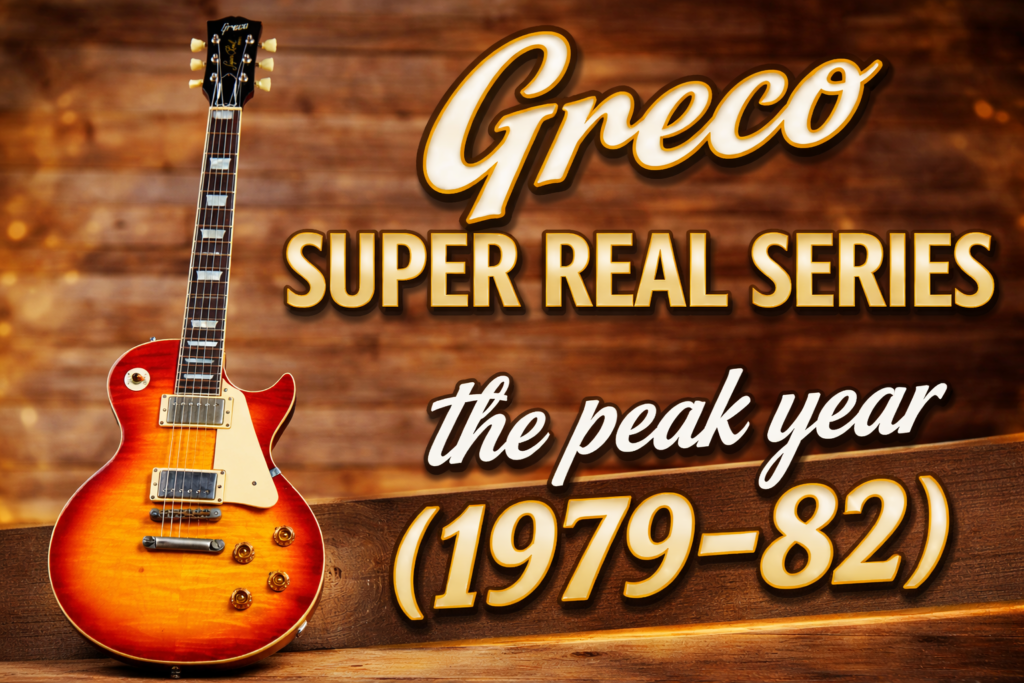
The Greco Super Real is one of the most respected Japanese Les Paul copies of the lawsuit era. Built by FujiGen for Kanda Shokai’s Greco brand between roughly 1979 and 1982, it set out to reverse-engineer a 1960 Les Paul, and Greco’s own catalog documents that effort spec by spec.
Greco Super Real Quick Facts
- Production years: Roughly 1979–1982
- Brand and factory: Greco (Kanda Shokai), built by FujiGen
- Flagship: EGF1800, listed at ¥180,000 in the 1980 catalog
- Signature pickup: DRY, Greco’s PAF-style humbucker
- Value today: Roughly $2,000–$6,000 used
Start here
- Taking a 1960 Les Paul Apart: the details Greco copied
- DRY, Screamin’ and The Groove: the Super Real pickups
- The Lineup and Decals: how to identify a model
- Which Super Real Should You Look For?: the quick finder
- What Is the Greco Super Real?
- Who Built It: Kanda Shokai and FujiGen
- “We Checked 1960 All Over Again”
- DRY, Screamin’ and The Groove: The Super Real Pickups
- Elliott Easton and the Super Real
- The Lineup and How to Identify a Model
- What Happened Next and What They Are Worth
- Which Super Real Should You Look For?
- A More Affordable Alternative: Orville
- Final Thoughts
- Frequently Asked Questions
What Is the Greco Super Real?
By the end of the 1970s, Gibson’s own Les Pauls had drifted away from their late-1950s specs, while Japanese makers were getting remarkably good at reading those old originals. Tokai had the Les Paul Reborn, Burny chased the old Gibson voice, and Greco answered with the Super Real. Winning that race meant getting the wood, the neck and the sound right, not just the look.
My Take
What draws me to the Super Real is the obsession behind it: Greco took a 1960 Les Paul apart and copied it down to the details, and FujiGen built it properly. Best of all, it put real vintage specs within reach at a reasonable price.
Who Built It: Kanda Shokai and FujiGen
Greco was the brand of Kanda Shokai, a Tokyo distributor. The guitars themselves came from FujiGen, the factory that was also building Ibanez guitars for export and, from 1982, the first Fender Japan guitars. When people praise the build quality of these Grecos, that factory is what stands behind it.
Greco’s catalog shows the process in concrete detail: maple selected in Canada and imported directly, dried until it reached a moisture content of 5 to 6 percent, a sealed finishing room behind double curtains and an air curtain, and straight-grained neck stock seasoned for years before it was cut.
“We Checked 1960 All Over Again”
The catalog’s central claim is bold: Greco went back to a 1960 Les Paul and checked everything, from the body wood and shape to the parts, pickups, controls and “right down to the grain filler under the finish.” More than twenty checkpoints were analyzed. These are the ones that stand out.
What Greco copied from the 1960 Les Paul
Chart: MIJ Guitar Guide, based on the Greco catalog.
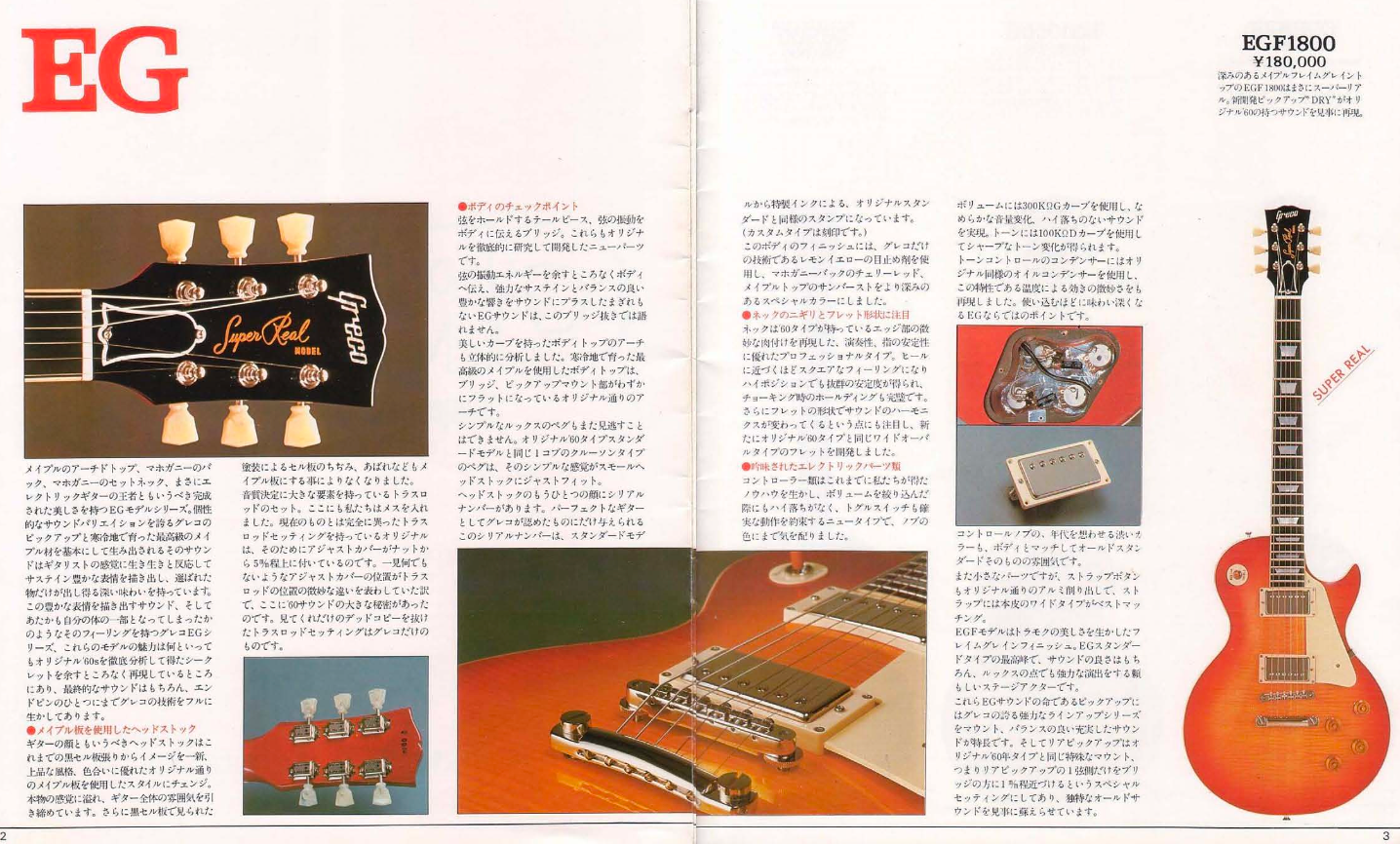
The finish gets its own story. The upper models wear flame maple, the figure the Japanese call tora-moku (tiger grain), and the lemon-yellow filler gives many Super Reals a warmer, more yellow burst than other makers’ copies, closer to a tangerine burst. For some buyers that color is a reason to seek one out.
DRY, Screamin’ and The Groove: The Super Real Pickups
Greco’s catalog traces a lineage from its earlier U series pickups (the U-1000 and U-2000) to three new designs. The star is the DRY, pitched as bringing back the rare “PAF sound” with U.S.-made coil wire and a special magnet.
Chart: MIJ Guitar Guide, based on the Greco catalog. Greco’s humbuckers of this era are widely reported to have been made by Maxon (Nisshin Onpa).
Not every Super Real carries a DRY. In the 1980 catalog, the EGF1000 and EG900 are listed with DiMarzio PAF pickups, while the EG1000C uses the DRY. Specs also shifted between years, so when you shop used, check which pickups are actually fitted. It matters for both tone and value.
Elliott Easton and the Super Real
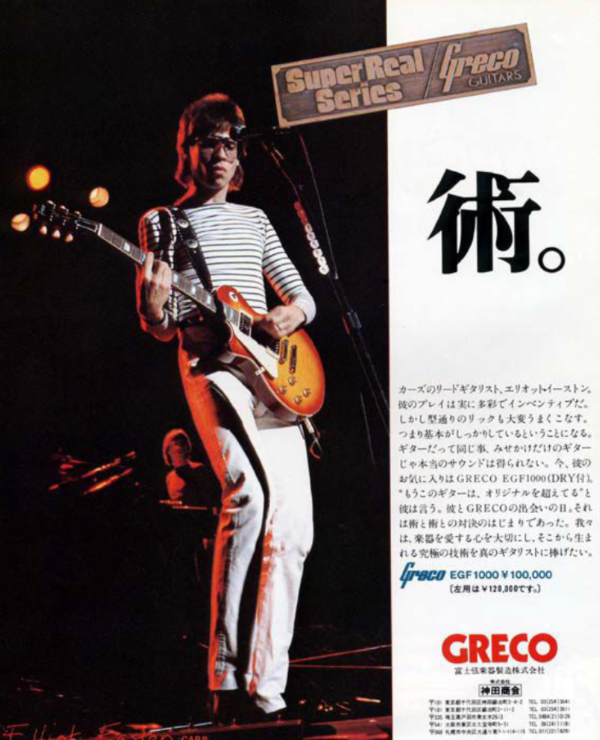
Greco put a famous name on the series: Elliott Easton, lead guitarist of the Cars. In this Greco advertisement, his favorite guitar is the EGF1000 fitted with DRY pickups, and Easton is quoted as saying the guitar had gone beyond the original. The ad lists the EGF1000 at ¥100,000 and the left-handed version at ¥120,000.
The Lineup and How to Identify a Model
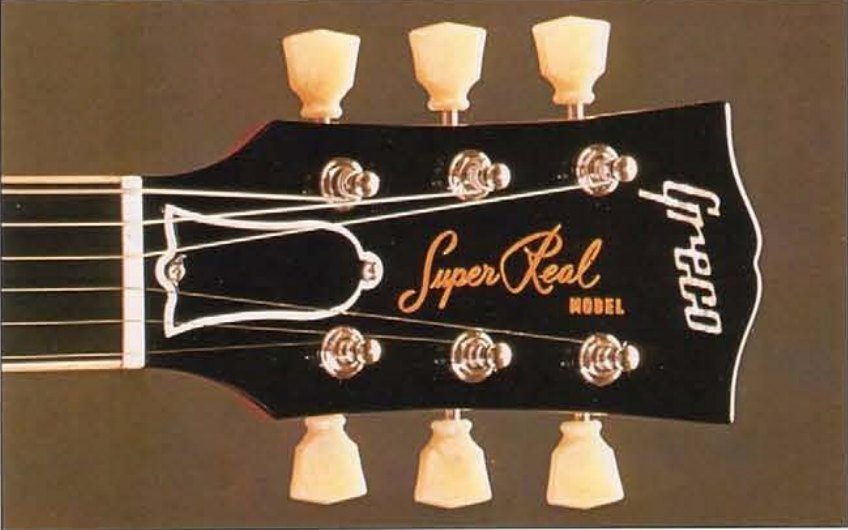
In the Super Real era, EGF marks the flame maple top models and plain EG the plain-top models. A trailing letter adds meaning: C for a Custom-style guitar like the EG1000C, GS for a goldtop, and PB or PR for three-pickup models modeled on Peter Frampton’s and Ace Frehley’s guitars. The decal on the headstock is a quick first clue to where a guitar sat in the range.
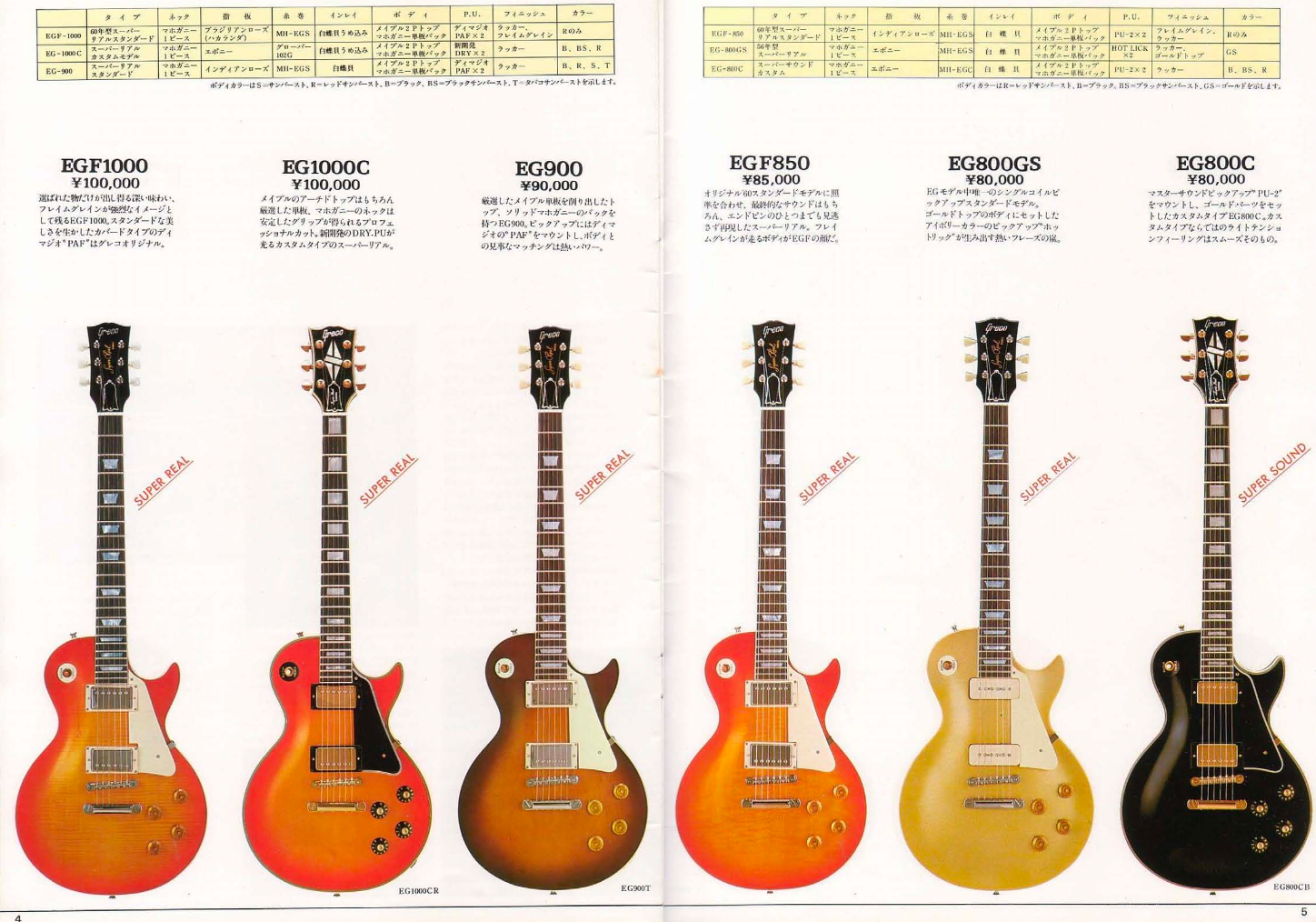
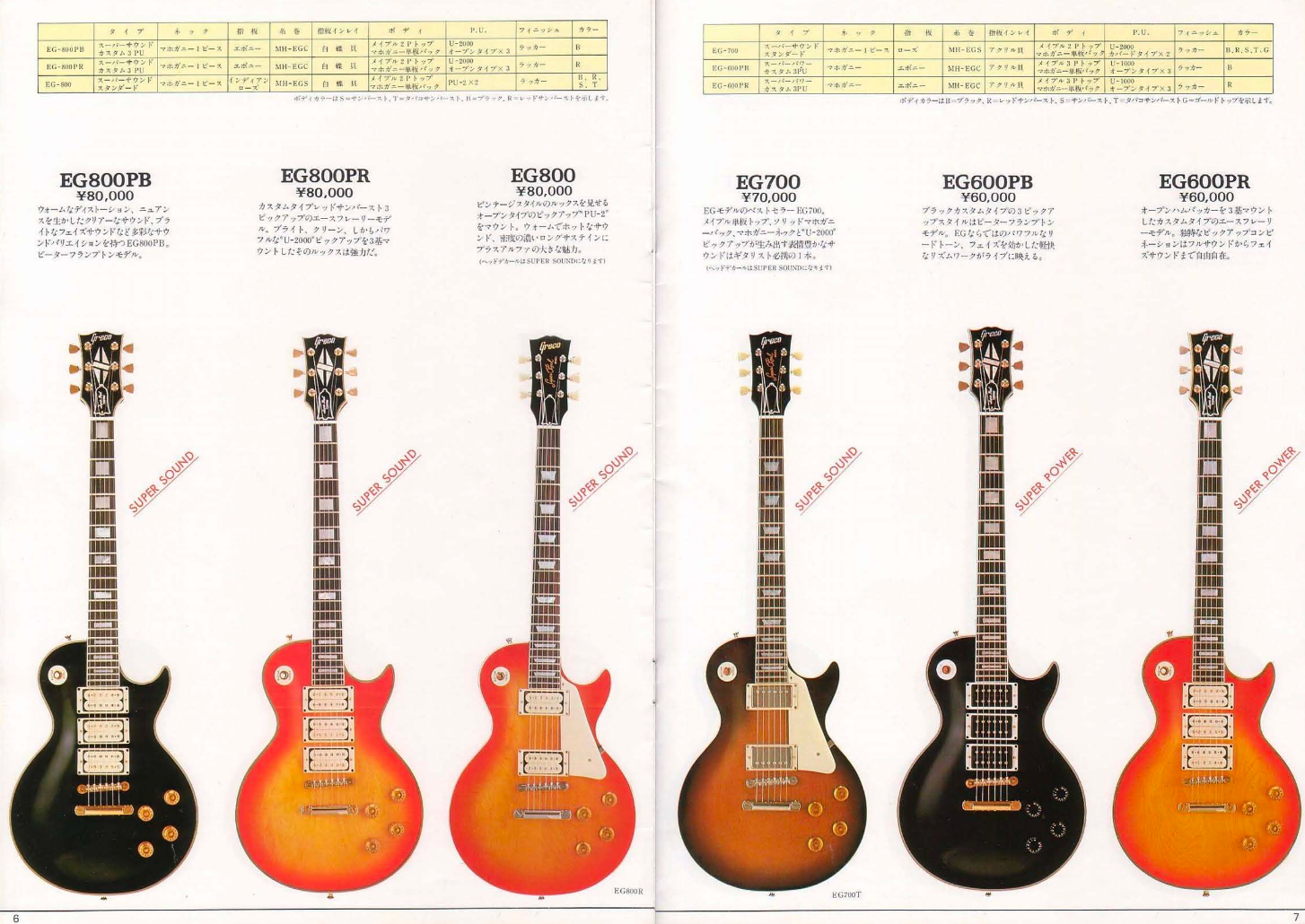
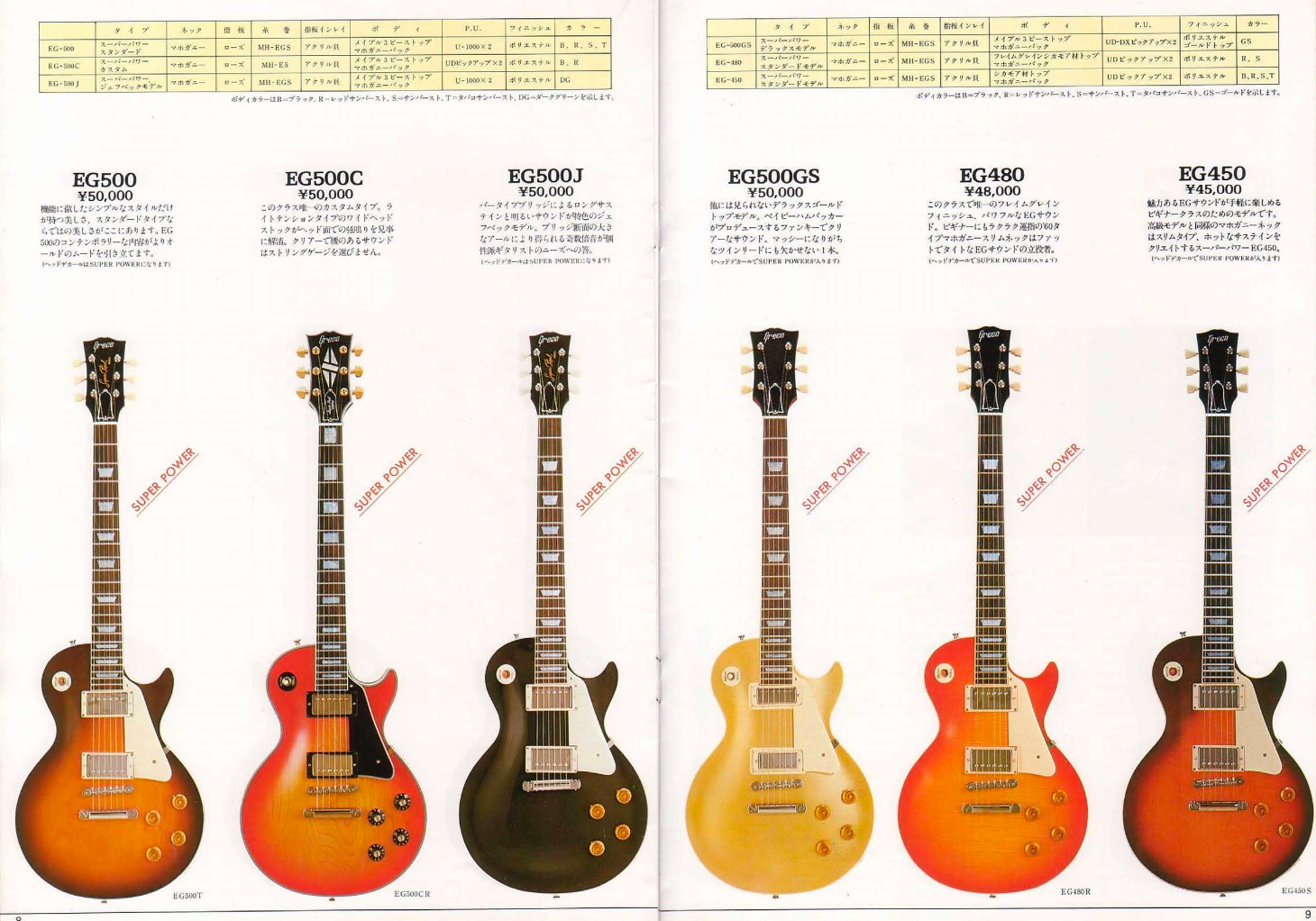
These artist-style models were most likely made without the artists’ permission, something the era tolerated to a degree.
What Happened Next and What They Are Worth
The Super Real’s intensity was concentrated in roughly 1979 to 1982. After that, Greco moved on to the Mint Collection. Guitar building carried on, but that uncompromising window had passed, which is exactly why guitars from this period are cherished by collectors.
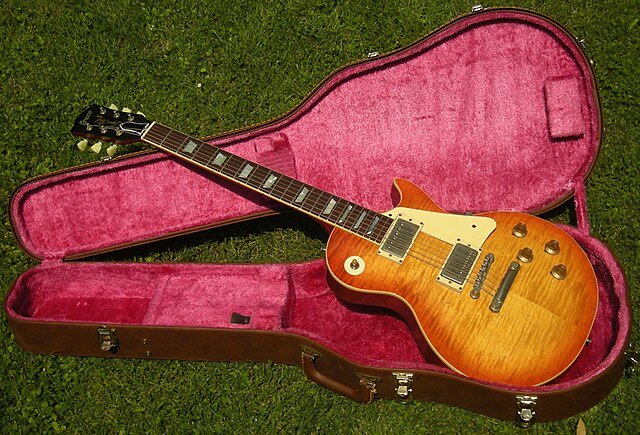
On today’s used market, Super Reals generally sell for roughly $2,000 to $6,000, depending on condition and originality. Examples that still have their original DRY pickups sit toward the top of that range. Given that they were sold when Japanese guitars were seen as a budget option, that is quite a climb.
Which Super Real Should You Look For?
| You want… | Super Real pickmodel | Whywhat you get |
|---|---|---|
| The flagshipmoney is no object | EGF1800 | Flame top, Brazilian rosewood board, two DRYs |
| The DRY soundPAF-style humbuckers | A model with original DRYs | Check the pickups; specs varied by year |
| Elliott Easton’s choiceflame top | EGF1000 | Flame maple top; DRY or DiMarzio depending on year |
| A Custom-style Super Realblack or red Custom | EG1000C | Super Real decal with the DRY |
| A vintage goldtopP-90 style | EG800GS | Super Real decal and P-90 style pickups |
My Take
I’d recommend a Super Real to anyone who can’t reach a real vintage Les Paul, to collectors of Japanese vintage guitars, and to any player who loves the Les Paul sound.
A More Affordable Alternative: Orville
If a Super Real is out of reach, an Orville Les Paul is another option. Many Orvilles from the 1990s were made by FujiGen and carry over know-how from the Greco years. Genuine Gibson 57 Classic pickups appear on the “Orville by Gibson” line, while plain “Orville” models used Japanese pickups. Orville prices have been climbing too.
Final Thoughts
The Super Real caught a narrow window when competition, factory and ambition all lined up. Its story is written plainly in Greco’s own catalog, in numbers and details, and you can still feel that care in the guitars. A Super Real that keeps its original DRY pickups, parts and finish is getting harder to find, and those are the ones people chase.
My Take
To me, the Super Real isn’t just a copy. It’s a great guitar in its own right.
Frequently Asked Questions
When were Greco Super Real guitars made?
Roughly 1979 to 1982. After 1982, Greco moved on to the Mint Collection.
Who made Greco Super Real guitars?
Greco was Kanda Shokai’s brand, and the guitars were built by FujiGen, the factory that also built Ibanez guitars and, from 1982, the first Fender Japan guitars.
What is the Greco DRY pickup?
Greco’s humbucker designed to bring back the vintage PAF sound. It is widely reported to have been made by Maxon (Nisshin Onpa).
What is the difference between EGF and EG models?
EGF models have a flame maple top; plain EG models have a plain top.
What do Super Real, Super Sound and Super Power mean?
They are headstock decals that mark where a model sat in the range: Super Real on the upper models, Super Sound in the middle, and Super Power on the more affordable ones.
How much is a Greco Super Real worth?
Roughly $2,000 to $6,000 used, depending on condition and originality. Original DRY pickups push the price up.