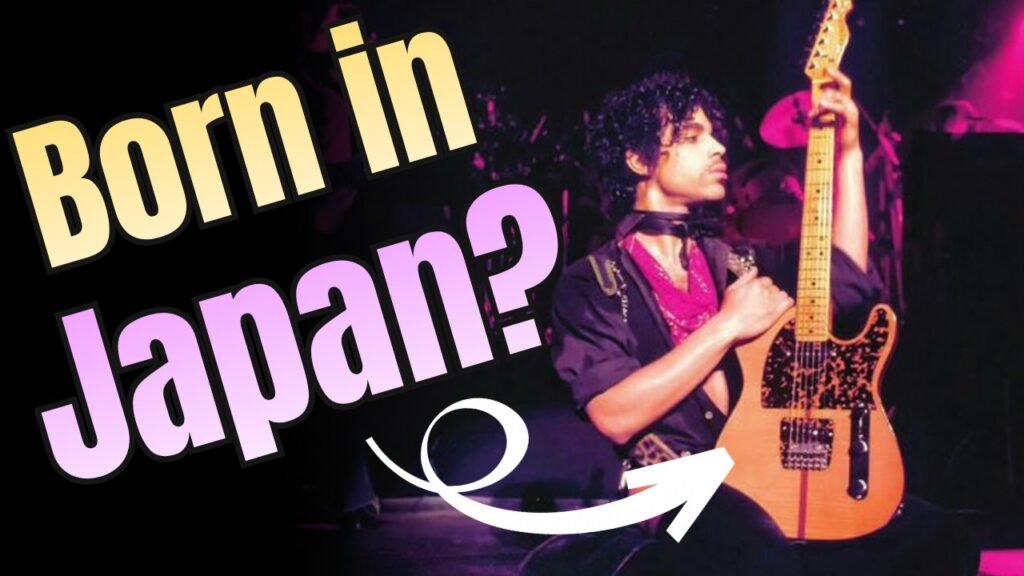
One of Prince’s most iconic guitars was the Mad Cat, and it became a key part of his image. But it was not originally a guitar made for Prince: the real original comes from Japan, from a brand called H.S. Anderson. This is the story of the guitar itself, from its Japanese roots to the Hohner version Prince played and the many later variations.
Mad Cat Quick Facts
- Original: H.S. Anderson Mad Cat, made in Japan at the Morris factory
- Brand: H.S. Anderson, launched in 1973 by Hidesato Shiino with Moridaira
- Prince’s version: Hohner HG-490, the export version; only about 500 made
- Later versions: Hohner The Prinz, TE Prinz and The Artist; Bill Lawrence and H.S. Anderson in Japan
- Today: Still made in small numbers in Japan
Prefer to watch? This article is based on my own video below.
H.S. Anderson: The Japanese Brand Behind the Mad Cat
So technically, calling Prince’s guitar the Mad Cat is not completely wrong. But more precisely, Mad Cat was the name of the original Japanese model that his Hohner version was based on.
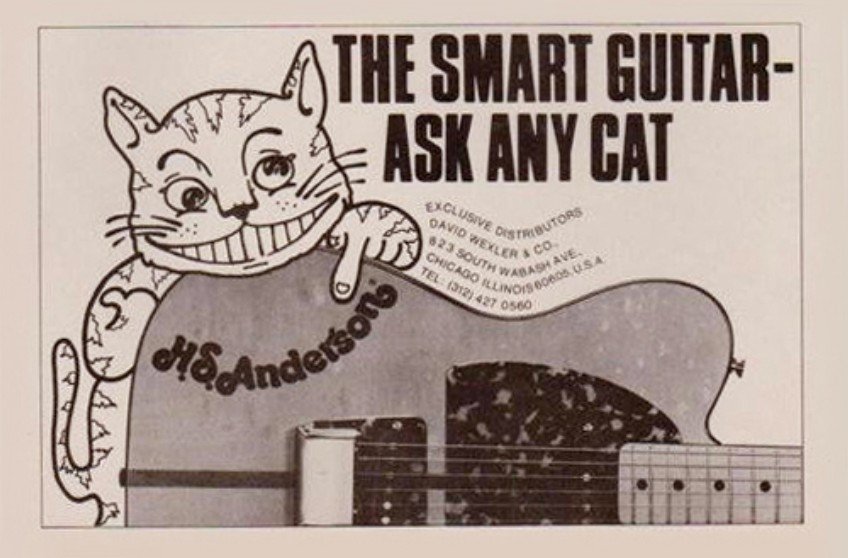
H.S. Anderson was launched in 1973 by Hidesato Shiino, the founder of ESP, together with Moridaira Musical Instruments, the company behind Morris guitars. The idea was to create guitars that were high quality but also full of playful character, and production started with only around three craftsmen at the Morris factory.
Even the logo had a story. The cat was meant to represent a wild soul, driven crazy by sound, and was designed by Atsuro Yamada, a friend of Shiino. The “HS” came from Shiino’s own name, and “Anderson” from Hugh Anderson, the New Zealand motorcycle racer who became famous in 1960s road racing and whom Shiino reportedly admired.
Original Designs in the Copy Era
H.S. Anderson introduced some bold, innovative designs, such as the Houston Apple Guitar, the headless HS-ARS and the BB-1. At a time when much of Japan’s electric guitar industry was still built on copy models, Shiino had already created original guitars that felt distinctive and refined.
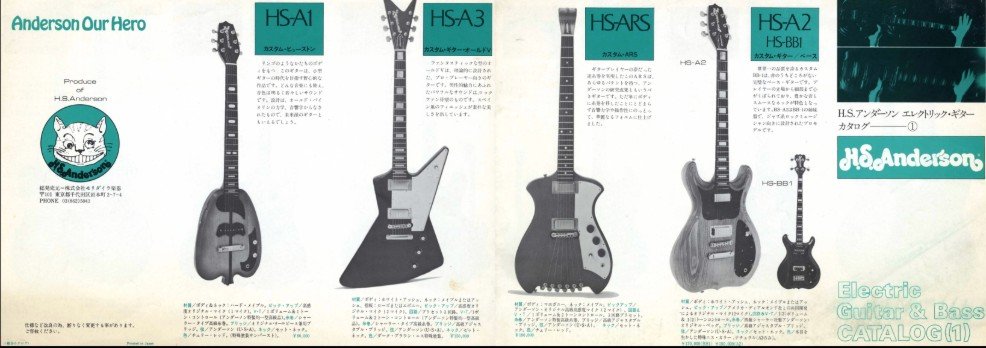
Like many Japanese brands of the 1970s, H.S. Anderson also made Fender- and Gibson-style copies. But even there it looked for ways to stand out: catalogs show Explorer-style models with Futura-type headstocks, and apparently Moderne-style models too.
The Original Mad Cat: More Than a Telecaster Copy
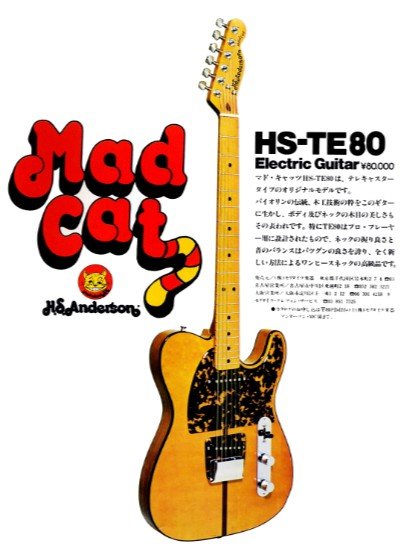
The Mad Cat was produced through the 1970s and quickly became one of the brand’s most popular and recognizable guitars. Its design was not just a straight Telecaster copy.
| Part | Original Mad Cat |
|---|---|
| Body | Ash with maple laminated on the front and back, and a walnut center strip, built so the mass and density of the left and right sides balance |
| Neck | One-piece maple, 21 frets |
| Bridge | Hardtail Strat-style bridge |
| Pickups | Strat-style single coils in the front and rear positions |
| Pickguard | Tortoiseshell pattern that looks almost leopard-like, with matching pickup surrounds |
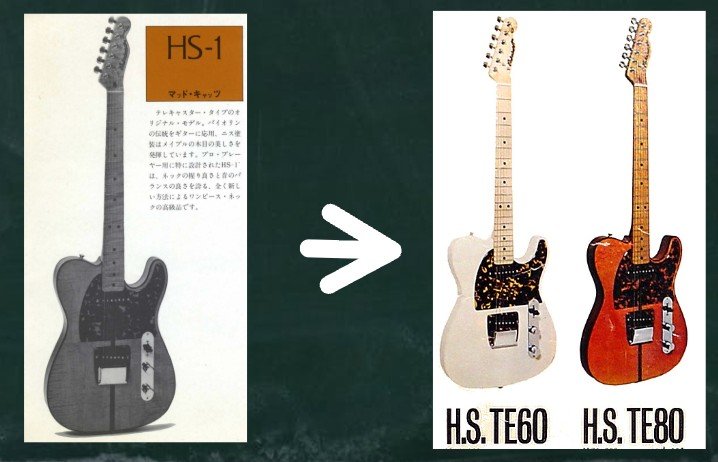
The model first appeared in 1974 as the HS-1 and was quickly renamed the HS-TE80. From 1975, serial numbers were stamped on the back of the headstock, and catalogs of the period also show a white version, the HS-TE60.
Hohner HG-490: The Export Version Prince Found
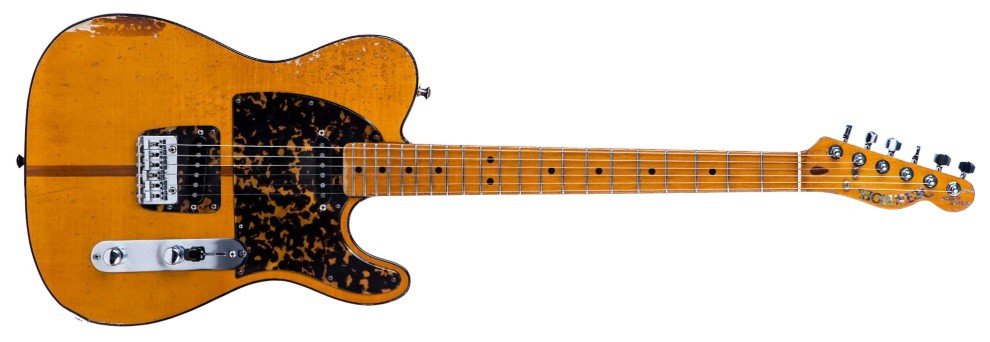
Around 1975, a request came from the American branch of Hohner, the German company best known for harmonicas, which wanted the guitar as an OEM model. So the Mad Cat began to be made in Japan for export. Hohner sold it as the HG-490 and apparently never used the Mad Cat name.
The headstock shape led to legal action from Fender, and the HG-490 was discontinued. Only around 500 were made in the 1970s.

Prince and His Mad Cat
Prince bought a Hohner HG-490 in Minneapolis in the late 1970s. According to one story, it may even have been bought at a gas station for 30 dollars. He apparently liked the leopard-style pickguard because it matched his stage clothes and other gear.
Getting the guitar and using it on stage were not the same thing, though. Up to the Dirty Mind Tour in February 1980, he was still using a natural-finish Fender Telecaster with artwork of what looked like Prince reaching toward a glowing star like a bird.
How Prince’s Mad Cat Changed
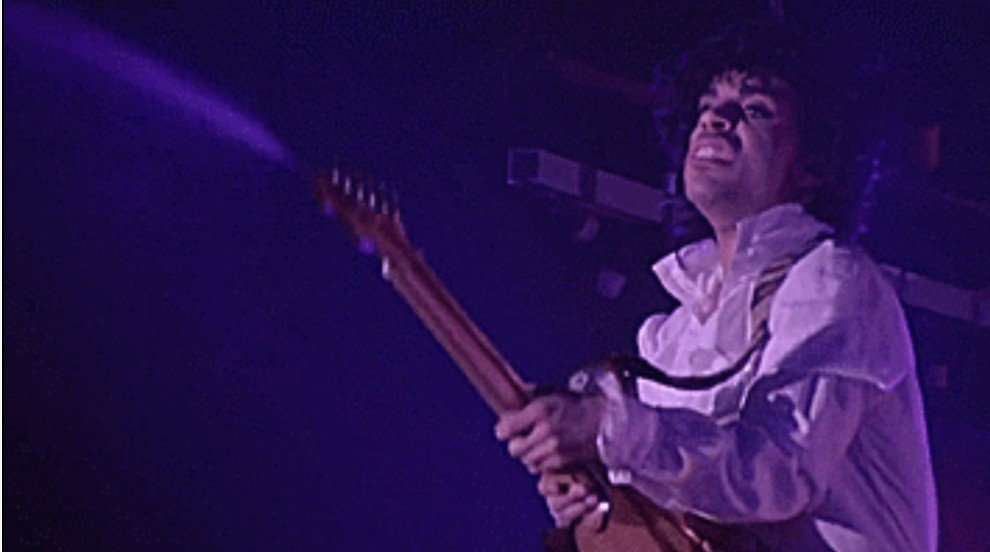
His Mad Cat went through a number of changes. The pickups were swapped more than once, first to Fender Vintage Noiseless and later to Kinman Traditional. At one point a third pickup was added under the pickguard for noise cancelling, then removed. A wireless receiver was built into the body during the Purple Rain Tour.
According to Prince’s longtime guitar technician Takumi Suetsugu, who rarely talks in detail about Prince’s gear, the Mad Cat was the best Telecaster he had ever played.
The Sadowsky Copies
Prince also had other builders make copies of the Hohner, including Roger Sadowsky, and some of them recreated the headstock logo in full.
- The EjacuCaster: a Sadowsky-made stage guitar that could spray soap liquid from the tip of the headstock, used in the climax of the film Purple Rain.
- The purple floral Telecaster: built by Sadowsky for the 1985 Purple Rain Tour and delivered just after it ended, in metallic purple with floral artwork by reggae artist Wayne Jarrett.
- The pink floral guitar: reportedly also by Sadowsky; it was not used much and ended up on display at Paisley Park.

After Prince: The Mad Cat’s Many Later Versions
Hohner The Prinz, TE Prinz and The Artist
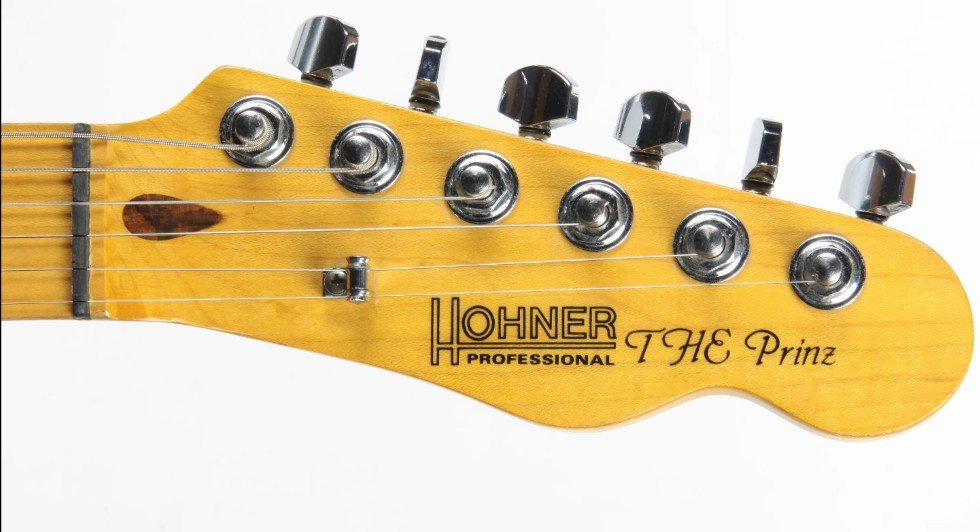
After Purple Rain made Prince widely famous, Hohner brought the guitar back. It changed the headstock to avoid legal trouble and had it produced in Korea, releasing it around 1984 as The Prinz. Because that headstock was still considered too close to the Telecaster shape, it was revised again around 1990 as the TE Prinz, and Prince owned one of those too. Around 2008, Hohner released Mad Cat-style reissues called The Artist and The Artist Elite.

Bill Lawrence: The Japanese Licensed Version

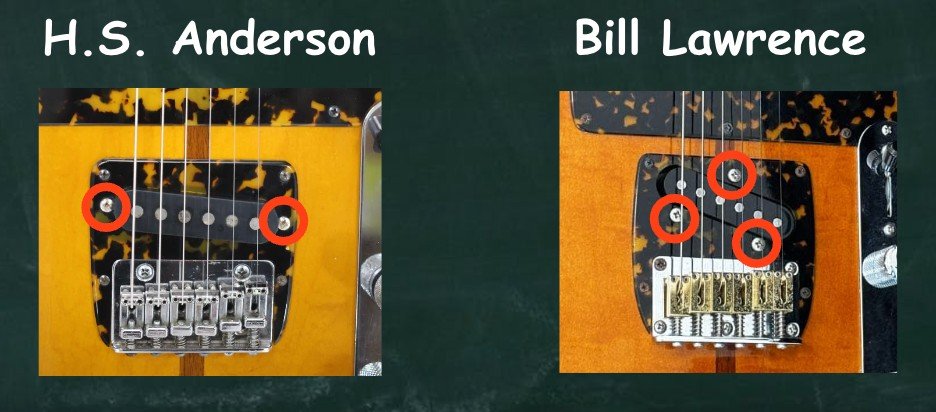
In Japan, the design continued in another form. Through Moridaira it was developed under the Bill Lawrence name on a licensed basis, still built by Morris in Japan, with Bill Lawrence Black Label pickups designed for a vintage-style sound. Several details changed:
| Detail | Original Mad Cat | Bill Lawrence version |
|---|---|---|
| Center strip | Walnut | A painted line |
| Rear pickup mounting | Two screws | Three screws |
| Bridge saddles | Six bent-steel saddles | Block saddles |
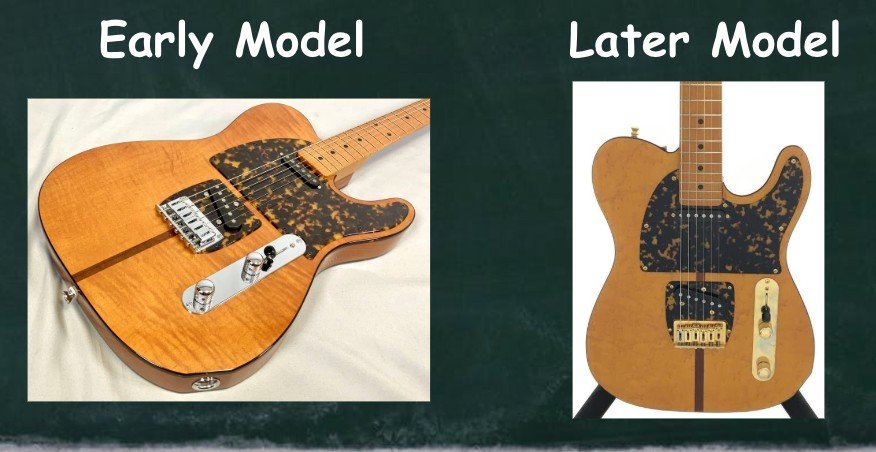
These versions stayed in production until the early 1990s, when Bill Lawrence-branded guitars stopped being made in Japan. Dating them accurately is very difficult, but one of the clearest clues is the control plate: on early versions the pickguard is cut around the control plate, while on later ones they are separate.
Bill’s Brothers: The Budget Version
After the Bill Lawrence contract ended, Moridaira released Mad Cat-style models under the Bill’s Brothers name, still made in Japan. Because Bill’s Brothers was more of a budget brand, these are not really seen as true reissues: they are more like regular Telecasters given a Mad Cat look, some apparently with a four-piece construction between the top and back. Their reputation and market value are generally lower than the Bill Lawrence versions.
H.S. Anderson Reissues: Still Made Today
Moridaira later reissued the model under the original H.S. Anderson name. These kept the laminated body and walnut strip of the original, but used three-screw pickup mounting, block saddles and Bill Lawrence pickups, so they sit between the original H.S. Anderson guitars and the Bill Lawrence versions.
The model was reissued again in the 2010s and has continued to be produced in small numbers since, so it is still possible to buy one new. Moridaira has even sold hoodies and T-shirts printed with the old Mad Cat logo.
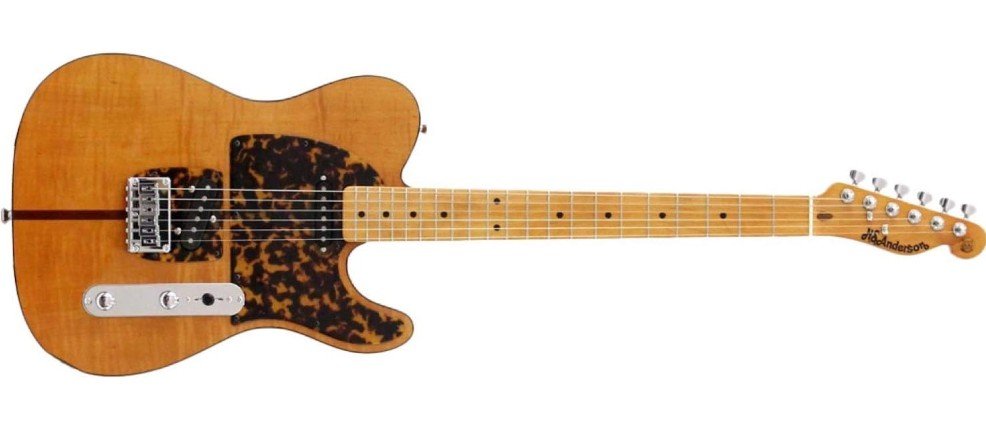
Mad Cat Versions at a Glance
| Version | Era | Made in | Notes |
|---|---|---|---|
| H.S. Anderson HS-1 / HS-TE80 | From 1974 | Japan (Morris) | The original; walnut center strip, laminated ash body |
| Hohner HG-490 | Around 1975 | Japan (Morris) | Export version; about 500 made; Prince’s guitar |
| Hohner The Prinz | Around 1984 | Korea | Revised headstock |
| Hohner TE Prinz | Around 1990 | Korea | Headstock revised again |
| Bill Lawrence | To the early 1990s | Japan (Morris) | Licensed; painted strip, block saddles |
| Bill’s Brothers | After Bill Lawrence | Japan | Budget version |
| Hohner The Artist / Artist Elite | Around 2008 | Not confirmed | Mad Cat-style reissues |
| H.S. Anderson reissues | Later reissues to today | Japan | Original name, small numbers |
Final Thoughts
This time I wanted to focus more on the guitar itself than on Prince. When I posted about it on Instagram, a lot of people commented that they had assumed it was just a custom Fender Telecaster.
For this article I gathered information from both Japanese and English sources, and to be honest, the details do not match perfectly in a few places. I picked the information that seemed the most credible and put it together here.
Frequently Asked Questions
What guitar did Prince play?
His most iconic guitar was a Hohner HG-490, known as the Mad Cat, the export version of a Japanese guitar by H.S. Anderson.
Was Prince’s Mad Cat a Fender Telecaster?
No. It was a Hohner HG-490 made in Japan, based on the H.S. Anderson Mad Cat. Many people assume it was a custom Telecaster.
Who made the Mad Cat?
H.S. Anderson, a Japanese brand launched in 1973 by ESP founder Hidesato Shiino with Moridaira, and built at the Morris factory in Japan.
How many Hohner HG-490s were made?
Only around 500 in the 1970s, before legal action from Fender over the headstock shape ended production.
Can you still buy a Mad Cat?
Yes. H.S. Anderson Mad Cat reissues are still made in small numbers in Japan.
What is the difference between the Bill Lawrence and original Mad Cat?
The Bill Lawrence version replaced the walnut center strip with a painted line, used three-screw rear pickup mounting and block saddles instead of bent-steel saddles.