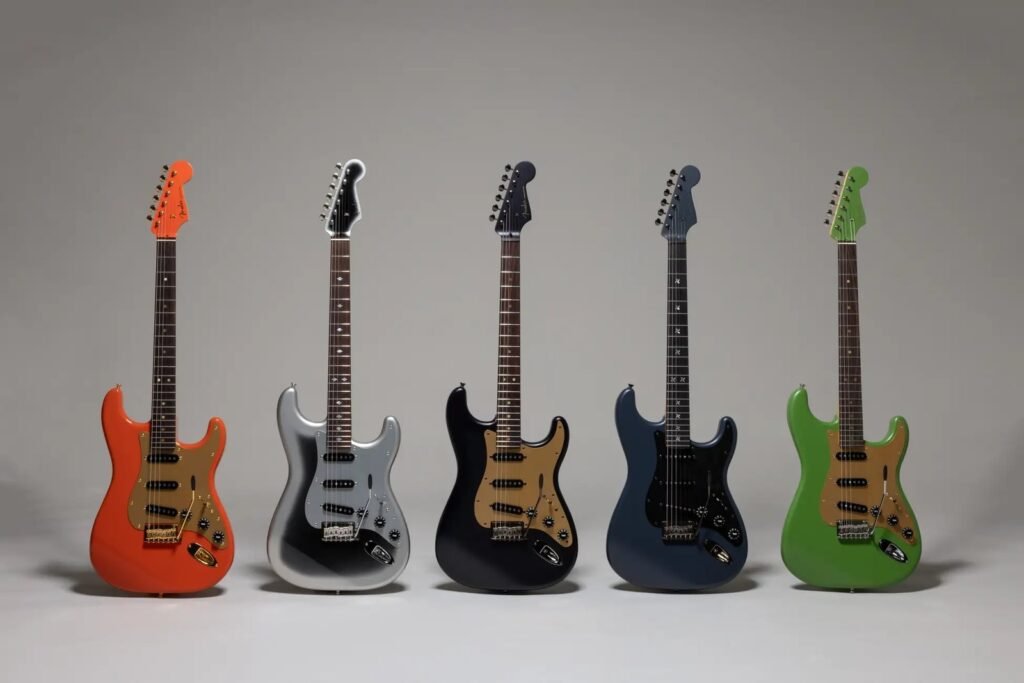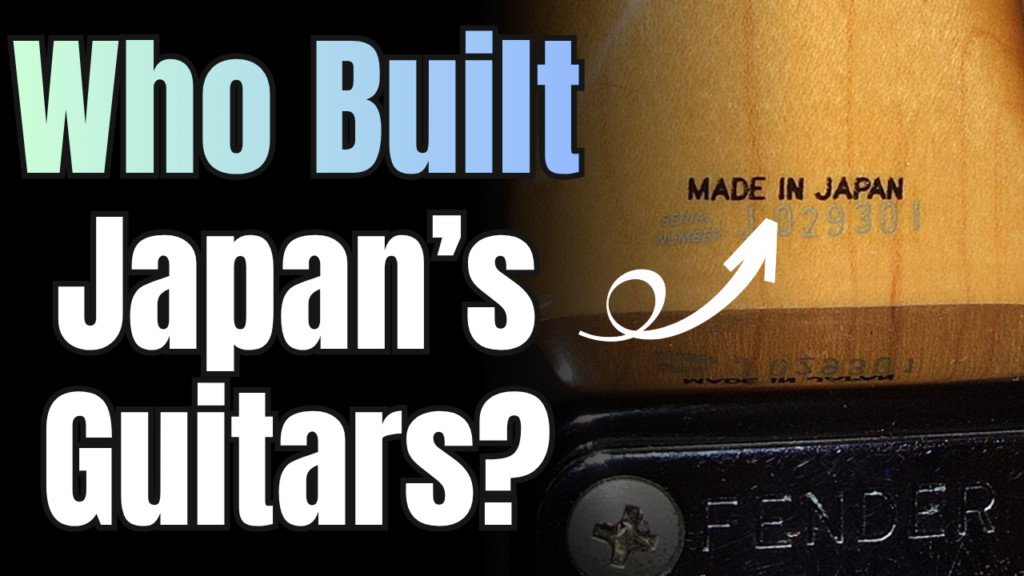
Ibanez, Fender Japan, Orville by Gibson. What do these guitars have in common? They are all Japanese-made, but that answer is incomplete. The real link is that they were all built in the same factory: Fujigen. It is a name that MIJ guitar fans know well, and yet very few people outside Japan know the full story. This article walks through Fujigen’s 65-year history, the brands it quietly built for, and what its own FGN-branded guitars are actually like today.
Fujigen Quick Facts
- Founded: 1960, as Fuji Gen-Gakki Seizo (Fuji Stringed Instrument Manufacturing)
- Founders: Yuichiro Yokouchi and Yutaka Mimura, in Matsumoto, Nagano
- Known for: OEM production for Ibanez, Fender Japan, Squier, Greco, Orville by Gibson, Epiphone, G&L, Music Man and more
- Peak output: around 14,000 guitars per month in 1983, the highest in the world at the time
- Own brand: FUJIGEN / FGN, launched in 1990 and still running today
- Signature feature: the Circle Fretting System (C.F.S.), a slightly curved fret installation
- Where to see them: Fujigen Custom House in Ikebukuro, Tokyo, opened in 2001
Prefer to watch? This article is based on my own video below.
- What Is Fujigen?
- Fujigen History: From a Cow Shed to the World's Largest Guitar Factory
- 1960: Founded With the Money From Three Cows
- 1961: The Switch to Guitars
- 1962: Electric Guitars and the First Export Order
- 1965 to 1966: Riding Japan's Electric Guitar Boom
- 1968: The Greco Connection
- 1982: Fender Japan and the JV Serials
- 1983: The World's Highest Guitar Output
- 1990: The Own-Brand Turn
- 2001 Onward: A Shop in Tokyo, and Woodwork Beyond Guitars
- 2020 to 2026: 60 Years, and the Loss of a Founder
- Why Fujigen Guitars Attract Players Worldwide
- Brands Fujigen Has Built For
- The FGN Own Brand: What Makes It Different
- Final Thoughts
- Frequently Asked Questions
What Is Fujigen?
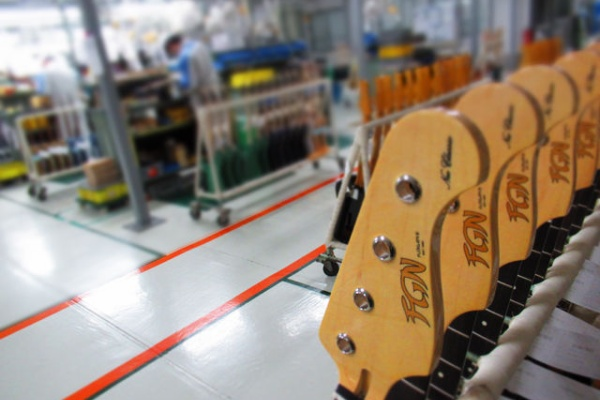
Fujigen is a guitar factory in Matsumoto, Nagano Prefecture, in the mountains of central Japan. For most of its life it was not a brand at all. It was the builder behind other people’s logos, which is exactly why so many players have owned a Fujigen guitar without ever knowing it. If you have played a Japanese-made Ibanez, an early Fender Japan Stratocaster, a 1970s Greco copy or an Orville by Gibson Les Paul, there is a very good chance a Fujigen craftsman built it.
Since 1990 the company has also sold guitars under its own name, FUJIGEN and FGN. That side of the business is smaller and less famous, but it is where all of the factory’s accumulated OEM knowledge ends up in a guitar you can actually buy with the builder’s own logo on the headstock.
Fujigen History: From a Cow Shed to the World’s Largest Guitar Factory
| Year | Milestone |
|---|---|
| 1960 | Fuji Gen-Gakki Seizo founded in Matsumoto; violin production starts in a converted cow shed |
| 1961 | Switches from violins to classical guitars after a nationwide market survey |
| 1962 | Electric guitar production begins; export OEM work starts after a New York dealer visits the plant |
| 1965 | Japan’s electric guitar boom hits; shipments surge |
| 1966 | New factory with in-house timber drying and woodworking |
| 1968 | The Greco brand starts its Fujigen chapter |
| 1970s | The copy model era; huge OEM volume for domestic and export brands |
| 1982 | Fender Japan is established; Fujigen builds the legendary JV serial guitars |
| 1983 | World’s highest guitar output: roughly 14,000 units per month |
| 1990 | FUJIGEN / FGN own-brand guitars launch |
| 2000s | Woodwork diversifies into Lexus and Toyota interior panels, audio panels, taiko drums and more |
| 2001 | Fujigen Custom House opens in Ikebukuro, Tokyo |
| 2020 | 60th anniversary, marked with commemorative models |
| 2026 | Founder Yuichiro Yokouchi passes away on April 2 |
1960: Founded With the Money From Three Cows
Fujigen was founded in 1960 as a joint venture between Yuichiro Yokouchi and Yutaka Mimura. Yokouchi was a farmer, not a luthier. He sold three of his cows and used that money to start the company that would become Fuji Gen-Gakki Seizo. He knew nothing about instrument making, but he wanted to build a world-beating manufacturer from Japan, so he named the company after Mt. Fuji. The first workshop was a remodeled cow shed, and the first product was violins.
Violins turned out to be the wrong product. The domestic market was simply too small, and the business never really got moving.
1961: The Switch to Guitars
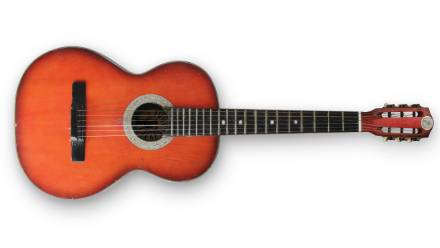
While still building violins, the two founders split up and travelled around Japan doing their own market research. What they found was a rapidly growing number of young people who wanted a guitar. Convinced that guitars would sell, they dropped violins entirely and started classical guitar production in 1961. They built prototypes based on American guitars, took them around to music stores, and the orders started coming in one after another.
1962: Electric Guitars and the First Export Order
The next year the factory started building electric guitars. The trigger was a visit from a New York guitar dealer who toured the plant and asked for instruments aimed at the American market. Fujigen took the order, and that single visit set the company on the OEM path it would follow for decades. The same dealer reportedly told them that an electric guitar boom was coming, which pushed the company to commit to electrics rather than acoustics.
Around the same time, a young Yasuo Momose joined the company. Yes, that Momose, the man whose name is now on Deviser’s high-end Momose brand. He worked at Fujigen in his early years and left in 1965.
1965 to 1966: Riding Japan’s Electric Guitar Boom
In 1965 Japan was hit by an unprecedented electric guitar boom. The Beatles and The Ventures were everywhere, and electric guitar shipments climbed sharply. Fujigen had only been building electrics for three years, and it caught the wave perfectly. Business grew fast.
In 1966 the company built a new plant that covered the whole process in house, including the timber drying and woodworking stages that are essential to consistent guitar production. That vertical integration is a big part of why Fujigen quality stayed stable while volume exploded.
1968: The Greco Connection
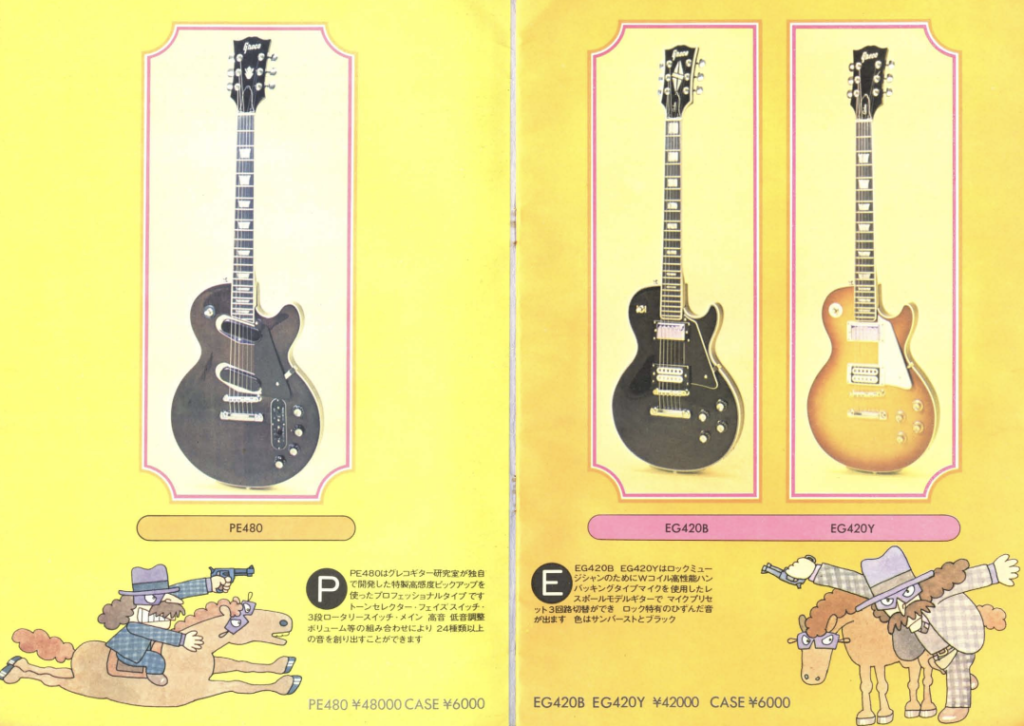
Greco started life as an overseas brand name, but Fujigen, which had been building for it on an OEM basis, acquired the trademark rights, and distributor Kanda Shokai later took the brand over. Fujigen-built Grecos kept prices down while delivering that precise Japanese build quality, and demand for those old models is still strong. Plenty of collectors specifically want the Greco version rather than the American original. If you want the full brand story, I have written a dedicated Greco guitars overview.
1982: Fender Japan and the JV Serials
In 1982 Fujigen went from copying Fender to officially building for Fender. Like Gibson, Fender was worried about its falling share and about how good the Japanese copies had become. Its answer was to join forces with Yamano Music, Kanda Shokai and Fujigen to establish Fender Japan. The earliest of those instruments carry JV serial numbers and have become legendary among Japanese guitar collectors.
1983: The World’s Highest Guitar Output
The following year Fujigen recorded the highest guitar production volume in the world: roughly 14,000 instruments a month. That number is remarkable on its own, but it becomes almost hard to believe when you remember what was running through the same building at the same time. Fender Japan, export Fenders for the US, Greco and Ibanez were all in production in parallel.
1990: The Own-Brand Turn
The reason Fujigen launched its own brand in 1990 sits in the late-1980s industry background. Cheap guitars from China and Korea spread very quickly, and Fujigen’s OEM order book dropped hard. The company decided to compete on quality instead of quantity, specialised in higher-end production, and launched the FUJIGEN and FGN brands. Thirty-five years later, that brand is still going.
2001 Onward: A Shop in Tokyo, and Woodwork Beyond Guitars
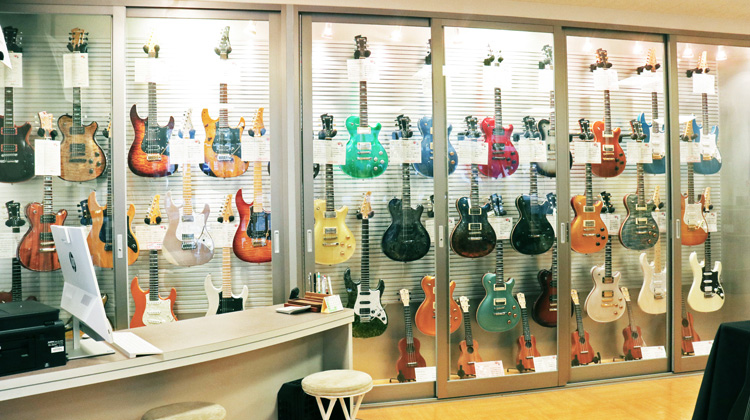
In 2001 Fujigen opened Custom House Ikebukuro, a directly operated shop in Tokyo specialising in Fujigen and FGN guitars. Fender’s flagship store in Harajuku pulls in visitors from all over the world, and if you are already making that trip, Custom House deserves a spot on the list too. Harajuku to Ikebukuro is about 35 minutes by train.
From the 2000s the company also moved well beyond instruments. Fujigen produces wood interior panels for Lexus and Toyota vehicles, wooden panels for audio equipment, taiko drums, cooking equipment and other products. Anything where advanced woodworking matters, basically.
2020 to 2026: 60 Years, and the Loss of a Founder
Fujigen marked its 60th anniversary in 2020 with commemorative models. On April 2, 2026, founder Yuichiro Yokouchi passed away. His goal, that Japanese-built Fujigen guitars would be recognised for their quality and carry real brand value, is still what the company runs on.
Why Fujigen Guitars Attract Players Worldwide
Kamijo, the company president at the time, gave a simple explanation: Japanese conscientiousness and care, multiplied by the fact that Fujigen staff genuinely love music. The head office reportedly has a rehearsal studio in it. This is not a factory where people happen to work with wood, it is a place that attracts people who actually play.
The other half of the answer is 65 years of continuous guitar building, and an OEM client list that is genuinely enormous.
Brands Fujigen Has Built For
| Brand | Period / Scope |
|---|---|
| Ibanez | From 1962. Not every Ibanez, but mainly the high-end lines: J.Custom, Prestige and signature models |
| Fender (US export) | 1980s |
| Fender Japan / Squier | 1982 to 1997 |
| Heartfield | The Fender joint brand, entirely Fujigen-built |
| G&L | Premium series |
| Music Man | EX series |
| Greco | From 1968 |
| Epiphone | Japanese production |
| Orville by Gibson | Gibson’s Japan-only line |
| Tobias | Bass production |
Look at that list again and the appeal becomes obvious. These are instruments finished to a high standard of precision right down to the small details, to a level that stands up next to custom shop work from overseas makers, which is exactly why the used market values them. If you want the Gibson side of this story in detail, see my Orville by Gibson overview.
The FGN Own Brand: What Makes It Different
The Circle Fretting System (C.F.S.)
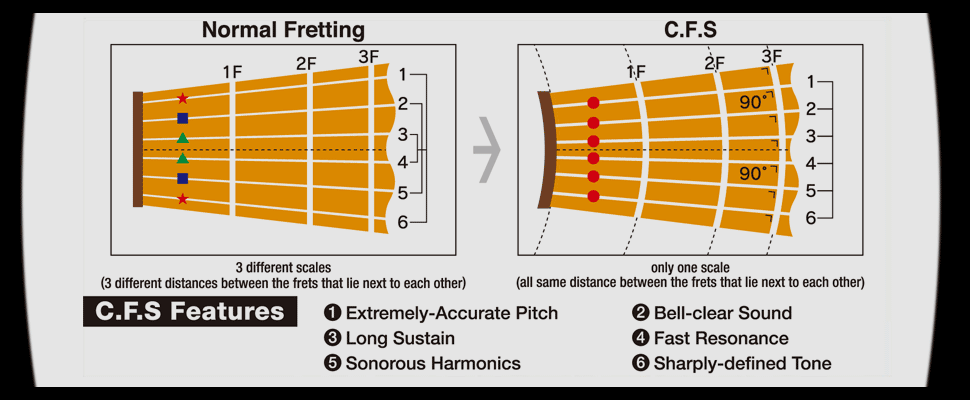
The headline feature is the Circle Fretting System. Frets are normally installed parallel to each other, perpendicular to the neck. C.F.S. frets are seated in a very slight arc instead, calculated so that each string crosses its fret closer to a right angle. The stated goal is better pitch stability and intonation.
Being honest about it: plenty of players cannot feel or hear the difference, and how much it actually delivers is hard to pin down. It also has a practical consequence. Some repair shops charge extra for a refret on a C.F.S. neck, or will not take the job at all. If you are planning a refret, talk to your tech first, or take it to a Fujigen shop.
Build Quality and Value
FGN electric guitars and basses lean directly on the factory’s OEM experience, and the feedback reflects it. Playability, finish work and price are all clearly thought through, and a lot of owners describe them as delivering more quality than the price suggests.
The lineup is not purely traditional either. There are models with small spec changes that scratch an itch nobody else bothered with, such as guitars set up for down-tuning, or basses with pickup layouts you would expect to exist but somehow do not. There are genuinely unusual models in there alongside the luxurious custom pieces.
The Series Lineup
| Series | Position |
|---|---|
| Expert | Flagship |
| Masterfield | Full-hollow and archtop models |
| J-Standard | The core of the range, modern spec |
| Neo Classic | Traditional feel and appointments |
Orders, Logos and Salvaged Wood
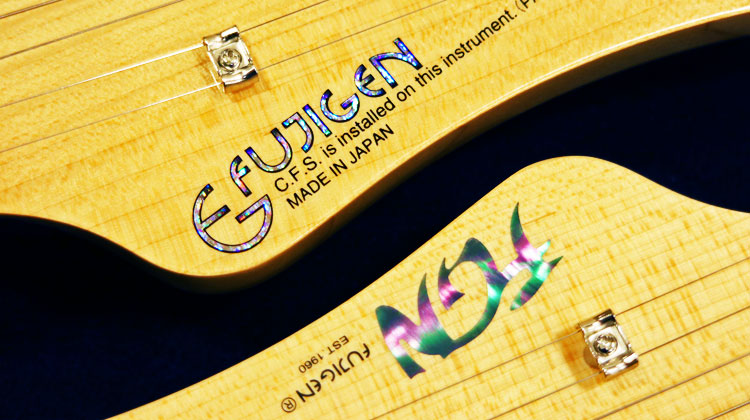
Fujigen also takes semi-custom individual orders, and you can spec a guitar out on their website. There is a useful tell on the headstock: catalog models carry the FGN logo, while one-off pieces carry the Fujigen logo.
One more interesting project is their use of salvaged wood, specifically sinker timber recovered from the bottom of the Great Lakes in the United States and similar sources. Individual logs vary in when they were cut and how they grew, but they all spent a very long time submerged, during which bacteria broke down impurities inside the wood’s vessels. The result is a genuinely vintage material.
Final Thoughts
Fujigen is woven into the history of Japanese instrument manufacturing, and into the history of some of the biggest guitar brands in the world. That track record is what creates the sense of confidence and trust people have in the name.
I will add the honest counterpoint, because it comes up. Some players find Fujigen too consistent, to the point of being a little boring. That applies to a lot of Japanese-made instruments, not just this one. Stable, repeatable quality is a wonderful thing, but if you are hunting for that one magic guitar off the wall, the freak instrument with more character than sense, a maker built around consistency may not be where you find it.
Fujigen is past 65 years now and still running every day. There are models and specs that exist only because this factory existed. If you care about the history of Japanese guitar building, this is one of the places to start.
Frequently Asked Questions
What is Fujigen?
Fujigen is a Japanese guitar factory founded in Matsumoto, Nagano in 1960. It is best known as the OEM builder behind brands such as Ibanez, Fender Japan, Squier, Greco, Orville by Gibson and Epiphone, and since 1990 it has also sold guitars under its own FUJIGEN and FGN brands.
Is Fujigen the same as FGN?
Yes. FGN is the brand name Fujigen uses for its own guitars. In practice the logo tells you what kind of instrument it is: catalog production models carry the FGN logo, while one-off custom and order-built pieces carry the Fujigen logo.
Which Ibanez guitars were made by Fujigen?
Fujigen did not build every Ibanez, but it handled much of the high-end Japanese production, mainly the J.Custom and Prestige series along with signature models. Ibanez production at Fujigen goes back to 1962.
Did Fujigen build Fender Japan guitars?
Yes. Fujigen was one of the partners that established Fender Japan in 1982, alongside Fender, Yamano Music and Kanda Shokai, and it built Fender Japan and Squier instruments from 1982 until 1997. The earliest of those are the famous JV serial guitars.
What is the Circle Fretting System?
The Circle Fretting System, or C.F.S., is Fujigen’s method of installing frets in a very slight arc rather than parallel to one another, so that the strings cross the frets closer to a right angle. The aim is improved pitch stability. Note that some repair shops charge extra for a refret on a C.F.S. neck, so check before booking work.
Are Fujigen and FGN guitars good value?
Most owners think so. The playability, finish and pricing are carefully balanced, and many players describe FGN instruments as delivering more than their price suggests. The trade-off is consistency: if you are looking for a quirky, unpredictable instrument rather than a reliably excellent one, that may not be what FGN is built for.
Where can I buy Fujigen guitars in Japan?
Fujigen has operated its own Custom House shop in Ikebukuro, Tokyo since 2001, specialising in Fujigen and FGN guitars. It is about 35 minutes by train from Harajuku, where Fender’s Japanese flagship store is located.