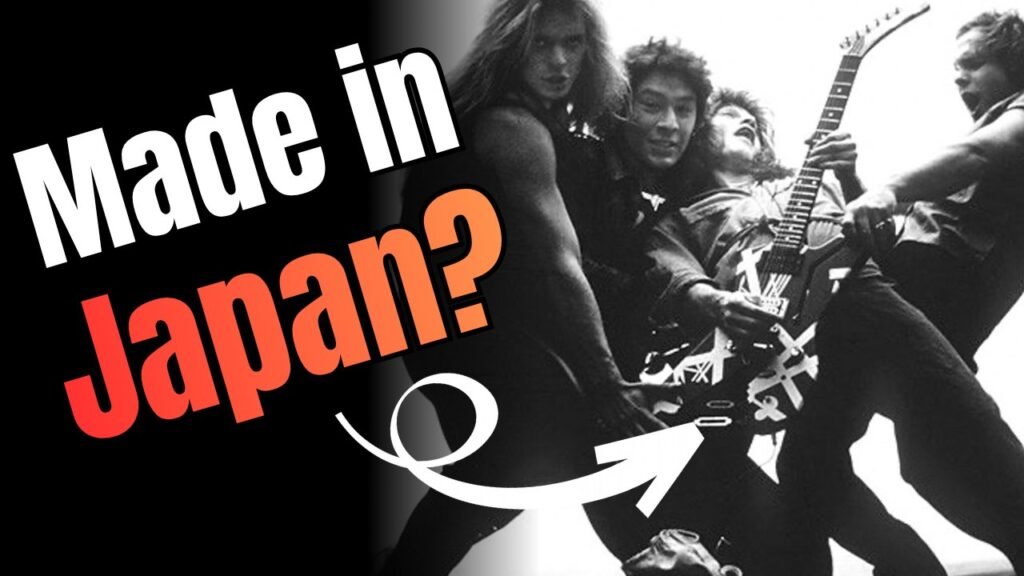
Japanese guitars are known for their craftsmanship, and a lot of famous guitarists have played made-in-Japan guitars. But this time I am not talking about the obvious names. Not Japanese players, and not the guitarists who have long been tied to Japanese brands. Instead, this is a list of the players who might surprise you: the ones you probably would not expect to see with a made-in-Japan guitar.
At a Glance
- Ibanez: Eddie Van Halen, Steve Lukather, Phil Collen, Ace Frehley, Sting and more
- Electra (Matsumoku): James Hetfield
- Fernandes / Burny: Kirk Hammett, Brad Gillis, Billie Joe Armstrong, Steve Hackett, Robert Fripp
- Tokai: Stevie Ray Vaughan, Joe Walsh, Billy Gibbons, John Mayer
- Aria Pro II: Cliff Burton, Yngwie Malmsteen, Neal Schon
- Fender Japan: Richie Kotzen, John Norum, Kurt Cobain, Duff McKagan
- Yamaha: Bob Marley, John Frusciante, Tommy Bolin, Sammy Hagar, Michael Anthony
- First guitars: Eddie Van Halen (Teisco), Jeff Beck (Guyatone), Bruce Springsteen (Kent)
Ibanez: More Famous Users Than You Think
Eddie Van Halen and the Destroyer
Let’s start with one of the biggest names in rock history. And yes, Eddie Van Halen used a Japanese guitar: the Ibanez Destroyer 2459, built by Fujigen in 1975 as a copy of the Gibson Explorer. It had a sen ash body, a Japanese wood, and Super 70 pickups. It is often said that Eddie got one of the very first batches shipped from Japan to the United States.
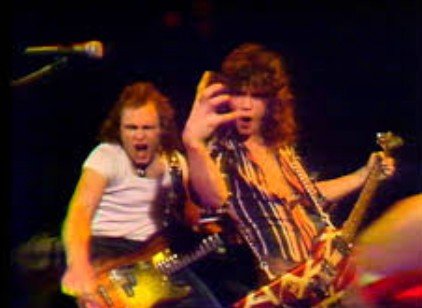
He later repainted it white and swapped the knobs for Fender-style ones, and it ended up on Van Halen’s 1978 debut album. In fact, a lot of the backing riffs on that record seem to come from that guitar. Later, the same instrument was cut into what became known as the Shark guitar. After the body was cut, the low end became weaker and the sustain dropped, so although it was still used on stage occasionally, it was no longer used for recording. I covered the full story in my Eddie Van Halen Destroyer article.
Rickey Medlocke, Ace Frehley and Paul Stanley
The Destroyer was used by many more players than people sometimes realize. Rickey Medlocke was also seen with one. There has been some debate over whether his guitar was actually a Gibson, but if you look closely at the photos, you can see the Ibanez logo on the headstock.
Then there is Ace Frehley. Most people strongly associate Ace with Les Pauls, but there are photos of him with an Explorer-style guitar, and that guitar was also an Ibanez Destroyer. It is often said that it was given to him by Paul Stanley. Funny enough, Paul himself has said he does not really know why he gave it away.
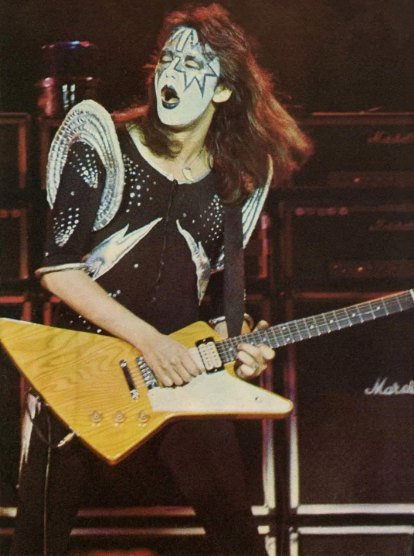

Paul Stanley later became much more closely associated with the Ibanez Iceman. You could even say he is one of the main reasons the Iceman became famous, and that connection is a very important part of Ibanez history.
Phil Collen and the Destroyer II
In the Destroyer II era, the guitar became even more connected to hard rock and metal players, and the strongest example is probably Phil Collen. He was already using a Destroyer II during his time with Girl, before joining Def Leppard, and once Def Leppard became huge worldwide, the Destroyer II became much more visible too. The Ibanez DT555 was not officially a Phil Collen signature model, but in practice, it was basically his guitar.
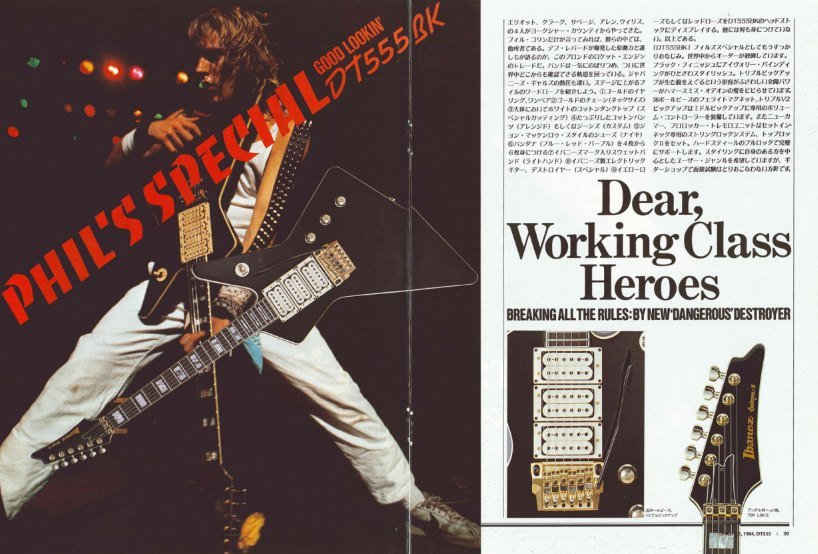
One more interesting detail: on Hysteria, his main guitar was a 1978 Strat he called Felix. According to Phil, his mother bought it for his 21st birthday. Gear features such as Premier Guitar’s Rig Rundown describe it as a late-’70s Japanese Strat, so even behind one of the biggest 80s rock albums, a Japanese Strat was part of the sound.
Iron Maiden and Dave Mustaine
In early Iron Maiden footage, you can see both Adrian Smith and Dave Murray using Destroyer II-style guitars, and they were also connected to Ibanez advertising at the time.

One thing that really surprised me while researching this was Dave Mustaine. During his early Metallica period, he also used an Ibanez DT400 from the same family. That is not the guitar most people immediately associate with him.
Steve Lukather
One interesting Japanese guitar connected to Steve Lukather is his red guitar. For years it was often described as a Schecter USA prototype, but it was actually a Japanese-made Moon guitar built by PGM. It was given to him when Toto came to Japan in 1980, he used it live, and you can see it on the back cover of Toto IV.

Lukather was also using several Ibanez guitars around that time. Two often seen in live footage are the V-shaped RR-400SL and the AR300. He also owned prototype-style guitars based on the AR series, with the selector on the right side of the body and an RG-style headstock.
The Roadstar: Lukather, Gary Moore and Allan Holdsworth
From the Roadstar line, Ibanez even released a Steve Lukather signature model, and his signature pick appeared in the catalog and was actually sold at the time.
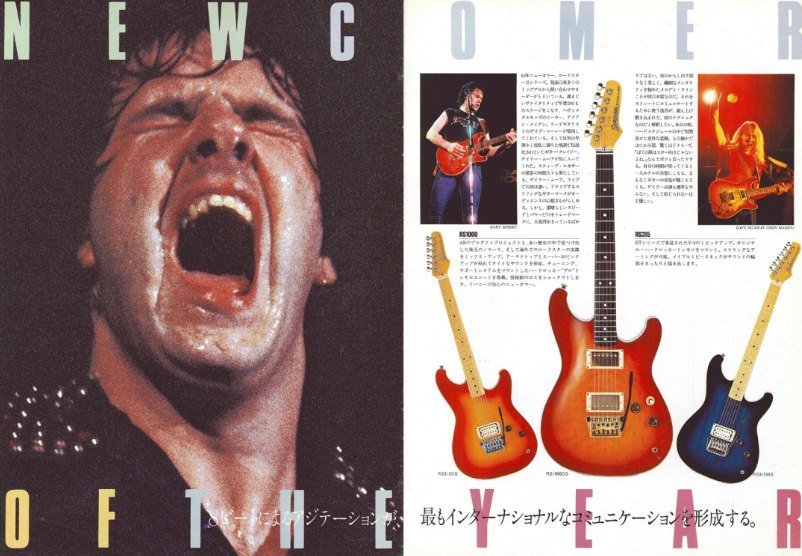

Gary Moore was another major Roadstar name. Ibanez promoted him heavily as one of the faces of the series, and Dave Murray appears in the same promotional image. Allan Holdsworth also had a signature model in the Roadstar series. It had a very 80s look: one humbucker, a simple layout, and a very raw, practical design.
The Musician Bass: Sting and Adam Clayton

Around the same period, Ibanez was also making basses that became very important. The Ibanez Musician bass was used by many famous bassists from the late 1970s into the early 1980s. Sting used models like the MC900 and MC940 during his time with The Police, and you can even see a fretless Musician bass in the music video for Message in a Bottle. Adam Clayton also used Musician basses in U2’s early years, including the MC-824DS and MC-924DS.
Once you start talking about Ibanez, the list of famous players gets very long very quickly, so I cannot cover every single one here. These are the ones I think are most worth mentioning.
Electra: James Hetfield’s Flying V
I am not talking about ESP here, even though that is obviously the brand most people associate with him. In the early days, Hetfield was using an Electra Flying V, a guitar that sold for around 200 dollars. After buying it, he realized it was not a real Gibson, because it said Made in Japan. But that did not bother him at all: he was a huge Michael Schenker fan, and this guitar gave him that same kind of excitement.
He used that Electra on Metallica’s first two albums. In 2008 he had it restored and fitted with EMG pickups, and in more recent years he found two vintage 1980 Electra Vs to recreate the original, which are now part of his live setup. The full story is in my James Hetfield Electra article.
Fernandes and Burny
Kirk Hammett
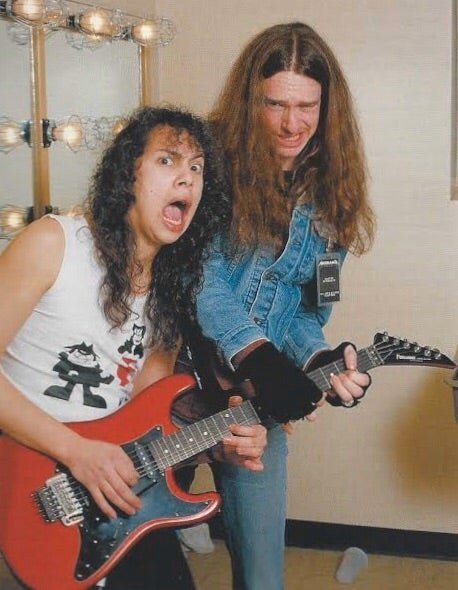
In the early days, Kirk Hammett used a Fernandes FST-90, basically a Strat-style copy. That guitar went through a lot of changes over time, and there are photos of it with a Floyd Rose, with Lace Sensors, with EMGs and with other modifications. According to the Fernandes official site, it was mainly used for clean tones.
Brad Gillis
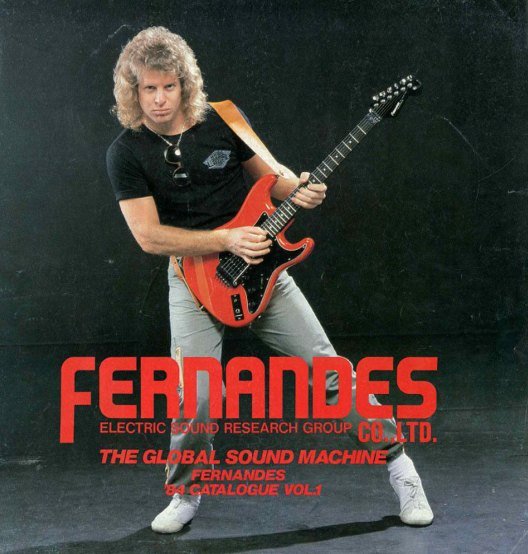
Once you start talking about Fernandes, one of the first names that comes to mind is Brad Gillis. The story goes that Fernandes measured Brad’s heavily customized Fender and used it as the basis for his model. In Japan, his signature model became one of those dream guitars for many players. There were different pickup variations, and it stayed popular for about 14 years. Even on tour in 2022, he was still using an original 1985 Fernandes BG alongside Fender guitars. More in my Brad Gillis Fernandes article.
Billie Joe Armstrong
Another famous Fernandes user is Billie Joe Armstrong of Green Day. He used a Fernandes from the RST series, the guitar known as Blue. Apparently it was bought for around 100 dollars and given to him by his mother. Over time it became covered in stickers and was modified again and again, including pickup changes. These days, replica versions seem to be used more often as his main touring guitars. See my Green Day Fernandes article.

Steve Hackett and Robert Fripp
Staying in the Fernandes family, we also get to Burny. Steve Hackett used a black Les Paul-style Burny, and also a goldtop Fernandes Les Paul-style guitar fitted with a Sustainer and a Floyd Rose.
Robert Fripp used similar Fernandes-based instruments, with things like tremolo systems, MIDI pickups and Sustainer systems. Later he became known for the Japanese-made aluminum-body guitar called EVO, a fully custom instrument designed to reduce noise as much as possible and make Sustainer control easier. It reflected what Fripp wanted from a guitar: near-infinite sustain and extremely precise pitch. He also went through a period of using a modified Tokai Les Paul fitted with a hexaphonic pickup for a Roland guitar synth.


Tokai

Tokai also has some very interesting artist connections. Stevie Ray Vaughan used a Tokai Strat-style guitar in the 1980s and even had an endorsement deal with the brand. Joe Walsh used a Tokai LS100.
Billy Gibbons also went through a period of using a Tokai LS-200. He seems to have used a Tokai out of concern over his stolen 1959 Les Paul.
In more recent years, John Mayer has been seen using Tokai’s Silver Star series, which recreates the feel and look of 1970s Strat-style guitars. That association definitely helped push prices up.
ESP and Aria Pro II
Neal Schon
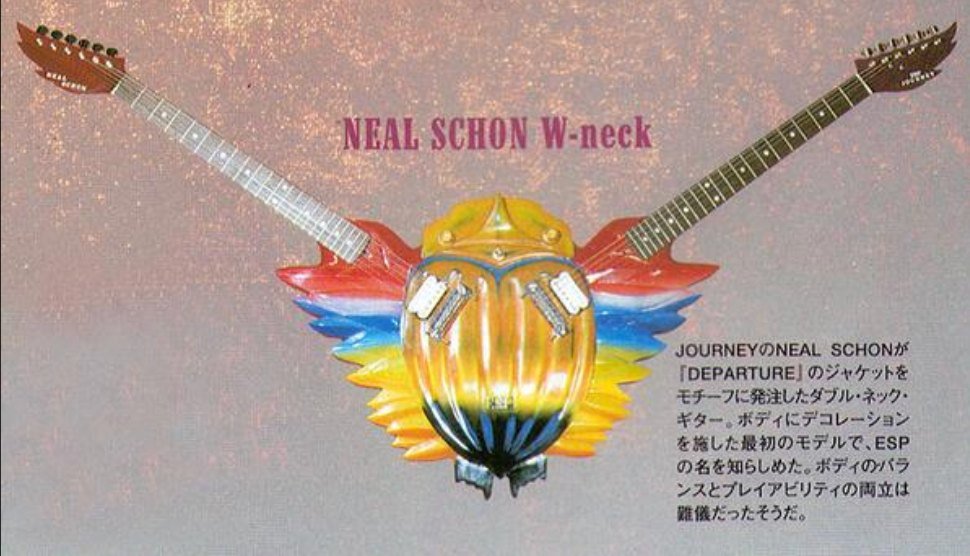
One early guitar often linked to the rise of ESP is Neal Schon’s Scarab guitar, built around Journey’s visit to Japan. The guitar is well known, although I could not find clear footage of him actually playing it. Later, Neal Schon was also associated with the Aria Pro II PE, which he used in modified form too, including setups connected to guitar synth systems.
Cliff Burton
When it comes to Aria Pro II, Cliff Burton is another well-known example. He used the SB-1000, a rare model produced only for a short period in the early 1980s.

Yngwie Malmsteen
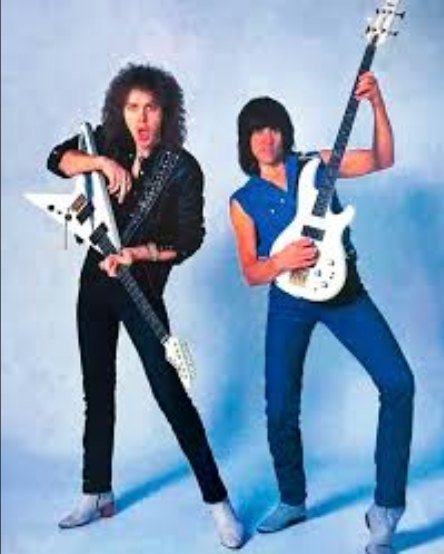
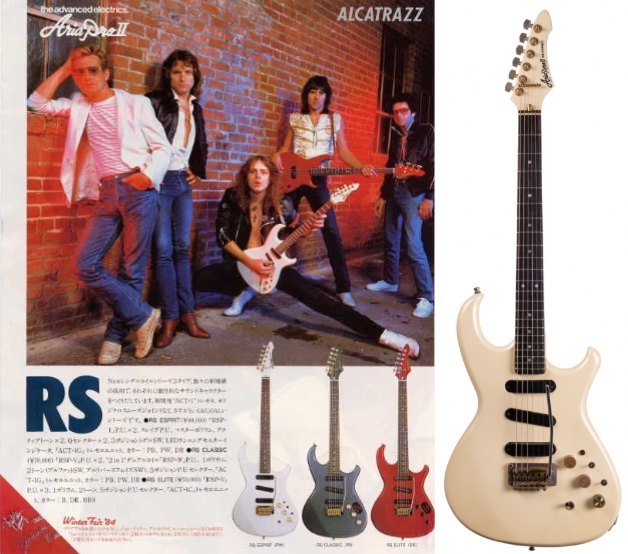
Yngwie Malmsteen also played Aria Pro II: an XX series model, a Flying V-style guitar. What makes it especially interesting is that it had a single-coil pickup rather aggressively fitted into a humbucker ring, and there is video of him using one during performances in Japan. He also appeared in advertising for the Aria Pro II RS Esprit, more of a super-Strat-style model, but whether he actually used it is unclear. More in my Yngwie Malmsteen Aria article.
He also used a Fender Japan signature-style Strat in the 1990s. One documented example is his September 8, 1994 performance at Foundations Forum, where he played a Fender Japan Strat.
Fender Japan and Heartfield
When we talk about Japanese guitars that were clearly used in real performance settings, Fender Japan becomes impossible to ignore.
Richie Kotzen
Since 1996, Richie Kotzen has built a huge part of his sound around a Japanese-made Telecaster. What makes that especially interesting is how close his actual stage guitars are to the production models. He has done things like sanding the back of the neck for a smoother feel, and some examples have had the N-Tune tuner installed. But overall, the difference between the guitars he uses and the ones people can buy is surprisingly small.
John Norum
John Norum has spoken very highly of a Fender Japan ’72 reissue Strat. At one point he even described it as having the best sound of any Strat, and according to him, it was used on most of the tracks on Gone to Stay. That is a very serious endorsement.
Kurt Cobain
If you really look at what Kurt Cobain owned, Fender Japan shows up a lot. And beyond Fender Japan, there were other Japanese-made instruments in that orbit too, like the Epiphone ET270 and the Univox Hi-Flier.
Duff McKagan
Duff McKagan is another interesting case. He used the Fender Japan Boxer Series PJ-555. The Boxer series was not exactly the most beloved Fender range at the time, but later, Fender in the US released Boxer-style models as well.
Heartfield: Vinnie Moore, Tracii Guns and Russ Parrish
If we are talking about Fender Japan offshoots, Heartfield deserves a mention too. It was Fender Japan’s short-lived answer to the super-Strat boom, very much in the era when guitars like the Ibanez RG were dominating attention. Early on, Vinnie Moore used them, and in old promotional material you also find names like Tracii Guns and even Russ Parrish, who later became better known as Satchel. That alone makes Heartfield one of those underrated little chapters in Japanese guitar history.


Yamaha
The Yamaha SG: Marley, Frusciante and Chris Poland
Carlos Santana is the obvious name when we talk about the Yamaha SG, but the SG series was used by many other important players too. Bob Marley used a Yamaha SG-1000. John Frusciante is another interesting example: most people associate him with Stratocasters, but from around 2010 he was also seen using Yamaha SG-2000 and SG-1500 models.
Then there is Chris Poland. His main Yamaha SG was a heavily customized goldtop with a semi-hollow-style construction, f-holes and a Floyd Rose. So this was not just a standard SG: it was a very personal instrument, modified around his own playing style. He owned many Yamaha guitars and used several custom SG-style models on stage, and Yamaha’s artist page lists him as a Yamaha player.
Tommy Bolin and Rory Gallagher: The SX-125
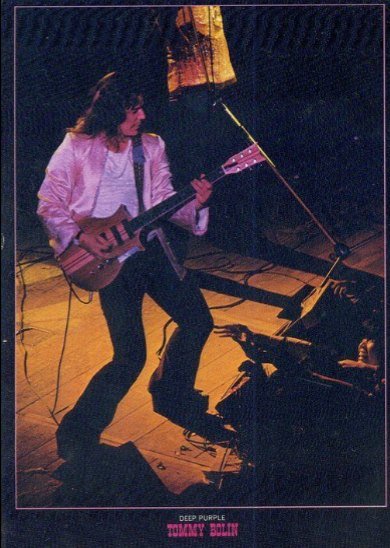
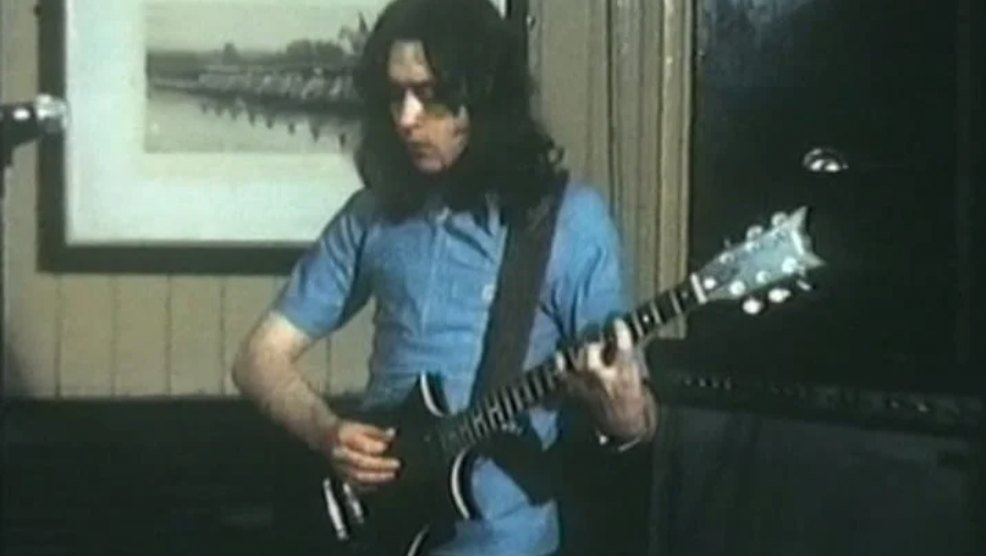
Outside the SG family, Tommy Bolin also used a Yamaha, and this one is pretty obscure: the Yamaha SX-125. It was a custom guitar provided by Yamaha when Deep Purple came to Japan, and Yamaha used him heavily in its advertising at the time. Rory Gallagher is also said to have used the SX-125, which makes this obscure model even more interesting.
Sammy Hagar and Michael Anthony
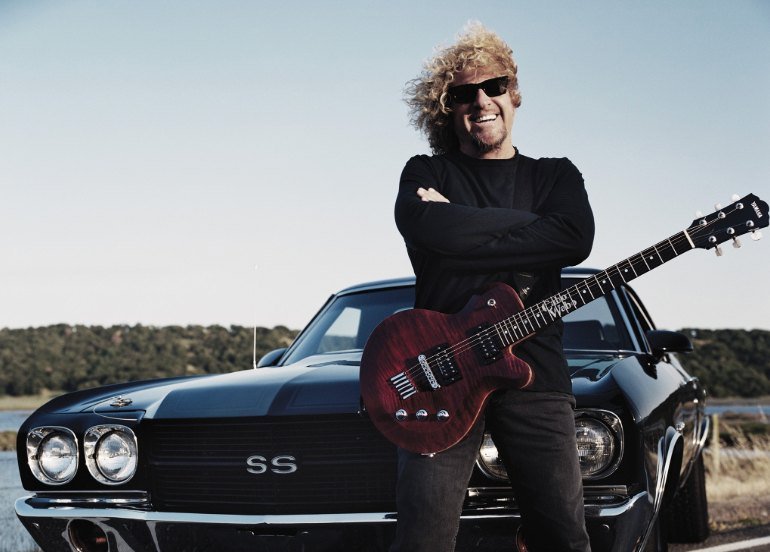
Sammy Hagar also had a Yamaha signature model. It was based on the AES620 design, with the distinctive Cabo Wabo inlay at the 12th fret.
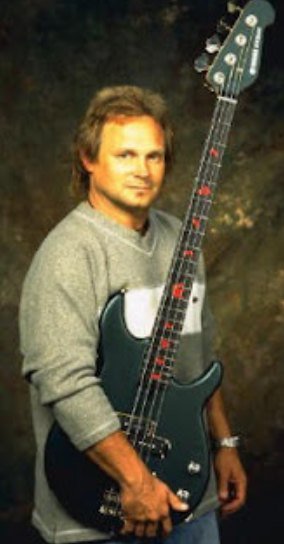
Michael Anthony, also from Van Halen and later Chickenfoot, has been a long-time Yamaha user, and from the 1980s to more recent years you can find plenty of footage of him playing Yamaha BB basses.
Where It Started: Japanese First Guitars
Staying with the Van Halen connection, Eddie’s first guitar was a Teisco Del Rey, often identified as a WF-4L. He did not even have an amp at first, so he used a table to make the guitar louder through vibration.

A few other legends also started on Japanese-made instruments. Jeff Beck’s first guitar is said to have been a Guyatone LG-50, which he reportedly begged his father to buy. Bruce Springsteen started with a Japanese-made Kent; his mother bought it for him with a 60-dollar loan, a story that later appeared in his song The Wish.


So for these players, Japanese guitars were not just cheap alternatives. They were the beginning.
Surprises Spotted by Readers
A few more examples came from comments on my previous video, and these were especially surprising to me.
Yngwie Malmsteen’s Squier
In one piece of footage, Yngwie looks like he is playing a Fender, but it is actually said to be a Squier. Since the footage is from 1984, it would be from a very early period of the modern Squier brand. The guitar then gets smashed as part of the performance, and now that early Japanese Squiers have become collectible, it feels like a bit of a waste. In the same footage, Gary Shea’s white bass appears to be an Aria Pro II SB-Elite II.
Brian May’s Greco
In Queen’s Good Old-Fashioned Lover Boy music video, Brian May plays a Red Special-style guitar, but it does not seem to be his original. It appears to be a Greco copy. If you look closely, the pickguard and bridge are different from the original, and the switches appear to be metal toggles rather than the usual plastic switches. Considering the year, 1977, Greco seems the most likely candidate. Brian May is one of the guitarists most strongly associated with one specific guitar, so seeing him with what seems to be a Japanese copy is definitely unexpected. More in my Greco BM-900 article.
Final Thoughts on Made-in-Japan Guitars
That is my list for now. If you go through old catalogs and vintage brochures, I am sure there are still plenty of surprising names out there. I should admit that this list leans pretty heavily toward classic hard rock and heavy metal, which is partly just my own taste in music.
With vintage guitar prices rising so much, even 1990s Gibson Les Pauls have more than tripled in price over the past five years. For a lot of players, the guitars they once dreamed of owning, or the sounds they wanted to chase, are starting to feel further out of reach. Of course, buying the same Japanese guitar does not mean you will automatically sound like the artist who used it. But many older Japanese guitars are still relatively affordable compared to the American instruments they once competed with. So if any of these models caught your attention, I really recommend digging into them for yourself.
Frequently Asked Questions
Did Eddie Van Halen use a Japanese guitar?
Yes. His Ibanez Destroyer 2459 was built by Fujigen in Japan in 1975 and was used on Van Halen’s 1978 debut album. His first guitar was also a Japanese Teisco Del Rey.
What Japanese guitar did James Hetfield use?
An Electra Flying V, made in Japan, which he used on Metallica’s first two albums.
Did Stevie Ray Vaughan play a Tokai?
Yes. He used a Tokai Strat-style guitar in the 1980s and had an endorsement deal with Tokai.
What Japanese guitar does Richie Kotzen play?
A Japanese-made Fender Telecaster, which he has used since 1996. His stage guitars are very close to the production models.
Which famous guitarists started on Japanese guitars?
Eddie Van Halen started on a Teisco Del Rey, Jeff Beck is said to have started on a Guyatone LG-50, and Bruce Springsteen started on a Kent.
Did Brian May play a Greco?
In the 1977 Good Old-Fashioned Lover Boy video he appears to play a Greco Red Special copy rather than his original guitar, judging by the pickguard, bridge and metal toggle switches.