Japan has given the guitar world some of its most important effects pedals, from compact pedals almost every player has owned to hand-built boutique drives. Here are five staple Japanese pedal brands, and a closer look at the key models from each one.
| Brand | Known for | Made in Japan? |
|---|---|---|
| BOSS | Compact pedals for beginners to pros | Older silver screw units and today’s Waza Craft series; most current models are made in Taiwan |
| Ibanez | The Tube Screamer | Classic Tube Screamers were built in Japan by Maxon |
| Maxon | Warm, analog-feel pedals | Yes |
| VEMURAM | Hand-built boutique drives | Yes, hand-assembled in Tokyo |
| Zoom | Compact multi-effects | Japanese brand |
Prefer to watch? This article is based on my own short below.
1. BOSS
First, BOSS. It is a key brand in the pedal world, used by everyone from beginners to professionals. Most current models are made in Taiwan, but the older silver screw units were made in Japan and are popular among enthusiasts. The Waza Craft series is still built in Japan today. For the full story, see my BOSS pedals history.
BOSS DS-1 Distortion: The Best-Selling Compact
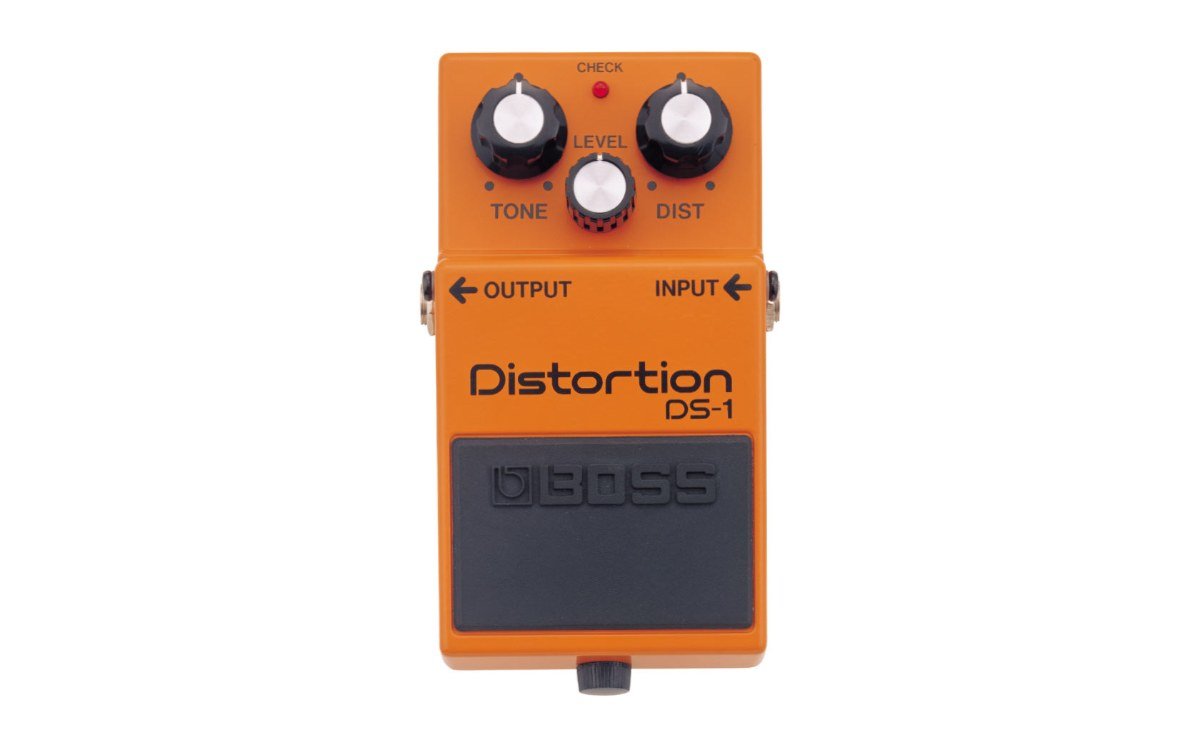
Introduced in 1978, the DS-1 was BOSS’s first distortion pedal, and BOSS calls it the top-selling BOSS compact pedal ever. Its hard-edged attack stays clear even at maximum distortion, and at low settings it also works as a booster. For many players, it was the first pedal they ever bought.
| Spec | |
|---|---|
| Type | Distortion |
| Released | 1978 |
| Controls | Tone, Level, Dist |
BOSS SD-1 Super OverDrive: The Yellow Classic
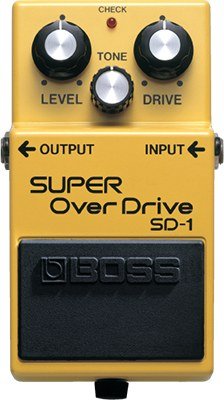
Released in 1981, the SD-1 is built around the asymmetrical clipping circuit of the OD-1, one of the three original BOSS compact pedals from 1977. It gives mild-to-moderate drive with a focused midrange and tight low end, works best with clean or slightly driven amps, and is also used to tighten up high-gain amp tones.
| Spec | |
|---|---|
| Type | Overdrive |
| Released | 1981 |
| Controls | Level, Tone, Drive |
BOSS BD-2 Blues Driver: Touch-Sensitive Drive

In continuous production since 1995, the BD-2 uses an amp-like gain circuit that responds to your picking and your guitar’s volume knob. Its range goes from a transparent clean boost to aggressive overdrive, which is why it shows up in blues, rock, country and jazz rigs alike.
| Spec | |
|---|---|
| Type | Overdrive |
| Released | 1995 |
| Controls | Level, Tone, Gain |
BOSS SD-1W (Waza Craft): Made in Japan Today

If you want a new BOSS that is made in Japan, the Waza Craft series is the answer. The SD-1W rebuilds the SD-1 with an all-discrete analog circuit and adds a switch between Standard mode, for the classic SD-1 sound, and Custom mode, for more range and gain.
| Spec | |
|---|---|
| Type | Overdrive (Waza Craft) |
| Modes | Standard / Custom |
| Made in | Japan |
2. Ibanez
Next, Ibanez, famous for the Tube Screamer. It has seen many versions over time, yet that mid-focused voice continues to be trusted by legendary players.
Ibanez TS808: The Original Tube Screamer

The TS808 is where it all started, around 1979. The circuit was designed by Maxon, which also sold it under its own name as the OD808. Today’s TS808 reissue keeps the JRC4558D chip and the classic analog circuit, with the familiar Overdrive, Tone and Level controls.
| Spec | |
|---|---|
| Type | Overdrive |
| Original | c. 1979 |
| Controls | Overdrive, Tone, Level |
| Chip | JRC4558D (reissue) |
Ibanez TS9: The Follow-Up

The TS9 followed the TS808 in Ibanez’s 9 series. The current reissue keeps the same housing, the same instantly recognizable green paint and the same overdrive, and is often the more affordable way into a Tube Screamer.
| Spec | |
|---|---|
| Type | Overdrive |
| Controls | Drive, Tone, Level |
Ibanez TS808HWV2: The Hand-Wired Flagship

At the top of the line sits the hand-wired Tube Screamer. Announced by Ibanez in 2024, the TS808HWV2 uses a JRC NJM4558 op-amp and Mogami OFC wiring, adds a boost stage that raises the maximum output by 6dB over the previous TS808HW, and runs on 9V to 18V through a standard 2.1mm DC jack.
| Spec | |
|---|---|
| Type | Overdrive (hand-wired) |
| Op-amp | JRC NJM4558 |
| Power | 9V–18V |
Ibanez TS Mini: For a Crowded Board
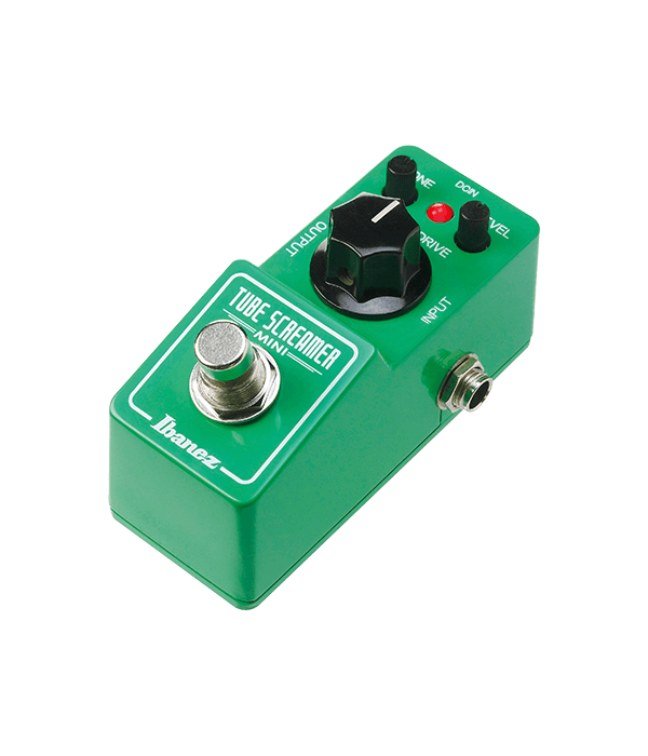
The TS Mini puts the Tube Screamer sound into a box roughly half the size of the original, with true bypass switching. It runs on an AC adapter only, so there is no battery compartment.
| Spec | |
|---|---|
| Type | Overdrive (mini) |
| Switching | True bypass |
| Power | 9V adapter only |
3. Maxon
Maxon built Ibanez pedals as an OEM maker until 2002, so older models share the same internal circuits. Today, Maxon is known for its warm, analog feel.
Maxon OD808: The Circuit Behind the Tube Screamer

Maxon designed the original OD808 overdrive circuit in the late 1970s and sold it to Ibanez as the TS808. Maxon’s former US distributor even called it the world’s first tube-amp overdrive simulator. If you want that circuit from the company that designed it, this is the one.
| Spec | |
|---|---|
| Type | Overdrive |
| Original | Late 1970s |
Maxon AD999: All-Analog Delay

The AD999 is a 100% analog delay with up to 900ms of delay time, built around eight custom Maxon MC4107D bucket brigade chips. It has stereo wet and dry outputs and true bypass, and its repeats can be pushed into self-oscillation.
| Spec | |
|---|---|
| Type | Analog delay |
| Delay time | Up to 900ms |
| Outputs | Stereo (wet/dry) |
Maxon CS-550: My Favorite Chorus

The CS-550 Stereo Chorus is one of my personal favorites. It is no longer in production, and mine is simply a compact pedal that happened to be lying around at home. The sound is full and warm, yet shimmering: it never smears the tone with too much effect, and the guitar still cuts through the mix. It is a perfect match for 1980s rock sounds.
To me, Maxon as a brand feels a little underrated, but pedals like this have that rugged, no-nonsense quality you only get from made-in-Japan gear.
4. VEMURAM
For modern boutique builders, there is VEMURAM. Its pedals are hand-assembled in Tokyo in brass housings, which the company says help shut out noise.
VEMURAM Jan Ray: The Flagship

The Jan Ray is a low-gain drive known for its touch response and clarity, and each unit is hand-assembled. VEMURAM designed it to recreate the punchy, clear tone of 1960s blackface Fender amps, with sustain and no unnatural compression. Besides Level, Gain, Bass and Treble, there is an internal saturation trimmer.
| Spec | |
|---|---|
| Type | Boost-overdrive |
| Controls | Level, Gain, Bass, Treble; internal Saturation trimmer |
| Power | 9V |
VEMURAM SHANKS ODS-1: Produced by John Shanks
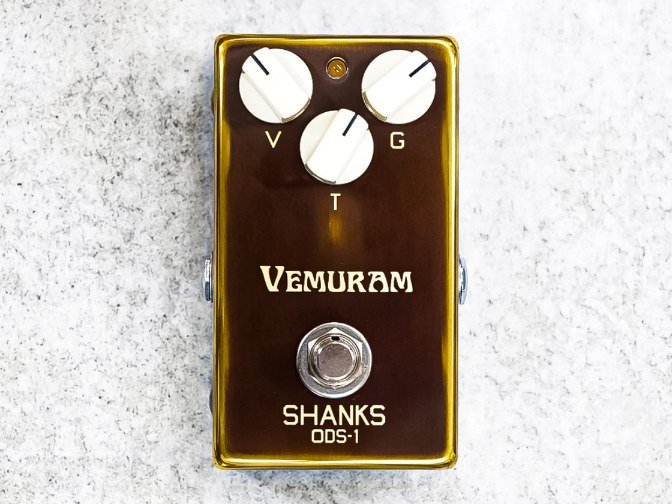
A collaboration with producer and guitarist John Shanks, the ODS-1 is a transparent overdrive with a wide tonal range. Two internal trimmers set the bass and the overall saturation, so it can go from a mild push to a full solo sound.
| Spec | |
|---|---|
| Type | Overdrive |
| Controls | Level, Gain, Tone; internal Bass and Saturation trimmers |
VEMURAM Butter Machine: Michael Landau’s Distortion

Developed with Michael Landau over more than two years of prototypes, tested at his sessions, on tour and in his home studio, the Butter Machine is a distortion that keeps your picking nuance and goes from overdrive to full-on distortion.
| Spec | |
|---|---|
| Type | Distortion |
| Signature | Michael Landau |
VEMURAM Las Lunas: The Newest Distortion

Las Lunas is a newer distortion designed to recreate the drive sound favored by the guitar heroes of an earlier era. Its 3-band passive EQ lets you fix the thin low end that many distortion pedals suffer from and shape the overall brightness.
| Spec | |
|---|---|
| Type | Distortion |
| EQ | 3-band passive (Bass, Tone, Treble) |
5. Zoom
Finally, Zoom, a brand closely tied to multi-effects in Japan. Its units are compact and accessible, covering both live use and home recording.
Zoom 9002: Where It Started
According to Zoom’s official company history, the company was founded in Tokyo in 1983, and its first own product was the 9002 multi-effects unit, released in 1990.
| Spec | |
|---|---|
| Type | Multi-effects |
| Released | 1990 |
Zoom G1 FOUR / G1X FOUR: The Starter Multi

The G1 FOUR is Zoom’s entry point, with more than 60 effects and 13 amp and cabinet models. The G1X FOUR adds an expression pedal for volume, wah, delay and pitch control.
| Spec | |
|---|---|
| Type | Multi-effects |
| Effects | 60+ |
| Amps/cabs | 13 |
Zoom MS-50G+: A Multi in a Single Pedal

The MultiStomp MS-50G+ fits a full multi-effects unit into a single-pedal footprint. It runs up to six effects at once in any order, stores up to 100 patches, and its screen changes color by effect type, which makes it easy to read on stage.
| Spec | |
|---|---|
| Type | Multi-effects (pedal size) |
| Simultaneous effects | Up to 6 |
| Patches | Up to 100 |
Zoom G11: The Flagship

At the top of the current guitar range is the G11, Zoom’s flagship multi-effects processor, with newly developed amp models plus new distortion and modulation effects.
| Spec | |
|---|---|
| Type | Multi-effects (flagship) |
Final Thoughts
From the compact pedals on almost every board to hand-built boutique drives, these five brands cover a big part of what Japanese pedals mean to players today. If you are hunting for made-in-Japan versions, the older BOSS and the Maxon-built Ibanez pedals are the ones to look for on the used market, while BOSS Waza Craft and Maxon still give you new pedals made in Japan.
Frequently Asked Questions
What is the most famous Japanese pedal?
The BOSS DS-1 and the Ibanez Tube Screamer TS808 are two of the most famous. The TS808 circuit was designed by Maxon, which also sells it as the OD808.
Are BOSS pedals made in Japan?
Most current BOSS models are made in Taiwan. Older units, including the silver screw era, were made in Japan, and the Waza Craft series is still built in Japan today.
Who made the Ibanez Tube Screamer?
Maxon built Ibanez pedals as an OEM maker until 2002, so older Ibanez and Maxon pedals share the same internal circuits.
What is the VEMURAM Jan Ray?
A hand-assembled boost-overdrive from Tokyo builder VEMURAM, designed to recreate the clear tone of 1960s blackface Fender amps.
Is Zoom a Japanese brand?
Yes. Zoom was founded in Tokyo in 1983, and its first own product was the 9002 multi-effects unit in 1990.